
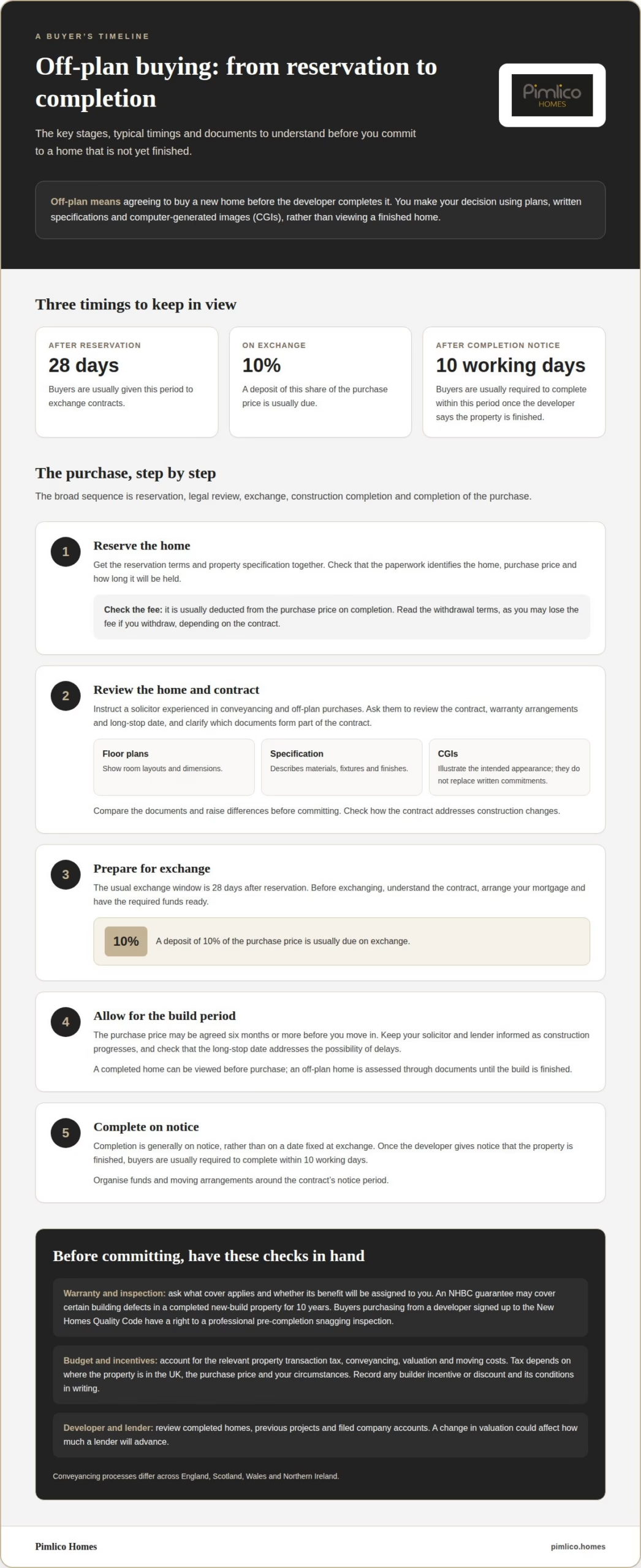
The defining commitment is made before the home is finished. Buying a luxury new build home off-plan means purchasing a property before the developer has completed it; it may still be under construction or not yet built. Buyers are usually given 28 days after reserving to exchange contracts, with a deposit of 10% of the purchase price usually due on exchange.
The appeal is clear: you can secure a home while its design is taking shape. Yet plans, specifications and computer-generated images (CGIs) show an intended result, so understanding exactly what they promise matters as much as appreciating the vision.
This guide explains how buying a luxury new build home off-plan works in the UK and what to examine before committing. You’ll learn how reservation fees are handled, how to read floor plans and specifications, and how to interpret CGIs without mistaking an illustration for a contractual detail. It also covers key questions about exchange and completion, helping you approach a significant purchase with clarity.
Key Takeaways
- Understand what you commit to when purchasing a home before it is complete, including how exchange and completion are structured.
- Read the reservation terms carefully so you know how the fee is treated and what could happen if you withdraw.
- Use the written specification alongside plans and CGIs to distinguish promised features from visual presentation.
- Clarify how the home’s design and documented details align with the property you intend to buy before committing.
What is buying off-plan?
Off-plan means agreeing to buy a new home before the developer completes it. The property may still be under construction or not yet built, so you make your decision using documents rather than a finished home.
-
Compare off-plan and completed homes
Decide whether the timing suits you before choosing a property. With a completed home, you can view the finished rooms; with an off-plan purchase, you assess plans, specifications and CGIs. Buying a luxury new build home off-plan can mean agreeing a purchase price six months or more before moving in. Consider whether that interval fits your mortgage and moving plans.
-
Follow the off-plan buying process
Begin by reserving the home, then instruct a solicitor experienced in conveyancing and off-plan purchases. Ask them to review the contract, warranty arrangements and long-stop date. Prepare your mortgage arrangements and funds before exchange. The broad sequence is reservation, legal review, exchange, construction completion and completion of the purchase. Conveyancing processes differ across England, Scotland, Wales and Northern Ireland.
-
Exchange contracts and pay the deposit
Prepare promptly for exchange: buyers are usually given 28 days after reservation to exchange contracts, a shorter period than for a conventional purchase. A deposit paid on exchange is usually 10% of the purchase price. Before buying a luxury new build home off-plan, make sure you understand the contract, have funds ready and know how the reservation fee is treated.
-
Allow time before moving in
Plan for completion on notice, rather than a date fixed at exchange. Once the developer gives notice that the property is finished, buyers are usually required to complete within 10 working days. Keep your solicitor and lender informed as the build progresses, and organise funds and moving arrangements around the contract’s notice period. Check that the long-stop date addresses the possibility of construction taking longer than expected.
Reservation fees and property specifications
Reservation is the point to examine the proposed home and the terms for holding it. Record the fee, how it is treated and the specification describing the property you intend to buy.
-
Reserve the property
Ask for the reservation terms and property specification together before committing. The reservation should identify the home, its purchase price and how long it will be held. Read the specification as a description of the property being promised, not simply as a design summary. Note the materials, fittings, finishes and included features, then raise any differences between the written details and sales information before signing.
Consider how the home will suit your plans for moving. For example, a specification might describe a finish by type or standard rather than name a particular manufacturer. Make sure the wording clearly distinguishes a defined feature from an illustrative choice. If a discount or incentive forms part of the offer, ensure its terms and effect on the purchase price are recorded in the reservation paperwork.
-
Review reservation fees and withdrawals
Check the amount and refund terms before paying. The fee is usually deducted from the purchase price on completion, but the written terms should explain how it applies to your transaction.
Read the withdrawal clause carefully: depending on the contract, you may lose the reservation fee if you withdraw. Note any conditions affecting repayment, and ask your conveyancing solicitor to explain any wording you do not understand before signing. Keep the reservation document with the specification and correspondence so the agreed property, fee and purchase price can be understood together.
Finally, consider the lender’s role. A reservation records your intention to proceed, but does not replace mortgage arrangements or the later contract. Do not assume the fee guarantees that every detail is fixed; rely on the written reservation terms and property specification to establish what has been agreed.
Assessing a property through plans, specifications and CGIs
Review the documents together: each reveals a different aspect of a home still under construction. Your solicitor or conveyancer can also assess the contract’s legal and financial implications.
- Compare the floor plans with the written specifications and note any differences. Plans show room layouts and dimensions; specifications describe materials, fixtures and finishes. CGIs illustrate the intended appearance but do not replace written commitments. Ask your solicitor which documents form part of the contract and how the contract addresses construction changes.
- Before reserving, have an experienced conveyancer review the contract, title information, long-stop date and warranty arrangements. Ask what cover applies and whether its benefit will be assigned to you. An NHBC guarantee may cover certain building defects in a completed new-build property for 10 years. Buyers purchasing from a developer signed up to the New Homes Quality Code have a right to a professional pre-completion snagging inspection.
- Work through the full buying budget before committing, including the relevant property transaction tax, conveyancing, valuation and moving costs. Tax depends on where the property is in the UK, the purchase price and your circumstances. Record any builder incentive or discount in writing, including its conditions, and consider whether a delay in your property chain could affect your timing or costs.
- Assess the developer’s record by reviewing completed homes, previous projects and filed company accounts, then consider what information is available during construction. With an off-plan purchase, you commit before the home is complete, so you cannot yet inspect the finished quality. A change in valuation could affect how much a lender will advance, leaving a funding gap; insolvency could disrupt construction. Before completion, arrange a snagging inspection and make a written record of defects for resolution.
Meaning of buying a home off-plan
Off-plan means committing to buy before a home is complete. The decision therefore links today’s contract to future construction, mortgage arrangements and moving plans.
- Separate the purchase decision from the experience of living in the finished home. Before completion, you assess the property through its contract documents and construction progress, rather than walking through finished rooms. That changes what you can judge directly: the agreed price and written specification are available, while the completed property is still ahead. Treat the commitment as a purchase of a defined future home, not a viewing of a finished one.
- Align your mortgage offer with the expected build programme. Mortgage offers typically last 6 months, while an off-plan purchase can involve a longer wait before moving. Lenders set their own requirements and consider the expected completion timing. Establish when an application and valuation fit the build schedule, and understand how a delay could affect the offer’s validity or your financing arrangements.
- Plan for delays and changes in your circumstances. A later completion can affect moving arrangements, employment plans or the timing of selling an existing home. Read the contract’s long-stop date and provisions for changes, then consider how they fit your plans. The practical test is whether your finances and housing arrangements remain workable if construction takes longer than expected.
- Judge the purchase by its full timeline, not only its initial appeal. Off-plan buying can give you time to prepare for a carefully designed home, but it separates contract commitment from occupation. Consider your mortgage, the sale of an existing property and your intended moving date together. For example, if you are relying on a sale, map that transaction against the build programme rather than assuming the dates will align.
Explore homes designed for considered living as you shape your next move.
Pimlico Homes
Pimlico Homes offers luxury homes for buyers considering a new-build purchase, including Luxury Detached Homes, Executive Courtyard Homes, Bespoke Luxury Homes and Luxury Barn Conversions. These offer different architectural approaches, from a detached residence to a courtyard setting or a bespoke home.
If you are weighing an off-plan purchase, first define what matters most in your finished home: its layout, setting, character and fit with your daily life. That clarity can help you consider which type of property reflects your priorities, alongside the plans, specifications and contractual terms covered in this guide.
Contact Pimlico Homes to discuss the kind of home you are considering.
Give your next home the right foundation
Buying a luxury new build home off-plan is not only a decision about a property. It is a decision about the kind of place you want to come home to and the details that will make it feel distinctly yours. Take time to align your priorities with the documented design and commitments in your purchase, so your choice reflects both the vision and the practicalities of your next move.
Pimlico Homes offers Luxury Detached Homes, Executive Courtyard Homes and Bespoke Luxury Homes, with different forms and design possibilities to consider. Start with a conversation about the setting, character and way of living you have in mind.
Contact Pimlico Homes to discuss your plans and explore a considered next step towards a home that feels unmistakably your own.
Frequently Asked Questions
Can I see the planning consent?
Yes. Ask to see the planning consent and plans relating to the development before committing. Have your solicitor review them alongside the contract and documents describing your particular property. For example, clarify whether the approved layout matches the plot and floor plan you are considering. This helps distinguish the consented development from illustrative sales material and identify details that need explaining.
Do lenders restrict off-plan mortgages?
Yes, lender criteria can limit your options: some UK lenders lend less on new-build properties, and some will not lend on an off-plan purchase. Before committing, establish whether your intended lender considers the development and purchase structure acceptable. Its assessment may also depend on the property valuation and expected completion timing, so align the mortgage process with the construction programme.
How do you know what you’re buying?
Use the contract documents to identify the exact plot and written description of the home. Match its plot reference across the reservation paperwork, plans and specification, then note any differences for your conveyancer to resolve. For example, confirm that the room layout you are relying on belongs to your chosen plot, rather than another home shown in the development’s marketing material.
What sort of off-plan discount do builders give?
There is no single discount figure to rely on: incentives vary by development and the terms offered. Treat any proposed reduction or added benefit as part of the purchase negotiation, not as an assumed feature of buying off-plan. Ask for the incentive and any conditions in writing, then establish how it affects the recorded purchase price and what the agreement includes.
What should a UK off-plan property contract include about completion dates and delays?
The contract should set out a long-stop date and explain how completion is triggered when construction finishes. Review how the developer serves notice, the time allowed to complete and the terms that apply if the build passes the long-stop date. Ask your conveyancer to explain how these provisions work together, so you understand the timetable and what steps are required if progress is delayed.
How do mortgage offers and valuations work when buying an off-plan home?
A mortgage application uses the agreed purchase price and a surveyor’s valuation to support the lender’s assessment. The lender also considers its own requirements and the expected build completion date when deciding the timing of an offer. For instance, if construction is expected to take longer than the offer period, discuss how the application and valuation timetable can align with the projected completion.





