
The most compelling artwork does not have to match the room around it. When designing a home to showcase an art collection, choose pieces for their meaning and presence, then use colour, scale and placement to create harmony or deliberate contrast. The key is to give each work enough space to be seen.
It is natural to want a painting or sculpture to feel at home in its surroundings. Yet considered contrast, such as a vivid canvas against a restrained palette or a sculptural form in a clean-lined room, can bring an interior into sharper focus without making it feel unsettled.
This guide explores how to choose between complement and contrast, draw a room’s palette from the art, and arrange a collection with care. It also considers how to plan for change, so the home can welcome new works and displays over time.
Key Takeaways
- Choose art for its personal meaning, then decide whether colour, scale or an intentional contrast will give it presence in the room.
- Make display part of everyday living by considering sightlines, movement through the space and the practical needs of each artwork.
- Borrow colours from the collection to shape a room’s palette, or use a restrained backdrop to let expressive pieces stand out.
- Plan for change with adaptable display areas and lighting, so new works can find their place as the collection evolves.
1. How should you choose an artwork for your home: should it “match” the interior, or create a deliberate contrast?
Neither approach is compulsory: choose artwork for its meaning, then decide how it should relate to the interior. A sculptural object can fill an awkward corner, complete a vignette or prompt conversation. In a Berlin penthouse, bespoke shelving placed a large portrait at the centre and divided the living and dining spaces. Give each piece breathing room rather than turning every wall into gallery space.
Hallways can lead the eye through a home, with artwork softening transitions between rooms. A sculpture that draws attention upwards can make use of a high ceiling, while a personal object can give an overlooked landing a distinct purpose. Before placing a piece, consider the approach, sightline and space needed to move around it.
For UK renovations, displaying art is different from altering a building. Structural changes, layout alterations or exterior work can bring planning and building-control considerations; requirements depend on the proposed work and property context. Consider these factors before settling on a gallery layout or commissioning built-in display features.
The cost of professional art lighting and installation in the UK depends on artwork size and weight, access, wall construction, lighting specification and installation complexity. A project-specific price follows a quote request. These details shape the work, from selecting suitable fixtures to positioning and securing each piece.
For paintings and photographs, choose a wall colour that supports the image rather than competes with it. A dominant tone in the artwork can guide the palette, while a pared-back finish gives bold or exuberant pieces greater presence. Keep frames and surrounding objects restrained when the composition already has strong colour or detail.
For valuable collections, plan security alongside the display: alarms, cameras, access control, sensors and specialised glazing can be integrated during design and construction. Discuss insurance in light of each work’s value, medium, location and security arrangements. To protect sensitive art, avoid direct sunlight, which can damage works on paper, photographs, textiles and some paintings; consider window orientation, glazing, shades and indirect daylight. Environmental needs can also inform heating, ventilation and monitoring plans.
2. What interior design tips would you give to someone who already has an art collection?
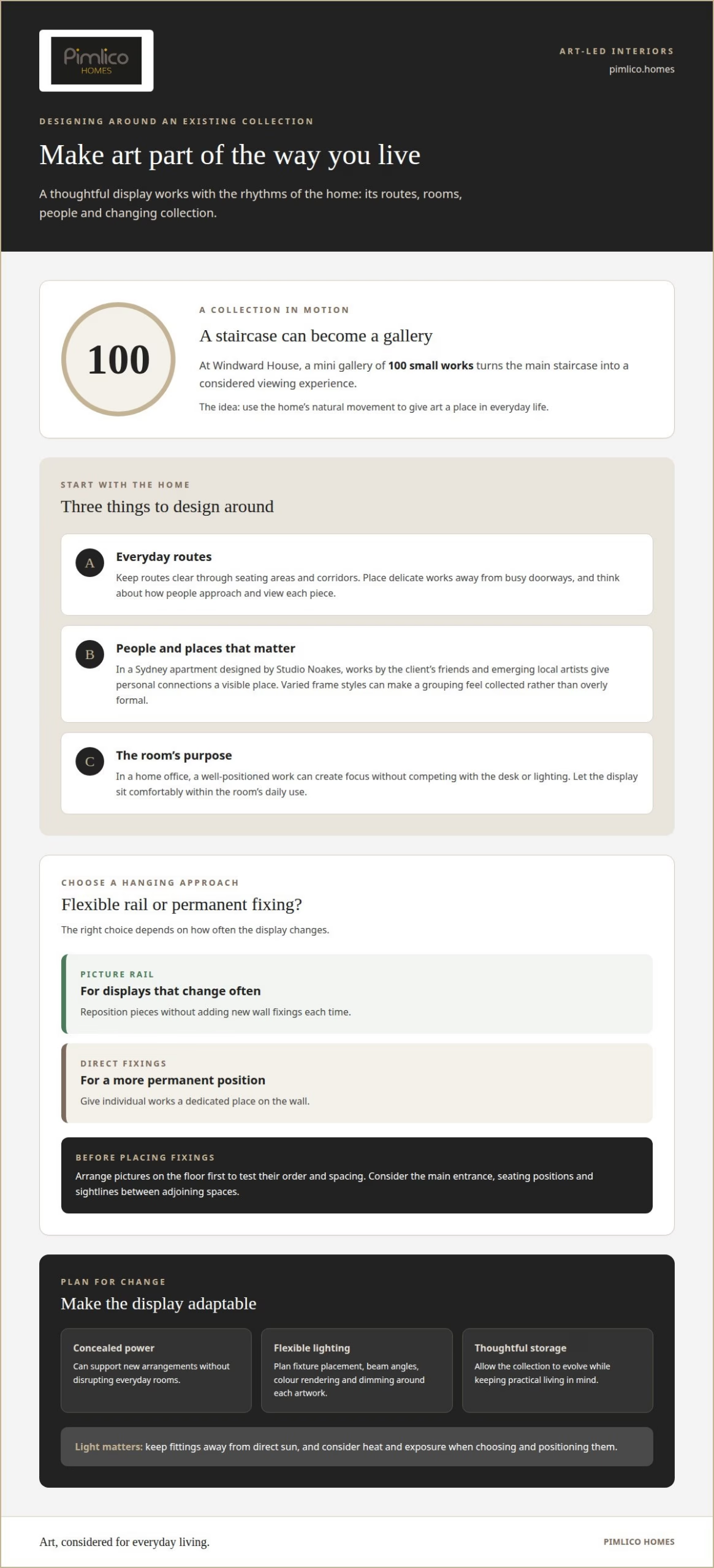
Begin with the rhythms of daily living, not a gallery-like room that looks untouched. Keep routes clear through seating areas and corridors, and place delicate pieces away from busy doorways. In a home office, for example, a single well-positioned work can create focus without competing with the desk or lighting.
Build the display around the people and places that matter to you. The walls of a Sydney apartment designed by Studio Noakes feature works by the client’s friends and emerging local artists. This approach gives personal connections a visible place in the home, while varied frame styles can make a grouping feel collected rather than overly formal.
Use the architecture to make a display part of the home’s movement. Windward House includes a mini gallery of 100 small works along its main staircase, turning a circulation route into a considered viewing experience. For a smaller collection, arrange pictures on the floor first; this lets you test spacing and order before placing fixings.
Picture rails make it easier to reposition pieces without adding new wall fixings each time. Direct fixings give individual works a more permanent position, while a rail suits displays that change often. For lighting, plan fixture placement, beam angles, colour rendering and dimming around each artwork. Keep light away from direct sun, and consider heat and exposure when choosing and positioning fittings.
Adaptability matters as your collection changes. Concealed power, flexible lighting and thoughtfully designed storage can support new arrangements without disrupting everyday rooms. For a new home, planning space around an evolving art display can bring practical living and considered presentation together.
3. Using an art collection’s palette in a room
Begin with one painting and identify its most compelling colour, not every shade in the frame. Echo that colour in a considered detail, such as a chair, curtain or alcove, then keep larger surfaces quieter. In a London home, clients drew their palette from tropical-themed art because colour helped them through the British winter. The example shows how a collection can shape the atmosphere rather than simply follow an existing scheme.
Use the strength of each colour to guide the room’s mood. A vivid artwork can bring energy to a calm sitting room, while muted tones can support a more contemplative study. Repeating a small accent colour through furnishings creates continuity; adding every colour from a busy canvas can make the interior feel crowded. A restrained frame also helps an expressive painting retain its visual authority.
Plan wall space around the works and the views through the room. Before fixing a display, consider the main entrance, seating positions and sightlines between adjoining spaces. A broad painting may need an uninterrupted wall, while a group of smaller pieces can suit a narrower passage. Room proportions matter too: artwork should relate to the wall and remain legible from places where people pause.
There is no single hanging height or spacing that suits every artwork. Set the position according to the work’s dimensions, whether people view it standing or seated, and how the pieces relate as a group. Keep gaps consistent within a series, then adjust the arrangement to the wall and viewing distance. For a high ceiling, a vertical composition can draw the eye upwards; for a low ceiling, a horizontal work can reinforce the room’s width. Consider lighting direction, too, so a picture light or adjusted fitting illuminates the work without creating distracting reflections.
4. Designing for an evolving art collection
A collection rarely stands still, so plan spaces for works that may arrive later. Begin with the largest pieces you own, then consider how different formats could fit into the same room. A tall painting might suit a stairwell, while a future sculpture could need open floor space and clear circulation. Designing a home to showcase an art collection means considering how each new acquisition could belong, rather than squeezing it into the remaining gap.
In a three-storey Zurich home designed for an evolving collection, a white and beige palette creates a quiet setting for changing displays. The principle is flexibility, not imitation: adaptable walls and lighting allow the art to change without fixing every room to one composition. Keep some surfaces visually calm and leave options for works that have not yet joined the collection.
Think beyond the wall. A substantial sculpture can affect circulation, ceiling height and structural requirements, while a large-format painting may influence wall dimensions. During design, map likely routes from the entrance to display areas, including doorways, corridors and stairs. Planning these spaces early can accommodate future works that would be difficult to manoeuvre once the home is complete.
Environmental needs can also shape long-term design choices. Window placement, glazing and shading affect daylight exposure, while sensitive works may influence ventilation and monitoring plans. A flexible display space can balance these needs with everyday living instead of becoming a sealed gallery. Storage for pieces not currently on display also allows rotation without overcrowding the main rooms.
The clearest takeaway is to design for change: preserve options in wall space, circulation and lighting, then let each new work influence its setting. A thoughtful approach to designing a home to showcase an art collection gives future acquisitions room to find their place. If your collection is shaping your plans, explore a bespoke home designed around your evolving collection.
Pimlico Homes
Pimlico Homes can help make a collection part of the thinking behind a new home, rather than an addition considered once the rooms are complete. For readers planning a home around art, this means considering display spaces alongside the practical details of everyday living, from sightlines and wall proportions to room flow.
Pimlico Homes’ Bespoke Luxury Homes, Luxury Detached Homes, Executive Courtyard Homes and Luxury Barn Conversions provide different settings for a personal collection. The right approach depends on the home’s character and how you want to live with your artwork, whether that means a calm focal point or spaces that can adapt as the collection grows.
To discuss your plans for a home shaped around art, contact Pimlico Homes.
Give your art a home with room to grow
Designing a home to showcase an art collection is ultimately about shaping a setting around the life you want to lead. The most meaningful starting point is not a finished room, but a clear sense of what home should feel like as your collection and priorities change. Art can express memory, curiosity and identity; its place in the home can make those qualities part of daily life.
Before a new home takes shape, consider how your collection might live alongside the moments that matter: a quiet morning, a shared meal or time spent with guests. Those intentions can guide early design decisions and help create a home that feels personal rather than prescribed. There is no single template to follow. The right setting gives your collection meaning while supporting the way you live.
If you are considering a home shaped around your art and future plans, discuss your art-led home plans with Pimlico Homes. A considered beginning can help your vision take shape with confidence.
Frequently Asked Questions
What advice would you give to someone looking for the best place in their home to hang their artwork?
Choose a position where the artwork can be viewed comfortably without interrupting how the room is used. A reading nook, for instance, may suit a smaller work visible from an armchair, while a dining room can give a larger piece prominence from the table. Use paper cut-outs to test how the work feels in different positions before committing to a hanging point.
What interior design tips would you give to someone who already has an art collection?
Start by making a simple inventory of each work’s dimensions, medium and preferred display conditions. This helps you identify which pieces can be grouped and which need a more distinctive setting. For example, a series connected by subject can create a purposeful display, while a single work with strong personal meaning may deserve a quieter position. Let the collection inform your choices without making every room serve as a gallery.
What are the best ways to hang and arrange artworks at home?
Give a grouping visual structure by aligning selected edges, such as the tops of frames, while letting the works’ different sizes create variation. A shared subject or tonal quality can bring pieces together without making the arrangement feel rigid. Before hanging, consider how the display relates to nearby furniture and architectural details, such as a fireplace or doorway, so the whole composition feels intentional.
How should sculptures and three-dimensional art be displayed safely at home?
Assess a sculpture’s weight, base and balance before choosing its position or support. A stable, appropriately sized plinth can give a work greater presence, but it should suit the piece rather than simply match the room. Keep sculptures clear of door swings and busy routes, and consider how they will be moved into place. For a substantial work, plan its support and location as part of the room design.





