
A house without a history isn’t a deficit; it’s a rare opportunity to curate a legacy from the very first day. Whilst the crisp precision of a luxury development offers unmatched efficiency, the initial “show home” anonymity can feel somewhat distant. You might find yourself wondering how to make a new build feel homely when the architecture lacks the centuries of wear that define a period property. It’s a common tension for the discerning homeowner: the appreciation for modern excellence versus the deep-seated need for a space that feels lived-in and prestigious.
We believe that your home should be a sanctuary that reflects your personal journey, not just a gallery of contemporary design. This masterclass will guide you through the process of “structural softening,” where we layer high-quality textures and bespoke elements to create warmth. We’ll examine how to balance large, open-plan acoustics with intimate design choices and explain why your new build is actually a superior canvas for building character. By the end of this exploration, you’ll possess the tools to transform your high-specification house into a home with a distinct, enduring soul.
Key Takeaways
- Master the concept of “Architectural Softening” to integrate permanent character and warmth into a pristine modern interior through bespoke joinery.
- Explore the strategic use of organic silhouettes and layered textiles to soften the precise lines of a contemporary luxury home.
- Adopt a collector’s mindset to discover how to make a new build feel homely by artfully blending high-specification finishes with curated personal history.
- Learn to manipulate light and acoustics to transition from a bright, architectural space into an intimate evening sanctuary.
- Understand why a bespoke luxury build offers a superior acoustic and thermal foundation that simplifies the process of creating a soulful environment.
The Foundation of Character: Permanent Architectural Enhancements
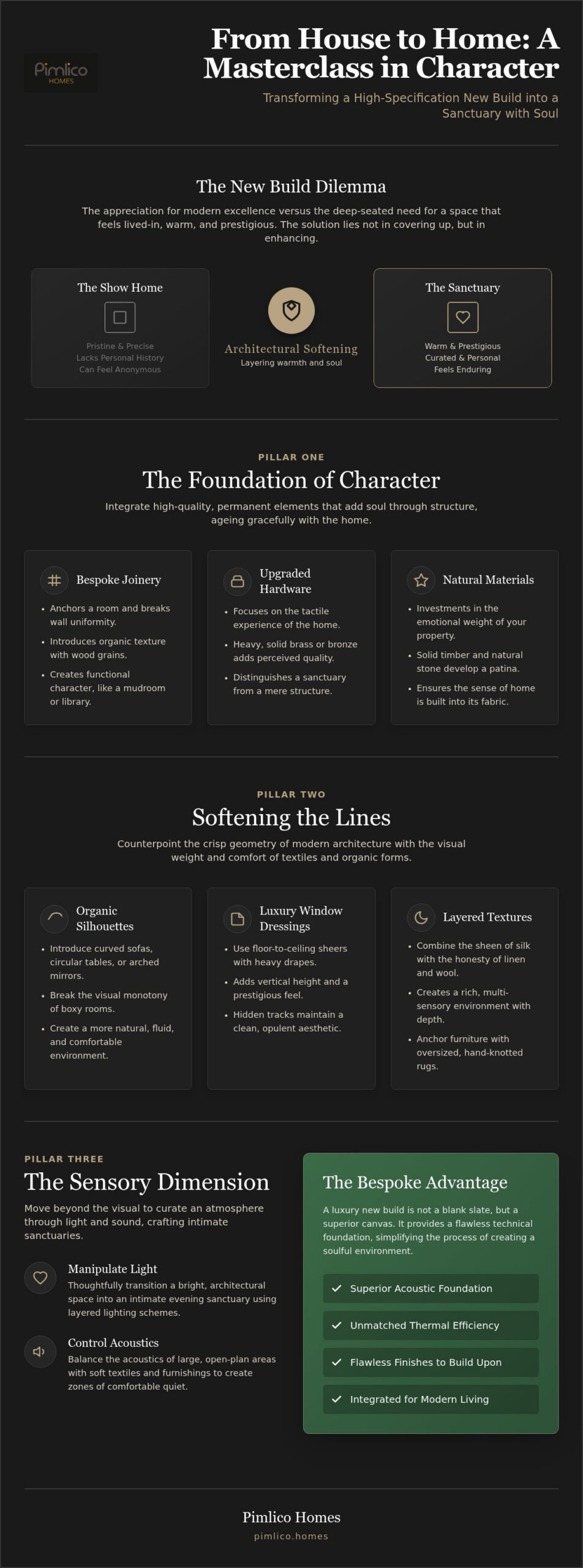
The secret to how to make a new build feel homely lies in a concept we define as architectural softening. This isn’t about covering up the modern structure; it’s about enhancing it with permanent, high-quality elements that feel as though they’ve always belonged. Whilst some might suggest temporary panelling or superficial fixes, a luxury property demands a more considered approach. You’re creating a bridge between the precision of contemporary construction and the tactile warmth of a legacy home. It’s a deliberate process of adding soul through structure.
Longevity is found in materials that age gracefully. Choosing solid timber for a built-in library or natural stone for a fireplace surround ensures that your home develops a patina over time. These aren’t just aesthetic choices; they’re investments in the emotional weight of your property. By focusing on functional character from the outset, you ensure that the sense of home is built into the very fabric of the building.
Bespoke Joinery and Cabinetry
Bespoke joinery is the most effective way to introduce a personal narrative into a new space. Custom-fitted wardrobes or alcove units don’t just provide storage; they anchor a room. They break up the uniformity of perfectly plastered walls by introducing the organic variation of wood grains and natural finishes. In our executive courtyard homes, we often see the value of an integrated mudroom. This space acts as a vital transition from the outdoors, grounding the house in its environment through functional, high-end craftsmanship.
Upgrading Internal Hardware
Details matter. The tactile experience of your home is often overlooked, yet it’s the most frequent point of contact for any resident. Replacing standard internal hardware with heavy, solid brass or bronze ironmongery changes the entire perception of a doorway. When you feel the weight of a well-crafted handle or the click of a high-specification tactile toggle switch, you’re experiencing a premium feel that signals quality amongst the broader modern aesthetic. These small, permanent choices are what truly distinguish a sanctuary from a mere structure.
Investing in these structural elements is the definitive answer to how to make a new build feel homely. It transforms a high-specification canvas into a space that reflects your personality through artistry and meticulous care.
Softening the Lines: The Power of Textiles and Organic Forms
The architectural precision of a modern property is undeniable. It’s the hallmark of a high-specification build. However, this crisp geometry requires a deliberate counterpoint. To understand how to make a new build feel homely, one must look to the interplay of textiles and organic forms. Softness doesn’t just add comfort; it provides the visual weight necessary to ground expansive, light-filled rooms. Scale creates prestige. Without these layers, even the finest architecture can feel somewhat clinical.
Colour palettes should flow naturally between open-plan zones to maintain a sense of calm. Instead of abrupt changes, use tonal shifts that guide the eye from the kitchen to the living area. This creates a cohesive narrative throughout the ground floor. Furniture choices also play a crucial role. Modern rooms can often feel boxy if every piece follows the lines of the walls. Introduce circular coffee tables, curved sofa backs, or arched mirrors to break the visual monotony. These silhouettes create a more natural, fluid environment that feels instinctively comfortable. When you choose one of our bespoke luxury homes, you start with a layout designed to accommodate these sophisticated interior layers.
Curating Luxury Window Dressings
Window treatments are more than just functional covers. They’re tools for defining a room’s scale and status. For a truly prestigious feel, opt for floor-to-ceiling sheers paired with heavy velvet drapes. This adds vertical height and softens the transition between the interior and the view outside. Hidden tracks or recessed pelmets maintain a clean aesthetic whilst providing an opulent finish. If you’re considering automated treatments, integrate them during the design phase for a seamless look that avoids visible wiring.
Layering Textures for Depth
A rich, multi-sensory environment relies on the careful mixing of materials. Combine the sheen of silk with the rustic honesty of linen and the warmth of wool. This layering creates depth that a flat surface simply cannot provide. In large executive living spaces, use oversized, hand-knotted rugs to anchor furniture groups. This prevents your sofas from “floating” in an open-plan zone and defines the purpose of each area. We often recommend a monochrome-texture approach. By using various textures within a single colour palette, you create a space that feels calm, cohesive, and deeply sophisticated without the distraction of high-contrast patterns. Details matter. It’s the subtle difference between a house and a sanctuary.
Moving Beyond the Show Home: Curating a Personal Narrative
A show home is designed to appeal to everyone, yet a home should reflect only you. To transcend the beautiful but anonymous atmosphere of a new property, you must adopt what we call the Collector’s Mindset. This philosophy suggests that a room shouldn’t look as though it was purchased from a single catalogue in one afternoon. Instead, it should appear as a curated assembly of items gathered over a lifetime. This layered approach is the definitive answer to how to make a new build feel homely. It creates a space that feels grounded in your personal history whilst enjoying the benefits of modern craftsmanship.
The art of curation lies in the balance between contemporary high-spec finishes and pieces with a past. When you place a curated antique or a vintage find against the pristine walls of a luxury new build, both elements are elevated. The modern finish highlights the character of the old, whilst the antique adds a sense of permanence to the new. This contrast prevents a home from feeling clinical and introduces the imperfection that is often missing in modern architecture. Displaying personal collections requires an intentional hand; group items by colour or material to maintain the architectural flow without creating clutter.
The Interplay of Old and New
Consider the dining room. A sleek, modern table provides a stunning focal point, but pairing it with mid-century or antique chairs introduces instant character. This juxtaposition is particularly effective in our executive courtyard homes, where the architecture provides a sophisticated backdrop for statement pieces. Don’t fear aged patinas. A weathered wood chest or a tarnished bronze sculpture adds a layer of soul that polished surfaces cannot replicate. These items act as conversational focal points, anchoring the room in a narrative that is uniquely yours.
Art and Sculpture in Modern Spaces
Scale is your most powerful tool in a high-ceilinged new build. Small frames can get lost on expansive walls, so prioritize large-format art to command the space. This creates an intentional gallery feel rather than a decorative afterthought. To elevate these pieces, use dedicated art lighting. Transitioning from general ambient light to focused spotlights on a painting or sculpture adds a museum-quality prestige to your daily environment. Don’t ignore the transition spaces. Hallways and landings are perfect galleries for sculpture, turning a simple walk between rooms into a sensory experience that celebrates your personal journey.
The Sensory Dimension: Lighting, Acoustics, and Atmosphere
True homeliness is often an invisible quality. It’s the way a room sounds as you enter it and how the light shifts as the day wanes. Whilst the structural perfection of a high-specification property is a distinct asset, the “echo” of a large open-plan space can feel distant if left unaddressed. Understanding how to make a new build feel homely requires a focus on these sensory layers. You’re moving beyond the visual to create an atmosphere that feels deeply personal and welcoming from the moment you step through the door.
Acoustics play a vital role in an executive environment. New builds are designed with exceptional thermal efficiency, but their hard surfaces can sometimes amplify sound. Strategic acoustic dampening is the solution. This involves more than just rugs; it’s about the density of your textiles and the placement of furniture to break sound waves. Scent and temperature are the final, often forgotten, dimensions of a sanctuary. A consistent, signature scent and a perfectly regulated climate signal a home that is cared for and ready for life. If you’re looking for a property that provides the perfect acoustic and thermal foundation, our luxury new build homes offer a superior canvas for these sensory details.
Mastering the Three Layers of Lighting
Lighting is the most powerful tool for changing the mood of a room. Too many downlights can create a clinical “office” feel that strips away character. Instead, you should layer ambient, task, and accent lighting. The transition from cool, architectural light used for daytime tasks to the warm, domestic glow required for the evening is essential. Use warm-dim technology to ensure that as you dim the lights, they shift towards a warmer, amber glow rather than just becoming a greyish version of themselves. Wall sconces placed at eye level are particularly effective. They “lower” the visual height of the ceiling in the evenings, creating an immediate sense of cosiness that feels grounded and intimate.
Acoustic Comfort and Warmth
Fabric wall coverings and heavy upholstery are essential for improving the “sound” of a modern interior. They absorb the sharp frequencies that can make a room feel cold. Even in a highly energy-efficient build, the psychological impact of a focal point fire cannot be overstated. It provides a visual and auditory rhythm that anchors the room. For those managing the unique challenges of high-ceilinged spaces, you can find further inspiration in our guide to Modern Barn Conversion Interiors. These principles of acoustic warmth ensure your home feels as prestigious as it looks. This methodical approach to the senses is the final step in how to make a new build feel homely.
The Bespoke Advantage: Starting with a Superior Canvas
Choosing a high-end developer ensures the architectural heavy lifting is already complete before you even collect the keys. Unlike standard developments that often feel repetitive, a bespoke build integrates character into the very floor plan. When you consider how to make a new build feel homely, the task is significantly easier when the foundation is designed for intimacy. Executive courtyard layouts are a prime example of this philosophy. They create natural privacy and frame intimate views that draw the eye inward, fostering a sense of seclusion that period properties often lack. You aren’t fighting against a featureless box; you’re working with a space designed for a sophisticated human experience.
High-specification builds provide a level of acoustic and thermal comfort that older houses simply cannot match. You don’t have to tolerate draughty windows, uneven floors, or thin walls to gain a sense of soul. Instead, you’re starting with a superior canvas that allows your interior layering to shine. This modern efficiency means your focus remains entirely on the aesthetic and emotional layers of your home. A new build doesn’t represent a lack of history. It’s the beginning of a bespoke legacy where every choice you make adds to a fresh, personal narrative that will endure for generations.
The Luxury of Space and Light
Grandeur is found in the volume and light of a room. Large windows and vaulted ceilings provide a sense of scale that traditional homes struggle to replicate without significant structural compromise. Our Luxury Detached Homes are designed to maximise this natural light, providing the ultimate privacy for a homely retreat. The flow of a modern layout is naturally more conducive to family life than the fragmented, dark plans of the past. It allows for a shared experience whilst still offering quiet, dedicated corners for reflection and rest.
Investing in Your Future Sanctuary
A luxury property is a long-term investment in both your lifestyle and your future security. It’s a commitment to quality and a statement of personal achievement that prioritises well-being. For those looking to understand the broader market and the benefits of modern construction, we recommend exploring The Ultimate Guide to Buying a Luxury New Build Home in 2026. This resource offers deeper insights into selecting a property that will age as gracefully as the memories you create within it. Your home is more than just a structure. It’s a sanctuary that respects your vision and supports your life’s journey from the very first day.
Crafting Your Bespoke Legacy
Transforming a high-specification property into a soulful sanctuary is a journey of deliberate layering. By embracing architectural softening through bespoke joinery and curating a personal narrative with a collector’s mindset, you move beyond the “show home” aesthetic. You’ve discovered that the secret of how to make a new build feel homely lies in the elegant intersection of modern precision and the human touch. It’s about manipulating light, softening acoustics, and choosing materials that age with grace.
At Pimlico Homes, we provide the superior canvas necessary for this transformation. With 25 years of high-end residential expertise, we specialise in executive detached and courtyard developments that redefine luxury living through bespoke craftsmanship. We ensure the structural foundations of warmth and character are present from the moment you receive your keys. Your home is more than a structure; it’s a testament to your journey and a guardian of your comfort.
Discover your perfect luxury canvas with Pimlico Homes and begin the process of building a space that reflects your unique vision and enduring legacy. We’re here to support you in creating a home that feels both prestigious and profoundly yours.
Frequently Asked Questions
How long should I wait before painting the walls of a new build house?
It’s standard practice to wait between six and twelve months before applying non-breathable paints to a new property. This settling period allows the high-specification plaster and modern building materials to dry out completely. Whilst you might notice minor hairline cracks as the structure settles, these are normal and easily addressed during your first redecoration. Waiting ensures that your chosen colours adhere perfectly to a stable, dry surface for a lasting, premium finish.
Can I add a fireplace to a new build if it does not have a chimney?
You can certainly introduce the warmth of a fireplace into a home without a traditional chimney by using bioethanol or high-end electric models. These modern solutions provide a sophisticated focal point without requiring extensive structural alterations. For a more permanent architectural feature, a balanced flue gas fire can be installed through an external wall. This adds a sense of heritage and domestic comfort that anchors a large, contemporary living space effectively.
What are the best ways to zone an open-plan new build for a cosier feel?
Zoning is best achieved through the strategic use of layered textures and varied lighting levels rather than physical partitions. Large, hand-knotted rugs are excellent for anchoring furniture groups, whilst bespoke joinery can subtly define a library or dining area. Using independent lighting circuits allows you to dim specific zones in the evening, creating intimate pockets of warmth. This methodical approach ensures your home feels purposeful and inviting whilst maintaining its grand, architectural flow.
How do I stop my new build home from feeling like a sterile show home?
The secret of how to make a new build feel homely is to move beyond the uniformity of a show home by introducing a personal narrative. Incorporate organic shapes, such as curved sofas or circular coffee tables, to counteract the straight lines of modern architecture. Layering different textiles and displaying a curated collection of art or books adds immediate soul. These human touches break the visual perfection and transform a high-specification house into a lived-in sanctuary.
Will adding traditional features like coving decrease the resale value of a modern home?
Adding high-quality architectural details like coving or bespoke cabinetry typically enhances a property’s prestige and market value. These features provide “architectural softening” that many discerning buyers find desirable in a modern home. The key is to ensure the craftsmanship matches the build’s quality and the style respects the room’s proportions. When executed with precision, these permanent enhancements signal a home that has been thoughtfully curated and maintained to an exceptional standard.
How can I improve the acoustics in a large, high-ceilinged new build?
Improving acoustics in a grand space requires the introduction of soft, sound-absorbing materials to dampen echoes. Heavy window dressings, such as floor-to-ceiling velvet drapes, and oversized upholstered furniture are highly effective. You might also consider fabric wall coverings or integrated acoustic panels that double as art. These elements absorb sharp frequencies, resulting in a quieter, more intimate atmosphere that feels solid and peaceful. This sensory layer is essential for a truly homely executive environment.
What type of furniture works best in a contemporary executive home?
Contemporary executive homes demand furniture that reflects the scale and quality of the architecture. Large-format pieces, such as modular sofas or substantial solid timber dining tables, suit the generous proportions of a new build. It’s effective to choose furniture with tactile, natural materials like stone, leather, and wool to add warmth. By selecting pieces with organic silhouettes, you create a sophisticated contrast with the building’s precise lines, ensuring the interior feels balanced and refined.
Is it possible to mix antique furniture with modern interior design?
Mixing antique pieces with a modern interior is a masterful way to demonstrate how to make a new build feel homely. This juxtaposition creates a “collector’s mindset” where the home feels as though it has been assembled over time. A single statement antique, such as a weathered chest or a classic armchair, adds a layer of history and soul to a pristine room. This blend of old and new ensures your home reflects a unique, personal journey rather than a temporary trend.


