
The legal process for buying a new build follows familiar steps, but the checks differ. Conveyancing covers the contract, searches and transfer of ownership; the luxury new build buying process also examines the development plans, access, services and future management costs. Exchange makes the purchase legally binding, while completion depends on the contract and when the property is ready.
It is natural to focus on a home’s design and finish, but the details behind the purchase matter just as much. An off-plan property, a changing build schedule and decisions about shared areas can all affect what happens between reserving a home and receiving the keys.
This guide explains how to set a realistic budget, arrange mortgage advice and instruct a solicitor, then outlines why new-build conveyancing needs particular attention. It also covers the steps after exchange, from remaining legal work to the final walkthrough and completion, so you can approach each stage with clarity.
Key Takeaways
- Set a budget that accounts for your deposit, legal fees and moving costs, then seek mortgage advice before reserving a home.
- Instruct a solicitor experienced in new builds to review the contract, plans, title and warranty while the property is being built.
- Ask your solicitor to examine development-specific details, including access, services, communal areas and any future management costs.
- Plan for completion around the home’s readiness, and keep funds and mortgage arrangements aligned with the contract timetable.
What happens between exchange and legal completion?
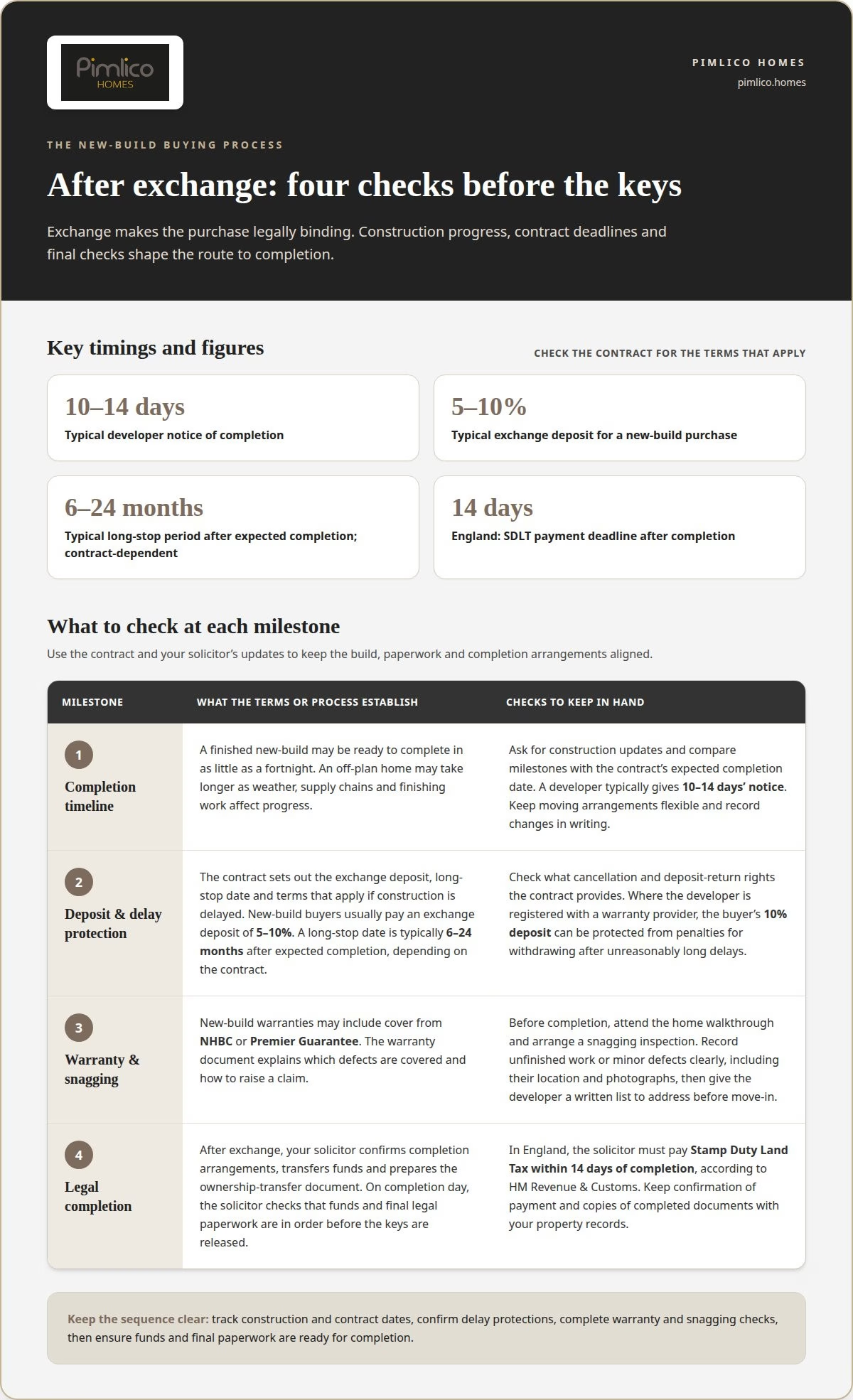
Exchange binds the purchase. Construction progress, contract deadlines and final checks then shape the route to completion.
-
Confirm the completion timeline
Ask for construction updates and compare each milestone with the contract’s expected completion date. A finished new-build home can be ready to complete in as little as a fortnight, while an off-plan home may take longer as weather, supply chains and finishing work affect progress. A developer typically gives 10-14 days’ notice of completion, so keep your moving arrangements flexible and track changes in writing.
-
Check deposit protection and long-stop dates
Read the contract for the exchange deposit, the long-stop date and the terms applying if construction is delayed. New-build buyers usually pay an exchange deposit of 5-10%; where a developer is registered with a warranty provider, the buyer’s 10% deposit can be protected from penalties for withdrawing after unreasonably long delays. A long-stop date is typically 6-24 months after expected completion, depending on the contract. Check what cancellation and deposit-return rights the document provides.
-
Arrange warranties and snagging checks
Review the warranty document to understand which defects it covers and how to raise a claim; new-build warranties may include cover from NHBC or Premier Guarantee. Before completion, attend the home walkthrough and arrange a snagging inspection to identify unfinished work or minor defects. Record each issue clearly, with its location and photographs, and give the developer a written list to address before move-in. These checks help distinguish cosmetic snags from matters requiring further attention.
-
Complete the legal deadlines
After exchange, ask your solicitor to confirm the completion arrangements, transfer funds and prepare the ownership-transfer document. On completion day, the solicitor confirms that the funds and final legal paperwork are in order before the keys are released. In England, a solicitor must pay Stamp Duty Land Tax within 14 days of completion, according to HM Revenue & Customs. Keep confirmation of payment and copies of the completed documents with your property records.
Instructing a solicitor
Instruct a conveyancing solicitor early so contract review and searches can progress alongside your mortgage application. England and Northern Ireland use SDLT, Scotland uses LBTT, and Wales uses LTT. The applicable calculation and filing deadline depend on the nation and transaction.
-
Choose a conveyancing solicitor
Choose a solicitor experienced in new-build purchases, then agree the scope of work and fees in writing. Ask how they will review the contract, title, plans, warranty documents and development obligations. Clarify which searches, inspections and other services are included, so the estimate reflects the work required.
-
Instruct a solicitor when reserving
Instruct your solicitor as soon as you reserve the property, rather than waiting for construction to finish. The reservation period gives the legal work time to progress alongside the purchase. Send the reservation document, property details and developer’s contract pack promptly. Ask your solicitor to note the reservation fee and deadlines, and raise unclear terms before committing to exchange.
- Coordinate the legal work with your mortgage application. Give your solicitor the lender’s details and promptly provide any requested identification, proof of funds and deposit information. Your solicitor checks the contract price, deposit and title deeds, while searches investigate matters such as ownership and access. Keep your mortgage adviser informed if the timetable changes, so the mortgage offer and legal preparations stay aligned.
- Ask for a clear timetable covering searches, contract review, exchange and completion. A completed new-build purchase typically takes 8-14 weeks from conveyancing instruction to completion. Your solicitor can also organise property surveys and explain which document records the transfer of ownership. Use each update to resolve outstanding questions, including the treatment of any guarantee or warranty paperwork. For a considered view of thoughtful home design, explore how the property’s details support your long-term plans.
Budgeting, mortgage advice and Agreement in Principle
Set your budget before reserving, then align the deposit, mortgage and purchase timetable. An Agreement in Principle helps shape your borrowing plan.
-
Set a budget and seek mortgage advice
List the deposit, legal fees and moving costs before deciding what you can comfortably spend. A deposit for a new-build home is commonly 10% of the purchase price, although a developer may request 10% to 30%. Ask a mortgage adviser to assess your finances and explain an Agreement in Principle, which estimates how much a lender may let you borrow.
- Use the Agreement in Principle as an early planning guide, not as a final mortgage offer. Give the lender accurate details of your income, commitments and deposit, and update your application if your circumstances change. Budget for more than the initial payment: legal costs and moving expenses are separate from the property deposit. Keep the reservation deadline in view so funding steps progress promptly.
- For an unfinished home, the lender assesses market value using the property’s plans and specifications. Send these details with your mortgage application and coordinate the valuation with your solicitor’s legal searches. Search findings and the lender’s assessment serve different purposes: searches investigate the property and site, while the valuation informs the lender’s decision. Resolve any questions before relying on the proposed borrowing.
-
Review the mortgage offer and deposit arrangements
Check the formal offer’s conditions, borrowing amount and expiry date before exchange. A mortgage offer for a UK new-build purchase is typically valid for 6 months; an extension is usually available for up to 3 months. Compare that period with the expected build timetable, because delays can leave the offer expiring before completion. Agree how the deposit will be paid, and have the required funds ready within the reservation period.
How new-build conveyancing differs from regular conveyancing
The legal process follows the same core steps as buying an existing home, but site-specific checks add complexity. Before exchange, ask your solicitor to examine the contract, plans, title, deposit, completion date, access, services and ownership-transfer terms.
-
Identify new-build conveyancing differences
Ask your solicitor to focus searches on the development as a whole, not just the individual plot. Checks may cover rights of access, sewerage, estate roads and arrangements for maintaining shared areas. An existing home usually has an established setting; a new build may sit within a developing site. Confirm which infrastructure and shared facilities will be ready at completion.
-
Ask the solicitor to check the contract
Request a clause-by-clause review of the purchase contract, plans and specification. Your solicitor should compare the promised layout and finish with the contractual documents, then explain your responsibilities and the developer’s. Clarify how the contract sets the completion date, payment structure, long-stop terms and transfer of ownership. Ask how it addresses changes to plans or delays, rather than relying on sales descriptions alone.
- Review future obligations before moving. For a development with shared spaces, understand how management works and which costs may arise. A new-build lease may run for 125 or 999 years, so examine its service obligations and management provisions. The precise legal structure affects both ongoing responsibilities and resale.
- Keep the distinction clear: conveyancing checks are familiar, but a new site introduces risks around planning permission, construction changes and incomplete roads or sewer connections. Ask your solicitor to record unresolved points and explain their effect before exchange. This gives you a clearer basis for planning completion and moving. Explore design-led home choices as you consider the setting and specification that suit your plans.
Pimlico Homes: Luxury Detached Homes
Pimlico Homes develops luxury new-build homes for buyers considering a considered purchase. Its Collection features the Altair, Eclipse and Redwood, each with its own architectural character. Pimlico Court is an exclusive courtyard development of traditionally built executive homes, while Brockbushes Farm is an upcoming development of luxury barn conversions. Explore the homes to see which style best suits your priorities.
Once your budget, mortgage advice and legal support are in place, comparing home styles can help connect practical needs with the design and setting you value. Consider what matters most in daily life, then explore homes that align with your plans.
Visit pimlico.homes to explore the homes, or contact Pimlico Homes to discuss your plans.
Choose a home that fits your next chapter
The next step is to turn practical requirements into a clear vision of how you want to live. Consider the setting, how rooms connect and which details will matter in everyday life. A well-planned luxury new build buying process leaves room for those choices, not just the transaction itself.
Pimlico Homes offers Luxury Detached Homes, Executive Courtyard Homes and Bespoke Luxury Homes. Each provides a different starting point for considering space, design and the character of your future home. Reflect on which option feels most aligned with your plans, then explore the homes with those priorities in mind.
When you are ready to discuss your next steps, contact Pimlico Homes about your new build. A considered choice today can help shape a home that feels right for years to come.
Frequently Asked Questions
Why is conveyancing more complex for a new build?
New-build conveyancing must account for a home and development that may still be taking shape. The solicitor needs to relate the plot plans to the wider site, including access routes, sewerage and shared areas. Buyers should also understand what happens if construction changes or the expected completion date moves. These site-specific details require additional scrutiny compared with the transfer of an established home.
What Causes Delays?
Construction delays can result from weather, supply-chain disruption or the time needed for quality finishing work. In the luxury new build buying process, progress may also depend on outstanding documents, site arrangements or confirmation that the property is ready. Ask for updates that identify affected work and revised milestones, rather than relying on a general estimate. A changed schedule can affect moving plans and mortgage arrangements.
What are the steps to buying a luxury new-build home in the UK?
The luxury new build buying process starts with setting your budget and obtaining mortgage advice, then choosing and reserving a property. Appoint a solicitor to review the contract, title, plans and development arrangements while completing the lender’s application. Resolve search and contract enquiries before exchange, when the purchase becomes binding. After exchange, prepare for the developer’s completion notice, final legal transfer and handover. Keep written records of decisions and deadlines.
What deposit is required to reserve a luxury new-build property in the UK?
The reservation document should explain what the fee secures, whether it is credited towards the purchase and the circumstances in which it may be returned. Check the payment deadline and recipient before paying, and distinguish this initial reservation payment from the larger deposit due at exchange.
What are the typical prices and extra costs when buying a luxury new-build?
The property price depends on the home and its specification. Purchase costs can include conveyancing, searches, mortgage-related charges, tax and moving expenses. Leasehold or managed developments may involve ongoing charges, while freehold estates can carry maintenance obligations. Set aside separate allowances for one-off transaction costs and future property expenses, and assess them against the contract documents rather than focusing on the purchase price alone.
How do reservation fees, exchange deadlines and completion dates work for new-build homes?
A reservation usually holds a property for 28 days, giving you time to progress the legal and mortgage work. The reservation document sets its own payment and deadline terms; the contract then defines exchange obligations and how completion is triggered. For a home still under construction, completion may depend on readiness rather than a fixed calendar date. Track written notices and ask your solicitor to explain any deadline changes.





