
Exchange is the turning point. In the UK, buyers usually pay a deposit of 10% of the purchase price when contracts are exchanged, although the amount can vary. The purchase becomes legally binding, so withdrawing afterwards can mean losing a deposit on a new build home.
It’s natural to focus on the sum you’ve paid and what might happen if construction or your mortgage is delayed. The detail that matters just as much is how your deposit is protected if the builder becomes insolvent: protection can depend on the arrangements in place, and some cases may be covered only up to the first 10%.
This guide explains what happens to your deposit after exchange, how delays and deductions can affect it, and what to check about deposit protection. It also covers how the longstop date and completion notices may shape your options if a new home is not ready on time, helping you approach this significant commitment with greater clarity.
Key Takeaways
- Separate the reservation fee from the exchange deposit, and understand what the agreement allows the developer to retain if the purchase does not proceed.
- Plan for legal, mortgage and construction delays, as an expired mortgage offer or missed completion deadline can alter your options.
- Read the contract’s longstop date and completion provisions carefully to understand the steps available if the home is delayed.
- Identify how your deposit is protected if the builder becomes insolvent, including any limits that apply to the cover.
Deposits required at exchange of contracts
A new-build reservation period is usually 28 days, with the developer setting the exchange timeline when you reserve. Use that window to complete conveyancing and agree the contract terms before committing.
-
Check reservation periods and exchange deadlines
Record the reservation deadline and proposed exchange date as soon as you reserve the property. In the UK, contracts are typically exchanged within the agreed reservation period, and the developer sets out the timeline at reservation. Compare those dates with progress on your mortgage application and conveyancing. Before exchange, a reservation agreement may offer limited certainty, so do not assume the purchase is secured. Treat the dates as deadlines to manage, not proof that the purchase is secured.
-
Complete legal checks before exchange
Ask your solicitor to complete the conveyancing checks before authorising exchange. Review the contract, purchase price, completion arrangements and any conditions that could affect your commitment. For a leasehold home, make sure you understand the lease terms and associated obligations. Resolve any questions about what the contract requires if construction or completion is delayed. Your lender’s mortgage offer should also match the property and purchase terms. Exchange only when the legal documents and funding arrangements align, because exchanging contracts makes the purchase legally binding.
-
Pay the deposit at exchange
Arrange the exchange deposit with your solicitor and confirm the required amount before the exchange date. Buyers usually pay 10% of the purchase price, although the amount can vary according to the agreement. The exchange deposit is paid a few weeks before completion, so distinguish it from any reservation fee already paid. Once contracts are exchanged, withdrawing can lead to financial penalties, including losing the deposit. Confirm the payment arrangements and contract terms with your solicitor before authorising exchange.
Risks from legal, mortgage and construction delays
Yes. If mortgage finance falls through after exchange, you may still be required to complete. If you cannot, the developer may retain your deposit under the contract. This is one way of losing a deposit on a new build home.
- Instruct your solicitor early. Local authority, environmental and drainage searches typically take 1-3 weeks, depending on the local authority. A mortgage valuation usually takes 5-10 working days from submission of the full application, while a complex mortgage offer can take 3-4 weeks. Start conveyancing promptly and track each deadline against the proposed completion date. Unfinished checks can delay exchange or leave less time to resolve issues before completion.
- Track the mortgage offer against the build programme. A typical UK mortgage offer is valid for 3-6 months, and construction delays can make it expire before completion. Ask your lender about the offer’s expiry date and the steps involved in extending it. For an off-plan purchase, completion follows notice that the home is finished, rather than a date fixed at exchange. The contract may require completion within 10 working days after the developer serves that notice.
- Respond quickly to a down-valuation. If the lender values a home below the agreed price, the mortgage may not cover the shortfall. Revisit your finances before committing to exchange, and discuss the valuation with your lender and solicitor. A lower valuation can affect affordability even if the purchase price remains unchanged.
- Keep communication and records organised. Send requested documents to your solicitor and lender promptly, and record changes to construction dates or mortgage terms. If delays threaten your mortgage offer, act before it expires rather than waiting for the completion notice. Losing a deposit on a new build home may be a risk if you cannot meet your contractual obligations, so make sure your property decision aligns with your finances and completion arrangements.
Reservation fees and possible deductions or retention
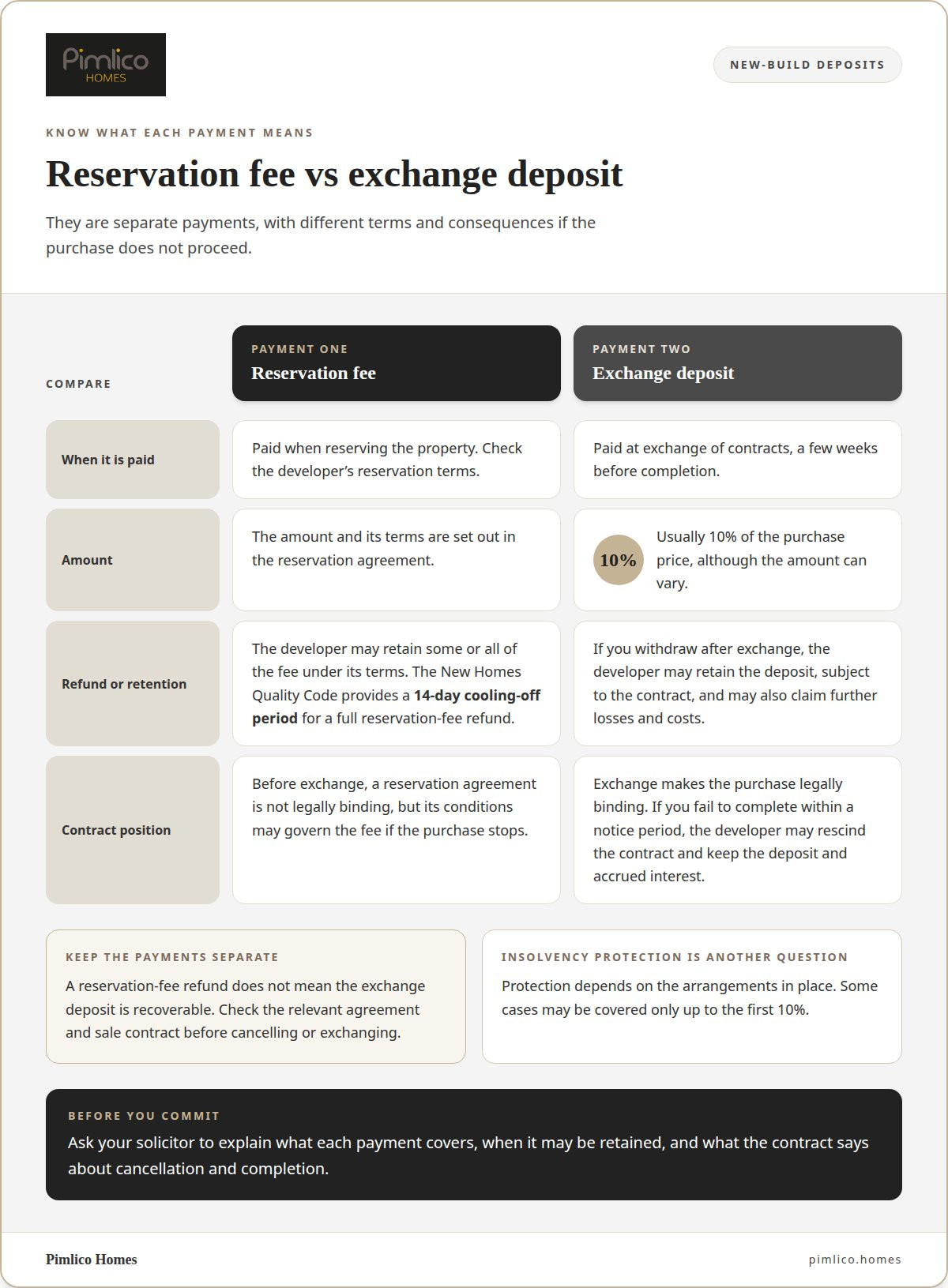
Distinguish the reservation fee from the exchange deposit: their refund terms and consequences may differ. Before cancelling, identify which payment the developer proposes to retain and the reason.
-
Check reservation fees and refund conditions
Compare the reservation fee and refund terms with the resale process. Check the agreed terms for what happens to an estate agent’s holding deposit if the sale does not proceed. For a new build, the developer may retain some or all of the fee under its terms. The New Homes Quality Code provides a 14-day cooling-off period for a full reservation-fee refund.
-
Review the reservation agreement and cancellation rights
Read the agreement’s cancellation clauses before reserving, including any cooling-off terms and circumstances in which deductions may apply. A reservation agreement is not legally binding before exchange, but its conditions may govern the fee if the purchase stops. Help to Buy or another funding scheme does not replace those terms: the agreement and sale contract set out the relevant cancellation and refund provisions. Treat the reservation fee separately from the later exchange deposit.
-
Check deposit forfeiture terms
Ask your solicitor to explain the sale contract’s consequences before exchange. If you pull out after contracts are exchanged, the developer may retain the exchange deposit, subject to the contract, and may also claim further losses and costs. If you fail to complete within a notice period, the developer may rescind the contract and keep the deposit and accrued interest. Do not assume that a reservation-fee refund means the exchange deposit is recoverable.
-
Dispute or recover a forfeited deposit
Request the developer’s reasons for retaining money in writing, then compare its explanation with your reservation agreement and sale contract. Gather payment records and correspondence, and discuss cancellation plans with a professional adviser. Where the Consumer Code for Home Builders applies, its Independent Dispute Resolution Scheme has a maximum award of £15,000. A dispute claim does not prevent further legal action. Snagging concerns alone do not establish a right to recover a deposit.
Deposit protection if the builder becomes insolvent
Before reserving or exchanging, establish what protection covers your deposit if the builder becomes insolvent. New-build warranties may protect the full deposit, although some cover only the first 10%.
-
Check deposit protection before reserving
Ask for the reservation terms and pre-purchase information pack, which developers must provide under the Consumer Code for Home Builders. Identify the warranty provider and the written terms covering your reservation payment if the builder fails. NHBC organises Buildmark warranties, and NHBC has over 20,000 builders on its register. A warranty’s existence alone does not show how much of your deposit is protected, so establish the applicable limit and conditions before paying.
Keep the reservation agreement and payment record together. These documents help distinguish the reservation fee from the larger sum you may later pay at exchange.
-
Confirm deposit protection before exchange
Before authorising exchange, have your solicitor review the contract and deposit protection documents. Confirm who holds the deposit, which insolvency events are covered, and whether protection applies to the full amount or only the first 10%. If the developer enters administration without adequate protection, an off-plan buyer’s deposit may be at risk. A warranty may also set conditions tied to the property being finished to its agreed specification, so understand what the cover addresses and any exclusions.
Keep the warranty certificate, contract and payment evidence with your conveyancing records. If the home is not completed, these documents can help clarify the protection and the process for making a claim. Do not assume a construction warranty automatically covers every deposit payment: its stated scope and limit matter. Establish those terms before exchange so you understand your exposure before committing.
Pimlico Homes
Pimlico Homes develops luxury new-build homes for buyers planning a significant investment in their next home. If you are weighing deposit protection alongside the property itself, keep the roles clear: your solicitor advises on contract terms and deposit risk, while your choice of home should reflect the design and living space you want.
Explore the available homes with your priorities in mind, whether you are considering a Luxury Detached Home, an Executive Courtyard Home, a Bespoke Luxury Home or a Luxury Barn Conversion. Considering the home and its purchase arrangements together can help you move forward with a clearer view of the commitment.
To discuss finding a home that suits your plans, contact Pimlico Homes.
Make your next move with clarity
The possibility of losing a deposit on a new build home can make the next decision feel weighty. Let that concern sharpen your preparation, not define the home you choose. Consider how the property will serve your plans over time, and base your legal and financial decisions on advice specific to your purchase.
A solicitor can explain your contractual obligations and deposit recovery options; choosing a home is a separate, personal decision. Give both the attention they deserve. A considered purchase brings together practical terms and the qualities that make a place feel distinctly yours.
To explore a home that could suit your plans, speak with Pimlico Homes about your purchase. Take the next step with care, and look ahead to the life you want your new home to hold.
Frequently Asked Questions
What Happens After Exchange?
After exchange, the purchase contract binds both buyer and seller to its terms. Your solicitor will progress the transaction towards completion in line with the contract. For an off-plan home, the completion date is not fixed at exchange; completion is arranged after the developer gives notice that the property is finished. Keep your lender informed if construction timing changes.
How long does a reservation last?
A new-build reservation period is usually 28 days, with the developer setting out the exchange timeline when you reserve. The reservation agreement is not legally binding before exchange, so it does not itself secure the purchase to completion. If conveyancing or mortgage work is progressing, most developers will grant an extension of 1-2 weeks. Get any revised deadline agreed and recorded.
Is the Reservation Fee Refundable?
A reservation fee is refundable during the 14-day cooling-off period under the New Homes Quality Code. After that, the agreement’s terms determine whether the developer can retain some or all of the fee if the purchase stops. If you complete, the fee is deducted from the final purchase price. Read the cancellation and refund clauses before reserving, rather than assuming every payment follows the same rules.
What If You Can’t Exchange in 28 Days?
If you cannot exchange within 28 days, ask for an extension before the reservation deadline passes. Most developers will grant 1-2 weeks when buyers are clearly making progress, but an extension is not automatic. Explain what remains outstanding, such as mortgage arrangements or conveyancing checks, and obtain the revised deadline in writing. Continue progressing the purchase; the reservation agreement is not binding before exchange.
What happens after you reserve a home?
After reservation, the developer provides a pre-purchase information pack within the reservation terms under the Consumer Code for Home Builders. The pack and reservation agreement set out key information and the exchange timeline. Your solicitor can begin conveyancing while your lender progresses the mortgage application. The agreed purchase price is fixed in most cases, subject to the reservation agreement’s terms.
When do you pay a deposit on a new build?
You usually pay the exchange deposit when contracts are exchanged, rather than when reserving the home. This is normally a few weeks before completion. Keep the reservation fee distinct: if you complete, it is deducted from the final purchase price. Ask your solicitor to confirm the amount and payment arrangements in time for exchange, and keep a record of the transfer.





