
A pristine show home is a masterpiece of staging, yet the true soul of a property lies in the integrity of its creator. You’ve likely felt that nagging doubt whilst scrolling through glossy brochures; is this excellence permanent, or merely a polished veneer? Understanding how to research a developer’s reputation online is no longer a casual task. It’s a vital act of stewardship for your future and your finances. It’s perfectly natural to feel a sense of unease when faced with curated reviews and high-end marketing that might mask structural mediocrity. You deserve a home that reflects your standards, built by those who value longevity over a quick sale.
We’ve designed this masterclass to transform your anxiety into an informed, quiet confidence. You’ll learn to navigate the 2026 Contractual Control Register and decipher planning histories that reveal a builder’s true consistency. We’ll provide a definitive checklist for verifying credentials and teach you how to distinguish between authentic feedback and manufactured praise. This guide provides the clarity needed to identify red flags in a digital footprint, ensuring your next residence is a sanctuary of quality and enduring value.
Key Takeaways
- Master the art of how to research a developer’s reputation online by looking beyond the polished facade of marketing brochures to find authentic proof of quality.
- Utilise official public registries to verify the financial health and historical performance of any builder before committing to a significant investment.
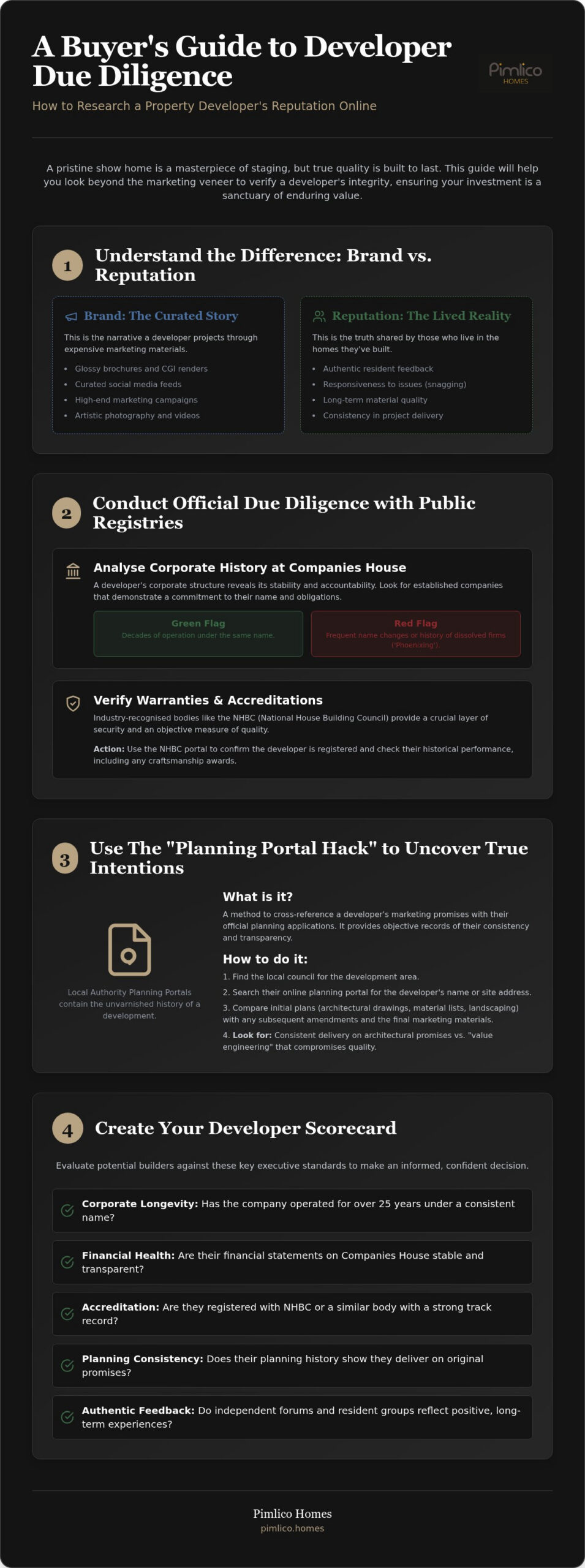
- Discover the “Planning Portal Hack” to uncover objective records of whether a developer consistently delivers on their original architectural promises.
- Learn to distinguish between curated testimonials and genuine organic feedback to ensure your future home is crafted with true integrity.
- Create a bespoke Developer Scorecard to evaluate potential builders against high executive standards and long-term value.
The Weight of Reputation in the Luxury Property Market
Reputation is the invisible foundation of every luxury home. It’s the silent assurance that the meticulous joinery and bespoke finishes seen in a showroom will manifest in your private residence. In 2026, the “New Build Narrative” requires a more discerning eye than ever before. To truly understand the development process, one must look past artistic renders and delve into the historical performance of the builder. Learning how to research a developer’s reputation online is the first step in protecting a significant life investment. It ensures the architectural reality eventually matches the marketing promise.
The Distinction Between Brand and Reputation
Brand is the story a developer tells through expensive photography and curated social media feeds. Reputation, conversely, is the narrative shared by those who have lived within the walls they built. Whilst high-end aesthetics are essential, they don’t always guarantee high-specification construction or attentive aftercare. Longevity serves as the ultimate arbiter of quality. A developer with a 25-year heritage demonstrates a commitment to excellence that far outweighs a temporary marketing campaign. Their digital behaviour provides a window into their operational integrity, specifically regarding:
- Historical transparency in planning applications and land use.
- Responsiveness to resident feedback and snagging requests on social platforms.
- Consistency in delivering promised communal amenities across various sites.
- The longevity of materials used in previous executive developments.
It’s the difference between a house built for a season and a home built for a lifetime. A visionary creator doesn’t just sell a property; they act as a reliable guardian of quality for years after the keys are handed over.
The Financial Impact of a Developer’s Standing
The prestige of a developer isn’t merely a matter of social standing; it’s a tangible economic factor. A builder’s track record directly influences the resale value of luxury new build homes across the country. Mortgage lenders and surveyors often look more favourably upon executive developments from established names. These properties tend to maintain their allure through shifting market cycles. When you master how to research a developer’s reputation online, you’re not just choosing a house. You’re securing an asset. Meticulous due diligence ensures that your capital is placed in a development of true distinction, where the resale potential is as robust as the brickwork itself. Choosing a builder with a proven history of craftsmanship provides an emotional security that no glossy brochure can replicate.
Official Due Diligence: Using Public Registries
Digital due diligence begins with the hard facts stored within official government and industry databases. Whilst social media offers a glimpse into the aesthetic, public registries provide the structural truth of a business. Knowing how to research a developer’s reputation online involves a forensic look at the entities behind the brand. These official records act as a shield, protecting you from the polished facade of less scrupulous builders.
Analysing Corporate Longevity
The Companies House register is an essential tool for any discerning buyer. By searching for the developer’s registered name, you can view their financial statements and the tenure of their directors. Longevity is a hallmark of excellence. A company that has operated under the same name for decades demonstrates a level of accountability that newer, transient entities often lack. Be wary of frequent name changes or directors who jump between multiple dissolved firms. Phoenixing is the strategic liquidation of a debt-burdened company followed by the immediate creation of a new entity to continue the same trade whilst abandoning previous legal and financial obligations. This behaviour leaves homeowners without recourse if structural issues arise years later. Universal principles of vetting contractors suggest that a transparent corporate history is the most reliable indicator of future integrity.
Warranty and Accreditation Checks
Industry-recognised warranties provide the security needed for such a significant life investment. The NHBC (National House Building Council) portal allows you to verify a developer’s historical performance and whether they consistently win awards for craftsmanship. A high rating here isn’t just a badge; it’s a promise of structural insurance. It’s also vital to confirm the developer’s specific expertise matches your vision. If you’re captivated by the refined rural aesthetic of modern barn conversion interiors, ensure the developer has a documented history of such complex, bespoke projects. Meticulous vetting at this stage ensures that your home is built by specialists who understand the nuances of high-specification construction. Reviewing a developer’s portfolio of executive courtyard homes can help you visualise the standard of artistry you should expect. Compliance with the Consumer Code for Home Builders further guarantees that you’ll be treated with the warmth and professionalism you deserve throughout the process.
Navigating the Digital Footprint: Reviews vs. Reality
A developer’s digital presence is often a carefully managed gallery, designed to evoke an aspirational lifestyle. Yet, the true test of their craft lies in the unfiltered digital footprint left by those who inhabit their creations. Mastering how to research a developer’s reputation online requires you to look beyond the star-rating widgets. You must find the authentic voices amongst the noise. True excellence doesn’t hide behind a high-end facade; it stands up to the scrutiny of the lived experience.
Review patterns. A study in consistency.
Digital testimonials sit within a hierarchy of trust. Artificially inflated ratings are often easy to spot. Look for sudden surges of five-star reviews over a short period, which can indicate a co-ordinated PR push. Instead, seek out consistent patterns over several years. A single negative comment about a minor delay is rarely a concern. However, twenty reviews detailing the same structural snagging issue suggest a systemic failure in quality control. Pay close attention to how a builder responds to public criticism. A developer of true distinction addresses concerns with warmth and professional accountability rather than defensive generic scripts. For a deeper look, search YouTube or TikTok for “snagging” videos. Professional inspectors often film their walkthroughs of specific development styles, providing a raw look at what sits behind the plasterboard.
Social evidence. Unfiltered architectural reality.
Instagram and Pinterest are more than just mood boards; they are tools for visual verification. Use location tags to find unfiltered photos shared by current residents. These images offer a “visual snagging” opportunity that no marketing brochure will provide. Compare the original marketing CGIs with the real-life architectural execution. Look specifically at the background of these photos. Notice how the landscaping has matured or how the exterior materials are weathering. High-specification construction should retain its lustre years after completion. Patterns of poor drainage or premature stone staining in resident photos are significant red flags. You can also find “community” groups on platforms like Facebook or Reddit. These private forums are where residents discuss the reality of their client care experience. They provide an honest perspective on whether the developer remains a reliable guardian of quality once the final payment has cleared.
The Planning Portal Hack: Uncovering the Truth
Whilst reviews offer a subjective lens, local planning portals provide an unvarnished, legal record of a developer’s history. These digital archives are the most objective way to verify whether a builder’s actions align with their glossy marketing. Understanding how to research a developer’s reputation online through these portals reveals the technical reality behind the “high specification” claims. By examining architectural drawings and technical specifications, you can see if the promised premium materials are actually mandated in the approved plans. It’s a masterclass in due diligence that separates visionary creators from volume-driven housebuilders.
How to Search Local Planning Portals
Begin by identifying the planning history of previous projects, such as the developer’s earlier executive courtyard homes. Most local authority websites allow you to search by developer name or specific site addresses. Once you’ve located a past application, look specifically for the “Discharge of Conditions” documents. These files confirm whether the builder followed environmental, safety, and architectural rules set by the council. They represent a developer’s commitment to the finer details of the law and the land.
Pay close attention to “Non-Material Amendments” or “Section 73” applications. These often indicate changes made during the construction phase. Whilst some are benign, a pattern of swapping high-end materials for cheaper alternatives is a significant red flag. It suggests a prioritisation of profit over the artistry and longevity promised at the outset. A developer of true integrity maintains the essence of their original vision. They don’t cut corners when the public eye isn’t looking.
Reading the Public Comment Section
The public comment section is a goldmine for those who know how to interpret it. You’ll need to distinguish between standard NIMBYism and genuine concerns regarding developer behaviour. Look for recurring complaints about boundary disputes, damaged local infrastructure, or broken promises regarding communal amenities. If neighbours frequently mention a lack of communication or disregard for site safety, it’s likely this attitude extends to their client care. These documents reveal the emotional and social weight a development carries within its local context.
Use this data to form specific, pointed questions for your sales representative. Ask them to explain why certain amendments were sought or how they resolved specific neighbour disputes. Their transparency in these moments is a true test of their professional standing. For those seeking a home built with uncompromising standards, exploring our collection of luxury detached homes provides a benchmark for what true excellence looks like in practice.
The Final Checklist: Making an Informed Decision
The journey of digital due diligence culminates in a moment of clarity. By now, you understand how to research a developer’s reputation online through digital forensics and public records. The final step is to consolidate these fragments into a “Developer Scorecard”. This structured approach allows you to move beyond emotional attraction and evaluate a builder on their operational integrity. A developer of true distinction, like Pimlico Homes, welcomes this level of scrutiny. Transparency isn’t a hurdle; it’s the ultimate proof of a builder’s professional standing and heritage.
- Corporate Vitality: Does the developer have a documented history of at least 25 years under the same name?
- Technical Alignment: Do the planning portal records confirm a consistent use of high-specification materials?
- Resident Sentiment: Is there a pattern of professional, warm responses to public snagging concerns?
- Warranty Assurance: Are the NHBC ratings and structural insurance policies current and comprehensive?
The In-Person Verification Walkthrough
Digital findings provide the map, but a physical visit provides the landscape. Visit a development that was completed three or four years ago. This timeframe is critical. It’s when the initial polish fades and the true quality of construction begins to speak. Observe the communal areas. Are they meticulously maintained, or do they show signs of neglect? Examine the external brickwork and joinery for premature weathering. If you encounter a resident, a brief, polite conversation can be illuminating. Ask if the builder remained a reliable guardian of quality after the keys were handed over. Their unfiltered perspective is the final piece of the reputation puzzle.
Choosing a Developer with Quiet Confidence
True luxury is found in the details that aren’t immediately visible. A premier luxury home builder often maintains a focused portfolio rather than chasing mass-market volume. This exclusivity allows for a more intimate connection between the visionary creator and the end user. One of the most significant indicators of quality is whether a developer manages their own construction teams rather than outsourcing to transient subcontractors. This internal control ensures that executive standards are met at every stage of the build.
Walk away from any purchase where the developer is evasive about their past projects or where “phoenixing” red flags appear in their corporate history. Your home is one of the most significant life investments you’ll ever make. It should be crafted by those who value longevity and artistry over a rapid turnover. Ultimately, a home is more than a structure; it is the legacy of the person who built it. By following this masterclass in due diligence, you ensure that your legacy is one of permanence, security, and refined excellence.
Securing Your Architectural Legacy
True discernment in the property market requires looking beyond the immediate allure of a show home. You’ve now mastered the essential techniques for digital due diligence, from forensic searches on official registries to uncovering the technical truths hidden within planning portals. Knowing how to research a developer’s reputation online transforms an emotional aspiration into a secure reality. It ensures that the person crafting your sanctuary values longevity as much as you do. A home is a significant life investment; it deserves the protection of a meticulous and informed choice.
A residence of true distinction is the result of decades of dedication. We invite you to Explore the Heritage of Pimlico Homes and witness the results of 25 years of architectural excellence. Our portfolio of distinguished courtyard developments and specialists in bespoke luxury detached living reflect a deep commitment to artistry and long-term satisfaction. Choosing a builder with a proven history provides the quiet confidence that your investment will endure for generations. Your future residence should be a testament to excellence, built by those who view construction as a lifelong craft and a reliable guardian of quality.
Frequently Asked Questions
Is a 10-year structural warranty enough to prove a developer’s reputation?
A 10-year structural warranty is a baseline requirement rather than a definitive proof of excellence. Whilst it provides essential protection against major defects, it doesn’t reflect the artistry or the meticulous attention to detail found in high-specification builds. You must look for a developer with a 25-year heritage to ensure that the craftsmanship within your home matches the structural promises made in the documentation. True reputation is found in the longevity of the business itself.
How can I tell if a developer’s online reviews are fake or manipulated?
Identifying manipulated feedback requires a keen eye for patterns and generic language. When you learn how to research a developer’s reputation online, you’ll notice that authentic reviews often contain specific details about the buying process or named staff members. Sudden surges of five-star ratings over a few days are often a sign of co-ordinated digital PR. Seek out consistent, organic feedback that spans several years to get a true sense of the builder’s integrity.
Where can I find a developer’s history of planning disputes?
Planning disputes are recorded within the public archives of local authority planning portals. You can search these databases using the developer’s name or the addresses of their previous executive courtyard homes. Look for the “Public Comments” and “Officer Reports” sections to find objections from neighbours or disagreements with council planners. These documents offer an unvarnished view of how a builder conducts themselves within a community and whether they respect local architectural standards.
Does a developer’s financial health affect my home’s warranty?
A developer’s financial stability is critical because it underpins their ability to honour aftercare promises and snagging requests. Whilst structural insurance policies are typically independent, a developer who faces insolvency or practices “phoenixing” leaves homeowners without a direct point of contact for minor repairs. Checking Companies House for active directors and stable accounts is a vital part of your due diligence. It ensures the builder remains a reliable guardian of your investment for years to come.
What should I look for when visiting a developer’s older projects?
When visiting established developments, observe how the exterior materials have weathered over three to five years. High-quality stone and timber should retain their character rather than showing signs of premature staining or rot. Pay close attention to the maintenance of shared landscaping and the condition of the road surfaces. Striking up a polite conversation with a resident can reveal if the developer maintained their executive standards once the final property on the site was sold.
Can I trust a developer who has only been operating for a few years?
Trusting a builder with a short operational history carries inherent risks that a 25-year industry veteran avoids. A new entity lacks a long-term portfolio to prove their construction methods can stand the test of time. Whilst they may offer modern designs, they haven’t yet demonstrated the corporate longevity required to navigate complex structural issues. For a significant life investment, the security provided by an established name with a proven heritage is often the more prudent choice.
How do I research the reputation of a bespoke home builder vs a volume builder?
Researching a bespoke builder requires a focus on their specific portfolio rather than mass-market review sites. Volume builders often have a high quantity of reviews that may not reflect the individual care given to a high-end project. When you explore how to research a developer’s reputation online for bespoke homes, focus on their history of complex projects like luxury barn conversions. These unique builds require a level of craftsmanship and architectural intuition that volume builders rarely possess.
What is the most important “red flag” when researching a developer online?
The most significant red flag is a pattern of frequent company name changes or dissolved entities associated with the same directors. This behaviour, often called “phoenixing”, suggests a developer is avoiding their long-term liabilities to homeowners. If a builder has a fragmented corporate history on Companies House, it’s a clear signal to walk away. A reputable developer maintains a transparent and consistent corporate identity, standing proudly behind every property they have crafted over their entire career.





