
A luxury home isn’t defined by its structural walls, but by the soul breathed into them long before the foundations are poured. Vision. It’s the silent architect of true prestige. When you’re finding an interior designer for a new build, you’re searching for more than a decorator; you’re seeking a guardian of your lifestyle. You’ve likely felt the weight of the blank canvas, that quiet anxiety that your bespoke luxury home might lack a cohesive identity or fail to integrate with the developer’s technical requirements. It’s a valid concern. Without a master’s touch, even the most expensive materials can feel cold and disconnected from the person they’re meant to house.
This guide provides the clarity you need to select a world-class partner who understands the intricate dance between architecture and artistry. We’ll explore the essential criteria for choosing a visionary who coordinates seamlessly with your builder, protects your property’s long-term value, and crafts a living space that’s an unapologetic reflection of your personality and heritage. Master the selection process and elevate your structure into a bespoke sanctuary that commands both respect and lasting comfort.
Key Takeaways
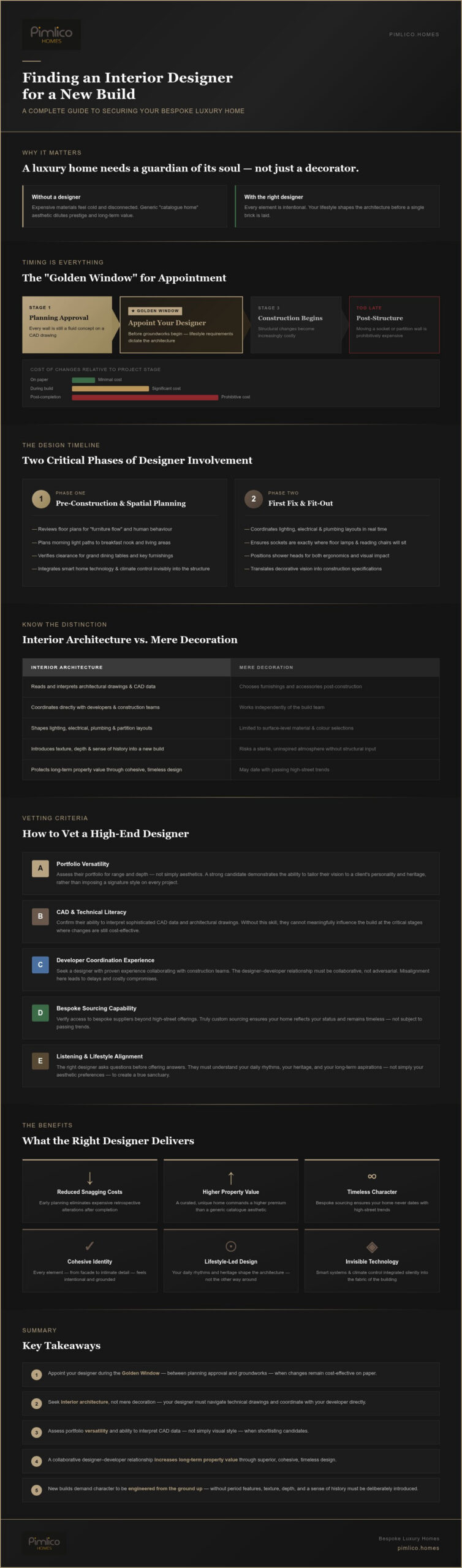
- Identify the “Golden Window” for appointment, ensuring your designer influences the project whilst changes are still cost-effective on paper.
- Master the nuances of finding an interior designer for a new build who can navigate the technical complexities of architectural drawings and developer coordination.
- Distinguish between interior architecture and mere decoration to secure a partner capable of handling the structural demands of bespoke luxury homes.
- Refine your selection process by assessing a portfolio’s versatility and a candidate’s ability to interpret sophisticated CAD data.
- Understand how a collaborative relationship between your designer and developer increases long-term property value through superior, cohesive design.
The Role of Interior Design in New Build Construction
The search for a strategic partner begins with finding an interior designer for a new build who understands the intersection of architectural intent and lived experience. A luxury home is more than a sequence of technical drawings; it’s a vision of a future lifestyle. In this journey, the designer acts as a guardian of the home’s soul. Whilst a developer provides the precision of the structure, the designer ensures that every square metre serves a purpose that resonates with your personal narrative. This collaboration should ideally begin before the first brick is laid.
The “blank canvas” paradox is a significant challenge for many owners. When every wall, floor, and fixture is a choice yet to be made, the sheer volume of options can become overwhelming. Professional curation transforms this infinite potential into a cohesive reality amongst a sea of possibilities. It’s the difference between a house filled with expensive items and a bespoke sanctuary where every element feels intentional and grounded.
Why New Builds Demand a Different Approach
Unlike a heritage renovation, a new build offers no existing period features to dictate the aesthetic. Character must be engineered from the ground up. This requires a professional who understands how to introduce texture, depth, and a sense of history into a space that is entirely contemporary. Finding an interior designer for a new build who possesses this specific vision is essential for avoiding a sterile, uninspired atmosphere.
Their influence extends far beyond the surface. A skilled professional reviews lighting, electrical, and plumbing layouts whilst they are still flexible on paper. They ensure a floor lamp has a socket exactly where a reading chair will sit, or that a shower head is positioned for both ergonomics and visual impact. Interior architecture is the bridge between structure and style.
The Financial Logic of Professional Design
Investing in design early is a calculated financial decision. It significantly reduces the need for “snagging” changes or retrospective alterations, which are notoriously expensive once the build is complete. By resolving the fine details during the planning stage, you protect your budget from the costs of indecision and structural rework.
Superior design also has a direct impact on the long-term value of luxury detached homes. A property that feels curated and unique commands a higher premium than one that suffers from a generic, “catalogue home” aesthetic. Bespoke sourcing ensures your home reflects your status and remains timeless, rather than dating with the passing trends of the high street. This meticulous care ensures that your investment grows in both emotional and financial weight over time.
When to Appoint Your Designer: The Timeline of Luxury
The most successful residential projects are born in the quiet moments before construction begins. Timing is the invisible foundation of luxury. There exists a “Golden Window” for design. This is the precise period between receiving planning approval and the first strike of a spade into the earth. At this stage, every wall and every window is still a fluid concept on a CAD drawing. Finding an interior designer for a new build during this window ensures that your lifestyle requirements dictate the architecture, rather than the architecture compromising your lifestyle. Waiting until the structure is upright often leads to a series of compromises that can dilute the prestige of your investment.
Late appointment carries tangible risks. Once the concrete is poured and the timber frames are set, the cost of moving a socket or adjusting a partition wall becomes prohibitive. You may find your lighting options restricted by ceiling heights that were decided without a decorative scheme in mind. For those investing in bespoke luxury homes, early collaboration ensures that the vision remains coherent from the external facade to the most intimate internal detail.
Phase 1: Pre-Construction and Spatial Planning
During the pre-construction phase, a designer reviews floor plans with an eye for “furniture flow” and human behaviour. They consider how you will move through the space on a daily basis. Will the morning light hit the breakfast nook as intended? Is there sufficient clearance for a grand dining table? This is also the moment to integrate smart home technology and climate control into the fabric of the building. By planning these systems early, they remain invisible guardians of comfort rather than unsightly afterthoughts that clutter the walls.
Phase 2: The First Fix Coordination
The “first fix” is the point of no return for a home’s internal nervous system. This is when your designer must speak directly to the electrician and plumber. They coordinate lighting circuits with your specific furniture layouts, ensuring that floor lamps and accent lights have power exactly where they are needed for maximum atmosphere. This level of meticulous care is particularly vital for executive courtyard homes, where the interplay between indoor and outdoor views must be perfectly aligned. Bespoke joinery, such as library shelving or walk-in wardrobes, should also be finalised now. This allows the builder to prepare the structural openings with millimetre precision, resulting in a finish that feels permanent and purposeful.
Defining Your Requirements: Interior Architecture vs. Decoration
Understanding the distinction between interior architecture and decoration is pivotal when finding an interior designer for a new build. While the terms are often used interchangeably, they represent two distinct disciplines that must work in harmony to achieve a world-class finish. Interior architecture focuses on the structural and functional elements of the internal space. It’s about the permanent bones of the home. This includes the selection of stone for a kitchen island, the engineering of a cantilevered staircase, or the intricate design of coffered ceilings. These decisions are made long before a single cushion is selected.
In the context of luxury barn conversions, this architectural sensitivity is even more critical. These projects require a designer who can respect the original volume of the building whilst introducing modern functionality. It involves navigating the complexities of exposed timber frames and vaulted heights without losing the intimacy of a home. For high-specification new builds, the designer ensures a seamless “flow” from room to room. Transitions between materials must feel effortless and logical. A designer manages several critical “hard finishes” during this phase:
- Bespoke cabinetry and integrated kitchen solutions
- High-specification flooring, from wide-plank oak to honed marble
- Architectural stonework for fireplaces and wet rooms
- Intricate ceiling details and internal door specifications
The Scope of Interior Architecture
Interior architecture involves mapping out internal elevations with surgical precision. It’s the process of defining how light interacts with different surfaces and how integrated storage solutions can disappear into the walls. By selecting permanent materials like hand-finished timber or bespoke stonework, the designer establishes a sense of longevity. These elements are the heritage of the future. They are the fixed points around which the rest of the home’s life will revolve, ensuring the structure feels grounded and intentional.
The Art of Interior Decoration
Once the architectural bones are set, the focus shifts to the art of decoration. This is the layer of the home that evokes emotion and warmth. It involves the careful layering of textures, fabrics, and art to create a space that feels lived-in and prestigious. When finding an interior designer for a new build, look for someone who avoids fleeting trends in favour of unique pieces that reflect your personal history. This approach ensures your residence doesn’t look like a generic executive courtyard home, but rather a curated collection of your life’s successes. A cohesive colour palette acts as the final thread, tying disparate spaces into a singular, harmonious narrative.
The Selection Process: How to Vet a High-End Designer
Vetting a partner for your residence requires a methodical approach. It’s about finding an interior designer for a new build who possesses both the artistic vision and the technical rigour to see it through. This selection is one of the most significant decisions you’ll make. It determines whether your home feels like a series of rooms or a unified masterpiece. A world-class designer must be a visionary, a manager, and a technical expert all at once.
The process begins with a rigorous portfolio review. Look for versatility amongst previous new build projects. A designer who only produces one “look” may struggle to adapt to the unique architectural language of your specific site. Technical competency is equally vital. Your designer must be fluent in architectural CAD drawings. If they cannot interpret a structural plan, they cannot effectively collaborate with your construction team. This technical bridge ensures that the design intent is never lost in translation during the build.
Clarity on fee structures is the hallmark of a professional. Most high-end designers operate on either an hourly rate or a percentage of the total project spend. Understanding these nuances early prevents friction later. Finally, assess their communication style. They must be able to collaborate effectively with a luxury home builder. A designer who views the developer as an adversary rather than an ally will inevitably cause delays. When exploring our bespoke luxury homes, consider how a designer’s technical proficiency will mesh with our established high-end construction standards.
Questions to Ask During the Initial Consultation
Preparation is key to a successful meeting. Ask how they handle the transition from the developer’s standard specification to bespoke finishes. This reveals their ability to manage detail. Inquire about specific examples where they influenced the architectural layout of a new build before the first fix. Their answer will demonstrate whether they are a true interior architect or merely a decorator. Finally, ask how they manage the procurement and logistics of rare or international materials. A designer who lacks a robust supply chain can easily become a bottleneck in a complex construction timeline.
Assessing the “Creative Fit”
Creative alignment is the final piece of the puzzle. Does their favourite aesthetic align with your own vision of refined luxury? They should be comfortable working within the parameters of exclusive residential developments where standards are uncompromising. Most importantly, choose a designer who listens more than they lecture. A true master craftsman understands that while they provide the expertise, the home must ultimately be a sanctuary for the person who lives within it. Precision is paramount. Artistic synergy is the goal.
Synergising with Your Developer: The Pimlico Homes Approach
Vision meets reality. At Pimlico Homes, we recognise that finding an interior designer for a new build is only half the journey. The other half is ensuring that professional can work within the technical framework of a high-end construction site. We don’t view external designers as intruders; we view them as essential collaborators. Our bespoke luxury homes serve as the ultimate canvas for their artistry. This partnership ensures that executive excellence isn’t just a goal. It’s the inevitable result of two experts working in tandem to protect your investment.
Our focus on high-quality craftsmanship provides a superior baseline. When a designer enters one of our luxury detached homes, they find structural precision that matches their own exacting standards. This mutual respect for quality eliminates the friction often found in standard developments. We provide the technical data and site access required for your designer to flourish. This unified front ensures the final residence is a bespoke sanctuary that transcends the ordinary, reflecting your status with quiet confidence.
Collaborating on Bespoke Barn Conversions
Historic structures present a unique set of challenges that require delicate handling. When we undertake luxury barn conversions, our role is to preserve the heritage charm whilst creating a structure that supports a contemporary lifestyle. We work closely with designers to ensure that vaulted ceilings and original timber frames are integrated into a modern interior vision. For a deeper look at this process, explore our insights on Modern Barn Conversion Interiors: A Masterclass in Refined Rural Luxury. Converting these historic structures into modern sanctuaries requires a technical sensitivity that only comes with 25 years of experience.
Finalising Your Vision of Prestige
The transition from a construction site to a finished home is a methodical process. Our handover is designed to be seamless. We ensure that every architectural detail is perfected before the final interior styling begins. This allows your designer to step into a space that is ready for its final layer of personality. Whilst this guide focuses on the design aspect, The Ultimate Guide to Buying a Luxury New Build Home in 2026 provides a broader perspective on the acquisition journey. A professionally designed Pimlico home isn’t just a place to live. It’s a legacy. It’s a testament to the longevity and value that result from a commitment to excellence and a partnership between visionary creators.
Crafting Your Architectural Legacy
A home of true distinction is never an accident. It’s the result of a deliberate, symbiotic relationship between structural precision and artistic vision. By understanding the “Golden Window” of engagement and prioritising interior architecture over mere decoration, you ensure your residence possesses an enduring soul. The process of finding an interior designer for a new build requires a partner who respects the technical demands of construction whilst championing your personal aesthetic. This collaboration is the key to transforming a high-specification structure into a bespoke sanctuary that reflects your unique heritage and status.
At Pimlico Homes, we bring over 25 years of expertise in luxury residential development to every project. We are dedicated to high-end craftsmanship and executive standards; we actively facilitate bespoke interior architectural collaboration to ensure your vision is realised without compromise. Your home should be a testament to excellence, built on a foundation of quality and refined through professional curation. Discover our latest bespoke luxury homes and start your journey toward a residence that is as unique as your own story. We look forward to helping you build a legacy of refined comfort.
Frequently Asked Questions
How much does an interior designer typically cost for a new build?
Fee structures vary based on the scope of the project and the designer’s prestige. Most high-end professionals charge either a flat design fee, an hourly rate, or a percentage of the total project expenditure. Whilst we don’t set these rates, we recommend discussing the procurement of materials early. Some designers pass on trade discounts whilst others retain them as part of their commission. Ensure you have a transparent agreement before the work begins.
Can I use an interior designer if I am buying a home in an executive courtyard development?
Absolutely; an interior designer is a vital partner in personalising your space within an executive courtyard development. Whilst the developer provides the high-quality structure and executive standard, a designer ensures the internal layout reflects your specific lifestyle. This collaboration is particularly effective when finding an interior designer for a new build who understands how to enhance the architectural flow of a courtyard home whilst maintaining its prestigious character and unique identity.
Do I really need an interior designer if the new build has a high specification?
High specification refers to the quality of the build and materials, but interior design focuses on the bespoke curation of your daily experience. A designer ensures that the premium finishes provided by the developer are harmonised with your furniture, art, and lighting. They move beyond the “standard” luxury to create a home that feels intentionally yours. This level of professional curation is what elevates a high-specification house into a world-class sanctuary.
What is the difference between an interior designer and an interior architect?
Interior architects focus on the structural and technical elements of the internal space, such as internal elevations and permanent finishes. Interior designers typically handle the aesthetic layering, including furniture and fabrics. When you are finding an interior designer for a new build, it’s often beneficial to seek someone with architectural experience. They can influence the placement of walls or the design of a bespoke staircase long before the decorative phase begins.
When is the absolute latest I can hire a designer for my new build?
The absolute latest point for engagement is just before the “first fix” stage of construction. This is when the electrical and plumbing systems are installed. If you appoint a designer after this point, you’ll be restricted by the existing positions of sockets, switches, and pipes. To avoid costly retrospective changes, we strongly advise hiring your designer during the architectural drawing phase. This allows for total synergy between the building’s shell and its interior soul.
Will my interior designer work directly with my property developer?
Yes, a professional designer will act as your representative when communicating with the property developer. At Pimlico Homes, we welcome this collaboration as it ensures the technical requirements of the design are integrated seamlessly into the build. Your designer will coordinate with our site managers to discuss lighting circuits, joinery dimensions, and material specifications. This unified approach guarantees that the final delivery meets the exacting standards of both the designer and the builder.
How do I ensure my new build interiors don’t look like a show home?
Avoidance of a “show home” aesthetic is achieved through bespoke sourcing and the inclusion of personal heritage. A designer helps you move away from high-street trends that date quickly, focusing instead on timeless pieces and unique materials. By layering textures and selecting art that resonates with your history, they create a space that feels lived-in and authentic. This ensures your home reflects your personality rather than a developer’s generic styling exercise or a temporary fashion.
Can an interior designer help with the snagging process of a new build?
Yes, an interior designer can be a valuable ally during the final snagging process. They possess a trained eye for millimetre-perfect finishes and can identify subtle inconsistencies that a layperson might miss. They ensure that the installation of bespoke cabinetry, stonework, and lighting meets the high standards agreed upon during the planning phase. Their presence during the handover provides an extra layer of security, ensuring your move-in experience is as flawless as the design itself.





