A large smart home has no single fixed running-cost figure. The long-term running costs of a large smart home depend on household energy and water use, the number of devices in operation, any subscriptions, and ongoing maintenance. For households on an out-of-contract variable electricity tariff subject to the price cap, the average electricity unit rate is 26.32p per kWh from October to December 2026.
It’s natural to ask whether the investment is worthwhile. Smart controls can influence how a home uses energy, but they sit alongside familiar costs such as heating, appliances, broadband and upkeep rather than replacing them.
This guide explains which household bills and device habits have the greatest impact, how subscriptions and maintenance fit into the picture, and what to consider when balancing comfort and convenience against long-term costs.
Key Takeaways
- Separate household bills from smart-device costs to see which expenses come from the property and which from its connected systems.
- Review standby use across televisions, routers and games consoles; small, continuous loads can add up across a large home.
- Allow for recurring subscriptions and occasional maintenance, and assess which services and devices genuinely earn their place.
- Compare the electricity each always-on hub, sensor, camera and display uses, then consider how device count and operating time shape the total.
- If replacing a heating system, the UK Government’s Boiler Upgrade Scheme provides up to £7,500 off a new installation.
Council tax, water, insurance and maintenance
Smart technology is only one part of a wider household budget. Council tax, water, insurance, heating and repairs remain significant costs of owning a large UK home.
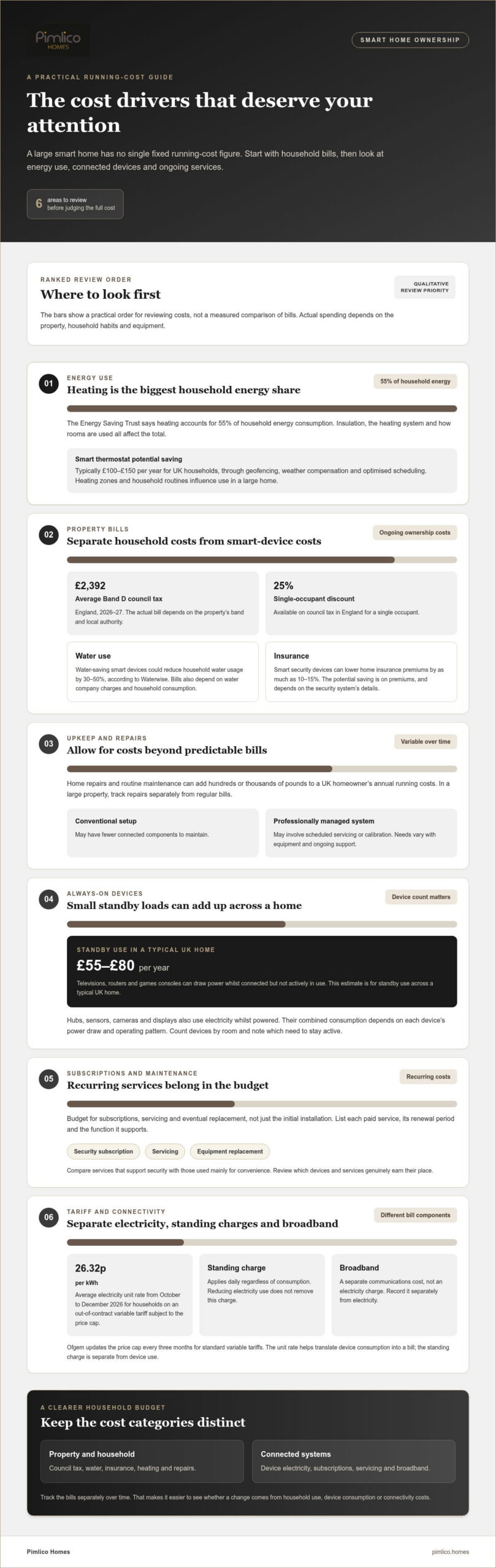
In England, the average Band D council tax bill is £2,392 a year in 2026-27. The actual bill depends on the property’s band and local authority. A single occupant receives a 25% council tax discount in England. Council tax is separate from smart-home energy use, but belongs in any realistic ownership budget.
Water bills also deserve attention. Household consumption, water company charges and the property’s usage patterns shape the bill. Smart water-saving devices could reduce household water usage by 30-50%, according to Waterwise. Lower consumption can support savings, particularly where devices help identify unnecessary water use.
Insurance is another cost to examine. Installing smart security devices can lower home insurance premiums by as much as 10-15%. The potential saving relates to premiums, not energy bills, and the security system’s details matter. Consider cameras, alarms and connected locks as part of the home’s wider protection, rather than assuming that every device changes the premium.
How do smart thermostats and automated heating affect annual energy bills in a large UK home? A smart thermostat typically saves UK households £100-£150 per year through geofencing, weather compensation and optimised scheduling. In a large home, heating zones and household routines influence consumption, so controls can help avoid heating unused areas unnecessarily.
Heating deserves close attention because the Energy Saving Trust says it accounts for 55% of household energy consumption. Insulation, the heating system and how rooms are used all affect the total.
Planned system changes can alter the initial outlay. The UK Government’s Boiler Upgrade Scheme provides up to £7,500 off a new installation. Once installed, equipment still needs suitable upkeep.
Allow for repairs as well as predictable bills in your household budget. Home repairs and routine maintenance can add hundreds or thousands of pounds to a UK homeowner’s annual running costs. In a large property, track heating, water use, insurance renewals and repair spending separately. This makes it easier to distinguish regular costs from changes in use that affect the overall budget.
Smart TV, broadband router and games console standby use
Standby power is the electricity devices use while connected but not actively in use. In a large home, televisions, routers and other connected equipment may draw power around the clock.
Standby electricity use
Across a typical UK home, standby use costs an estimated £55-£80 per year. These separate figures illustrate how regular standby use contributes to the actual energy bill.
Hubs, sensors, cameras and displays also use electricity while powered, but their combined consumption depends on each device’s power draw and operating pattern. Count devices by room and note which need to stay active, such as a router that supports connected thermostats.
Smart-home costs can differ from those of a conventional home because of the number of connected devices and how they are used. A professionally managed building system may involve scheduled servicing or calibration, while a conventional setup may have fewer connected components to maintain. The comparison depends on the equipment, household habits and level of ongoing system support.
Security and privacy can bring ongoing costs if devices need replacing or maintaining, or account access needs changing after a security concern. Connected cameras and displays may handle sensitive household information, so include secure account management and device upkeep in your ownership plan. Electrical faults also need attention: standby mode does not prove that a device’s connections are safe.
Electricity rates and running costs
Electricity unit rates charge for each kilowatt-hour used, while standing charges apply daily, regardless of consumption. From October to December 2026, the average electricity unit rate for households on an out-of-contract variable tariff subject to the price cap is 26.32p per kWh. Ofgem updates the price cap every three months for standard variable tariffs.
The unit rate helps translate device consumption into a bill, while the standing charge is separate from device use. A household can reduce electricity consumption without removing its standing charge. This distinction matters when comparing a smart home with a conventional property or estimating the cost of always-on equipment.
Broadband is a separate communications cost, not an electricity charge. Record broadband separately from electricity, then compare each bill over time. This makes it easier to distinguish changes in connectivity costs from changes in device consumption.
For the long-term running costs of a large smart home, consider both the energy used by always-on equipment and the connection it depends upon. Households planning a property around their priorities can explore luxury detached homes as part of that wider decision.
Subscription and maintenance fees
Connected systems bring recurring charges alongside household repairs. Budget for subscriptions, servicing and eventual replacement, not just the initial installation.
Subscriptions and maintenance budgeting
To budget for subscriptions and maintenance, track recurring service fees alongside planned equipment care. The number of paid services is an important part of long-term household planning.
List each service, its renewal period and the function it supports. For example, distinguish a security subscription from a system used only for convenience. These recurring charges should be tracked separately from maintenance costs.
There is no single maintenance total for every large home. Home repairs and routine maintenance can add hundreds or thousands of pounds to a UK homeowner’s annual running costs. Set aside a reserve for repairs, scheduled servicing and replacement equipment, then compare actual spending with your budget each year.
Replacing batteries and devices
Replacement budgeting covers batteries, repairs and devices that eventually need renewing. Wireless sensors and smart locks use batteries, so replacement needs depend on the number of units, how often they operate and the battery type. Record each device and battery change to understand your household’s pattern over time.
There is no fixed UK total for replacing batteries in wireless sensors and locks. Costs depend on how many devices the home has, how often they operate and the battery type each requires. Keep replacement batteries as a separate line in your home-maintenance budget rather than treating them as an unexpected repair.
Replacement devices are another variable cost. Keep an inventory of hubs and connected equipment, noting which systems rely on each hub. This helps identify which equipment may need attention if a central component fails.
Preventative maintenance can help limit avoidable breakdowns, but it does not remove the need to plan for repairs. A boiler or heat pump is part of the home’s heating infrastructure, while smart controls add equipment of their own to maintain. Keep servicing, repairs and technology replacements in separate budget categories.
Figures are easier to use when reviewed together: total subscription renewals, maintenance visits and replacement purchases over the same period. The estimated payback period for smart-home devices through energy savings and reduced maintenance costs is around 3-5 years. Compare those savings with the actual upkeep and service charges recorded in the home.
How much electricity do smart home hubs, sensors, cameras and displays use when left on 24/7?
There is no single electricity figure for every smart-home device left running 24/7. A hub, sensor, camera or display draws power according to its design and what it is doing. The useful measure is each device’s consumption over time, then the combined total across the home.
Start with the power rating shown on each device or its technical label. If the rating is in watts, calculate estimated use with this formula: watts × 24 hours × 365 days ÷ 1,000 = annual kilowatt-hours. This assumes the device draws the stated wattage continuously; actual use can change when its functions activate or it enters a lower-power state.
For a practical inventory, group equipment by room and purpose. Record hubs that coordinate systems, sensors that detect activity, cameras that monitor spaces and displays that remain ready for use. Note whether each device runs continuously or performs demanding tasks only at certain times. This helps identify which items use power constantly and which vary.
A camera, for example, may use more electricity while recording or transmitting than while idle. A display may draw power while showing information, then use less when its screen sleeps. A sensor may communicate only when it detects a change, while a hub stays active to coordinate connected equipment. These different operating patterns explain why device count alone cannot show total consumption.
To refine your estimates, use a suitable energy monitor for plug-in equipment or refer to the device’s power information. Do not assume every device uses its maximum rating all day. If monitoring is available, compare readings during quiet periods and active use, such as when cameras are recording or displays are illuminated. Use the same measurement period for each device.
Once annual consumption is expressed in kilowatt-hours, multiply it by the electricity unit rate on the household tariff to estimate usage costs. Add the results for each device to estimate the whole-home total. This calculation covers electricity consumed; the standing charge is separate and does not increase when another device is switched on.
Always-on equipment may serve essential functions. A hub can keep lighting and security controls connected, while a camera supports monitoring. Review each device’s purpose before changing its settings. For example, a display used as a control panel may need to remain accessible, while you could adjust the sleep settings on an unused screen.
Update the inventory when you add equipment or change how rooms are used. A new camera, hub or display affects the total, and different settings can alter consumption. Keeping device-level readings alongside the household electricity bill makes the contribution of connected technology clearer over time.
What are UK electricity unit rates and standing charges, and how do they affect smart home running costs?
An electricity unit rate is the price charged for each kilowatt-hour (kWh) used. A standing charge is a separate daily amount for supplying electricity, payable even when consumption is low. Both appear on the bill, but only the unit rate changes with a smart home’s electricity use.
For households on an out-of-contract variable electricity tariff subject to the price cap, the average unit rate is 26.32p per kWh from October to December 2026. Ofgem updates the energy price cap every three months for households on a standard variable tariff. The cap is therefore a changing reference point, not a fixed long-term rate.
To estimate a device’s running cost, multiply its electricity consumption in kWh by the tariff’s unit rate. Add the result for each device to estimate the usage component of the bill. Keep the standing charge separate: reducing consumption can lower usage costs, but it does not remove that charge.
Household size and how the property is used also affect comparisons. These examples show why the number of rooms alone cannot predict a bill.
Different consumption assumptions explain why these figures represent different household examples.
When reviewing a bill, separate electricity consumption from the standing charge, then compare both with the previous period. Note changes in device use, heating controls and household routines alongside tariff changes. This helps distinguish a rise caused by greater consumption from one linked to a new unit rate or standing charge.
For a home designed around connected living, consider how room layouts and household needs shape future electricity use. Explore luxury detached homes as you plan the wider property decision.
Pimlico Homes: Luxury Detached Homes
Pimlico Homes offers luxury detached homes for buyers planning a large home around their household’s long-term needs. The running-cost considerations in this guide can inform decisions about room use, connected systems and how everyday living patterns shape energy consumption.
When considering a new property, weigh these practical priorities alongside design and layout. A home’s size, heating requirements and planned technology all influence its bills and maintenance needs over time. Pimlico Homes also offers executive courtyard homes, bespoke luxury homes and luxury barn conversions, providing distinct residential options for prospective homeowners.
If you are considering a property for connected living, contact Pimlico Homes to discuss your plans.
Shape a home around the way you live
Planning for the long-term running costs of a large smart home involves more than choosing connected devices. Consider how your household moves through the property, which spaces need to work together, and how you want comfort, privacy and everyday convenience to feel. These priorities can guide decisions about layout and technology’s role in daily life.
Pimlico Homes offers luxury detached homes, executive courtyard homes and bespoke luxury homes. Each offers a different approach to a significant home investment, shaped by your priorities. The right property is more than a setting for technology: it is a place designed around the life you want to build.
Take the next step at your own pace. Explore Pimlico Homes and consider which setting feels right for your future. A considered vision today can help create a home that feels welcoming, enduring and distinctly yours.
Frequently Asked Questions
Are Smart Homes Worth the Investment?
Smart-home systems can be worthwhile when automation improves energy use, security or everyday comfort. Their value depends on whether they address real needs rather than simply adding connected devices. For example, scheduling heating around room use may be more useful than automating a space that is rarely occupied. Consider ongoing service and upkeep alongside convenience, and judge the investment by how well it fits your routines.
How does the EPC rating affect the estimate?
An EPC rating can help indicate how efficiently a home uses energy for heating. UK homes in EPC bands F or G can cost 75-110% more to heat than average. This relates to heating costs, not the full electricity bill or every smart-home device. Insulation, heating controls and how much of the property is occupied also shape consumption, so use the rating as context rather than a complete running-cost estimate.
What are typical annual electricity costs for a large smart home in the UK?
There is no single annual electricity cost for every large smart home, because consumption varies with appliances, occupants and daily routines. Treat this as a household example, not a fixed smart-home tariff or device-only cost.
What are typical subscription fees for UK smart home security, cloud storage and automation services?
The total depends on how many paid services are active and what each covers, such as security features, cloud storage or automation. To estimate your household’s spending, list each recurring charge and its renewal period, then add them together. Distinguish optional services from essential connectivity to see which subscriptions support features you use.
How much does broadband needed for a large smart home cost, and what speeds are recommended?
The suitable speed depends on simultaneous use: several video streams, camera uploads and video calls place greater demand on a connection than basic device control. Consider how many people and connected devices will be active at once, then choose a package that supports those household patterns and the broadband available at the property.
How do smart lighting and appliance controls change electricity use compared with conventional devices?
Smart lighting is estimated to reduce energy consumption by about 40-60%, while LED smart bulbs use up to 75% less energy than traditional incandescent bulbs. Automated controls can also schedule devices to avoid unnecessary use, though savings vary with usage.