
A true creative sanctuary is designed into a home, not squeezed into whichever spare room remains. For those considering luxury homes with a home studio, the question is not simply how much space is available, but whether the room’s layout, light and building services can support the work and equipment it needs to accommodate.
A generic room may look impressive yet fall short when sound travels through the house, daylight falls at the wrong angle or the layout leaves little room to move. These details matter. A studio should feel considered and at home within a refined residence, rather than like an afterthought.
This guide explains what to look for, from acoustic planning and lighting to layouts suited to different creative pursuits. It also compares detached homes with barn conversions, which may offer soaring ceilings alongside specific design challenges. Whether you are recording, painting or making, start by identifying what the space must do, then assess how well a property can support it.
Key Takeaways
- Assess whether a studio can work as an integral part of a home, rather than an afterthought.
- Consider how natural light, sound and room layout affect suitability for your creative work.
- Compare the flexible planning of a detached home with the character and generous volume a barn conversion may offer.
- Define the studio’s purpose, equipment needs and workflow before choosing furniture and finishes.
- When comparing luxury homes with a home studio, consider craftsmanship, adaptability and how the room fits the wider residence.
The Evolution of the Executive Home Studio
A home studio is more than a desk in a spare room. It is a space for making, composing, recording or developing ideas, with its layout and atmosphere shaped around the work. The wider evolution of home recording reflects how creative work can take place in a domestic setting. A well-planned studio can serve as both a practical workspace and a defining part of a luxury home.
This changes how the home supports its owner. A home office is generally arranged for administration and communication. A creative studio may also need space for equipment, materials, movement and concentrated work. Its purpose may be professional, personal or a blend of both, but it should feel distinct from the routines of the rest of the household.
Beyond the Spare Bedroom: A New Standard
A repurposed bedroom may offer floor space, but its proportions, ceiling height, lighting and sound environment were not necessarily planned for creative work. Start by checking whether the room can fit essential equipment and storage without restricting movement. Consider where the main work will take place, how materials will be stored and whether the room has enough usable wall space.
Room volume matters as well. Generous ceiling height can make a studio feel open and provide flexibility for some creative pursuits. In a barn conversion, double-height spaces may offer a striking sense of scale, while a detached home designed from the outset can provide a more regular layout for a contemporary studio. In either setting, consider how the room’s proportions and finishes will support its intended use.
The Lifestyle of the Modern Visionary
A dedicated studio can bring creative work closer to home without allowing it to take over every room. A clear physical boundary helps distinguish time spent focusing from time spent with family or relaxing. When viewing a property, consider the route between the studio and the rest of the home, and whether household activity is likely to interrupt the work.
The room can also express something personal about its owner. Meaningful materials, considered surroundings and an orderly workflow can make it easier to settle into a creative task. Think beyond appearance: a layout that keeps frequently used tools close by and distractions to a minimum can make the room more practical for recording, painting or developing ideas.
In luxury homes with a home studio, the creative space should belong within the larger vision of the residence. When assessing a home, consider whether its architecture and layout can accommodate your ambitions while still working for everyday life. Pimlico Homes develops luxury detached homes, executive courtyard developments, bespoke new builds and premium barn conversions. Buyers can explore these types of homes with their own priorities in mind, including the space and setting they need for creative work.
Essential Architectural Considerations for a Bespoke Studio
A creative room’s performance depends on more than its finish. Light, sound, structure and environmental control should all be considered in relation to the intended use. For anyone comparing luxury homes with a home studio, these practical details help distinguish an attractive room from one that genuinely supports the work.
Mastering Natural and Artificial Light
For painting and other colour-sensitive work, north-facing windows are often favoured for their steadier, indirect daylight, which can reduce sharp changes in brightness and shadow. The best orientation still depends on the creative discipline and the building’s setting. Skylights and generous glazing can bring depth and atmosphere, but consider glare, changing daylight and privacy as well as the view.
Artificial lighting should complement daylight and give you control when conditions change. Adjustable fittings let you vary brightness and colour temperature for detailed work, recording or a more relaxed creative mood. For a gallery-style room or design space, aim for even illumination across work surfaces and displayed pieces. Check where shadows fall when you are standing or seated at your usual workstation, and consider blinds or other glare control if direct sun reaches the room.
Acoustic Integrity and Technical Infrastructure
Sound control has two distinct aims: limiting noise travelling between rooms and managing reflections within the studio. They need different design choices. Suitable acoustic insulation and sound-dampening measures may be easier to plan during construction than to add after the room is finished. For music and recording spaces, Sound on Sound’s guide to Acoustic Treatment explains how treatment can shape what you hear inside the room.
Consider the building fabric as well as the equipment. A grand piano, kiln or other heavy item may need specific consideration of floor loading and position. Ask an appropriately qualified structural professional to assess the intended load before settling the layout. Kilns and delicate instruments may also have particular environmental needs, so plan suitable ventilation and temperature or humidity control with the manufacturer’s guidance in mind.
Connectivity deserves early attention. Map power and data points against the equipment layout, then consider discreet cable routes so leads do not cross working or walking areas. If you are considering smart-home controls, check that the proposed systems suit the studio’s intended use. Do not assume that a standard domestic arrangement will provide everything a recording setup or specialist equipment requires.
These decisions are easier to evaluate when the studio is considered as part of the home’s overall design. Buyers considering bespoke luxury homes can explore the types of properties Pimlico Homes develops while assessing which layout best fits their priorities.
Selecting the Ideal Canvas: Detached Homes vs. Barn Conversions
The right property type depends on the work your studio must support. Recording, painting and design each place different demands on a room’s proportions, privacy and connection to the rest of the home. Compare each property’s architectural character with the practical needs of your creative practice, rather than choosing on appearance alone.
The Detached Advantage: Modernity and Precision
A detached new build can offer a flexible starting point. Consider how the studio sits in relation to living areas, entrances and other rooms, and whether the circulation works for the way you will use it. A regular layout may suit work that benefits from clearly defined areas, such as a design studio with separate space for focused work, equipment and storage.
Access is another consideration. If the layout allows for a separate external entrance, visitors or collaborators may be able to reach the studio without passing through the main living spaces. Check whether the room’s position, lighting and sound separation suit your planned activity, and whether it could serve another purpose if your needs change. For further reading, explore this guide to luxury detached living.
Barn Conversions: Volume and Heritage
A barn conversion can bring a distinct sense of history. Original timber beams and stone walls may give an atelier or making space character, while double-height interiors can accommodate large-scale work or dramatic displays. These features help shape the room’s atmosphere, but weigh them against practical needs such as usable wall space, storage, lighting and day-to-day access.
Vaulted ceilings can give a music room an impressive sense of volume, but height alone does not guarantee suitable acoustics. Consider how sound behaves in the room and what treatment the intended use may require. For ideas on combining heritage features with contemporary living, read about refined barn conversion interiors.
Privacy, Setting and Creative Fit
An executive courtyard development may offer a sheltered relationship between the home, studio and outdoor areas. Privacy depends on the individual layout and outlook, so check whether windows or entrances face shared spaces. Match the property to the medium: a painter may value clear wall space, a musician may prioritise separation from household activity, and a maker may need practical space for materials.
There is no universal choice. Compare each property’s character, layout and adaptability, then decide which setting will support your work and feel at home within the wider residence.
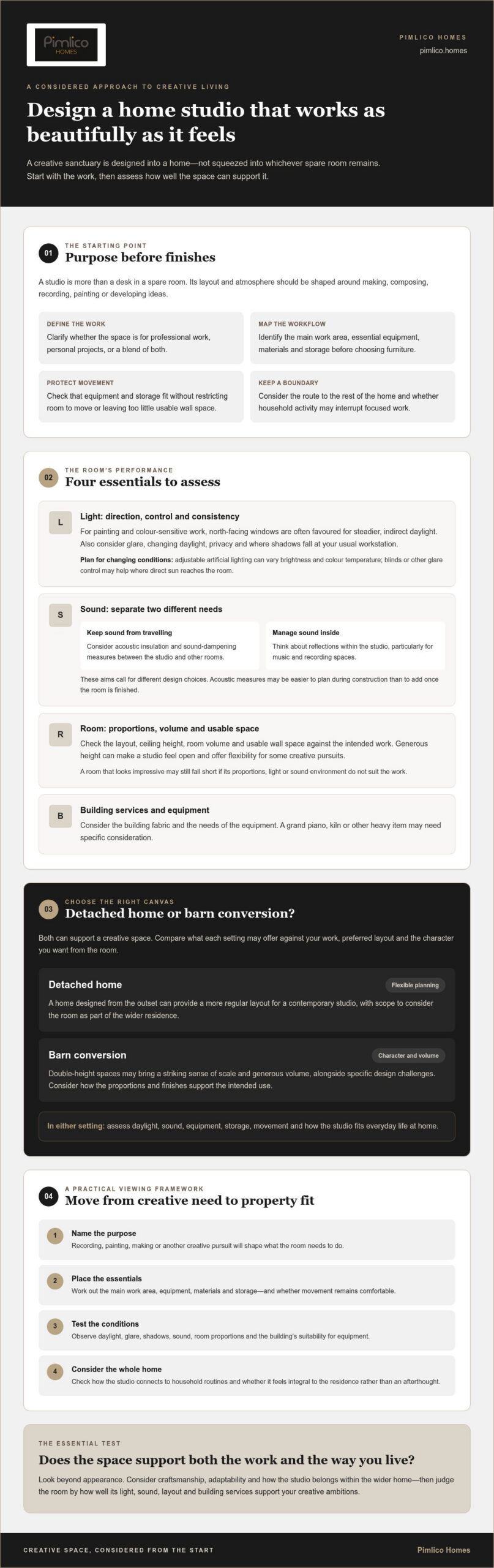
Creating a Dedicated Hobby Room or Studio: A Step-by-Step Design Framework
A successful studio takes shape through deliberate choices, made in a useful order. Before selecting finishes or furniture, clarify what the room needs to do. This framework helps turn an appealing idea into a space that supports creative work and feels naturally at home in a residence.
- Phase 1: Define the purpose. Name the main activity, then list the equipment, materials and storage it requires. A painting studio may need room for easels and drying work, while a writing space may call for a generous desk, reference materials and a quieter atmosphere.
- Phase 2: Map the workflow. Picture a typical session from beginning to end. Place frequently used tools within easy reach, allow clear movement between tasks and keep equipment from interrupting the main working area.
- Phase 3: Choose materials for use as well as appearance. Consider how surfaces will wear, whether they are straightforward to care for and how they complement the home. A maker’s workbench has different needs from a room used to display finished pieces.
- Phase 4: Set the atmosphere. Bring together colour and texture, and decide whether you want a calm or more energising mood. Aim for a considered setting that supports the work rather than a collection of decorative choices competing for attention.
Zoning for Productivity and Inspiration
Even a single room can hold distinct zones: an active work area, accessible storage and a place to pause or review ideas. Keep routes between them clear and check that doors, drawers and equipment can be used without obstructing movement. Choose furniture to suit both the work and the person using it, with comfortable seating and work surfaces at practical heights. Bespoke cabinetry can conceal supplies and visual clutter, while open shelves keep frequently used tools within reach. The balance is personal, but each storage choice should have a purpose.
Personalising the Aesthetic Narrative
Colour helps establish a room’s character. Restrained neutrals can provide a calm backdrop for detailed work, while a more expressive accent may suit a space used for creative exploration. Test colours in the room’s changing light before committing. Texture adds another layer: leather, timber and polished concrete each bring a different quality, so choose materials that suit both the activity and the wider home.
Display completed work, collected objects or a small number of reference pieces to make the room feel personal without overwhelming its function. In luxury homes with a home studio, thoughtful planning can bring individual style together with lasting craftsmanship. To explore the homes Pimlico Homes develops, discover Pimlico Homes.
Bespoke Craftsmanship: The Pimlico Homes Approach to Creative Spaces
A creative studio works best when it belongs naturally to the home rather than feeling like a feature added without regard for the whole. Pimlico Homes develops luxury detached homes, executive courtyard developments, bespoke new builds and premium barn conversions. Its focus on high-quality craftsmanship is relevant to buyers considering how the character and finishes of a home align with their own priorities.
For buyers, the key is to choose a home that can accommodate the way they want to live. A studio can reflect its owner’s interests while contributing to a coherent residence. Consider the room’s practical requirements alongside the wider design, from equipment and storage to privacy and access.
A Legacy of Excellence in Every Detail
A well-considered home brings together its layout, materials and finishes. Before viewing or comparing properties, write down what the studio needs to accommodate and how it should connect with the rest of the home. Use that brief to assess whether a room’s proportions, position and details suit your intended use, rather than relying on appearance alone.
Materials should be considered for both their appearance and their intended use. A surface that works well in a display space may not suit a room where tools or materials are used regularly. Buyers weighing up their options can also consult The Ultimate Guide to Buying a Luxury New Build Home in 2026 for further perspective on the purchase.
Investing in a Lifestyle of Distinction
A dedicated studio may appeal to buyers who value creative space, but no design feature can guarantee a particular resale outcome. Future appeal depends on the room’s quality, flexibility and the needs of the market when the property is sold. An adaptable space may serve more than one purpose as its owners’ requirements change.
The decision reaches beyond resale. A home is a significant financial commitment and the setting for everyday life. Luxury homes with a home studio can bring these priorities together when the studio is considered as part of the residence’s wider design. For a broader discussion of long-term property value, see Resale Value of New Build Homes: A Luxury Investment Guide. Consider how each home’s layout and character align with your priorities before making a decision.
Choosing Luxury Homes with a Home Studio
A studio that belongs to the architecture can help a home support both professional purpose and personal expression. Begin by understanding the work and its needs for light, sound, space and privacy. Then compare the layout of a detached home with the distinctive character and generous volume a barn conversion may offer.
Thoughtful design matters at every scale. A workable layout, well-planned storage and finishes suited to the room’s use can make a creative space practical and personal. In luxury homes with a home studio, these choices help make the studio a considered part of the residence.
Pimlico Homes develops luxury detached homes, executive courtyard developments, bespoke new builds and premium barn conversions, with a focus on high-quality craftsmanship. To explore its homes and consider which property may suit your priorities, visit Pimlico Homes.
Frequently Asked Questions
What is the ideal room size for a luxury home studio?
There is no single ideal size; plan the room around its purpose, equipment and workflow. A writing studio may need a desk, storage and space to move comfortably, while a music room or artist’s atelier could require room for instruments, work surfaces or large pieces. List essential equipment first, then allow for circulation, storage and likely changes in use before settling on a layout.
Does a dedicated hobby room add value to a luxury property?
A well-designed hobby room may appeal to buyers who value dedicated creative space, but it cannot guarantee a higher resale value. Versatility matters: a thoughtfully integrated studio that can serve several purposes may appeal to a wider range of future owners than a room built around highly specialised equipment. Consider the quality of the design, its relationship to the home and the preferences of potential buyers.
How do I soundproof a room in a new build home effectively?
Plan sound isolation during the design and construction process, and distinguish it from acoustic treatment. Isolation aims to limit sound travelling into other rooms; treatment helps control reflections within the studio. The appropriate approach depends on the activity, building construction and desired level of separation. Discuss the intended use with suitable acoustic and building professionals early, and check which current regulations apply, particularly if the space will be used commercially.
What are the best lighting options for an art studio at home?
The best arrangement combines useful natural light with controllable artificial lighting. North-facing windows can offer artists relatively steady daylight, though the right orientation depends on the site and the work. Adjustable artificial lights allow you to manage brightness and colour temperature for detailed tasks or different creative moods. Position fittings to illuminate work surfaces evenly, and consider blinds or other glare control where direct sun could affect colour judgement.
Can I include a home studio in a barn conversion without losing character?
Yes. A studio can sit comfortably within a barn conversion when its design respects the building’s distinctive features. Original timber beams, stone walls and double-height spaces can lend atmosphere and a sense of scale. Keep those qualities visible where practical, while planning suitable lighting, storage and sound control around them. A carefully considered layout can support creative work without making the room feel detached from the building’s heritage.
What technical infrastructure is required for a professional home recording studio?
Start with dependable internet access, sufficient power provision and data connections positioned around the intended equipment layout. Plan cable routes discreetly, and consider ventilation and temperature management for the room and its technology. Acoustic isolation and internal treatment also affect recording quality, so consider them alongside the equipment list. Requirements vary with the work, from a compact editing setup to a studio with separate recording and control areas.
How do I balance the aesthetic of a studio with the rest of a luxury home?
Choose finishes that relate to the wider home, then tailor the room to the creative work. A coordinated palette, considered materials and well-planned storage can create continuity without making the studio feel generic. Bespoke cabinetry can keep equipment accessible yet visually ordered, while displayed artwork or meaningful objects bring individuality. The aim is a space that feels part of the residence and distinctly suited to its owner.





