
What if the most impressive room in your home were also the place you most wanted to retreat to? In luxury homes with a library, architectural presence and everyday comfort need not compete. The right design makes a private collection part of the home’s character while creating a calm setting for reading, reflection and conversation.
A library can be daunting to plan. Too formal, and it risks becoming a room admired but rarely used. Too much direct sunlight can damage books, while poor acoustics or awkwardly placed technology can disturb the quiet atmosphere. These are practical considerations to resolve from the outset, not reasons to leave the idea on the shelf.
This guide explores how to shape a bespoke reading space, from choosing its position and planning cabinetry to balancing natural and artificial light, sound and technology. You’ll find practical principles for creating a room that feels welcoming as well as distinctive. A well-planned library is more than storage: it is an expression of taste, craftsmanship and the way you want to live.
Key Takeaways
- Choose between a dedicated library and a compact reading nook according to your collection, available space and daily routines.
- Consider light, acoustics and climate when creating a comfortable space and caring for books.
- Plan bespoke shelving around its position, proportions, intended use and the collection it needs to hold.
- Use a library to make your home more personal, with a space designed for focus, reflection and everyday use.
- Plan the library as part of the home’s design so it feels like an integral feature rather than an afterthought.
The Architectural Significance of the Modern Home Library
A home library is more than a place to keep books. It is a space for concentration, curiosity and quiet reflection, with an atmosphere that invites you to pause. In luxury homes with a library, this sense of retreat can be built into the architecture from the outset, rather than added later as a decorative afterthought.
Private libraries have long reflected the values and interests of the people who create them. The history of private libraries offers a wider perspective on the relationship between books, learning and domestic life. In a contemporary home, the idea can take a personal form: a considered space for a collection, meaningful objects and moments of stillness.
Why Libraries are Returning to High-End Residences
As more work, reading and entertainment move onto screens, a room centred on physical books offers a welcome change of pace. This analogue retreat need not reject technology. Instead, it makes room for tactile, unhurried experiences, such as turning a page, consulting a reference book or reading without notifications.
A library need not serve only one purpose. It can accommodate study during the day and become a comfortable place to read or unwind in the evening. Plan its role around the household’s routines. A desk, comfortable seating or a side table can support different activities, but each should have a clear purpose. Above all, consider how much separation the room needs from the rest of the home.
The Library as an Intellectual and Aesthetic Anchor
Architecturally, a library can give a home a centre of gravity. Floor-to-ceiling shelving draws the eye upwards and creates a sense of scale, while integrated cabinetry can make the room feel resolved rather than furnished in pieces. The proportions, finishes and workmanship all matter. Shelving should suit the architecture and accommodate a collection that may change over time.
The books themselves tell a story. Literature, family volumes, travel writing and carefully chosen objects reveal interests and memories, making the library an expression of personal history rather than a display arranged for others. That distinction gives the room warmth and purpose.
A dedicated “slow space” can also mark a transition from the demands of the day to reading, thought or conversation. In a new build, a library can bring a sense of permanence through considered materials and craftsmanship. Planned as part of the home’s overall design, it becomes a lasting expression of how its owners wish to live.
Choosing Your Format: Grand Library vs. Bespoke Reading Nook
Start with how you want to use the library and where it can sit naturally within the home. Consider the size of your collection, whether you need a desk for focused study and how much separation from household activity would feel restorative. Then assess the available space and the property’s proportions. A dedicated room can make a formal statement; a carefully designed nook can create a similar sense of retreat within a smaller footprint.
Neither format is inherently more distinguished. In luxury homes with a library, the best choice is one that belongs to the architecture and supports daily life, rather than claiming space for appearance alone.
The Grand Library: A Statement of Stature
A grand library can suit a substantial collection and a household that will use the room for study, reading or quiet conversation. Double-height ceilings give shelving a dramatic vertical presence, while a mezzanine may make use of the height and provide access to upper shelves. Both options need careful planning for circulation, access and comfort, so the room feels welcoming rather than imposing.
Formal seating, a writing desk and, where appropriate, a fireplace can create distinct zones. Shelving might frame a focal point, while furniture is arranged to preserve clear routes through the room. For visual inspiration, explore these favourite home libraries, then consider which elements suit your home rather than reproducing a look wholesale.
The Reading Nook: Intimacy and Quietude
A smaller footprint need not mean a less rewarding space. Window seats, alcoves and mezzanine landings can become inviting reading spots when they have a clear purpose and are integrated into the home’s design. A window seat with storage below, for example, combines a place to read with discreet space for books.
Bespoke cabinetry can define a nook without enclosing it completely. A fitted shelf, a comfortable seat and well-planned lighting help distinguish it from a passing corner while keeping the surrounding space open. Check that there is room to sit comfortably, reach a book and move through the area without obstruction.
Match the format to your routines and the property’s character. A formal room may complement architecture with generous proportions, while a nook can bring purpose to a landing or quiet corner. In a bespoke home, considering the library early allows its position, cabinetry and circulation to be planned together. Explore bespoke luxury homes as you consider a design in which every space has a considered role.
The Technical Essentials: Lighting, Acoustics, and Climate
A library’s atmosphere depends on more than shelves and furnishings. Light, sound and temperature all affect comfort and the care of books and other materials. In luxury homes with a library, it is worth considering these practical details early so that building elements and technology can be integrated discreetly.
Mastering Light: Balancing Natural and Task Lighting
Natural light brings warmth and a connection to the outdoors, but prolonged direct sunlight can fade covers and affect paper, leather and bindings. Where possible, position shelves away from the strongest sun. Blinds or UV-filtering glazing can help manage exposure at windows. For particularly valuable or fragile volumes, seek advice on suitable conservation conditions rather than relying on glazing alone.
Layered lighting makes the room adaptable. Ambient fittings provide overall illumination, while a reading lamp directs light onto the page. Picture lights or carefully integrated shelf lighting can highlight a collection. Choose controls that let you adjust brightness for different activities and times of day, and position reading lights to reduce glare. For further inspiration, browse these home library design ideas, then consider how each approach might work with your collection and the room’s natural light.
Soundproofing and Thermal Regulation
A quiet library does not need to be completely soundproof. A more practical aim is to reduce distracting noise through room planning and suitable materials. Heavy curtains can soften sound and control light; upholstered furniture and acoustic wall treatments may also help reduce reverberation. If the library sits beside a busy living area, consider door placement and sound separation as part of the wider design.
Books benefit from a stable indoor environment. Avoid placing a collection beside a heat source, in direct sun or near areas prone to damp. Plan ventilation and heating to limit sharp fluctuations in temperature and moisture. Underfloor heating can leave more wall space available for shelving, but the system should be designed to provide even, controlled warmth.
Discreet Technology, Lasting Character
Modern controls need not interrupt a traditional interior. Dimmers, concealed speakers and discreetly positioned charging points can support contemporary use while keeping the visual focus on cabinetry, books and furnishings. Plan wiring before walls and bespoke shelves are finished, and group controls logically so lighting can shift from focused reading to a softer evening setting. Technology should serve the room quietly, not define it.
In a bespoke home, these decisions connect comfort with craftsmanship. Coordinating lighting, joinery and environmental planning from the beginning helps create a library that feels composed, protects what matters and remains a pleasure to use.
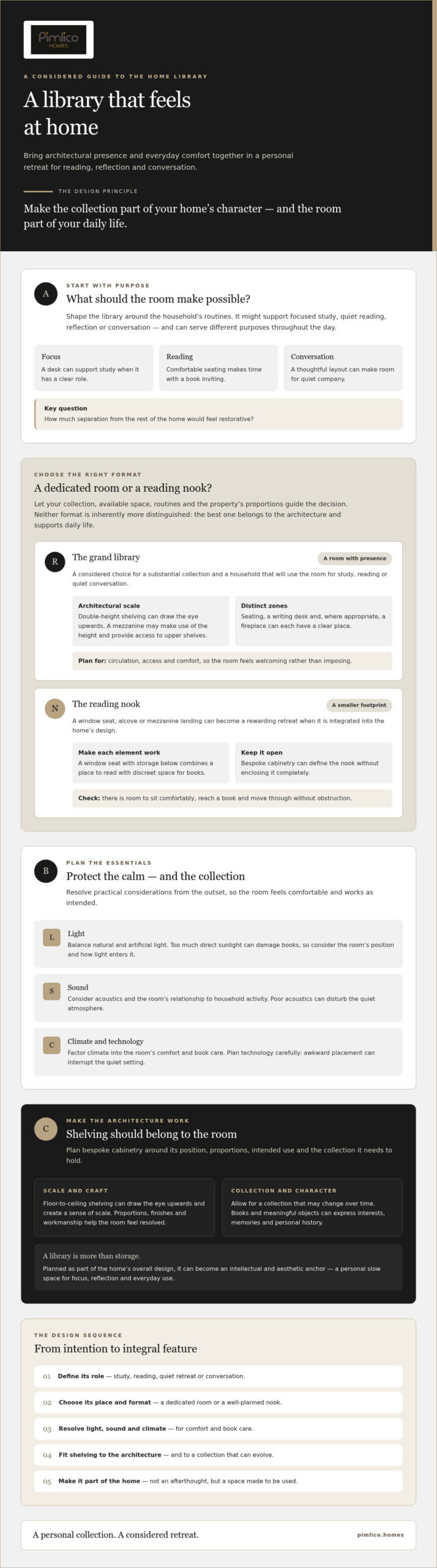
How to Design Luxury Homes with a Library that Complements the Architecture
A successful library feels as though it belongs to the home from the beginning. Its proportions, materials and relationship to adjoining rooms should complement the architecture, while its layout makes reading, study and relaxation comfortable. In luxury homes with a library, this coherence comes from planning the room as part of the whole, not treating shelves and furniture as finishing touches.
Bespoke Cabinetry and Material Selection
Bespoke cabinetry is made to fit the room, collection and architectural character of a home, forming the lasting framework of its library. Traditional dark hardwoods can lend depth and formality; lighter or more restrained finishes may suit a contemporary interior. Relate the choice to existing timber, flooring and detailing without requiring every surface to match. The quality of construction and finish gives the room its sense of care.
Plan the joinery around the books and objects it will hold. Adjustable shelves accommodate different book heights and allow the arrangement to change as a collection grows. Before detailing the cabinetry, consider the position of doors and windows, the intended shelf depth and whether lower cupboards could keep less-used items out of sight. A measured design process helps the finished joinery fit the room and function as intended.
Comfort matters just as much. A well-proportioned armchair, a small table for a book or drink, and a suitable reading light can make the library inviting without competing with its architectural features. Choose furnishings for their scale as well as their appearance, so the room feels composed rather than crowded.
The Relationship Between the Library and the Floor Plan
Position shapes the library’s character. Set away from busy routes, it can offer privacy for study and reading. Placed between a public reception space and quieter private rooms, it can work as a transition, retaining a connection to the home while signalling a change of pace. Door placement, circulation and sightlines all affect how naturally the library fits into daily life.
A concealed jib door can create a discreet entrance, but consider ease of access, the surrounding wall design and the room’s practical use. The effect is most successful when the detail feels integrated rather than theatrical. In any arrangement, the library should be easy to find and pleasant to enter.
For a new build, deciding on the library’s role early allows its cabinetry, furnishings and position to be resolved alongside the wider floor plan. Explore bespoke luxury homes as you consider how a library might become a lasting part of your home’s design.
Elevating Your Vision with Pimlico Homes
A private library works best when its purpose is considered as part of the home’s architecture, rather than left until the final stages of furnishing. Its location, shelving, lighting and relationship to adjoining rooms all affect how naturally it serves the household. For those considering luxury homes with a library, early planning can turn a personal ambition into a considered feature of the wider design.
Integrating Libraries into Bespoke Luxury Homes
Start with the intended collection and how the room will be used. Tall, densely filled shelves place different demands on a floor and wall than a compact reading nook, so discuss anticipated loads with the relevant design professionals during planning. This is also the time to consider lighting controls, sockets and other electrical requirements, before bespoke joinery makes later changes more disruptive.
Explore bespoke luxury homes as you consider how a library might fit your priorities. A well-resolved design considers more than the room itself: its proportions and materials should sit comfortably alongside the rest of the home, and its entrance should support the right balance of privacy and connection. Pimlico Homes develops bespoke luxury detached homes and executive courtyard developments, with a focus on high-end craftsmanship. That wider architectural perspective matters when a library is intended to feel integral to the home.
Craftsmanship and Enduring Design
Joinery gives a library much of its character. Carefully planned cabinetry can make practical use of a room’s proportions, while considered detailing helps shelving feel at home within the architecture. Choose materials for their appearance, durability and how their character may develop with use. This is an investment in the experience of home: a space shaped around reading, learning and the collections a household values.
Pimlico Homes specialises in luxury residential development, including bespoke new builds and premium barn conversions. For a different architectural context, explore luxury barn conversions for inspiration on how a library might respond to distinctive features and proportions.
As you consider your next home, define what the library should make possible: a quiet place to study, a room for a growing collection or a welcoming retreat at the end of the day. Sharing those priorities early can help shape decisions about space, structural provision and craftsmanship, creating a home that reflects your routines and the life you hope to build within it.
Make Space for a More Considered Way of Living
A well-designed library is defined not by its size, but by how naturally it supports life at home. Whether you favour a dedicated room or an intimate reading nook, thoughtful planning can bring together comfort, craftsmanship and architectural character. Careful attention to light, sound and the needs of your collection helps make the space a pleasure to use, not simply a feature to admire.
For those imagining luxury homes with a library, the most rewarding approach is to consider this sanctuary as part of the home’s wider design from the outset. Its place in the floor plan, the quality of its joinery and its connection to daily routines can give it enduring meaning.
Pimlico Homes develops luxury detached and executive courtyard homes, with a focus on bespoke design and craftsmanship. Explore our portfolio of bespoke luxury homes and executive developments, and start planning a home with space for the things that matter to you.
Frequently Asked Questions
Does adding a library increase the resale value of a luxury home?
A library may strengthen a home’s appeal, but it cannot guarantee a higher resale value. Its contribution depends on the quality of the design, how well the room suits the property and whether prospective buyers value a dedicated study or reading space. A flexible layout, considered finishes and practical storage can help the room feel useful to a wider range of households, rather than overly personal or purely decorative.
How much space do I need for a functional home library?
There is no fixed minimum: a functional library can be a dedicated room or a compact nook with a comfortable seat and accessible shelving. Begin with how you intend to use it. A desk, several seats or extensive shelving will need more floor area than a quiet reading corner. Allow clear circulation, space to pull out a chair and room to reach shelves without obstructing doors or walkways.
What is the best lighting for reading without damaging book collections?
The best approach combines controlled natural light with adjustable reading illumination. Avoid placing valuable books in prolonged direct sunlight, which can fade covers and harm paper over time. Use blinds or suitable UV-filtering glazing where windows expose shelves to strong sun. Add a focused, adjustable lamp for reading and softer ambient lighting for the room. Position fittings to reduce glare on pages and keep heat-producing lights away from books.
Can I integrate a home office and a library in the same room?
Yes, a library can also function as a home office if the layout supports both activities. Set a desk near power and task lighting, and arrange reading chairs or shelves so they do not interrupt the working area. Storage can help keep paperwork and equipment organised, preserving a calm atmosphere outside working hours. If possible, plan distinct zones for focused work and reading, even within a single room.
What are the best materials for bespoke library shelving?
The right material depends on the room’s architecture, desired finish, and the weight and dimensions of the collection. Timber can bring warmth and develop character; painted finishes may suit a more restrained interior, while quality engineered materials can offer design flexibility. Ask the joinery specialist to consider shelf spans, fixings and anticipated loads as part of the specification. Choose the finish and construction for durability as well as appearance.
How do I soundproof a library in an open-plan luxury home?
Complete soundproofing can be difficult, but careful design can reduce distraction. Place the library away from busy routes where possible, and consider a door with effective seals to limit sound transfer. Soft furnishings, rugs, heavy curtains and acoustic wall treatments can help absorb sound within the room. Discuss wall and ceiling construction with a qualified design professional if stronger isolation is important, as results depend on the building as a whole.
Is UV protection necessary for all home libraries?
UV protection is most important where sunlight falls directly on books, particularly rare, valuable or delicate volumes. Ordinary collections can also fade with prolonged exposure, so consider shelf position, curtains or blinds, and glazing suited to the room. UV-filtering glass can reduce exposure, but it does not remove the need to manage sunlight and heat. If a collection includes fragile or significant items, seek specialist conservation advice.
How do I organise a large book collection for both aesthetics and function?
Organise books in a way that makes them easy to find and pleasant to live with. You might group them by subject, author or use, keeping frequently read volumes within easy reach and reference books near a desk. A consistent arrangement can create visual order, while selected objects or occasional changes in orientation add variation. Leave room for new acquisitions, and avoid packing shelves so tightly that books are difficult to remove.





