
What if the home that makes the strongest first impression isn’t the development you’ll be happiest living in? For buyers considering luxury new build developments UK, the distinction matters. Elegant architecture and beautifully presented interiors may draw the eye, but a home is part of a wider setting. Its layout, shared spaces, access and character all shape daily life.
It’s natural to focus on the property itself. Yet marketing materials can make developments difficult to compare, and a striking design may not suit your routines or changing needs. A considered choice looks beyond first impressions to how the whole place feels and functions.
This guide offers a practical framework for assessing a development as a complete living environment. You’ll learn how to read its site plan, compare shared areas and access, and weigh different home types against your lifestyle and longer-term plans. From detached and courtyard homes to bespoke new builds and barn conversions, the aim is to identify a place with distinction, purpose and the qualities to remain a rewarding choice.
Key Takeaways
- Look beyond individual homes to see how architecture, privacy and shared surroundings create a coherent place to live.
- Read the site plan for entrances, routes, open areas and boundaries to understand how the development may feel day to day.
- Compare luxury new build developments UK using consistent criteria, including setting, home type, layout and shared spaces.
- Review development plans, specification documents and ownership information to build a clearer picture before committing.
- Consider whether a detached, courtyard, bespoke or converted home best suits your routines and longer-term plans.
What Makes a Luxury New Build Development Feel Exceptional?
A luxury new build development is more than a collection of individually specified homes. It is a residential scheme in which architecture, layout, privacy and shared surroundings are considered together, so each home belongs to a wider composition. That distinction matters when comparing luxury new build developments UK: the quality of the setting can shape daily life as much as the design of any one property.
Development quality comes from the relationship between each home and the place around it. Notice how residents arrive, where views lead, how outdoor areas sit alongside homes, and whether the architecture feels coherent without making every property identical. The Housing in the United Kingdom spans a broad range of housing forms; within that variety, a well-conceived development gives its homes a clear sense of place.
How the whole development shapes everyday life
Look beyond the front door. Routes through a site affect whether movement feels direct and intuitive, and whether passing traffic runs close to private areas. The orientation and spacing of homes influence outlook and separation between neighbours. Notice how gardens, courtyards and other outdoor areas relate to the buildings. A sheltered space beside a home, for example, may feel more connected to daily routines than an open area with no clear relationship to it.
A coherent masterplan gives these choices an overall logic. A group of attractive individual façades may still lack a settled identity if entrances, boundaries and shared spaces feel unrelated. The difference is not only visual. It can affect how private, welcoming and easy to navigate the development feels.
Luxury beyond finishes and first impressions
Polished presentation can make a strong impression, but lasting appeal also rests on decisions that may be less visible in a brochure. Consider whether the layout supports the way you live, whether rooms connect well with outdoor areas, and whether the arrangement itself provides privacy. Plans and specification documents can help you understand the design behind what you see.
Look for consistency between architectural form, materials and landscape. A restrained palette, carefully placed planting or a well-defined entrance can give a scheme character when each feels part of the same vision. Luxury is personal, however. One buyer may value a detached home and private garden; another may prefer the closer relationship with neighbours offered by courtyard living. Judge the development against your routines and priorities, not a generic image of prestige.
Ask whether the place feels composed as a whole while allowing each home to serve the people who live in it. Distinction comes from thoughtful relationships between homes, movement and setting, not just one striking feature. Note what you can observe, then use plans and documents to understand the decisions behind it.
From Site Plan to Home: Reading the Character of a Development
A site plan is more than a diagram of plots. It shows how a development is arranged and offers clues about arriving, moving around and spending time at home. For buyers comparing luxury new build developments UK, reading the plan can reveal whether the homes and their surroundings have been designed as a connected whole.
What to notice on a residential site plan
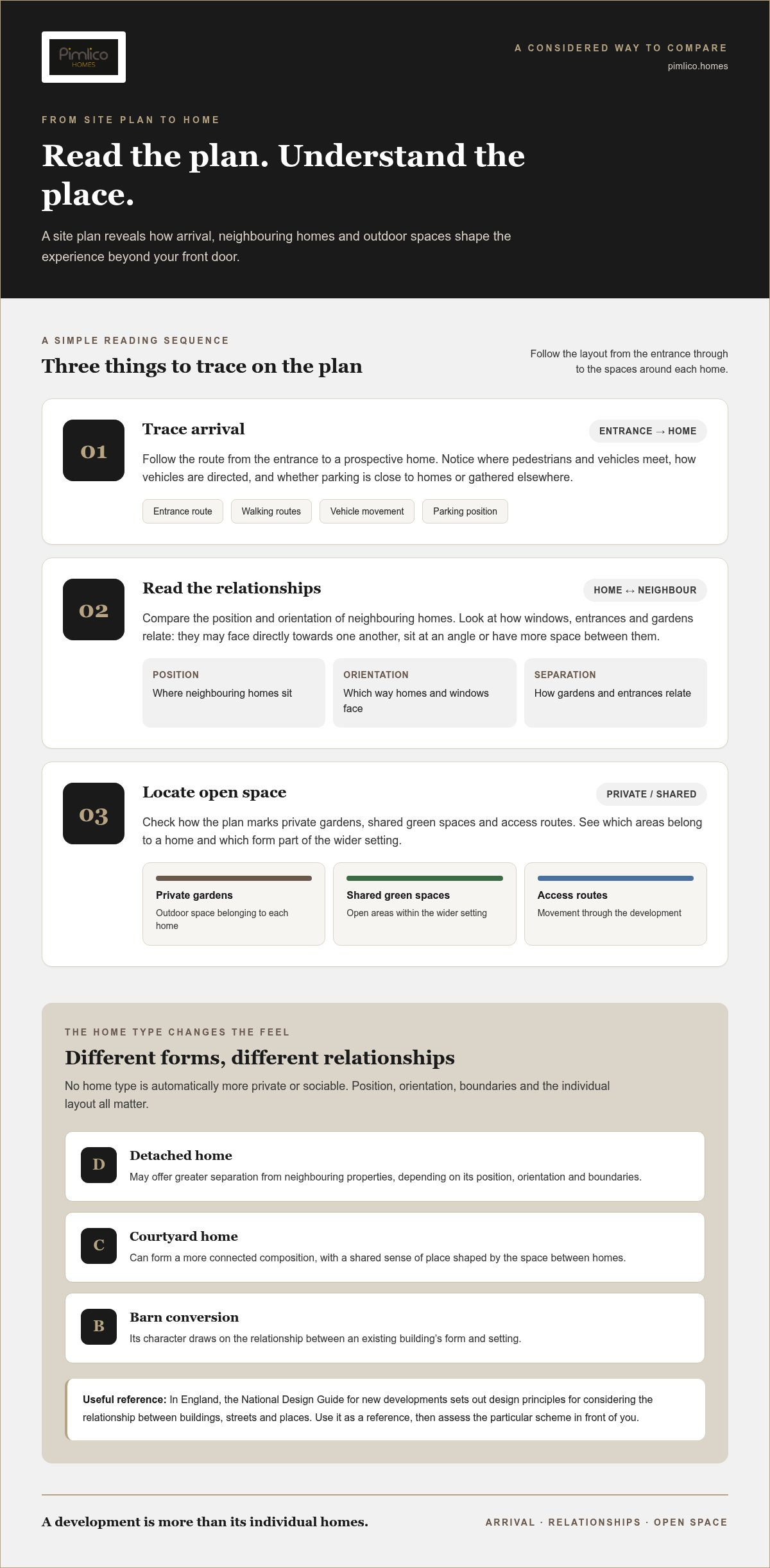
Start at the entrance and trace the routes through the development. Notice where vehicles are directed, where people can walk, and whether parking sits close to homes or is gathered elsewhere. Then look at each property’s position and orientation. Windows, entrances and gardens facing directly towards one another can create a different outlook from homes arranged at an angle or with more space between them.
Check how the plan marks boundaries. Private gardens, shared green spaces and access routes should be clear enough to show which areas belong to each home and which form part of the wider setting. In England, the National Design Guide for new developments sets out design principles that can help buyers consider the relationship between buildings, streets and places. Use it as a reference, then assess the particular scheme in front of you.
Follow a simple sequence to make a plan easier to interpret:
- Trace arrival. Follow the route from the entrance to a prospective home and note where pedestrians and vehicles meet.
- Read the relationships. Compare the position of neighbouring homes, windows, gardens and parking.
- Locate open space. See whether outdoor areas appear private, shared or connected to routes through the site.
These observations turn an abstract drawing into practical questions about outlook, access and the boundary between private life and shared space. The site layout shapes the experience beyond your front door by determining how arrival, movement and outdoor space fit together.
How home types create different development experiences
Home type influences the character of a scheme. A detached home may offer greater separation from neighbouring properties, depending on its position, orientation and boundaries. A courtyard arrangement can place homes in a more connected composition, with a shared sense of place shaped by the space between them. Neither form is automatically more private or sociable; the site plan and individual layout matter.
Barn conversions bring another architectural character, often drawing on an existing building’s form and setting. Their appeal lies in the relationship between an inherited structure and considered residential design, rather than simply matching the appearance of newly built homes. A coherent development need not be uniform: complementary materials, rooflines or landscape choices can bring a scheme together while allowing each home its own identity.
Explore how Pimlico Homes’ detached and courtyard homes reflect distinct ways of living within a development, alongside bespoke new builds and barn conversions.
How to Compare Luxury New Build Developments on What Matters
Brochures present developments at their most compelling. A more reliable comparison comes from applying the same questions to each scheme, then separating what you can see in plans and documents from what comes down to personal taste. Consistency helps you judge the whole proposition rather than letting one striking interior or landscape image dominate.
Use the same criteria for every development. Build a simple scorecard and record evidence, not just impressions. If a detail is unclear, write down the question rather than assuming the most favourable answer. This makes it easier to distinguish features that support your priorities from attractive extras.
A practical framework for comparing development plans
Use the same categories for each option and add a short written assessment, such as “supports my preference for a private garden” or “parking arrangement unclear”. A numerical score can help organise your thinking, but it should not imply precision when the evidence is incomplete.
- Setting: What is the immediate character of the surroundings, and how does the scheme sit within them?
- Layout: How are homes, access routes and parking arranged? Is movement easy to understand?
- Home type: Is the choice detached, courtyard, converted or another form, and does it suit your preferred way of living?
- Privacy: What do the plans show about spacing, orientation, boundaries and outlook?
- Shared areas: Which spaces are communal, and how do they relate to private gardens and routes?
- Project information: Which plans and specification documents are available, and what questions do they leave open?
Keep evidence beside each judgement, such as a site plan, specification document or observation from a visit. Mark features as essential, desirable or simply appealing. This prevents an impressive finish from outweighing a layout that does not suit your daily routine. For context on how new-build homes are considered in valuation, consult RICS standards for new build valuations. Valuation is one perspective; your own priorities remain central.
Matching a development type to your preferred way of living
Home types offer different spatial experiences, not a universal hierarchy. A detached home may appeal if separation and a distinct private setting matter to you. A courtyard arrangement can feel more connected, with homes grouped around a shared composition. Barn conversions bring individual architectural character shaped by an existing structure. Assess the actual layout rather than relying on the category alone.
Consider what matters in ordinary routines: a quieter relationship with neighbours, a sense of connection, or a home with distinctive architectural history. The design appeal of executive courtyard homes offers further perspective on this arrangement. Your comparison should identify not which development is universally best, but which aligns most closely with the life you want to lead.
What to Check Before Committing to a New Build Development
A considered decision rests on more than a viewing. Before committing to one of the luxury new build developments UK buyers may be weighing, compare what has been described with the project documents available to you. Keep a written record of details that are clear, points that differ and questions that remain. The aim is to understand the home and wider development you are considering, not to reach a legal conclusion yourself.
Reviewing project information and proposed layouts
Work through the information methodically. Compare the home’s description with its plans and specification documents, then examine how the wider development is represented. Illustrative images can convey design intent, but they are not a substitute for written project information. Planning and building requirements vary across the UK, so check that any regulatory references relate to the nation where the property is located.
- Read the development plan. Find your prospective home, entrances, access routes and parking. Note how these relate to nearby homes and movement through the site.
- Compare the home details. Check that the room arrangement, listed features and specification information correspond with the property you are considering. Record any differences between a description, drawing and image.
- Understand boundaries. Identify how the plans show the limits of private areas, access and shared spaces. Note where a boundary is unclear.
- Review shared areas. Look at how communal outdoor spaces and other shared parts are described, including information about their upkeep and who is responsible.
- Read the ownership documents. Establish whether the proposed arrangement is freehold or leasehold and review the documents explaining its specific terms. The implications depend on the arrangement, so do not rely on a label alone.
Understanding shared areas and ownership arrangements
Shared spaces can contribute to a development’s character, but buyers should understand how they are intended to be used and maintained. Look for written details about responsibility for upkeep, access and associated arrangements. This helps you assess the practical relationship between your home and the wider scheme, rather than treating communal areas as a purely visual benefit.
Freehold and leasehold are important ownership terms, but their implications depend on the specific documents and arrangements. Terminology and relevant requirements can also differ between UK nations. Read the purchase documents carefully and seek appropriate independent professional advice on points affecting your circumstances. Keep unclear details on your review list until you understand what the documents say.
Careful document review brings the development into sharper focus: not just the home you see, but the boundaries, shared responsibilities and written terms that form part of ownership. Explore Pimlico Homes’ considered new build homes as you assess which kind of development may suit your plans.
Discover a More Considered Approach to Luxury New Build Developments
A confident choice emerges when the details align: the development has a coherent design, the home type suits your preferences, the layout supports daily life, and the project information gives you a clear basis for understanding what is proposed. That is a more useful measure than a polished first impression alone, especially when comparing luxury new build developments UK buyers may be considering.
Pimlico Homes develops luxury detached homes, executive courtyard homes, bespoke new builds and luxury barn conversions. Each format offers a different relationship with space and architectural character. The right one depends on what matters to you, whether that is the separation of a detached home, a courtyard setting with a more connected arrangement, a home shaped around individual requirements, or the distinctive character of a conversion.
A development-led perspective on choosing a home
Consider the home and its surroundings together. A floor plan can help you assess how rooms work for you; the wider development plan shows how the home relates to access, outdoor areas and neighbouring properties. Pimlico Homes focuses on high-end design and craftsmanship, with each home understood as part of a considered residential setting. A property’s character comes from both its individual design and the way it belongs to the place around it.
There is no single definition of luxury that fits every buyer. One person may value distinctive architectural history, while another prioritises a layout suited to changing routines. Compare each option against your own needs, and use the available plans and specification information to understand the details behind its presentation.
Your next step towards a well-chosen home
Before moving forward, return to the points that matter most. A concise final review can bring your impressions and research into focus:
- Design: Does the architecture feel coherent across the development while allowing each home its own character?
- Home type: Does the property suit your preferences for space, privacy and architectural style?
- Practicality: Do the layout, access and outdoor areas support the way you expect to live?
- Information: Have you reviewed the plans, specification documents, boundaries, shared spaces and ownership details?
Resolve unanswered questions through the appropriate project information and independent advice where needed. A significant home choice deserves careful attention, not pressure. To continue your research, explore the luxury new build buying guide for 2026 alongside the residential information available from Pimlico Homes. A well-considered decision starts with understanding what matters to you, then finding a home and development that reflect it.
Choose a Place That Feels Right for the Years Ahead
Turn your priorities into a clearer sense of what home should mean to you. Look for a place whose character feels compelling now and whose design and setting still make sense as your routines evolve. That personal fit is what gives a property lasting significance.
For buyers exploring luxury new build developments UK, Pimlico Homes offers a specialist focus on luxury detached and executive courtyard homes, alongside bespoke new builds and luxury barn conversions. These distinct forms offer different expressions of space and character, with each choice best considered in relation to the life you want to lead.
Explore the homes and development information available, and let your priorities guide what you discover. Explore Pimlico Homes’ luxury residential developments to find inspiration for your next chapter. A well-chosen home can be more than an address; it can become a place to belong, shaped around the future you have in mind.
Frequently Asked Questions
Can I buy a luxury new build home before the development is complete?
Yes, in some cases a home can be purchased before construction is finished, but the process and information available depend on the development. If you are considering an off-plan purchase, check that the documents relate to the specific home and plot, not just a general example. Compare plans and specifications with illustrative images, and understand the contract terms and stated completion arrangements before deciding whether this route suits you.
What happens if the expected completion date for a new build changes?
The effect of a changed completion date depends on your contract and the circumstances of the development. Read the relevant clauses and any formal update carefully, then keep dated copies of written communications. A change may affect practical arrangements such as coordinating a move or the end of another housing commitment. If it could affect your plans or obligations, seek independent legal advice rather than relying on general expectations.
Is a reservation deposit refundable on a luxury new build?
Whether a reservation deposit is refundable depends on the reservation terms, contract wording and circumstances of the purchase. Before paying, read the agreement for the conditions that apply if you or the seller decide not to proceed, and note any deadlines or steps it describes. Don’t assume the deposit will automatically be returned or kept. An independent conveyancer or solicitor can advise on the specific agreement before you commit.
Can I personalise a new build home after reserving it?
Personalisation options depend on the home, its construction stage and the terms of the purchase. Some choices may need to be settled earlier in the build, while structural elements may already be fixed. Review the specification and choices documentation for what applies to your home, including any decision deadlines. If a show home or image illustrates a finish, treat it as an example unless the written purchase information says it is included.
What should I know about management charges in a residential development?
If a development has shared areas or services, the ownership documents should explain how their upkeep is organised and funded. Review who is responsible, how payments are structured and whether the documents describe a process for reviewing them. These arrangements can differ even between developments with similar communal spaces. Read the relevant terms carefully and obtain independent advice if you need help understanding your responsibilities or the effect of a particular clause.
Does a luxury new build development include landscaping?
Landscaping may be included in development plans, but its scope, timing and final appearance depend on the project documents and specification. Look for details that distinguish planting in a private garden from shared green areas, and check whether drawings are illustrative. If landscaping matters to your decision, compare the written information with marketing images and consider how the described planting and outdoor areas relate to the home you intend to buy.





