What if the most important decision about art storage is made before the first room takes shape? For anyone considering luxury new build features Pimlico Homes might include, climate-controlled storage is best treated as part of the design brief, not an afterthought.
It is natural to want suitable conditions for a valued collection, while also wondering what those conditions should be and whether a dedicated room is the only answer. Different materials can have different environmental needs, so one solution may not suit every work. Once a home is built, adapting its layout and services can also be more complex than planning them from the outset.
This guide covers the early decisions that inform a considered approach, from the location and purpose of the space to the choice between a dedicated room and integrated or adaptable storage. It explains how to bring specialist requirements into a bespoke home design conversation, balancing practical considerations with craftsmanship and a cohesive aesthetic. The aim is to give you a clear starting point for considering the home and collection together.
Key Takeaways
- Consider climate-controlled art storage among the luxury new build features buyers may wish to discuss early in a bespoke home design.
- Record your collection’s materials, dimensions, handling needs and intended access to create a practical storage brief.
- Assess temperature, humidity, light and air movement as distinct factors, guided by the needs of the artworks and relevant conservation advice.
- Compare a dedicated room, integrated storage and an adaptable multi-purpose space for access, separation, flexibility and design coherence.
- Bring your requirements into the design conversation before plans are settled, so specialist considerations can sit comfortably alongside the home’s wider design.
Why Climate-Controlled Art Storage Belongs in a New-Build Design Brief
Climate-controlled art storage is a planned space where environmental conditions are considered in relation to the collection it will hold. It is not simply a cupboard or spare room with shelving. The collection’s materials, dimensions, handling needs and intended use all influence what the space should accommodate.
A work displayed for regular enjoyment may have different practical requirements from one kept in storage for longer periods. Large canvases need room to be positioned and moved safely; framed works on paper may call for different handling from a three-dimensional mixed-media piece. Start the brief with the objects themselves, rather than assuming one room or arrangement suits every collection.
That distinction matters when considering luxury new build features North East buyers may wish to include. A general-purpose room can provide useful storage, but it does not automatically address a collection’s sensitivities or the practicalities of access. Planning around the intended contents gives the design conversation a clearer purpose.
Which collections may call for specialist storage?
Different media can respond differently to changes in their surroundings. Works on paper, paintings and mixed-media pieces may each include materials with distinct sensitivities. Even items grouped as one collection can vary in format, condition and handling requirements, so there is no single assumption that applies to every artwork.
An art conservator can identify collection-specific considerations and help translate them into a useful design brief. Record what the collection includes, which pieces are most delicate, and whether items will be stored, handled or viewed in the space. General controlled atmosphere storage principles offer background on managing environmental conditions, but they are not a substitute for advice tailored to an art collection.
Why plan storage before the home is designed?
Early planning allows the space to be considered alongside the home’s layout and building services. Its location may affect how artworks are brought in and out, how much room is available for handling, and how the intended storage arrangement fits within the wider plan. These questions are easier to address before rooms and circulation routes are settled.
Start with a practical record: list the artwork types, note dimensions, identify handling needs and describe how often you expect to access each piece. This gives the design team specific details to consider when reviewing room proportions, access and service coordination. It also helps distinguish a dedicated space from storage integrated into another room.
Good planning cannot guarantee that every artwork will be protected in every circumstance. It does, however, make the collection’s needs visible while design choices are still being shaped. In a bespoke home, thoughtful coordination can bring specialist requirements into the brief without losing sight of craftsmanship, timeless design and the character of the home as a whole.
How Climate-Controlled Art Storage Depends on the Indoor Environment
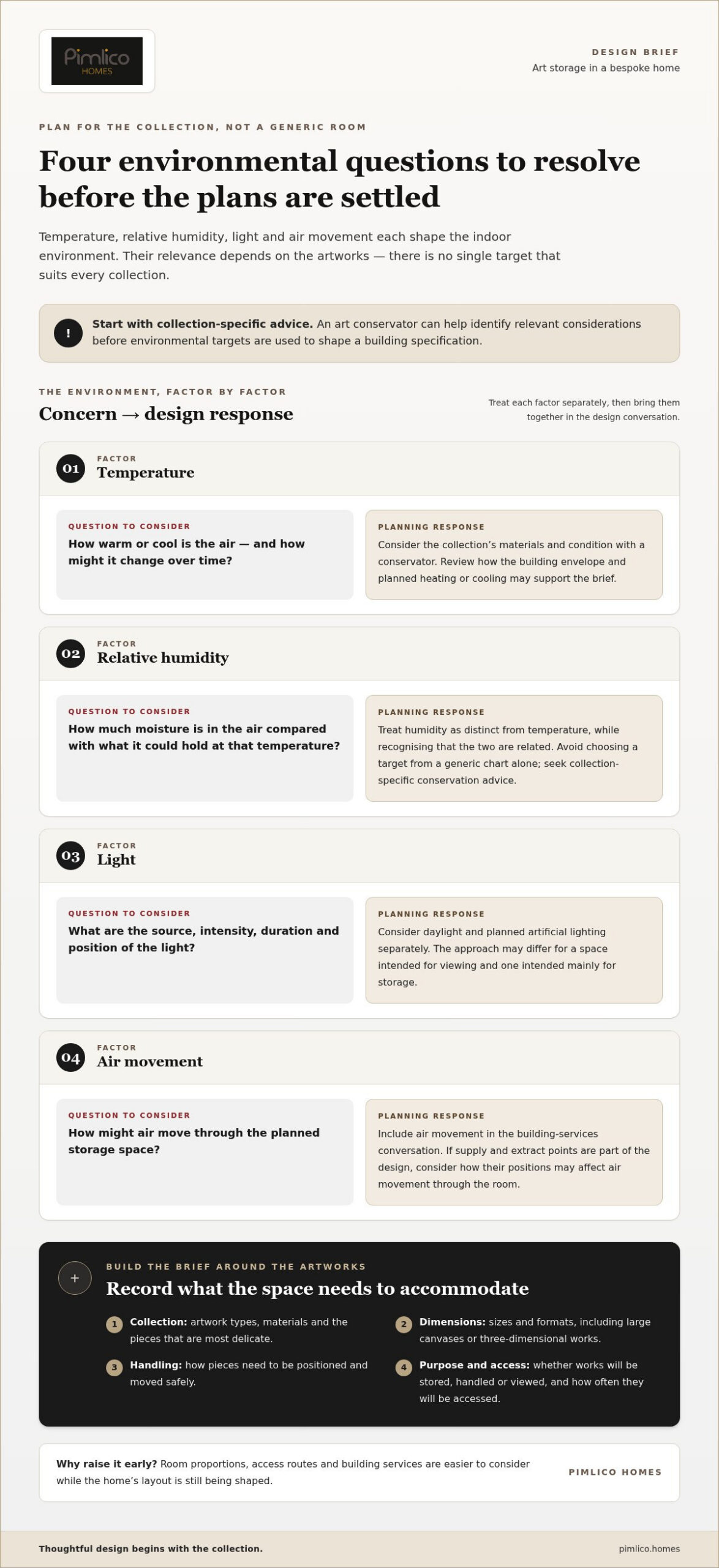
A carefully planned art space depends on more than a thermostat. Temperature, relative humidity, light and air movement are separate parts of the indoor environment, and their importance depends on the collection. A painting, a work on paper and a mixed-media object may respond differently to the same conditions. There is no universal target that can be assumed to suit them all.
For anyone considering luxury new build features North East homes might include, the practical starting point is to understand what the intended collection needs, then consider how the building can support that brief. The building envelope, meaning the parts that separate the interior from outside conditions, and the way heating, cooling and ventilation are planned can influence how a room behaves. Treat this as a design conversation, not an assumption that one particular system is required.
Temperature and relative humidity: what needs consideration?
Temperature describes how warm or cool the air is. Relative humidity describes how much moisture the air contains compared with the maximum it could hold at that temperature. The two are related, but they are not interchangeable. Changes in either may matter to artworks, and shifts over time can be as relevant as a reading at one moment.
For that reason, do not select a target from a generic chart alone. An art conservator’s collection-specific advice should inform environmental targets, because the materials, condition and combination of works determine which temperature and humidity considerations are relevant to the design brief. Have technical guidance on preservation conditions reviewed by a qualified conservator before using it to shape a building specification.
Light, air movement and monitoring
Light deserves separate attention. Its source, intensity, duration and position can all influence how a work is displayed or stored, so the brief should consider both daylight and planned artificial lighting. A space used to view pieces may need a different lighting approach from one intended mainly for storage. Do not assume that a visually pleasing arrangement is automatically appropriate for every object.
Air movement also belongs in the conversation. The position of supply and extract points, if included in the eventual building-services design, may affect how air moves through a room. Consider the space as part of the whole home, rather than as an isolated box. A building-services specialist can help assess how the envelope and proposed heating or ventilation arrangements relate to the conservator’s guidance, without presuming a particular system or outcome.
Monitoring may form part of the brief, particularly if the collection’s needs call for indoor conditions to be observed over time. The appropriate approach depends on the project and specialist advice. Do not assume it will involve a particular device, control method or level of performance. Clarity at this stage helps align environmental considerations with the home’s wider design intent.
That balance is central to bespoke luxury homes, where craftsmanship and innovation can support a considered brief without dictating a one-size-fits-all solution. Begin with the collection, bring professional conservation advice into the design discussion, and consider the home’s layout and services in response.
Dedicated Room or Integrated Storage? Compare the Design Approaches
There is no single layout that suits every collection. A dedicated room, storage incorporated into a larger space, or a room designed for more than one purpose can each work differently in practice. The useful comparison is not which sounds most impressive, but which best fits the artworks, household routines and advice from an art conservator.
| Approach | Access | Separation | Flexibility | Coordination with the home |
|---|---|---|---|---|
| Dedicated room | Access can be planned around handling and moving works. | Offers a distinct space away from everyday activities. | Less adaptable if the room has a specialist, single purpose. | Needs considered placement and proportion within the overall layout. |
| Integrated storage | Can keep items close to a display or living area. | Provides less separation from the room’s usual activity. | Storage can be part of a broader interior arrangement. | Requires care to balance storage with the room’s function and appearance. |
| Adaptable multi-purpose space | Access depends on how the room is being used. | Separation may vary with the room’s other uses. | Can accommodate changing household needs. | Needs a layout that makes both purposes practical. |
This comparison is a starting point, not a specification. None of the approaches inherently provides environmental control; that depends on the design and any measures planned for the space. When weighing luxury new build features North East homeowners may value, consider the arrangement alongside the collection’s needs and the character of the home.
When might a dedicated art-storage room suit the brief?
A separate room may suit a collection that needs orderly organisation, a clear area for handling, or some separation from busy household routines. Access can be planned around how artworks enter, leave and are arranged within the space. The trade-off is dedicating a distinct part of the home to one specialist purpose. This choice makes most sense when the collection and household’s use of the home support it, rather than simply for the impression it creates.
When could integrated or adaptable storage make sense?
Integrated storage may be appropriate when works are closely connected to rooms where they are viewed or enjoyed. It can form part of a considered interior, though everyday activity in that space should be weighed against the collection’s requirements. An adaptable room may offer a useful balance if its layout accommodates storage alongside another purpose. Its suitability depends on whether changing uses introduce handling, access or environmental considerations that conflict with professional advice.
Before settling on an approach, consider how often the works will be accessed, who will handle them, and whether the room will have another role. A specialist space may be justified for practical reasons, while a more integrated solution may better support daily life. Let the collection brief and household routines guide the design decision, with conservation guidance informing the balance.
How to Brief the Design Team on Art Storage Before Building
A clear brief turns a personal collection into practical design information. It helps the design team understand what the space may need to accommodate, which decisions depend on specialist advice, and how storage should fit within the home. Keep confirmed facts separate from assumptions; precision supports a more considered discussion.
Before the design discussion, prepare an inventory of artwork types, materials, dimensions, handling needs, intended display and storage, access patterns, security questions and points requiring professional assessment.
Prepare a collection-led design brief
Work through the collection methodically. Note whether pieces are works on paper, paintings or mixed-media, and record approximate dimensions, including frames or mounts where relevant. Describe which items will be displayed, which are intended for storage, and how frequently you expect to handle or access them. Photographs can help the team understand formats and arrangements, but should accompany, not replace, written measurements.
- Inventory the collection. Group works by media and record dimensions, condition notes you already know, and any unusual formats or handling requirements.
- Describe how you will use the space. Set out whether pieces will be stored, viewed, arranged or moved through the room, and who is likely to need access.
- List practical questions. Note security considerations, handling routes and whether the collection may change over time. Mark each point as known, preferred or awaiting specialist advice.
- Seek collection-specific guidance. An art conservator can advise on preservation considerations; relevant building-services specialists can consider how those requirements relate to the proposed design.
Coordinate layout, services and future flexibility
Once the brief is assembled, use it to review the proposed layout rather than treating storage as a final interior detail. Consider where the room sits, how artworks and people will move through the home, and how the intended use coordinates with building services. Ask the design team to record key assumptions and specialist recommendations clearly, so the basis for decisions remains visible as plans develop.
- Review the room position and circulation. Consider the route from entry to storage and the space needed to manoeuvre the largest works safely, based on their dimensions and handling advice.
- Coordinate the services discussion. Share the conservator’s guidance with the relevant building-services specialists so environmental considerations can be discussed alongside the wider design, without presuming a specific system or outcome.
- Test future flexibility. Consider whether the layout could accommodate additions to the collection or a change in household use. Record any compromises, dependencies or matters still awaiting professional assessment.
For a bespoke home, this process brings specialist requirements into the design conversation early, while leaving room for craftsmanship and timeless design to shape the overall result. To discuss a bespoke home brief with Pimlico Homes, explore a bespoke home design. Pimlico Homes is Company No. 13527402.
Considering Art Storage Within a Bespoke Pimlico Homes Design
A home is shaped by more than its rooms and finishes. The way its spaces support a household’s interests and routines matters too. Pimlico Homes develops bespoke luxury homes, where personal priorities can form part of the wider design conversation. If art storage is among yours, raising it early gives it a place in the brief alongside the other qualities you want your home to embody.
Make your requirements clear so they can be considered alongside the home’s layout, character and practical needs. For a collection, that may mean explaining whether works are primarily displayed or stored, how you expect to access them, and what specialist advice says about their care. These details can help distinguish an essential requirement from a preference, while keeping art storage in proportion with the rest of your home priorities.
Bring specialist requirements into the home conversation
A concise brief makes a complex subject easier to discuss. Describe the collection in broad terms, note the dimensions and handling needs of key works, and explain how the space might be used. Include questions that still need professional assessment, rather than presenting assumptions as settled requirements. An art conservator’s guidance can clarify collection-specific considerations; building-services input can then inform how these relate to the home’s design.
There is a balance to strike. Art storage may be important, but it sits alongside other considerations, such as how the home flows, where family life gathers, and the overall atmosphere you want to create. A thoughtful conversation allows each priority to be weighed together. Craftsmanship and innovation are most meaningful when they serve the people who will live in the home, while timeless design gives personal choices a coherent setting.
A considered next step for a bespoke home
Before discussing your design vision, gather the questions that make your collection distinctive: what types of work do you own, what are their approximate dimensions, how will you access or handle them, and what advice has a conservator provided? Consider whether the space is intended for display, storage or both, and whether your collection or household needs may change. A clear brief gives the conversation a considered starting point without deciding the solution in advance.
Pimlico Homes brings craftsmanship, innovation and timeless design to its bespoke homes. The Pimlico Pledge reflects the company’s commitment to customer service from reservation through hand-over of keys, supporting customers through this important journey. Art storage can be one element of a broader, carefully shaped vision.
To explore Pimlico Homes’ bespoke homes and consider how your priorities might inform a home design conversation, take the next step at your own pace. Pimlico Homes is Company No. 13527402.
Shape a Home Around the Life You Want to Live
A collection can be part of a home’s character, but its needs are only one element of a larger vision. As you consider luxury new build features North East buyers may prioritise, think about how your home should support daily life, personal interests and the things you value for the long term. A clear sense of those priorities gives a bespoke design conversation a meaningful starting point.
Pimlico Homes brings over 25 years of experience to the creation of bespoke luxury homes. Its approach centres on craftsmanship, innovation and timeless design. The Pimlico Pledge supports customers from reservation through hand-over of keys, providing continuity during an important home-buying journey.
Explore Pimlico Homes’ bespoke homes and begin shaping a home around what matters to you. A thoughtful vision is a fine place to start.
Frequently Asked Questions
What is climate-controlled art storage?
Climate-controlled art storage is storage planned around the environmental needs of a particular collection. Unlike an ordinary cupboard or general-purpose room, its intended use and conditions are considered in relation to the works it will hold. Paper, paint and mixed-media components may call for different considerations, so a conservator’s guidance can inform the brief. The label itself does not promise a preservation outcome or a particular level of protection.
Does every art collection need climate-controlled storage?
No. Whether specialist storage is appropriate depends on the artworks, their materials and condition, how they will be stored, and the environment around them. A small group of works displayed in living spaces may raise different questions from a collection kept together out of view. Neither situation automatically requires a dedicated controlled room. An art conservator can assess the collection and help inform a suitable design approach.
What temperature and humidity should art storage maintain?
There is no single temperature or humidity target that suits every artwork. The materials, condition and conservation recommendations for the specific collection all influence what should be considered. Stability may matter alongside the selected target, so a single reading does not tell the whole story. Before setting environmental specifications for a room, seek collection-specific advice from an art conservator and discuss relevant building considerations with specialists.
Can art storage be included in a bespoke new-build home design?
Yes. You can raise collection requirements during early design discussions, when room layout and building-services coordination are being considered. A useful starting point is a short inventory covering materials, approximate dimensions, handling needs and how you expect to use the space. For buyers considering luxury new build features North East homes might include, the final approach should reflect the home’s design and relevant specialist recommendations, not an assumed standard system.
Is a basement suitable for storing valuable artwork?
A basement is not automatically suitable simply because it is enclosed or separate from the main living areas. Its suitability depends on the room’s environmental stability and condition, how works can be accessed, and the needs of the collection. For example, a difficult route for moving large pieces may be a practical concern. Ask an art conservator and relevant building-services specialists to assess the proposed location before making it part of the design.
Can existing art storage be adapted if a collection changes?
Possibly, but the scope for adaptation depends on the building, its installed services and what the new collection requires. A room arranged for framed works, for example, may not readily suit objects with different dimensions or handling needs. Document current conditions and the proposed changes, then seek advice from an art conservator and relevant building-services specialists before altering the space. New equipment alone may not address every concern.