
For an overseas purchase, a smoother process depends on more than finding the right home. Appointing a solicitor early can help keep legal questions and decisions on track. A search for “luxury new build homes for overseas buyers UK” may begin with architecture and setting, but buying from abroad also calls for careful legal coordination. Distance, time zones, identity checks and unfamiliar procedures can make even a well-planned purchase feel complex.
A solicitor experienced in non-resident purchases and new-build transactions can explain their role, carry out legal checks and coordinate the conveyancing with you. The process and property taxes differ across the UK, so the property’s jurisdiction matters from the outset. This guide explains how to assess a solicitor’s experience, prepare documents and questions before instructing them, and organise communication during the transaction. With clear responsibilities and a considered approach, you can follow the legal process more confidently while keeping the home itself in view.
Key Takeaways
- Shortlist a solicitor whose experience matches your purchase, buyer status and the UK jurisdiction where the property is located.
- For luxury new build homes for overseas buyers UK, clear communication and familiarity with developer contracts can help keep the legal process coordinated.
- Compare written scopes of work to see what the solicitor will handle and which matters may sit outside that scope.
- Prepare questions about identity checks, source-of-funds evidence and remote document handling before you instruct a solicitor.
- Use regular updates to track contract review, exchange and completion, and to identify outstanding documents or decisions.
Buying a UK Luxury New Build from Overseas: Why the Solicitor Matters
Buying a home from overseas can feel complicated before the legal work begins. You may be reviewing plans and developer information from another time zone while getting to grips with unfamiliar paperwork and decisions. A solicitor brings structure to the legal process. Understanding what they do, and where their responsibilities begin and end, gives you a clearer basis for choosing representation for luxury new build homes for overseas buyers UK.
Conveyancing is the legal work involved in transferring property ownership from seller to buyer. Terminology and procedures vary across England, Wales, Scotland and Northern Ireland, so the property’s jurisdiction should shape the advice you receive. Your solicitor acts for you as the buyer. The developer presents and sells the home, provides transaction information and manages its own responsibilities. It does not replace independent legal advice on your behalf.
A solicitor protects the buyer’s legal position by examining the transaction, explaining its documents and guiding the transfer of ownership.
What does a conveyancing solicitor do for an overseas buyer?
Your solicitor examines the legal title and relevant property information, reviews the contract and raises enquiries when details need clarification. They prepare or check transaction documents, explain what you are being asked to agree to, and advise on legal risks that could affect the purchase. If, for example, the contract refers to a boundary, access right or completion arrangement you do not understand, your solicitor can explain its legal significance and identify questions to resolve.
This is different from a property agent’s role. A solicitor represents your legal interests; they do not act as your property-finding agent or assess the home’s design in place of your own judgement. From abroad, agree how documents will be shared, how instructions will be recorded and how urgent questions will be handled. Identity and source-of-funds checks may also be part of the solicitor’s onboarding process. The precise requirements depend on the firm and applicable rules.
Why does a new-build purchase need a distinct approach?
With a resale, the home is usually already built and occupied or ready to occupy. With a new build, the legal paperwork may relate to a plot, plans, specifications and work still under way. Information can arrive in stages as the purchase and construction progress. Your solicitor reviews the contractual material and explains its implications; the developer remains the source of project and construction updates.
Pay close attention to dates. The contract may set out milestones or explain how completion is triggered, but the arrangements depend on the contract and jurisdiction. Keep a dated record of questions, replies, revised documents and any deadlines your solicitor identifies. If a developer update changes your understanding of the home or its expected progress, pass it to your solicitor promptly rather than assuming it changes the legal agreement.
There is no single UK-wide conveyancing sequence. Scotland, for example, has a distinct process from England and Wales, and Northern Ireland has its own legal framework. A solicitor familiar with the relevant jurisdiction can interpret the paperwork in context and help coordinate legal decisions with developer communications. This keeps the developer’s role in delivering the home distinct from the solicitor’s duty to advise you on the transaction.
How to Find a UK Solicitor with the Right Overseas-Buyer Experience
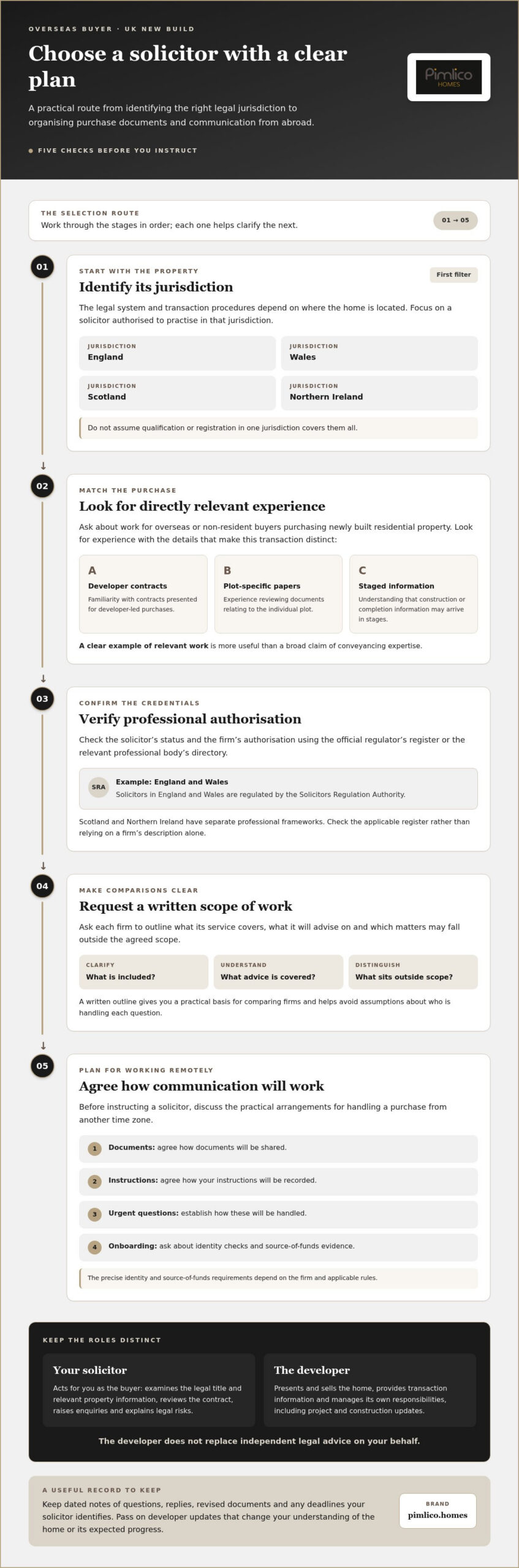
Build your shortlist around the details of the purchase, not familiarity alone. For luxury new build homes for overseas buyers UK, look for a solicitor who understands the property’s jurisdiction, has relevant experience with non-resident clients and developer-led purchases, and can explain how they will work with you from abroad. These qualities help make a complicated sequence of documents and decisions easier to manage.
- Start with the property’s jurisdiction. Identify whether the home is in England, Wales, Scotland or Northern Ireland, then focus on solicitors authorised to practise there. Legal systems and transaction procedures are not identical. Do not assume that qualification or registration in one jurisdiction covers them all.
- Look for directly relevant experience. Ask about work for overseas or non-resident buyers purchasing newly built residential property. Find out whether the solicitor has handled developer contracts, plot-specific documents and transactions where construction or completion information arrives in stages. A clear example of relevant work is more useful than a broad claim of conveyancing expertise.
- Verify professional authorisation. Use the official regulator’s register or relevant professional body’s directory to check the solicitor’s status and the firm’s authorisation for the jurisdiction. Solicitors in England and Wales, for example, are regulated by the Solicitors Regulation Authority. Scotland and Northern Ireland have separate professional frameworks. Check the applicable register rather than relying on a firm’s description alone.
- Request a written outline of the work. Ask what the service covers, what the solicitor will advise on and which matters may fall outside the agreed scope. This gives you a practical basis for comparing firms and helps avoid assumptions about who is handling each question.
- Assess communication before you instruct. Establish who your main contact will be, how documents can be shared securely and what update schedule the firm can provide. Discuss how it handles time-zone differences, urgent questions and matters that need your approval. Ask how unfamiliar legal terms will be explained so you can understand their significance before making decisions.
Shortlist on three essentials: authorisation in the property’s jurisdiction, relevant overseas new-build experience and clear written communication.
An introductory conversation can help you assess the quality of a solicitor’s answers. Ask how they would organise a contract review if you are abroad, or how they distinguish developer updates from changes to the legal agreement. Look for a clear explanation of process and responsibilities, not just reassurance. The solicitor represents your interests; the developer presents and sells the home and provides project information.
With legal representation in view, you can consider the home and the legal review together. See Pimlico Homes’ luxury new-build homes as part of your wider purchase planning, while keeping property decisions and independent legal advice distinct.
Comparing Solicitors: Scope, Communication and New-Build Knowledge
Once you have a shortlist, compare what each solicitor will do, not just your overall impression of their service. For a remote purchase, a clear written scope and a reliable update process make it easier to follow the work across time zones. Look for a solicitor who can explain how their service fits your transaction rather than assuming one approach suits every buyer.
| Comparison point | What to look for |
|---|---|
| Experience | Relevant work with overseas buyers and developer-led residential purchases, including review of new-build contracts and supporting documents. |
| Jurisdiction | Authorisation to practise where the property is located, and familiarity with the legal process that applies there. |
| Communication | A clear method for secure document exchange, routine updates, urgent queries and matters requiring your approval. |
| Scope | A written description of the legal work included, its limits and how additional work is handled. |
| Fee transparency | An itemised explanation of the solicitor’s charges, disbursements and relevant third-party costs, with the basis for additional charges made clear. |
What should a clear engagement scope explain?
Look for a practical description of how the solicitor will review the contract, raise and assess enquiries, report key findings and handle legal steps towards completion. The engagement terms should explain what happens if the work changes or additional issues arise. Ask how disbursements, meaning payments made to third parties as part of the transaction, are shown separately from the solicitor’s own charges.
Keep the boundaries clear. A conveyancing solicitor provides legal advice on the transaction and its documents. Mortgage advice, tax planning, a property survey and technical construction assessments are separate matters. Knowing what falls within the legal retainer helps you direct questions appropriately and identify any advice you still need before deciding how to proceed.
How should a solicitor handle new-build transaction details?
New-build paperwork may include plans, specifications, contractual dates and information supplied as construction progresses. Ask how the solicitor records outstanding documents, tracks deadlines and flags decisions that need your instruction. Before you commit, you should receive clear legal advice about the obligations in the contract, with uncertainties explained in practical terms.
Distance need not mean uncertainty. Agree what each update should cover: what has been reviewed, what remains outstanding, whether you need to respond and what the next legal milestone depends on. For example, an update can distinguish a document that is still awaited from a contractual decision that requires your approval. This structure helps you stay involved without having to monitor every exchange in real time.
Compare each firm’s written proposal against the same points, then note any differences in responsibilities or communication arrangements. For buyers considering luxury new build homes for overseas buyers UK, this makes the legal service easier to understand before instruction and helps keep the purchase coordinated.
Preparing to Instruct a Solicitor and Manage the Purchase Remotely
Preparing the practical details before you instruct a solicitor can help keep an overseas purchase organised. For luxury new build homes for overseas buyers UK, agree how information, decisions and deadlines will be managed. This gives you, your legal representative and the developer a clearer view of what is needed and who is responsible for each step.
- Define your purchase needs. Set out the property you are considering, who will own it, how you expect to fund the purchase and what you want from the home. If ownership or funding involves more than one person or a company, explain that at the outset so the solicitor can identify relevant questions.
- Shortlist and select your solicitor. Focus on experience with overseas buyers, new-build transactions and the jurisdiction where the home is located. Compare each firm’s proposed scope and communication arrangements before deciding whom to instruct.
- Clarify responsibilities and updates. Agree how the solicitor will report on contract review, outstanding information and decisions requiring your approval. Establish how developer project updates will reach you and when to share relevant information with your solicitor.
- Prepare requested documents. Gather identity and address documents, along with information about the source of funds and intended ownership. The required evidence, format and verification process depend on the solicitor’s requirements and applicable rules. Follow the instructed firm’s directions rather than assuming a standard set of documents will apply.
- Set up a shared record. Keep a dated list of requests, replies, decisions and upcoming milestones. Note who is responsible for each item, whether that is you, the solicitor or the developer, and mark any date the contract identifies as significant.
Prepare questions and documents before instruction
Keep a concise question list covering the property documents, contract terms, expected stages and your preferred communication method. Ask which documents should be originals, certified copies or digital files, and how to send them securely. Before signing anything, ask how documents must be executed and witnessed in the relevant jurisdiction. Requirements can differ, so your solicitor should explain the process that applies to your transaction.
For a broader view of the purchase journey, the luxury new-build purchasing guide covers legal preparation alongside the wider decisions involved in buying a new home.
Keep remote communication structured
Agree a regular update schedule and a secure channel for sharing documents. A shared deadline list can help align your actions with legal requests and developer information without confusing the responsibilities of the three parties. Record when a question was raised, who needs to respond and whether the answer affects a decision or contractual milestone. If a developer update appears to change information in the contract, send it to your solicitor for advice rather than relying on informal messages alone.
As you organise the purchase, you can also view Pimlico Homes’ luxury new-build homes and consider how the home fits your priorities.
From Solicitor Instruction to a Confident Luxury New-Build Purchase
Once instructed, your solicitor guides you through the legal stages of the purchase. The broad sequence is instruction, review of the contract and supporting papers, enquiries and advice, agreement to proceed, then the steps leading to completion. The names and order of milestones differ across the UK, so treat this as an overview rather than a fixed timetable. Your solicitor can explain the applicable process and identify what needs your attention at each stage.
What should you expect as the transaction progresses?
After reviewing the contract and available information, your solicitor should report their findings, explain points that need a decision and set out the next steps. You may be asked to approve a response to an enquiry, clarify an instruction or consider a contractual obligation. Ask for significant advice in writing and keep the correspondence with your records. A clear written record gives you a useful reference if questions arise later.
In England and Wales, exchange of contracts is a key commitment before completion. Scotland has a distinct process, including the conclusion of missives, while Northern Ireland follows its own conveyancing framework. Milestones, terminology and timing can also depend on the contract and circumstances. Rather than relying on a generic timeline, use your solicitor’s updates to track what is complete, what remains outstanding and whether you need to act.
How can the home search and legal process work together?
Keep your practical priorities in view alongside the legal work. Consider how the home’s layout, setting and documented features meet your requirements, while keeping funding arrangements, ownership intentions and purchase documents in view too. Developer information helps you understand the home and project; independent legal advice helps you understand the contract and your obligations. Each serves a distinct purpose, and neither replaces the other.
As you consider luxury new build homes for overseas buyers UK, make sure new information reaches the right person. A developer update about a plan or construction detail may prompt a question, but your solicitor can advise on its contractual significance. Legal advice may also identify an issue you want to discuss with the developer. Connecting those conversations and recording who is responsible for each response helps prevent details from being missed across time zones.
Pimlico Homes is a residential developer selling luxury new-build homes. Its role is to present and sell homes; your solicitor provides independent advice on the purchase documents and legal process. Keeping those responsibilities clear allows you to give both the home and the transaction the attention they need.
View Pimlico Homes’ new-build homes as you consider your next steps and the qualities you want in your new home.
Take the Next Step Towards Your New Home
A purchase from overseas is an opportunity to decide what you want your next home to make possible. As you consider luxury new build homes for overseas buyers UK, weigh the legal process alongside the qualities that matter in everyday life: considered design, high-quality craftsmanship and a home that feels right for you.
Pimlico Homes develops luxury residential properties, including luxury detached homes, executive courtyard homes and bespoke homes. Consider each home in light of your priorities, while your independent solicitor advises you on the legal commitments. A considered decision takes both perspectives into account.
Explore luxury new-build homes from Pimlico Homes and take the next step towards a home shaped around thoughtful design and quality craftsmanship.
Frequently Asked Questions
Can a non-resident buy a luxury new-build home in the UK?
Yes. There are no general restrictions preventing overseas nationals from owning UK property, but buying a home does not grant permission to live in the UK. For buyers considering luxury new build homes for overseas buyers UK, property ownership and immigration status are separate matters. Consider how you plan to use the home and whether your plans involve separate visa or residence requirements.
How do I find a solicitor for a UK property purchase from overseas?
Look for a solicitor authorised in the jurisdiction where the property is located, with experience acting for overseas buyers in new-build transactions. Check their professional status through the relevant regulator’s register or professional body, then request written details of their work and communication arrangements. Ask whether they have handled purchases involving developer contracts and remote clients, and how they explain decisions that need your approval.
Do I need a solicitor based in the UK to buy a new-build home?
You need legal representation authorised to handle conveyancing in the jurisdiction where the home is situated. The solicitor’s physical office location is a separate consideration. A solicitor based elsewhere may be able to act if properly authorised for that jurisdiction and equipped to manage the transaction. Establish this before instruction, especially if the property is in Scotland, Wales or Northern Ireland, where the legal framework differs from England.
Can the conveyancing process be completed remotely if I live overseas?
Much of the communication and document exchange can often be managed remotely, but the exact steps depend on the solicitor, transaction and jurisdiction. Some stages may require particular signing or witnessing arrangements, so do not assume an electronic signature will be accepted for every document. Before proceeding, agree how instructions will be confirmed, how original papers will be handled if needed and which secure channel to use for sensitive information.
What documents might an overseas buyer need to provide to a solicitor?
Expect to be asked for identity and address evidence, along with information supporting the source of funds for the purchase. The solicitor may also need details of intended ownership, such as the names of all buyers or information about a purchasing company. Requirements and acceptable formats vary, so use the instructed firm’s document list to guide any arrangements for translations, certifications or other formalities.
Are property purchase taxes the same across the UK?
No. The tax and transaction systems depend on where the property is located: Stamp Duty Land Tax applies in England and Northern Ireland, Land Transaction Tax in Wales, and Land and Buildings Transaction Tax in Scotland. Rates, reliefs and rules for overseas or additional-property buyers can differ and may change. Ask which tax applies to your purchase and seek tax advice if your wider circumstances need consideration.
When should I instruct a solicitor for a new-build purchase?
Instruct a solicitor as early as practicable, ideally before making a binding commitment or signing purchase paperwork. Early involvement gives them time to review the proposed contract and explain obligations before you decide whether to proceed. For a home under construction, it also allows legal questions about plans, specifications or completion arrangements to be raised while there is time to seek clarification.





