
A swimming pool isn’t merely a leisure accessory; it’s a profound architectural statement that defines the very soul of a high-end estate. Most owners of luxury new build homes with swimming pools understand that the true value lies in the invisible details, the structural precision and the seamless flow between the terrace and the water’s edge. You likely recognise that a poorly integrated installation can disrupt the harmony of a bespoke build, yet the desire for a private sanctuary remains paramount.
This guide promises to transform that vision into a reality by mastering the delicate balance between aesthetic elegance and engineering excellence. We’ll explore the nuances of UK planning permissions, the critical importance of Building Regulations, and how to maintain absolute privacy within exclusive developments. By the end, you’ll possess the clarity needed to ensure your aquatic features are as enduring as the home they grace. It’s about moving beyond the surface to create a legacy of quality that resonates through every ripple.
Key Takeaways
- Navigate UK planning laws with confidence by distinguishing between Permitted Development rights and the specific requirements for properties in conservation areas or the Green Belt.
- Ensure your installation is a visionary creation by matching premium pool materials with the architectural facade of luxury new build homes with swimming pools.
- Prepare your estate’s infrastructure early with a dedicated 32-amp electrical supply and integrated filtration systems to avoid costly retrospective changes.
- Optimise the “Goldilocks” zone of your garden to balance natural solar gain with protection from the wind for a superior year-round experience.
- Understand the impact of bespoke leisure features on property value and learn how to future-proof your investment for discerning high-net-worth buyers.
Navigating Planning Permission and Site Selection for Luxury Pools
The journey toward a private aquatic sanctuary begins long before the first spade touches the earth. Integrating luxury new build homes with swimming pools requires a meticulous assessment of the landscape. You must ensure the ground stability and drainage capacity can support such a significant, heavy-duty installation. A site with a high water table or clay-heavy soil may require specialised reinforced concrete foundations to prevent shifting over time. It’s about more than just aesthetics. It’s about permanence and the structural integrity of your entire estate.
Legal Constraints and Permitted Development Rights
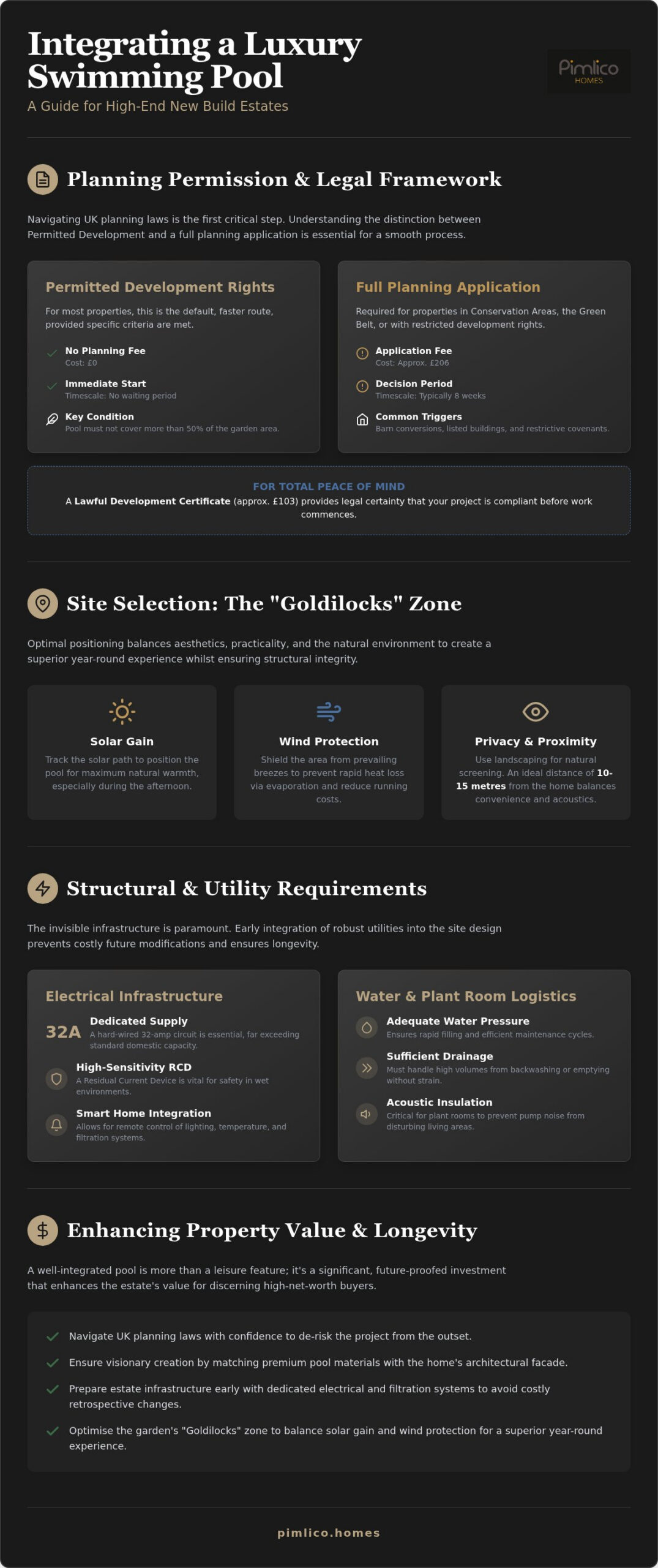
In many parts of the UK, an outdoor pool is considered “permitted development” under the Town and Country Planning Order 2015. This allows for a smoother process, provided the pool doesn’t cover more than 50% of your garden and isn’t situated in front of the principal elevation. If your home sits within a conservation area or the Green Belt, the rules become more complex. In these cases, a full planning application is required. This typically carries a fee of around £206 and a decision timescale of eight weeks.
Bespoke luxury barn conversions frequently have these rights restricted or removed entirely to preserve the historical character of the site. Similarly, executive courtyard developments may have restrictive covenants that dictate the placement of outbuildings and leisure facilities. A Lawful Development Certificate, which costs approximately £103, offers the security of knowing your project is legally sound before work commences. It’s a small price for total peace of mind.
Optimal Positioning for Aesthetic and Practical Success
Identifying the “Goldilocks” zone involves balancing the natural elements. You should track the solar path to ensure the water benefits from maximum natural warmth during the afternoon. Natural wind protection is equally vital. A pool exposed to the prevailing breeze will lose heat rapidly through evaporation, increasing running costs and diminishing the user experience. Look for areas shielded by the house or existing structures.
Strategic placement allows you to maintain seclusion amongst neighbouring executive homes. By utilising the existing topography and high-specification landscaping, you can create a natural screen that shields the area from view. When considering different swimming pool construction methods, think about the acoustic separation from the main residence. You want the convenience of proximity without the sound of splashing water or filtration pumps echoing into your quiet living spaces. A distance of ten to fifteen metres often provides the perfect buffer.
Structural and Utility Requirements for High-Specification Installations
Engineering excellence is the silent partner of architectural beauty. For luxury new build homes with swimming pools, the invisible infrastructure determines the longevity of the investment. It isn’t enough for a pool to look spectacular; it must function with the precision of a master-crafted timepiece. This requires early integration of utilities into the primary site design, ensuring the home acts as a reliable guardian of these sophisticated features.
Electrical Infrastructure and Safety Standards
A standard domestic circuit isn’t sufficient for high-specification leisure installations. You’ll require a dedicated 32-amp supply, hard-wired to a consumer unit with a high-sensitivity Residual Current Device (RCD). This is vital for safety in wet environments. Unlike ‘plug-and-play’ alternatives, permanent luxury builds demand bespoke electrical solutions that integrate with your centralised smart home system. This allows you to orchestrate lighting, temperature, and filtration cycles from a single mobile interface, even whilst you’re away from the estate.
Water Management and Plant Room Logistics
Efficiency begins in the plant room. You must ensure adequate water pressure for rapid filling and maintenance cycles. It’s equally important to design drainage systems that can handle the volume of backwashing or seasonal emptying without overwhelming the local network. Whilst UK Permitted Development Rights focus on the external footprint, building regulations dictate the internal safety and energy standards. For indoor installations, acoustic insulation in the plant room is paramount. It ensures the rhythmic hum of the pumps doesn’t compromise the quiet confidence of your living spaces.
Weight-bearing considerations are critical if you’re envisioning a raised deck or a roof terrace installation. Water is exceptionally heavy; a medium-sized pool can easily exceed 50 tonnes when full. This necessitates reinforced structural supports that mirror the craftsmanship of the primary residence. Future-proofing is the final layer of this visionary creation. By incorporating energy-efficient air-source heat pumps and automated insulated covers, you reduce annual running costs, which typically range between £3,000 and £4,000. It’s a commitment to sustainability that enhances the long-term appeal of our bespoke luxury homes.
Designing for Aesthetic Harmony and Architectural Synergy
Aesthetic cohesion is the hallmark of a truly bespoke estate. For luxury new build homes with swimming pools, the water feature should never appear as an afterthought. It must mirror the architectural language of the primary residence, drawing inspiration from the same lines, textures, and proportions. This synergy transforms a standard garden into a curated sanctuary. It’s about creating a visual dialogue between the stone of the facade and the shimmer of the water.
Sunken Installations for a Minimalist Finish
Flush-to-ground pools offer a minimalist profile that preserves the clean sightlines of contemporary architecture. They create a seamless transition between the indoor living space and the outdoor terrace. This approach is particularly effective for those seeking a modern, understated elegance. Maintenance access is hidden within discreet stone-clad hatches to ensure the mechanical elements remain invisible. For executive family homes, safety is a primary consideration. Automated covers that can support the weight of a child or pet are essential. They ensure the aesthetic remains undisturbed whilst providing total peace of mind for the homeowner.
The Material Palette: Timber, Stone, and Glass
Selecting materials requires a master craftsman’s eye. For luxury barn conversions, matching the pool surround to the original heritage stonework creates a sense of permanence. Durable hardwoods like Ipe or high-specification Millboard provide a warm, organic contrast to the cool water. Integrating glass balustrades allows for uninterrupted countryside views, a key trend in Modern Pool Architecture that emphasises transparency and light. These choices ensure the installation feels like a natural extension of the landscape rather than a modern intrusion.
Landscaping serves as the frame for this visionary creation. Natural stone and carefully selected timber soften the structural edges, bedding the installation into its environment. Lighting design is the final, transformative layer. Subtle illumination from within the pool and along the perimeter paths creates an atmospheric evening sanctuary. It invites you to linger long after the sun has set. This turns the garden into a private retreat that feels both exclusive and deeply personal. The result is a space that doesn’t just look luxurious; it feels like a significant life investment. It’s a place where heritage and innovation meet in perfect balance.
A Phased Guide to the Installation Process
The construction of a luxury estate is a methodical exercise in timing. For luxury new build homes with swimming pools, the installation sequence is as critical as the architectural design itself. It requires a disciplined approach that respects the structural integrity of the site whilst preparing the ground for a significant, permanent addition. This phased journey ensures that every utility and foundation is perfectly aligned before the final aesthetic layers are applied.
Groundworks and Structural Foundations
A reinforced concrete pad is non-negotiable for long-term stability. Without this robust foundation, the pool unit risks shifting under its own immense weight, which can lead to structural stress and catastrophic leaks. Excavation depths vary depending on your chosen finish. Tiled pools require deeper, more precise structural shells than liner-based alternatives to accommodate the thickness of the render and adhesive. Achieving a perfectly level surface is paramount; even a few millimetres of deviation can create uneven water lines and strain the filtration system.
Once the excavation is complete and the concrete has cured, we move to the utility first-fix. This involves routing the dedicated 32-amp electrical cables and plumbing lines before any landscaping begins. By installing these essential services early, we preserve the visual integrity of the garden and avoid the need for disruptive retrospective work. It’s a proactive step that ensures the home remains a guardian of quality throughout the build.
Logistics and Specialist Site Access
Delivering a large pool shell to an exclusive courtyard development requires precision logistics. For properties with restricted rear access, we often organise specialist crane lifts to lower the unit into position. This avoids the need for heavy plant machinery to navigate through tight spaces, protecting your driveways and existing structures. We use ground protection mats and careful route planning to ensure the rest of the estate remains pristine during the delivery phase.
The process concludes with a technical handover. This final commissioning involves balancing the water chemistry, testing the heat pumps, and demonstrating the smart home integration. We ensure you’re fully comfortable with the operation of your new sanctuary before the project is considered complete. It’s the final touch in creating a visionary creation ready for immediate enjoyment. Explore our latest bespoke luxury homes to see how we integrate these features into our master-planned developments.
Enhancing Property Value and Investment Longevity
A visionary creation should transcend the immediate joy of ownership. For luxury new build homes with swimming pools, the installation is a significant life investment that must be protected with meticulous care. When a leisure feature is woven into the architectural fabric of an estate from the outset, it ceases to be an ‘add-on’ and becomes an integral part of the property’s heritage. This sense of permanence is what distinguishes a master-crafted home from a standard development.
The ROI of Integrated Leisure Amenities
Professional valuations reflect the quality of structural integration. Market data suggests that a swimming pool in excellent condition can add approximately 7% to a property’s value. In the most exclusive high-end markets, this uplift can reach as high as 20% when the facility is part of a cohesive design. A professionally landscaped pool area serves as a seamless extension of the interior, creating a compelling visual narrative that resonates with subsequent high-net-worth owners. It’s this level of artistry that secures the resale value of new build homes over the long term.
Sustainable Maintenance and Heritage Preservation
Protecting your investment from the British elements requires a proactive maintenance regime. Future-proofing involves selecting eco-friendly filtration systems and high-specification air-source heat pumps that reduce long-term running costs. Automatic covers are essential for heat retention and safety, ensuring the water remains a pristine sanctuary throughout the year. By treating the home as a guardian of quality, you ensure that these amenities remain as impressive in a decade as they are on the day of handover. For those beginning their journey, our ultimate guide to buying a luxury new build provides the broader context needed to make an informed decision.
Luxury detached homes provide the ideal canvas for these sophisticated amenities. The expansive plots allow for the necessary structural separation and privacy that executive living demands. Whether you’re considering a bespoke barn conversion or a modern courtyard estate, the focus remains on longevity and excellence. It’s about more than just a pool. It’s about the enduring legacy of a home built to the highest possible standards.
Realising Your Vision of Architectural Excellence
Creating a private retreat within your estate is a journey that demands both visionary thinking and technical rigour. The most successful luxury new build homes with swimming pools are those where the water and the walls share a single architectural language. By prioritising reinforced foundations, navigating planning complexities with precision, and selecting materials that mirror your home’s facade, you ensure an investment that matures alongside your property. It’s a commitment to quality that resonates through every detail of the construction process.
Pimlico Homes brings 25 years of industry expertise to every project. As specialists in bespoke barn conversions and luxury detached homes, we maintain an unrivalled commitment to high-specification craftsmanship. We act as the reliable guardian of your investment, ensuring that every leisure feature is a masterpiece of engineering and design. We invite you to explore our latest luxury new build developments and discover how we can help you realise your vision. Your sanctuary awaits, crafted with the quiet confidence and prestige you deserve.
Frequently Asked Questions
Do I need planning permission for a swimming pool in my garden?
In most instances, an outdoor pool is considered permitted development and doesn’t require a full planning application. This is provided the installation doesn’t cover more than 50% of your garden and isn’t situated in front of the house. However, if your home is a listed building or located in a conservation area, you’ll likely need formal approval. We recommend obtaining a Lawful Development Certificate for absolute peace of mind.
How much does it typically cost to run a luxury hot tub annually?
Annual running costs for high-specification leisure features typically fall between £3,000 and £4,000, depending on usage and energy efficiency. High-end hot tubs integrated into luxury new build homes with swimming pools often benefit from superior insulation and automated covers. These features help retain heat and reduce electricity consumption. Investing in an air-source heat pump can further optimise these costs whilst maintaining a constant, inviting temperature for year-round enjoyment.
Can I install a hot tub on a timber deck at a new build property?
You can certainly install a hot tub on a timber deck, but it requires significant structural reinforcement. A filled hot tub can weigh over two tonnes; therefore, standard residential decking isn’t sufficient. We recommend using durable hardwoods or high-performance composites, supported by a reinforced concrete pad or heavy-duty subframe. This ensures the installation remains stable and safe, reflecting the permanence expected of a prestigious and visionary new build estate.
What electrical supply is required for a high-end swim spa?
High-end swim spas generally require a dedicated 32-amp electrical supply, hard-wired back to your home’s consumer unit. This installation must include a high-sensitivity Residual Current Device (RCD) to ensure total safety in a wet environment. It’s essential that this work is carried out by a qualified electrician to comply with Part P of the Building Regulations. This permanent solution provides the reliable power needed for sophisticated jet systems and heating.
Will a swimming pool increase the resale value of my luxury home?
A professionally installed swimming pool can increase a property’s value by approximately 7%. In premium UK residential markets, this uplift can reach 20% if the pool is seamlessly integrated into the home’s architectural design. For luxury new build homes with swimming pools, the facility acts as a lifestyle anchor that appeals to discerning buyers. Quality of finish and maintenance are the primary factors that determine the final return on your investment.
How long does the installation of an inground pool typically take?
The physical installation of an inground pool typically takes between eight and twelve weeks, depending on the complexity of the design. This timeline includes excavation, structural shell construction, and the final commissioning of filtration systems. However, you should also factor in the time required for site surveys and any necessary planning approvals. A methodical, phased approach ensures that every detail meets our exacting standards for high-specification craftsmanship and long-term structural integrity.
Is it better to install a pool during the construction of a new build?
Integrating a pool during the primary construction phase is highly advantageous. It allows for the seamless routing of utilities, such as water and a dedicated 32-amp power supply, before landscaping begins. This proactive approach avoids the disruption of retrospective groundworks and ensures the pool’s design perfectly complements the home’s foundations. It also facilitates easier access for heavy plant machinery, protecting the finished driveways and garden areas of your new estate.
What are the safety requirements for outdoor pools in the UK?
While the UK doesn’t have a single safety law for private pools, all installations must comply with strict Building Regulations. Electrical work must meet Part P standards, and indoor pools must adhere to specific ventilation and energy efficiency rules. We strongly recommend installing automated safety covers and secure fencing, especially in family homes. These features provide a vital layer of security whilst maintaining the aesthetic harmony and quiet confidence of your sanctuary.


