
Completion is more than a signature. The luxury new home handover process brings together final quality inspections, checks that building systems are working as intended, snagging, a walkthrough and the information you need to understand your home. Each part helps make the transition from construction to occupation clearer.
It is natural to want the finished details to reflect the care invested in a home’s design and build. A considered handover gives you the chance to understand how the property works, see how outstanding minor works are recorded and learn how completion is communicated.
This guide explains what a UK new-home handover involves, how independent inspections and snagging audits can contribute, and what to expect when the property is presented and its documentation provided. It also explains how system commissioning fits into the process, so you can approach this important milestone with a clearer picture of what happens and why.
Key Takeaways
- Understand how commissioning checks heating, ventilation, electrical, plumbing and other building systems before occupation.
- See how an independent architect or surveyor can assess the home and identify issues before handover.
- Learn how snagging records minor defects so they can be addressed as part of the final works.
- Know what to expect when completion is communicated, including the walkthrough, home documentation and explanations of how systems operate.
What is a new build handover?
A new-build handover is the formal transfer of a completed home, supported by final checks, documentation and guidance on its systems. The luxury new home handover process brings these elements together before occupation, helping you understand what is being transferred.
Testing life-safety and building systems
Commissioning involves testing building systems, including heating, ventilation, electrical and lighting, plumbing, smart-home technology and energy systems. Life-safety checks form part of the wider review of safety and building performance. A finished room is not enough; its supporting equipment should also function as intended. Any issues identified can be recorded for attention before handover.
Demonstrating building systems
A demonstration can show you how to operate features such as heating controls and ventilation, making unfamiliar equipment easier to use. There is no single completion-cost figure: conveyancing and moving expenses depend on your circumstances. For developers registered with the New Homes Quality Code, the Homeowner User Guide must be supplied at or before legal completion.
Starting the building guarantee period
The defect-liability period typically runs for 6 to 12 months following construction completion; some arrangements describe twelve months from official handover. A structural warranty typically covers a new-build home for 10 years. If a developer does not address a reported defect, keep written records and follow the complaint process in the relevant warranty or purchase documents.
Differences between UK developer handovers
Handover procedures vary in their inspections, paperwork and communication. Developers registered with the New Homes Quality Code must provide a formal pre-completion inspection, a Homeowner User Guide and an opportunity to raise concerns before legal ownership. The luxury new home handover process therefore depends partly on the developer’s applicable code and procedures. Review the completion information to understand the steps for your property.
Independent inspection by an architect or surveyor
An independent inspection is an assessment of the home by an architect or surveyor acting for you. It offers another perspective on workmanship, finishes and visible defects before handover. This can be particularly useful when a bespoke layout or carefully specified materials call for close attention to detail. The inspection complements the developer’s own checks; it does not replace commissioning or the formal handover process.
The professional can examine rooms systematically, noting issues such as uneven flooring, poorly finished decoration, sticking doors, damaged surfaces or incomplete fittings. They may also review accessible areas and compare visible work with the agreed specification. A report records the findings, giving you a clear reference for discussing defects with the developer. The inspection is most useful when carried out early enough for reported items to be considered before completion.
There is no single UK fee for an independent new-build snagging inspection. The cost depends on factors such as the property’s size and complexity, its location, and the inspection’s scope and level of detail. Consider what the fee covers rather than comparing figures without accounting for the work included.
A pre-handover visit can identify issues while access and remedial work remain part of the completion discussion. The professional should distinguish cosmetic snags from concerns that may need further technical assessment, and describe each finding clearly by room or location. Photographs and concise notes make the record easier to discuss and revisit. An independent report does not itself require the developer to accept every finding, so clear communication and documented follow-up remain important.
For buyers considering a home shaped around considered design and specification, explore luxury new build homes as part of planning the purchase. An inspection is most valuable when its findings are precise, timely and easy to act upon.
Pre-handover snagging audits
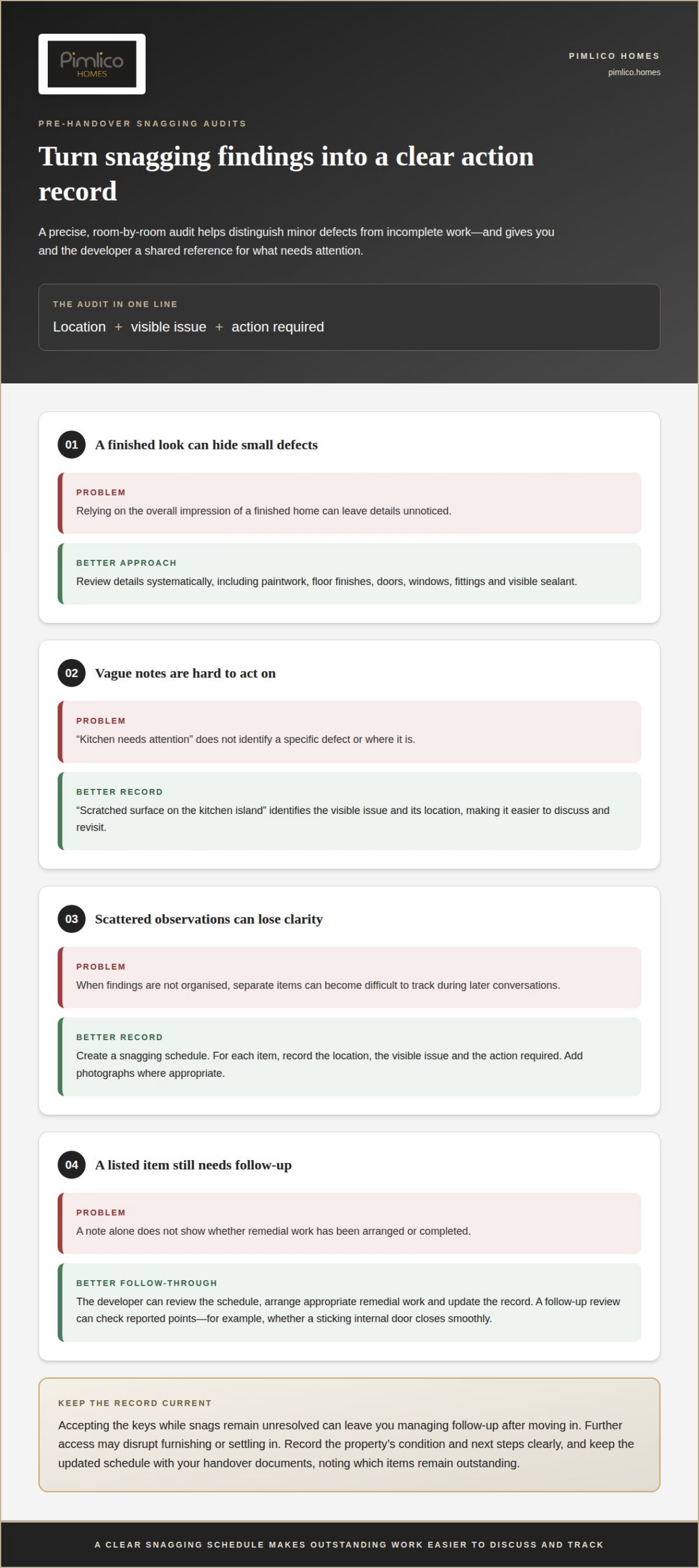
A snagging audit identifies minor defects and incomplete work before final handover, so outstanding items can be recorded for resolution. Rather than relying on the overall impression of a finished home, a specialist review examines details such as paintwork, floor finishes, doors, windows, fittings and visible sealant. Clear findings help distinguish a small finishing issue from a concern that needs closer assessment.
An audit is most useful when each finding is precise and tied to its location. For example, “scratched surface on the kitchen island” is easier to act on than “kitchen needs attention”. A room-by-room record, supported by photographs where appropriate, creates a shared reference for discussing remedial work. It also helps keep separate observations distinct during later conversations.
Before handover, organise the audit findings into a snagging schedule. Each entry should describe the location, the visible issue and the action required. The developer can then review the list, arrange appropriate remedial work and update the record as items are addressed. A follow-up review can focus on reported points, such as whether a sticking internal door closes smoothly or a marked worktop has been dealt with.
Accepting the keys while snags remain unresolved can leave you managing follow-up after moving in. Outstanding work may require further access to rooms and disrupt furnishing or settling in, so record the property’s condition and the next steps clearly.
Not every snag has the same significance. A small paint blemish differs from an incomplete fitting or a door that will not close properly. A written audit gives you and the developer a defined record to discuss, rather than relying on memories of a walkthrough. Keep any updated schedule with your handover documents, noting which items remain outstanding after each review. This makes progress easier to track and gives later communication a specific reference point.
Project completion and client communication
Completion brings final inspections and commissioning together with the formal transfer of the home. The handover explains what happens next and how to operate the property.
Completing the project
Project completion is the point at which final checks are concluded and the home is prepared for handover. The timing depends on the project’s size and follows final inspections and commissioning. This sequence matters because you receive a home whose systems have been tested, rather than relying on appearance alone.
Legal completion and the practical handover are connected, but have distinct roles. Before legal completion, the new-build home’s Energy Performance Certificate must be lodged with the EPC Register. Developers registered with the New Homes Quality Code must also carry out a formal pre-completion inspection, provide the Homeowner User Guide and give you an opportunity to raise concerns before legal ownership.
At handover, the home is presented, relevant documents are provided and its operation is explained. Where a managing agent is involved, a Handover Acceptance Form can formalise the transfer of day-to-day operational responsibility between the developer and agent. This clarifies who manages shared operational matters after the transfer.
Communicating with the client
Clear communication covers completion information, outstanding matters and guidance on using the home. It helps you understand both the property you are receiving and any next steps. A walkthrough can connect written instructions with actual controls, such as heating settings or ventilation equipment.
For developers registered with the New Homes Quality Code, the Homeowner User Guide is due at or before legal completion. It provides a reference for the home’s systems and maintenance. A clear record of concerns raised before completion also keeps discussions specific, with each point tied to the relevant room, fitting or document.
As you consider the details that shape a new home, explore homes designed for considered living.
Pimlico Homes
Pimlico Homes creates luxury homes for buyers seeking a considered, high-quality new-build property. Its Luxury Detached Homes, Executive Courtyard Homes, Bespoke Luxury Homes and Luxury Barn Conversions offer distinct approaches to design, setting and everyday living.
If you are considering what a new home should offer, the handover details discussed here can help you ask informed questions about completion, systems and documentation. These considerations sit alongside the qualities that matter throughout a home: its layout, craftsmanship and lasting suitability for the people who will live there.
For a home that reflects your priorities, contact Pimlico Homes to discuss your plans.
Shape the next stage of your plans
Your next step is to define what “ready to live in” means to you. Consider not only the architecture, but also how the home should support daily routines, privacy, entertaining and changing needs. This perspective can guide conversations about specification and the approach to completion.
The luxury new home handover process connects the home you envisioned with the one you are preparing to occupy. Keep your priorities in view as decisions are made, so practical details stay aligned with the experience you want from the property.
Pimlico Homes offers Luxury Detached Homes, Executive Courtyard Homes and Bespoke Luxury Homes, each with a distinct character. The right starting point is the home that reflects how you want to live, not simply how you want the property to look.
Contact Pimlico Homes to discuss your project and give your vision a considered beginning.
Frequently Asked Questions
What Is the Handover Process?
A handover is the formal transition of a completed property to its new owner, with checks and information supporting the change. The practical sequence usually brings together a final review, commissioning, recorded snags, a walkthrough and relevant documents. Keep copies of correspondence and any outstanding-items schedule with your home papers, so later discussions can refer to the same written record.
What happens during a luxury new-build home handover in the UK?
You are shown the property, receive its documentation and are introduced to the systems installed in the home. In a high-specification house, the walkthrough can also explain how bespoke controls and finishes work, rather than leaving you to guess. Arrangements vary by developer and project, so completion information should make clear what is being handed over and how to raise follow-up points.
What should be checked on a luxury new-build snagging inspection?
Look for visible defects and incomplete work throughout the home, including finish quality and the operation of fittings. Examples include chipped tiles, scratched glazing, loose handles, uneven grout or a tap that does not run correctly. A useful report identifies each issue by location, describes what you observe and includes photographs where helpful. This gives the developer a clear record to review and respond to.
When should buyers arrange a snagging survey before or after handover?
Arrange a survey before formal handover where access allows, so findings can be recorded while completion discussions are under way. A later inspection can help identify issues that only become apparent once the home is occupied, such as a window that sticks during regular use. Record when each problem appears and report it through the developer’s stated process, retaining copies of messages and photographs.
What are the UK warranty and defect-correction rules for new-build homes?
Warranty cover and defect-correction procedures are set out in the documents provided for the particular home. Read these for the reporting route, the type of defect covered and any applicable time limits. For a defect, send the developer a clear written description, its location and supporting photographs, then retain the response. If the issue remains unresolved, follow the formal complaint process described in the relevant paperwork.
What utilities, appliances and smart-home systems should be tested at handover?
Check the operation of installed heating, ventilation, lighting, plumbing, electrical systems, energy equipment and smart-home controls. Where appliances are part of the home, confirm that each powers on and operates through its basic functions. Ask for demonstrations of unfamiliar controls, such as the heating interface or ventilation settings, and note which manuals or operating instructions accompany them. This helps you use the installed technology with confidence.





