
A beautiful façade can capture attention, but it cannot tell you how thoughtfully a home has been designed or built. When comparing luxury property developers UK-wide, look beyond the first impression: consider the coherence of the design, the character of the development and the care shown throughout the buying journey.
Comparison can be difficult when polished photography and confident descriptions look similar across different portfolios. The details that shape daily life are less immediately visible, so it helps to assess what you can observe: how spaces connect, whether the home’s character feels consistent and how clearly the development is presented.
This guide sets out practical ways to assess those qualities, from architectural character and material choices to the service described from reservation through handover. It also considers how bespoke homes, executive courtyard homes and barn conversions offer different ways of living. Pimlico Homes’ Pimlico Pledge reflects a commitment to customer care across the buying journey. Use the criteria below to decide which details matter most to you and what makes a home feel exceptional beyond the first viewing.
Key Takeaways
- Look beyond luxury language and assess design coherence, craftsmanship and customer care.
- Compare plans, imagery and project descriptions to understand the substance behind a developer’s portfolio.
- Consider how different home formats, from executive courtyard homes to barn conversions, suit your household and lifestyle.
- Separate essential needs from appealing features before weighing a home’s design and details.
- Explore how Pimlico Homes brings together craftsmanship, timeless design and customer care through the Pimlico Pledge, from reservation through handover of keys.
What distinguishes luxury property developers in the UK?
A premium home is more than an impressive exterior or a carefully styled interior. Its distinction comes from how consistently the home, its setting and the buying experience have been considered. A useful definition is this: a luxury property developer turns architectural ambition into a coherent place to live, where enduring design and skilled workmanship matter as much as presentation.
The phrase Luxury real estate offers a broad overview of the market, but a label cannot tell you how a particular home has been conceived or made. To understand that, look past descriptive language and assess the decisions visible in the home, the development and the information provided to buyers.
What does a luxury property developer do?
A property developer creates homes and shapes the residential environment around them. This can include establishing the design direction, deciding how homes relate to one another and overseeing how a development takes form. Design intent means the ideas guiding a home, from its proportions and materials to the arrangement of spaces for everyday use.
A developer selling homes has a different role from a property rental provider. The developer creates homes for buyers to purchase, while a rental provider lets properties to occupants. For a prospective buyer, this distinction helps clarify what is being offered and the nature of the purchase journey.
Which qualities make a development feel exceptional?
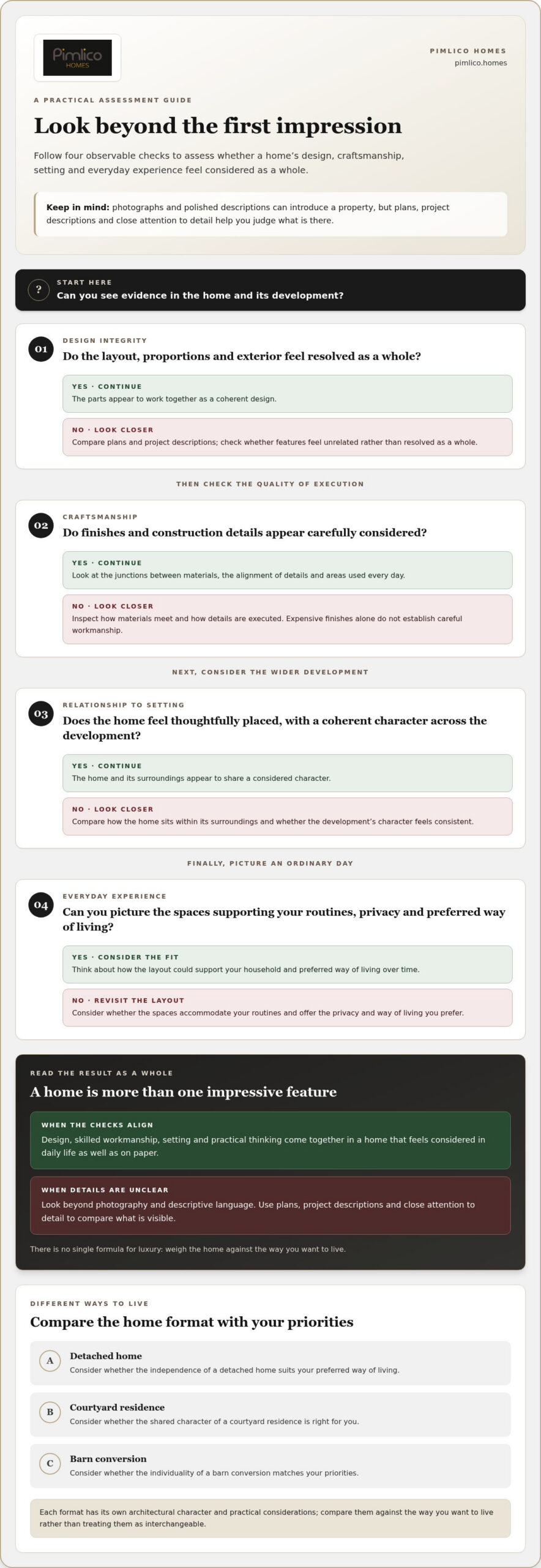
There is no single formula for luxury. One buyer may value the independence of a detached home; another may prefer the shared character of a courtyard residence or the individuality of a barn conversion. Each format has a different architectural character and practical considerations, so compare them against the way you want to live rather than treating them as interchangeable.
As you look beyond the first impression, consider these dimensions:
- Design integrity: Do the layout, proportions and exterior feel resolved as a whole, rather than assembled from unrelated features?
- Craftsmanship: Do the finishes and construction details appear carefully considered, including the points where materials meet and areas used every day?
- Relationship to setting: Does the home feel thoughtfully placed within its surroundings, with a coherent character across the development?
- Everyday experience: Can you picture how the spaces support your routines, privacy and preferred way of living over time?
These questions offer a grounded way to compare homes from luxury property developers UK-wide. Photography can introduce a property, and polished language can describe an ambition. Plans, project descriptions and close attention to detail help you judge whether that ambition has been carried through into a considered place to live.
How luxury property developers translate design into lasting quality
Design becomes meaningful through the decisions that carry it from an initial idea into everyday life. Architectural intent is the guiding vision for a building: its form, materials and arrangement of spaces. For that vision to feel complete, the details must support it. Consider how rooms connect, whether the layout feels intuitive and whether the finishes appear consistent with the design as a whole.
Design consistency, careful craftsmanship and practical thinking come together in a home that feels as considered in daily life as it looks on paper. This is a useful standard when comparing luxury homes. It shifts attention away from novelty and decoration towards the relationship between the overall design and its individual parts.
How do craftsmanship and innovation work together?
Craftsmanship can be seen in the precision of execution: the junctions between materials, the alignment of details and the care given to features residents interact with each day. It is not simply a matter of selecting expensive finishes. The quality of the design depends on whether those choices have been brought together with discipline and purpose.
Innovation can sit comfortably alongside established design values. Its purpose is not to introduce change for its own sake, but to respond thoughtfully to how people live. When reviewing a design, ask whether a feature serves a clear purpose and supports the home’s character, rather than distracting from it.
- Look at the whole: Do the materials and finishes reinforce a consistent design direction?
- Consider the detail: Are transitions between spaces and surfaces resolved with care?
- Test the intention: Does a contemporary feature serve a clear purpose in everyday life?
Why should timeless design feel practical as well as distinctive?
Timelessness is not a promise that a particular style will always be fashionable. It is better understood as coherence: a home in which proportions, materials and layout feel connected, rather than dictated by a passing visual effect. Character matters, but so do the flow between rooms and the way spaces accommodate household routines.
When considering a luxury new build, picture an ordinary day as well as the first viewing. Where would you pause, gather, work or find quiet? Does the layout support those activities without making the home feel over-designed? These questions help distinguish a striking feature from a lasting design decision. A UK House Price Index report can provide wider market context, but it cannot measure craftsmanship or tell you how well a home suits your life.
To see how craftsmanship, innovation and timeless design can shape a home’s wider experience, explore Pimlico Homes’ approach to considered design.
How to compare luxury property developers beyond the portfolio
A portfolio can show a developer’s visual language, but it cannot decide whether a particular home suits your priorities. Photographs may present different settings, formats and interiors, so compare the underlying information as well: what the plans reveal, how the design is described and whether the buyer journey receives attention alongside the finished appearance.
Use the same criteria for each development and make a note of what you can observe. Separate specific information from broad claims, such as “exceptional quality”. This gives you a more balanced comparison than relying on one striking image or a polished phrase.
| Criterion | What to examine | Useful question |
|---|---|---|
| Design coherence | Plans, elevations and project descriptions | Do the homes feel individual whilst sharing a clear design sensibility? |
| Home format | Detached, courtyard, bespoke or conversion properties | Does the format suit your preferences for space, character and privacy? |
| Craftsmanship | Construction descriptions and visible details in imagery | Is care explained through specific choices, rather than adjectives alone? |
| Customer journey | Information about the process from reservation to handover | Is customer care presented as a considered part of buying? |
Which signals reveal a developer’s design approach?
Read project descriptions alongside plans and imagery. Look for evidence that each home has its own character while belonging to a coherent development. Consider who the home might suit and how its layout could support daily routines. The form, arrangement and relationship between homes give you more tangible details to assess than marketing language alone.
A phrase such as “timeless design” becomes more useful when the project information explains the design approach. Notice whether the words match what the plans and images show. A portfolio can demonstrate a developer’s style, but it cannot establish that every home will suit every buyer. Your comparison should take account of both the architecture and your own priorities.
How can customer care be part of a fair comparison?
Include the buyer experience as a distinct criterion, rather than treating it as an afterthought. Buying a home involves decisions and communication from reservation through handover, so consider how clearly the developer describes its role across that journey. Pimlico Homes’ Pimlico Pledge describes customer service from reservation through handover of keys.
Awards, testimonials and confident promises can provide context, but none alone determines how a purchase will feel. Compare what is described about customer care just as you would examine a plan or project image. For buyers considering luxury property developers UK-wide, this structured approach helps balance presentation with design, home format, craftsmanship and the service around the purchase.
How to decide whether a luxury home suits your life
A home can be beautifully designed and still be the wrong fit for your household. Start with a clear picture of how you want to live, not a list of impressive features. Compare the property information with your routines, your preference for privacy and the ways you expect to use the home over time.
Work through the decision in order:
- Define your needs. Note the spaces and qualities that support everyday life, such as areas for gathering, working or finding quiet.
- Choose a preferred format. Consider the character and living arrangement that feel most natural to you.
- Assess the design. Review the layout and visual character against your essential requirements, rather than judging by one striking detail.
- Consider the buyer journey. Reflect on the clarity and support described from reservation through handover.
Separate essentials from attractions. A feature may be appealing but have little bearing on how well the home works for you. Keeping those categories distinct makes comparisons more grounded and helps prevent presentation from overshadowing personal fit.
Which home format aligns with your priorities?
A detached home may appeal if you value a distinct residence and a greater sense of separation. Courtyard homes offer a different character, with homes arranged around a shared setting. A barn conversion may suit you if you are drawn to architectural character shaped by an existing building. None is inherently the better choice. The right fit depends on your preferences for privacy, setting and style.
What should you reflect on before taking the next step?
Consider three questions: what matters most in the design, which spaces will support your daily routines, and what kind of buying experience would help you feel informed? Then review the available property information, including plans, imagery and project descriptions. Note any details that affect your sense of fit, such as how a room might function or how the home relates to its setting.
- Essential: Does the layout support the way you live?
- Personal preference: Does the home’s character feel right to you?
- Additional appeal: Which features are desirable, but not necessary?
- Buyer journey: Is the process described in a way that feels clear and considered?
Use this checklist to compare homes on your own terms. Buyers exploring luxury property developers UK-wide can bring the most important details into focus by assessing home format, design and the support described throughout the purchase.
For a closer look at homes shaped around considered design and craftsmanship, explore Pimlico Homes’ luxury homes.
Pimlico Homes: award-winning homes shaped around lasting quality
Pimlico Homes develops luxury homes with an emphasis on exceptional craftsmanship, innovation and timeless design. Its portfolio includes distinct residential formats rather than a single prescribed style. The company describes its homes as Award Winning Homes, with a focus on considered design and the experience of buying a home.
For readers comparing luxury property developers UK-wide, this offers a useful point of reference: assess the character of each development alongside the care described throughout the buyer journey. Pimlico Homes connects these aspects through its focus on quality and customer service.
What does the Pimlico Pledge mean for the buyer journey?
The Pimlico Pledge describes customer service from reservation through handover of keys. It reflects Pimlico Homes’ commitment to supporting buyers across the stages of purchasing a home, making the buyer experience part of the company’s approach to development.
Keeping the buyer journey in view from reservation to handover can help make the service around a home purchase clearer. The Pimlico Pledge expresses Pimlico Homes’ customer-focused approach. It places the experience of purchasing alongside the design and character of the finished home.
How does Pimlico Homes express different forms of luxury living?
Pimlico Homes’ developments show how luxury can take shape through different architectural formats. Each offers a distinct way to consider character, design and how a home might suit individual preferences.
- Pimlico Court: Four traditionally built executive courtyard homes. The development is sold and demonstrates a courtyard residential format.
- Western Way: An upcoming project of two luxury bespoke homes, offering an individual expression of residential design.
- Brockhbuses Farm: An upcoming project of five luxury barn conversions, bringing the barn-conversion format into the company’s portfolio.
These examples are not interchangeable. A courtyard development, bespoke homes and barn conversions each have a different character. Together, they show the range of formats Pimlico Homes develops, with craftsmanship, innovation and timeless design as stated priorities across its work.
Explore the developments and consider which setting and home format best match your preferences. Look beyond the first impression to the details that matter to you, and weigh the design alongside the customer care described across the purchase. Pimlico Homes brings the homes themselves and the journey from reservation through handover into one considered approach to luxury living.
Choose a home that feels right for what comes next
Move from comparing impressions to imagining the life you want a home to support. Consider which qualities will continue to matter as routines change: a sense of character, spaces that feel naturally connected and customer care throughout the buying journey. These are personal measures, but they can help you decide which details deserve closer attention.
For those exploring luxury property developers UK-wide, Pimlico Homes offers bespoke homes, executive courtyard homes and barn conversions, with a focus on craftsmanship and timeless design. Its homes are presented as Award Winning Homes, while the Pimlico Pledge describes customer service from reservation through handover of keys. These provide a starting point for exploring an approach in which both the home and the buyer journey matter.
Let your next decision be guided by what feels enduringly right for you, rather than by first impressions alone. Explore Pimlico Homes and its award-winning homes to discover which expression of considered living speaks to your aspirations.
Frequently Asked Questions
Is a luxury property developer the same as a bespoke home builder?
Not necessarily. “Luxury” describes the market and standard a developer aims to serve, while “bespoke” refers to how much a home is shaped around an individual brief. A developer may create homes to a considered design without tailoring every one to a buyer’s specific requirements. Pimlico Homes develops bespoke homes as well as other luxury residential formats. If individual tailoring matters to you, consider which aspects of the home’s design are shaped around the buyer’s brief.
Can luxury property developers create both new-build homes and barn conversions?
Yes. Some developers work with both formats, although the design considerations differ. A new-build home is created as a new property, while a barn conversion adapts an existing agricultural building for residential use. The original building influences a conversion, whereas a new build begins with a different architectural context. Pimlico Homes develops luxury new-build homes and luxury barn conversions, giving buyers distinct formats to consider.
Are all homes from a luxury property developer fully bespoke?
No. A developer can offer homes with a recognisable design approach without tailoring every property to an individual buyer. A bespoke home is shaped around a particular brief, so the degree of personal input is separate from the home’s luxury positioning. When comparing luxury property developers UK-wide, review the specific property information and descriptions. A premium label does not mean every design choice has been made for one buyer.
What does “Award Winning Homes” mean?
“Award Winning Homes” is the wording Pimlico Homes uses to describe its homes. Treat it as one part of the presentation and weigh it alongside the information available about the home’s design, construction approach and customer experience.
Can a luxury property developer create homes across the UK?
Yes, although the geographic reach of developers varies. Pimlico Homes’ projects are nationwide across the UK, so buyers can include its homes in a broad search rather than limiting their consideration to one local market. As you explore a development, focus on the home itself and the information provided about its setting and character. This keeps your comparison grounded in the qualities that matter to your household.
What should I consider when choosing between a courtyard home and a detached home?
Start with how you want your home to relate to its surroundings. A detached home may suit a preference for a more individual setting, while a courtyard home places the residence within a shared arrangement. Consider the privacy you value, how you use indoor and outdoor spaces, and whether a shared setting appeals. Then compare the plans and descriptions of the specific homes. The format alone cannot determine which will feel right for you.





