
The most captivating view may not be the strongest reason to choose a rural home. An open outlook can change, while a secluded setting may make everyday journeys more demanding than expected. When comparing luxury rural developments, Pimlico Homes understands that you must look beyond the first impression and consider how each property fits your routines.
It’s easy to understand the appeal of countryside and waterside living: space, tranquillity and a closer connection to the landscape can reshape the rhythm of home life. Yet comparing these settings fairly means looking at privacy, access, maintenance and how your needs may evolve over time.
This guide offers a practical framework for assessing rural homes, from the character of their surroundings to the questions worth asking before a viewing or offer. You’ll consider how outlook, privacy and day-to-day convenience affect suitability, and how a home’s layout can support life in a rural setting. The aim is to help you decide which homes merit a closer look, using more than an attractive first impression.
Key Takeaways
- Set your priorities before comparing countryside and waterside homes, so you can measure the setting against how you want to live.
- Assess outlook, privacy, access and maintenance separately. Photographs cannot confirm what daily life or future views may hold.
- Use a consistent viewing checklist to examine the home, review relevant documents and, where practical, visit at different times of day.
- When considering luxury rural developments North East, compare confirmed property details with your own expectations rather than assumptions about the setting.
- Compare detached, courtyard and barn-conversion homes by their layout, outdoor space and fit with your longer-term priorities.
Luxury rural developments: decide what the setting needs to give you
Open horizons, quieter surroundings and a closer connection to the landscape are among the enduring appeals of rural living. But a setting should do more than look beautiful from a window. Consider whether the home supports your routines, offers the level of privacy you value and remains practical if your circumstances change.
There is no single standard that makes a development “luxury”. Here, the term describes a thoughtfully planned residential setting where the homes, their layout and their relationship with the surroundings have been considered together. For a wider introduction to what is rural development, remember that the idea extends beyond scenery to the quality of life and wider context of a place.
At a glance: A countryside outlook faces open land, fields or wooded landscapes. A waterside outlook faces a river, lake or other body of water. Neither is automatically more private, practical or suitable. Assess the individual home and its setting.
What makes a rural development feel considered?
Look beyond the address. The arrangement of homes, the position of windows and entrances, and the form of boundaries can all affect privacy. A spacious setting does not necessarily mean every home is equally separate, so check sightlines between neighbouring properties and the areas immediately around the home.
Architectural quality is a separate consideration. A rural location or appealing view cannot, on its own, tell you how a home has been designed or what its specification includes. Compare the current plans and property details with what you see on site. Confirm important features rather than relying on photographs or general descriptions.
Countryside or water: which outlook suits your life?
Open-landscape views may appeal if you value broad horizons and the changing character of fields or trees. A water-facing outlook offers a different visual focus, with changing light and seasonal surroundings. Neither setting is inherently better. Consider which rooms you use most, the direction and quality of light you prefer, and how the outlook may feel throughout the year.
Think about how much time you spend at home, too. A view enjoyed each morning may matter more than one seen only occasionally, while a quieter outlook may be less important if access and everyday convenience are your priorities. Where practical, visit at different times and look from the rooms where you expect to spend the most time.
A well-matched rural home brings together an outlook you value and the everyday practicality your life requires. Keep that principle in view as you compare settings. The strongest choice is the one that feels right beyond the first impression.
Compare countryside and waterside homes beyond the first impression
A photograph can suggest a setting, but it cannot confirm how a home relates to its surroundings or what living there involves. Compare details that can be checked with impressions that still need testing on site. This is particularly useful when weighing up luxury rural developments North East, where the setting can vary from one property to the next.
| Factor | Countryside setting | Waterside setting | What to verify |
|---|---|---|---|
| Outlook | Open land, fields or trees may shape the view. | The home may face water, overlook it from a distance or sit beside a shared area. | Check the view from key rooms and establish what land or space lies beyond the boundary. |
| Privacy | Open surroundings do not necessarily mean few sightlines or little nearby activity. | A waterfront position does not automatically mean seclusion. Routes and shared spaces may affect privacy. | Inspect boundaries, neighbouring homes and access routes in person. |
| Access | Consider routes to regular destinations and nearby services. | Check how the home connects to roads and paths, and whether access to the water is included or shared. | Confirm routes and access arrangements rather than inferring them from images. |
| Maintenance | Ask what responsibilities apply to the home and its boundaries. | Ask which environmental or upkeep matters apply to that specific property. | Review the documents and seek appropriate advice where details are unclear. |
| Daily routines | Consider outdoor space, household activity and regular journeys. | Consider how you would use the outlook and any outdoor areas through the year. | Match the setting to your actual habits, not an imagined lifestyle. |
What to weigh up in a countryside setting
Notice how the outlook feels from the rooms you use every day, not only from the garden or entrance. Check boundaries and neighbouring land, then ask whether its current use is documented. Research possible future change rather than assuming the view will remain the same. Think through regular journeys, too. A peaceful location may suit you well if its access and distance from services work for your household.
What to weigh up in a waterside setting
Establish the exact relationship between the home, the water, access routes and any shared spaces. Ask which environmental or maintenance considerations apply to that specific property, and check relevant documents rather than assuming all waterside homes have the same rights or responsibilities. For homes in England, you can use GOV.UK to check the long-term flood risk. Verify property-specific information with appropriate sources.
Household needs can shift the balance. Regular entertaining, children’s play or a preference for gardening may make privacy, access and usable outdoor space more important than a particular view. Compare confirmed specifications with your priorities. The homes described by Pimlico Homes include detached homes, executive courtyard homes, bespoke new builds and high-end barn conversions, offering different formats to consider alongside your requirements.
Could a rural view come with compromises? Check the practical realities
A beautiful outlook can make a powerful first impression, but it cannot establish whether a home is right for you. Seclusion may mean a longer journey to regular destinations; open land or water may prompt questions about boundaries, access and upkeep. These are not reasons to rule out a rural home. They are reasons to examine the specific property before deciding.
A desirable view is an impression; the property’s boundaries, rights and relevant risks are matters to verify. This distinction is useful when comparing luxury rural developments North East. Scenic appeal is personal, while the documents and arrangements attached to an individual home need to be checked on their own terms.
How can you test whether an outlook is likely to endure?
No seller or photograph can promise that a view will remain unchanged. Ask what land lies beyond the boundary and whether relevant information about its ownership and current use is available. Review planning information and land ownership records, and seek independent professional advice if the outlook, boundary or neighbouring land would materially affect your decision.
Consider the view from the rooms you use most, then compare it with the site layout and available property details. A clear view today does not establish what may happen to surrounding land in future. Treat that as a matter for research, not assumption.
What practical questions matter around water or open land?
Ask whether any access routes, shared spaces or maintenance responsibilities apply to the specific property. Clarify what is included in the sale and what, if anything, is shared with others. Do not infer access rights or upkeep obligations from a nearby home. Arrangements can differ between individual properties.
Environmental considerations also need a property-specific answer. For a home in England, GOV.UK provides a tool to check the long-term flood risk. Use it as one part of your enquiries, not a substitute for checking other relevant information. Where flooding, land or boundaries are material to your decision, consult suitable authoritative sources and seek independent advice. Conditions at a neighbouring property may not establish the situation for the home you are considering.
Access deserves equal attention. Think through regular journeys, nearby services and how the route feels at times you would ordinarily travel. Rural living can offer a valued sense of calm, but the right balance depends on your household’s routines and tolerance for travel. GOV.UK’s government commitment to rural communities provides wider context on rural priorities. Your decision should rest on verified details for the individual home and its setting.
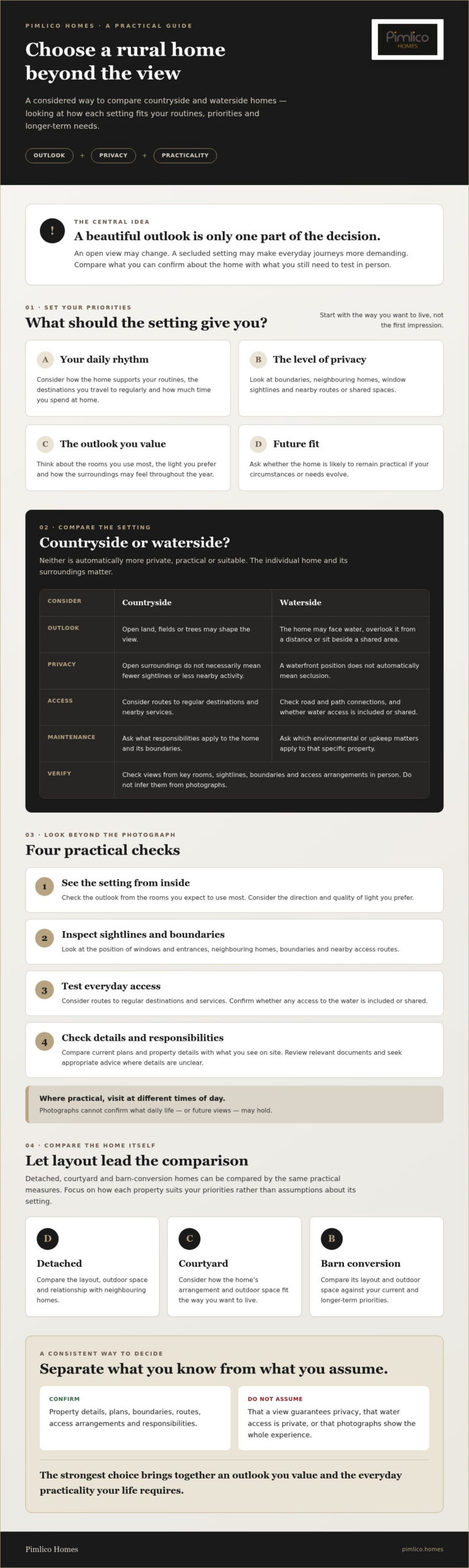
Use this viewing and due-diligence checklist before choosing a rural home
A considered viewing is more than a walk through attractive rooms. Use the same sequence for every property so you can compare the setting, specification and practical details on equal terms. For buyers considering luxury rural developments North East, a written record also helps separate what you observed from what still needs confirmation.
- 1. Define your priorities. Note what matters most: outlook, privacy, outdoor use, access to services or ease of everyday journeys. Mark which features are essential and where you can be flexible.
- 2. Compare the settings. Assess countryside and waterside options against your routines, household needs and entertaining habits. If practical, view at different times of day to notice changes in light, activity and the outlook from key rooms.
- 3. Inspect the home. Consider how the layout supports privacy, movement through the home and access to outdoor areas. Compare what you see with the written specification and site plan. Note any differences or details you cannot confirm during the visit.
- 4. Verify the documents. Gather the available property information and identify questions about boundaries, access, shared spaces or surrounding land. Treat verbal explanations as a starting point, not a replacement for written confirmation.
- 5. Seek appropriate advice. Ask qualified professionals to review matters that could affect your decision, including title, planning or environmental information. A luxury new build buying guide can also help you prepare for the wider purchase process.
Questions to ask during a viewing
Ask which features, boundaries and outlook details are confirmed in the property information, and which are simply visible from the home today. Check how the layout works for your household: where privacy matters, how you would use outdoor space and whether everyday movement feels straightforward. Keep a note of unanswered questions and request follow-up information rather than relying on assumptions made during a conversation.
Documents and independent checks to consider
Discuss title, boundaries and relevant property information with a qualified conveyancer. For environmental matters, consult the Environment Agency and other appropriate authoritative sources, checking details for the individual property rather than relying on information about nearby homes. Review relevant planning information if the surroundings or outlook matter to your decision, and seek qualified advice if anything remains unclear.
Once your checklist is in place, compare homes by confirmed details as well as how they feel in person. Pimlico Homes’ luxury new build homes provide examples of the types of properties to consider alongside your priorities.
Choose a luxury rural development that feels right beyond the view
A considered choice brings several elements together: the character of the setting, the outlook from the home, the privacy it offers, its practical fit with your routines and the property details you have been able to verify. No single feature should carry the decision. Look for a home that feels compelling on a viewing and continues to make sense when you picture an ordinary week there.
For buyers comparing luxury rural developments North East, set personal priorities before shortlisting. Decide what you value most, then compare each home against the same criteria. A striking view may be a real pleasure, but it should sit alongside questions of access, layout and confirmed information about the individual property.
Match the development type to the way you want to live
A detached home may appeal if you are seeking a standalone property. An executive courtyard home offers a different residential format, but check the specific layout, boundaries and any shared arrangements rather than assuming what they involve. A barn conversion has a different architectural context, so look closely at the property’s design and specification to decide whether it suits your preferences. You can also explore ideas around refined barn conversion interiors as you consider the character you value in a home.
Thoughtful design and high-quality craftsmanship can contribute to the experience of a home, but descriptions alone cannot confirm its precise features. Compare the current property information with what matters to your household, from how rooms connect to how you expect to use outdoor space.
Take the next step with informed confidence
Before arranging a viewing, create a shortlist using your written priorities. Record what is confirmed for each property and what still needs an answer. This keeps comparisons grounded, particularly if several homes have appealing but very different settings. For wider context on the long-term value of new build homes, consider how your own plans and the home’s verified details inform your decision. Do not treat future value as assured.
Pimlico Homes develops and sells luxury detached homes, executive courtyard homes, bespoke new builds and high-end barn conversions. Its residential developments offer different home types to compare against your priorities. Confirm current availability, specifications and setting details directly before making a decision.
Explore Pimlico Homes to review its residential developments and consider which homes may suit your requirements.
Choose with clarity, then explore what fits
The right rural home is about more than a memorable outlook. As you compare luxury rural developments North East, weigh the setting and privacy alongside daily practicality, and distinguish verified property details from what a photograph or description might suggest. A measured comparison can help you choose with confidence, based on the way you live now and the years ahead.
Home design matters, too. A detached home, an executive courtyard home or a barn conversion may each suit different preferences, provided the layout and confirmed details align with your priorities. Pimlico Homes specialises in luxury detached and executive courtyard homes, with a portfolio that includes bespoke new builds and high-end barn conversions. The company’s focus on high-quality craftsmanship is relevant when comparing the homes on offer, but check each property’s specific features for yourself.
Review the homes and residential developments offered by Pimlico Homes, checking current availability and property details as part of your decision. Explore Pimlico Homes’ homes and developments and take the next step towards finding a rural home that feels right beyond the view.
Frequently Asked Questions
Is a countryside-view home always more private than a waterside home?
No. Privacy depends on the individual property and its surroundings, not simply whether it faces fields or water. Check sightlines from neighbouring homes, window positions, boundaries and how nearby land is used. Walk around the plot where access allows, and assess the outlook from key rooms. Photographs can suggest openness, but an on-site visit and property-specific information give you a clearer picture of how private the home feels.
Can the view from a rural new build change after purchase?
Yes, the surroundings may change, so do not assume an outlook is permanent. Ask what land lies beyond the property boundary and review relevant planning information with the appropriate local authority. Planning records can inform your enquiries, but cannot guarantee that a view will remain unchanged. A qualified conveyancer can help you understand relevant title and property information. You may also wish to seek independent advice if the outlook is central to your decision.
What should I check before buying a home beside water?
Check environmental information for the specific property, including relevant flood-risk information, using authoritative sources such as the appropriate environmental authority. Confirm the precise boundaries, routes to the water and whether access is private, shared or subject to stated arrangements. Ask what maintenance or other responsibilities apply, then check the property documents with a qualified conveyancer. Do not assume that information about a nearby home applies to the one you are considering.
How do I compare countryside and waterside developments?
Compare each setting against the same criteria: the outlook from everyday rooms, the level of privacy, access to regular destinations and how the location fits your household’s routines. Then check those impressions against verified property information, including plans, specifications and boundaries. Buyers comparing luxury rural developments North East can use this consistent approach to look beyond photographs and descriptions, then decide which setting best fits their priorities without treating either outlook as automatically superior.
Are luxury rural developments suitable for year-round living?
They can be, but suitability depends on the individual home, access, nearby services and your routines. During viewings, consider how you would manage regular journeys, where you would shop or access services, and whether the layout supports your daily life in every season. If possible, visit at different times and check routes under ordinary conditions. Confirm property details rather than assuming a rural setting will meet your needs throughout the year.
What should I ask when viewing a rural new build?
Ask what the property information confirms about boundaries, outlook, specification and access, and how the layout supports privacy and everyday movement. Compare the written details and site plan with what you see in person. Record unanswered questions, then request clear follow-up rather than relying on verbal assumptions. For details that could affect your decision, such as title or access arrangements, seek confirmation through the relevant documents and qualified professional advice.





