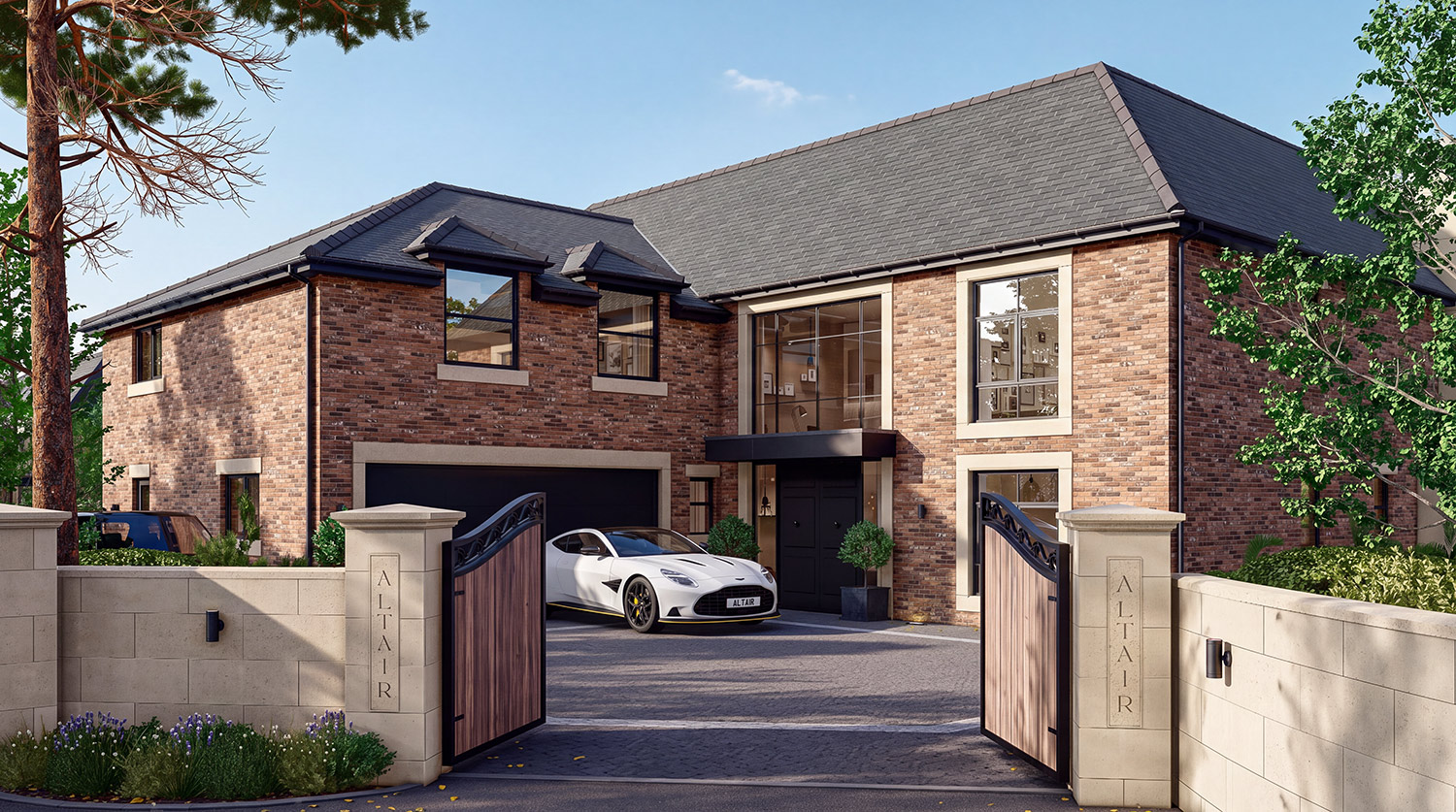
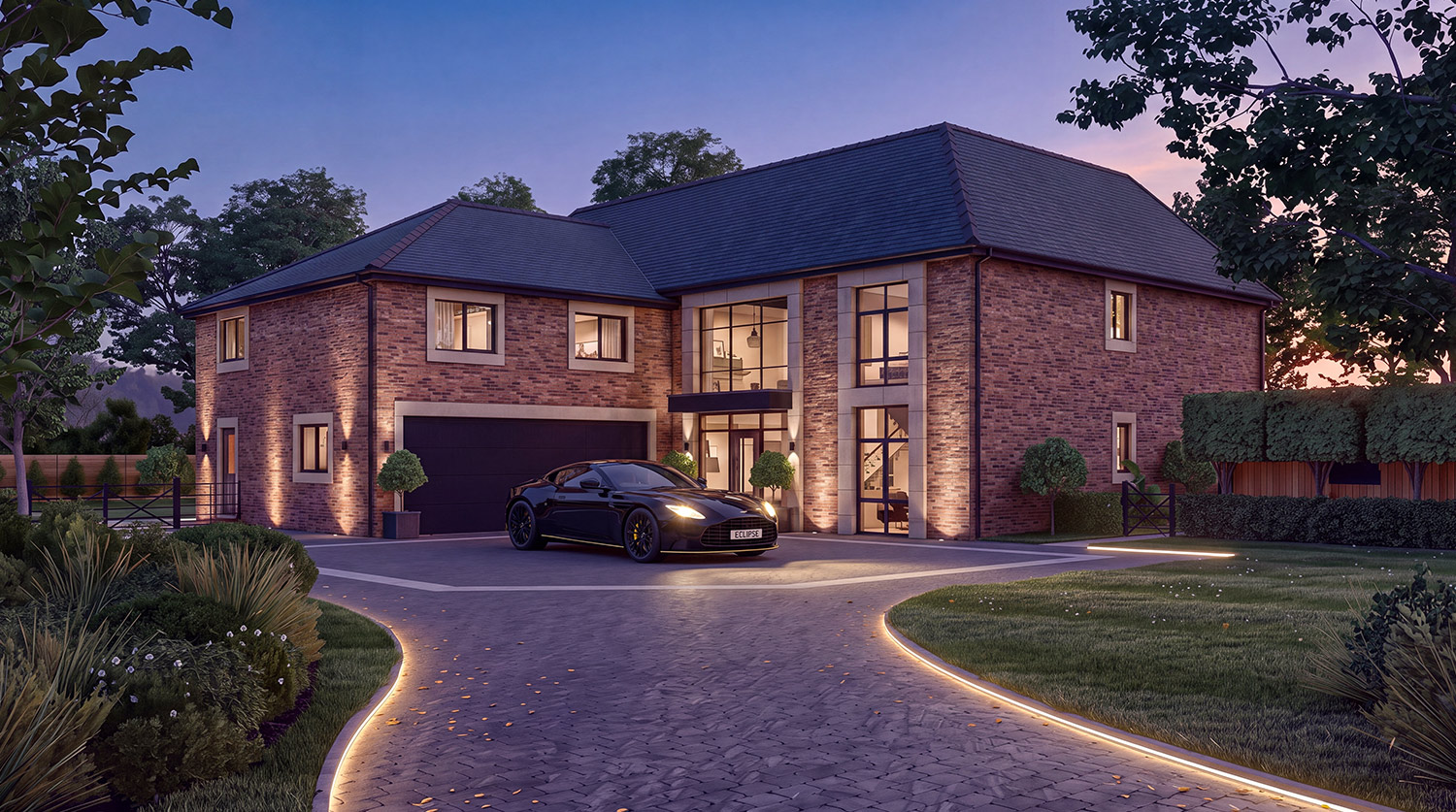
What if a countryside home could offer the character and distinction you admire without the draughts, upkeep and outdated systems that can come with an older property? Today’s luxury rural homes bring together heritage-inspired design, contemporary comfort and technology planned to sit discreetly within their surroundings.
The rural dream has enduring appeal: space, privacy and a closer connection to the landscape. Yet buying a traditional property can also mean taking on maintenance and weighing up its energy performance and modern conveniences. A bespoke new home offers another option, combining individual design with the opportunity to plan a home around the way you live.
This article explores how architectural choices can shape a countryside home, from materials and layouts that respond to rural character to smart technology and courtyard settings. Pimlico Homes focuses on luxury residential projects, with an emphasis on craftsmanship and quality. Read on for practical points to consider when comparing a high-specification rural residence with your expectations, priorities and plans for the future.
Key Takeaways
- Explore how luxury rural homes can combine countryside character with contemporary design for everyday living.
- Compare executive courtyard layouts and bespoke barn conversions to see how each approach can shape privacy, setting and architectural character.
- Consider the comfort and infrastructure of a new build alongside the individual character and potential upkeep of a heritage property.
- Use the master plan and specification to assess how a home relates to its surroundings and whether its quality meets your expectations.
- Learn how Pimlico Homes’ experience in luxury residential projects informs its focus on bespoke homes, craftsmanship and exclusive developments.
The Evolution of Luxury Rural Homes: Beyond the Drafty Manor
A countryside home may be a retreat, a primary residence or both. Buyers looking for a home to live in every day may prioritise dependable comfort, digital connectivity and spaces that adapt to work and family life. In 2026, luxury rural homes are defined not only by acreage or period detailing, but by how well their architecture responds to the landscape and the people who live there.
The country house has evolved alongside changing ideas of home and domestic life. A brief look at the evolution of the country house offers historical context. The challenge today is to create a strong sense of identity while meeting expectations around warmth, flexible interiors and modern infrastructure. A bespoke rural new build offers one way to do this, shaping character through design rather than inheriting a building’s existing maintenance needs and constraints.
The Performance Gap in Traditional Countryside Living
Beautiful stonework alone does not guarantee a comfortable home. If walls, roofs or floors lack effective insulation, heat may escape and rooms can be harder to keep at a comfortable temperature. Older properties may also need ongoing work to preserve their fabric. If a property is listed, changes to historic features can be subject to additional constraints, so understand these before planning improvements.
New construction allows the building fabric, heating and technology infrastructure to be considered together. It can also provide scope for open-plan shared spaces alongside quieter rooms for work or retreat. When comparing homes, ask how the design addresses comfort, services and your everyday routines, rather than assuming that a new build or a period property will automatically meet your needs.
Aspirational Aesthetics: Modernising the Rural Vernacular
Contemporary architecture can feel at home in a rural setting. Materials such as stone, timber and brick can echo the colours and textures of the surrounding area, while considered proportions help a house sit comfortably within its landscape. The goal is not to imitate an older building, but to create a coherent design with its own identity.
Large windows can bring daylight and views into a home, but appearance is only one consideration. Ask about the glazing specification and how orientation and shading have been considered. Look, too, at how the materials, form and setting work together. A clear architectural idea can give a new home a sense of permanence, sometimes described as “instant heritage”.
This is one appeal of a bespoke rural new build: the opportunity to draw on traditional character without automatically taking on the constraints of a period property. For buyers seeking a distinctive home that supports modern living, thoughtful design is as important as the first impression.
Architectural Signatures: From Executive Courtyards to Luxury Barn Conversions
Rural prestige is shaped by more than a picturesque exterior. The position of buildings, entrances and outdoor spaces affects privacy, arrival and the way a home relates to its neighbours. Executive courtyard homes and luxury barn conversions offer two distinct ways to draw on rural architectural traditions.
The Sophistication of Modern Barn Conversions
A successful barn conversion retains the qualities that give the original structure its presence while making the interior work for contemporary life. Double-height spaces can create a striking sense of scale, while exposed beams and other structural details can preserve a connection to the building’s past. Bespoke joinery, well-chosen materials and a practical layout can help generous rooms feel welcoming rather than cavernous. For further inspiration, explore these modern barn conversion interiors.
Executive Courtyards: Privacy by Design
A courtyard layout takes inspiration from the traditional farmstead. Buildings arranged around a central space can shelter gardens and entrances from direct views, creating a transition between the wider landscape and the home. The shape and orientation of the layout influence how residents arrive, where they spend time outdoors and how each home relates to shared areas.
A well-planned courtyard can feel cohesive without compromising residents’ individual space. Complementary materials and proportions establish a shared architectural character, while distinct entrances and private outdoor areas can give each home its own identity. The layout alone cannot guarantee privacy or security, so look closely at access arrangements and the boundaries between public, shared and private spaces.
Detached living can provide further separation, but the details of the plan matter. Consider the position of each home, its sightlines and its relationship to shared routes. When viewing a property, ask where visitors arrive, which outdoor areas can be seen from neighbouring homes and how the development distinguishes private space from communal areas.
These architectural choices can help luxury rural homes feel individual and connected to their setting. Pimlico Homes specialises in executive courtyard homes and bespoke barn conversions, with a focus on high-end craftsmanship. To explore its approach, view Pimlico Homes’ rural residences.
Performance vs Heritage: Why New-Build Rural Excels
Period homes can offer a distinctive sense of history, but age may bring practical compromises. Older roofs, uneven insulation and systems adapted over time can mean more maintenance and less predictable comfort. In a new build, the structure, services and technology can be planned together, rather than fitted around existing features.
That does not make a new property maintenance-free. Every home needs care, and defects can occur in new builds. The important questions are what the specification includes, how the home has been constructed and what documentation is provided at handover. Ask how issues are recorded and reported, and read the relevant documents rather than relying on a verbal summary.
Energy Efficiency as a Luxury Standard
Consistent indoor temperatures contribute to everyday comfort. Insulation, airtightness, glazing and the heating system all play a part. Underfloor heating may suit some layouts, but the right choice depends on the property. Heat pumps and solar panels can also be considered, with their design and placement assessed alongside rooflines, views and the wider setting.
There is no reliable rule that every period home has a poor EPC rating or that every new home has a strong one. Compare the individual Energy Performance Certificates and read the recommendations. An EPC is a useful starting point, but it does not replace an understanding of the property’s condition and specification. Energy performance may matter to future buyers, but no single feature guarantees resale value.
Connectivity in the Countryside
Check digital infrastructure as carefully as heating and lighting. Fibre-to-the-premises may not be available at every rural address, so confirm service options for the specific property. Inside the home, ask where network points and equipment can be located to support coverage for work, calls and entertainment. If you need a dedicated office, consider its lighting, acoustic privacy and space as well as its internet connection.
Smart controls and security systems have their own dependencies. Ask how they work if internet access or power is interrupted, and whether essential functions can be managed locally. Planned cabling and control points can help create a tidy installation, but the system still needs to suit the household and the connectivity available at the address.
For buyers comparing luxury rural homes, the case for a new build is the opportunity to assess design, performance and infrastructure from the outset, not a promise of zero maintenance. Pimlico Homes’ bespoke luxury homes reflect a focus on craftsmanship and considered quality.
Essential Criteria for Selecting Your Luxury Rural Estate
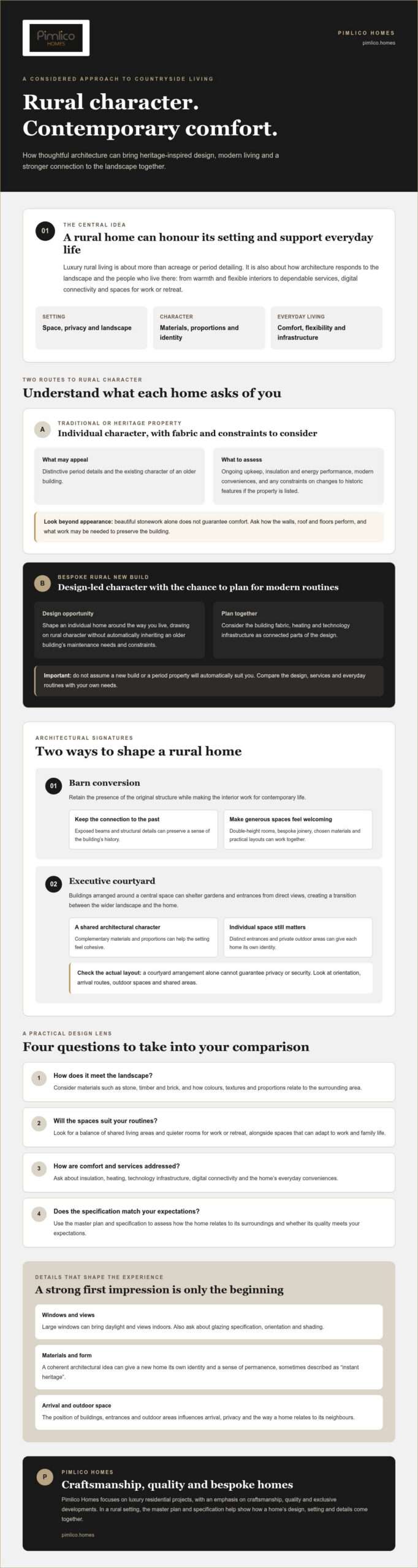
A beautiful setting is only the starting point. When choosing among luxury rural homes, look closely at how each property is planned, built and supported. Consider the home as part of a wider development: its relationship with neighbouring properties and the landscape, as well as the specification, will shape daily life after the viewing is over.
The Importance of Landscape and Stature
Look beyond the view from the main rooms. If possible, visit at different times of day and consider whether windows and outdoor areas balance open views with privacy. Notice how paths, planting and boundaries connect the home to its setting. Ask which elements are already in place and which are planned, since the finished landscape may differ from what you see on a viewing day.
The master plan also deserves close attention. Check how homes are positioned in relation to one another, shared access and entrances. Ask who is responsible for maintaining shared areas and whether any planned landscaping or communal spaces have specific arrangements. These details help you assess the setting you are buying into, not just the view from the house.
Specification and Craftsmanship
Look for considered design inside and out. Natural stone, slate and high-grade timber may contribute to a sense of quality, but material names alone do not prove good workmanship. Request the specification and ask how finishes and bespoke details are carried through the home. Look at storage, circulation, daylight and the relationship between living spaces as well as decorative finishes. These practical details affect how comfortable the home is to use.
- Assess the build: Request clear specification documents and, where possible, inspect finishes, junctions and fittings in person.
- Review the developer: Look for relevant experience in high-end residential projects. Pimlico Homes brings 25 years of industry experience in luxury residential projects.
- Clarify the warranty: Ask what is covered, for how long, how exclusions apply and how to report an issue. Read the documents rather than relying on a verbal summary.
These checks help you assess whether the quality and setting suit your expectations without assuming that prestige guarantees lasting value. For a more detailed checklist, read the ultimate guide to buying a luxury new build.
If you are considering a bespoke rural residence, explore Pimlico Homes’ luxury homes and its approach to craftsmanship and carefully planned developments.
Pimlico Homes: Redefining the Rural Landscape through Excellence
A distinguished rural home needs more than an attractive exterior. Its architecture, setting and practical design all contribute to the experience of living there. Pimlico Homes brings 25 years of experience in luxury residential projects, with a focus on high-end craftsmanship and exclusive developments. Its work includes luxury detached homes, executive courtyard homes and bespoke barn conversions.
Visionary Design and Reliable Guardianship
Traditional rural character and contemporary design can work together. Bespoke architecture can draw on familiar forms and materials while shaping spaces around modern ways of living. Room layouts, outlook and privacy all influence how a home feels, from the arrival at the front door to the way rooms connect with outdoor spaces.
This attention to the experience of home is central to the appeal of luxury rural homes. Pimlico Homes specialises in luxury detached homes, executive courtyard homes and bespoke barn conversions. A courtyard setting can bring homes together around a central space, while the layout determines how shared and private areas relate. A barn conversion offers a different opportunity: retain the character of an existing structure while creating a home for contemporary living.
Quality also means understanding what a significant purchase involves. Review the specification, ask how materials and finishes have been selected, and examine the relevant documents before committing. No design can remove every uncertainty, but careful scrutiny helps you decide whether a particular home suits your needs.
Your Journey to a Bespoke Rural Residence
Start with your priorities: how you want to use each space, what kind of setting feels right and how much privacy you value. Pimlico Homes’ experience in luxury residential projects informs its focus on craftsmanship and considered design. Executive courtyard developments and bespoke barn conversions offer different relationships between home, landscape and neighbour, so consider which layout best fits your preferences.
As you explore a rural residence, look beyond its first impression. Ask about the overall development plan, the specification of the individual home and the design decisions that distinguish it. These questions give you a more practical basis for judging whether the property may suit you over time.
For those seeking a countryside home with individuality and architectural presence, Pimlico Homes’ luxury detached homes, executive courtyard homes and bespoke barn conversions offer distinct approaches to rural living. Explore the portfolio to see which style best reflects your priorities.
Choose a Countryside Home Designed for the Future
A modern rural home brings together a thoughtful relationship with the landscape, distinctive architecture and the practicalities of everyday living. Whether you are considering a bespoke new build, an executive courtyard home or a barn conversion, look beyond appearance. Assess the setting, specification, privacy and likely demands of ownership. The right choice should feel connected to its surroundings and work for the way you want to live.
Pimlico Homes brings 25 years of experience in luxury residential projects, with a focus on high-end craftsmanship, executive design and bespoke homes. Its portfolio includes luxury detached homes, executive courtyard homes and bespoke barn conversions. When comparing properties, review the design and documentation carefully, and decide whether the home’s character and practical features meet your own requirements.
Explore the portfolio at Pimlico Homes’ luxury rural homes and bespoke developments. Get in touch with Pimlico Homes to discuss its luxury residential developments and find out which style of countryside living could suit your plans.
Frequently Asked Questions
What defines a home as a “luxury rural home” in 2026?
There is no single formal definition. Luxury may be reflected in the design, materials, setting and experience of living in the home. A rural property may combine architecture that responds to its landscape with well-planned interiors, modern comforts and considered privacy. Look beyond size or finishes alone. The specification, workmanship and relationship with the surroundings all help you judge whether it meets your expectations.
How do new-build rural homes compare to period properties in terms of value?
Neither type guarantees stronger resale value. A new build may appeal to buyers seeking contemporary layouts and modern building systems, while a period property can offer distinctive character and an established setting. Compare the condition, specification, energy information, location and likely maintenance needs of each property. Consider your own priorities as well as future buyer appeal, and seek independent professional advice before making a significant purchase.
What are the benefits of living in an executive courtyard development?
An executive courtyard development can combine a cohesive architectural setting with a greater sense of enclosure. Homes arranged around a central space may create a sheltered arrival and help distinguish private areas from shared surroundings. The benefits depend on the actual layout, boundaries and access arrangements. During a viewing, consider sightlines from neighbouring homes, how visitors approach the property and how communal spaces are managed.
Can a luxury barn conversion be as energy-efficient as a modern house?
A barn conversion can be designed for good energy performance, but the result depends on the existing structure, the work undertaken and the completed specification. Original fabric and design constraints may affect the available options. Review the property’s Energy Performance Certificate and ask about insulation, glazing, heating and ventilation. For a fair comparison, assess the specific conversion against the specific new home rather than relying on property type alone.
What should I look for in a luxury home developer’s portfolio?
Look for completed homes that show consistent craftsmanship, considered architecture and a clear relationship with their setting. Examine the finishes and how layouts support everyday use, not just the first impression. Ask about the developer’s experience with projects relevant to your interests, such as detached homes, courtyard developments or barn conversions. Pimlico Homes has 25 years of experience in luxury residential projects.
How is privacy maintained in exclusive rural residential developments?
Privacy depends on more than the distance between homes. Look at orientation, window positions, garden boundaries, entrances and shared routes. Courtyard layouts may create a more enclosed setting, while careful placement can reduce direct overlooking and clarify which spaces are private. Visit the development and check the master plan, including shared areas and access points. Do not assume that a secluded location alone ensures privacy.
Do luxury rural new builds come with a structural warranty?
Warranty arrangements vary, so do not assume a structural warranty is included with every new build. Ask the seller or developer what protection applies, who provides it, when it begins and what it covers. Read the documents, including exclusions and the process for reporting defects. If any terms are unclear, consider seeking independent advice before purchase. Confirm the arrangements for the specific home in writing.
Is smart home technology standard in high-specification rural homes?
Smart technology is not guaranteed to be standard, even in a high-specification property. Features and infrastructure vary, so request the specification and identify what is included. Ask whether controls cover heating, lighting or security, and how systems work if internet access is interrupted. Check connectivity at the property itself, as rural broadband availability can vary. Confirm compatibility and any ongoing requirements before deciding.