
The most demanding phase of acquiring an exceptional residence isn’t the formal completion; it’s the delicate art of occupation. When managing the transition to a new luxury home, the sheer operational scale can swiftly overshadow the pride of ownership. It’s entirely natural to feel apprehension when faced with uncalibrated environmental controls, the high-stakes transit of bespoke furniture and fine art, or the lingering frustration of poorly managed contractor schedules. You shouldn’t have to spend your first weeks deciphering building management systems or chasing remedial work.
True luxury living should deliver quiet confidence and absolute ease from the moment the threshold is crossed. This guide provides the definitive blueprint to master every stage of your luxury property transition, from technical commissioning to white-glove relocation and architectural settling-in. Ahead, you’ll discover how to orchestrate an effortless handover, establish rigorous warranty governance, and achieve total operational mastery before your first night of occupancy.
Key Takeaways
- Establish an eight-week milestone roadmap that aligns legal completion with technical readiness, ensuring a calm and predictable handover.
- Treat your property as a finely tuned ecosystem when managing the transition to a new luxury home, prioritising an in-depth technical walk-through of environmental and automated plant systems.
- Safeguard irreplaceable art, bespoke furnishings, and private collections by commissioning accredited white-glove specialists equipped with climate-regulated transport and custom timber crating.
- Implement a structured warranty governance framework to distinguish natural material settlement from legitimate architectural snags requiring developer attention.
- Harmonise architectural intelligence with the natural daily rituals of your household to create an intuitive, secure, and enduring living environment.
Preparing for Handover: Establishing Your Pre-Move Milestone Schedule
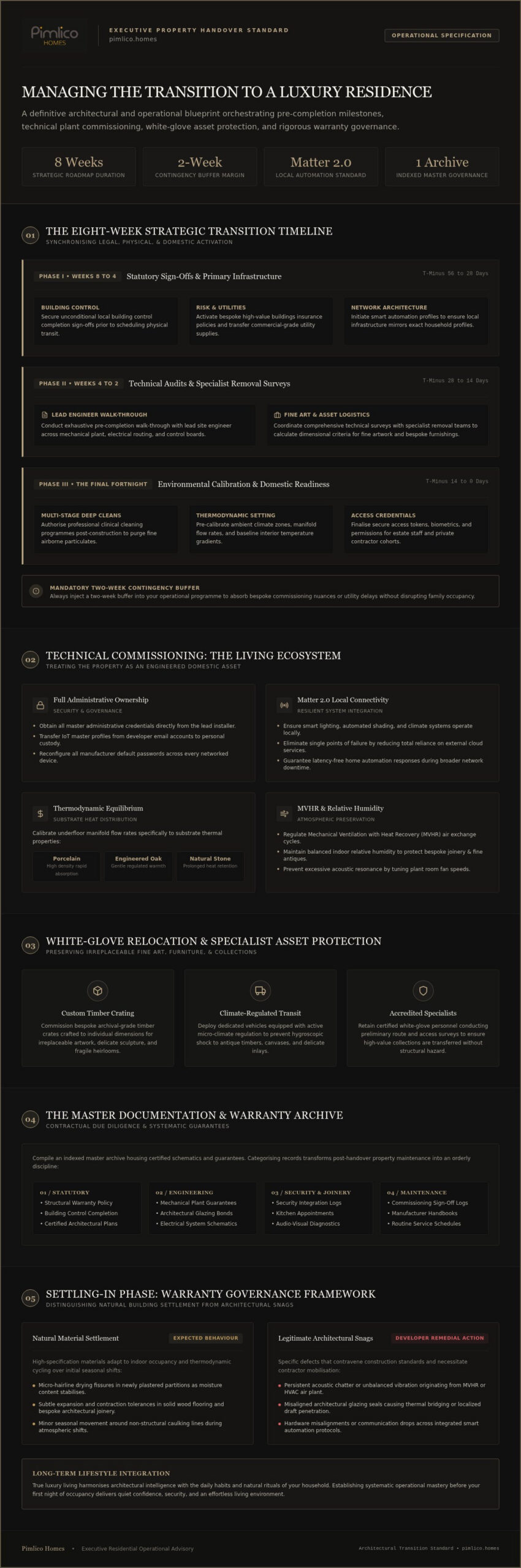
Precision orchestrates serenity. Successfully managing the transition to a new luxury home requires far more than synchronising moving vans; it demands a disciplined alignment between legal completion, physical construction sign-offs, and domestic activation. Unlike mass-market completions that compress handovers into chaotic afternoon arrivals, high-specification residences require methodical planning. By collaborating closely with your conveyancer and developer, you can establish definitive key-release protocols well in advance. Always build a two-week contingency buffer into your programme. This absorbs bespoke commissioning nuances or utility connection delays without disrupting your broader household calendar.
The Eight-Week Strategic Transition Timeline
A structured roadmap converts overwhelming operational variables into measured milestones:
- Weeks Eight to Four: Secure unconditional building control sign-offs, activate high-value buildings insurance, and transfer commercial-grade utility supplies. Initiate preliminary discussions on understanding home automation systems to ensure network infrastructure is configured to your family’s exact profiles.
- Weeks Four to Two: Conduct exhaustive pre-completion walk-throughs with the lead site engineer. Simultaneously, coordinate comprehensive technical surveys with specialist removal teams to calculate logistical requirements for bespoke furnishings and artwork.
- The Final Fortnight: Dedicate this window entirely to pristine domestic readiness. Authorise multi-stage professional deep cleans, calibrate ambient climate zones, and finalise access credentials for estate staff and private contractors.
Essential Documentation and Warranties to Assemble
A seamless arrival hinges upon meticulous record-keeping. Prior to formal completion, compile an indexed master archive containing every certified architectural plan, compliance record, and system schematic. Review this comprehensive guide to buying a luxury new build to benchmark your contractual due diligence against industry best practice.
Ensure your archive houses the definitive structural warranty documentation alongside local building control completion certificates. Group all individual manufacturer guarantees logically, categorising mechanical plant, architectural glazing, security integrations, and kitchen appointments. When managing the transition to a new luxury home, possessing complete operation manuals and certified commissioning logs transforms post-handover property care into a clear, orderly process.
Technical Commissioning: Mastering Smart Automation and Plant Systems
A luxury residence operates as an engineered ecosystem. Successfully managing the transition to a new luxury home requires looking beyond surface aesthetics to understand the intricate mechanical infrastructure beneath. Before the first moving crate enters the property, schedule an exhaustive, multi-hour technical walk-through with the developer’s lead site engineer. This session transforms complex plant rooms from intimidating tangles of pipework into familiar, controllable domestic assets.
Demanding full administrative ownership is paramount. You must obtain master administrative credentials, transfer IoT profiles, and reconfigure manufacturer default passwords across every connected platform. Smart automation systems operating on local protocols, such as Matter 2.0, ensure that lighting, shading, and climate systems communicate locally without total reliance on cloud infrastructure. If you appreciate architectural foresight and impeccably planned plant integration, exploring Pimlico Homes provides valuable insight into how master-built properties balance intricate engineering with intuitive operation.
HVAC, Underfloor Heating, and Acoustic Balance
Thermodynamic equilibrium demands careful calibration. Large-format porcelain, engineered timber, and natural stone absorb and radiate underfloor heat at distinct rates. Take the time to understand these manifold flow rates alongside your Mechanical Ventilation with Heat Recovery (MVHR) cycles. Maintaining balanced relative humidity protects delicate bespoke joinery, antique furnishings, and acoustic wall panels. Achieving this atmospheric harmony is especially critical in double-height volumes, such as those found in modern barn conversion interiors, where extensive spatial envelopes require disciplined airflow management.
Building Management Systems, Lighting, and Security Handover
Lighting and security networks require immediate operational sovereignty. Walk the floorplate to locate manual physical overrides for automated blinds and lighting panels, verifying that automated scenes respond effortlessly to physical touch:
- Access Control: Re-enrol administrative biometrics, reset keypad entry codes, and confirm that mobile video intercoms connect seamlessly to your personal mobile devices.
- Perimeter Defence: Test monitored sensor zones, integrated CCTV feeds, and physical security contacts across every entrance before domestic routines begin.
- Logistical Due Diligence: When coordinating high-value deliveries, consult authoritative resources such as Protect Your Move for robust guidelines on logistical security, operational vetting, and chain of custody.
- Network Segregation: Establish separate virtual local area networks (VLANs), isolating smart appliances and domestic entertainment systems from sensitive private executive data.
When managing the transition to a new luxury home, completing these technical calibrations in an empty property prevents environmental disruptions and guarantees absolute peace of mind.
Orchestrating White-Glove Relocation: Specialist Handling and Asset Security
Standard domestic removals falter when confronted with bespoke craftsmanship and irreplaceable private collections. When managing the transition to a new luxury home, physical logistics must mirror the exacting standards of the architecture itself. Engaging an accredited white-glove firm ensures that every consignment receives dedicated curatorial care. From tailored timber crating to air-ride, climate-controlled transit, bespoke logistics mitigate kinetic and atmospheric shock. Establish a digital inventory using high-resolution photographic condition reports, giving your household total visibility and absolute accountability from departure to final placement.
Curating the Transit of Fine Art, Antiques, and Wine
Irreplaceable assets cannot endure generic handling. Monumental canvases, delicate sculptures, and architectural glass demand certified fine art technicians who understand weight distribution, custom rigging, and archival packing materials. Similarly, private wine collections require a continuous, temperature-regulated chain of custody to prevent bottle shock and preserve cellar integrity.
Scrutinise your transit cover meticulously. Standard carrier liability, often tied to nominal statutory weight formulas, is grossly inadequate for high-value private portfolios. Insist upon comprehensive all-risks transit policies that cover the true replacement or restoration value of every piece, backed by recent independent appraisals.
Protecting Architectural Surfaces During Load-In
The physical load-in phase represents the greatest hazard to pristine interior finishes. Pristine wide-plank hardwood, delicate mineral plasters, and natural stone surfaces require structural defence before any crate crosses the threshold:
- Floor Armouring: Shield high-traffic zones with breathable, impact-resistant composite boards, never relying on lightweight plastic sheets that trap grit.
- Architectural Cladding: Sheath bespoke door frames, architraves, and hand-crafted staircases with tailored, high-density foam protectors and rigid edge guards.
- Phased Unloading: Sequence deliveries logically. Position primary, oversized furniture within key architectural suites before secondary textiles, lamps, and decorative accessories arrive.
Applying this disciplined approach ensures that managing the transition to a new luxury home protects the architectural perfection delivered on completion day.
Managing the Settling-In Phase: Professional Snagging and Warranty Governance
Every newly constructed residence undergoes a quiet period of maturation. As building materials adjust to internal heating and ambient atmospheric shifts, microscopic structural settling naturally takes place. When managing the transition to a new luxury home, recognizing the distinction between standard seasonal movement and genuine architectural defects is essential. Rather than relying on superficial checklists designed for mass-market properties, commission an independent prime residential snagging surveyor. An accredited specialist compiles an authoritative, photographic dossier, establishing an objective baseline for all future property care.
Understanding Natural Building Settlement and Acclimatisation
Natural materials breathe and react to their environment. Over the first complete annual heating cycle, timber frameworks and structural substrates release residual construction moisture, often causing minor hairline drying lines in mineral plaster. Similarly, expansive glazing systems and structural steelwork expand and contract during seasonal shifts, requiring subtle realignment. You can actively mitigate these movements by maintaining indoor relative humidity between 45% and 55%. This controlled atmospheric baseline protects delicate architectural finishes, engineered hardwood floors, and bespoke cabinetry from unnecessary moisture shock.
Constructive Snagging Protocols and Developer Relations
Remedial governance thrives on methodical collaboration rather than reactive disputes. Establish a professional protocol that honours both the integrity of your property and the privacy of your household:
- Structured Documentation: Consolidate observations into a central digital log, categorising issues by individual trade and operational urgency rather than sending sporadic notifications.
- Dedicated Access Windows: Agree upon predetermined, block-booked rectification windows with your developer, ensuring private contractor visits don’t compromise your daily executive schedule.
- Warranty Mobilisation: Channel all communications through designated customer care leads, leaning on clear contractual warranties to resolve latent snagging methodically.
Reputable developers welcome thorough third-party inspections because they validate the exceptional quality of master-built architecture. If you demand complete confidence in your next property investment, discover bespoke luxury homes crafted to the highest structural standards. Approaching the settling-in phase with patience and structured governance ensures managing the transition to a new luxury home remains an organised, reassuring journey.
Long-Term Lifestyle Integration: Transforming an Exclusive Property into a Home
Architectural brilliance achieves its true purpose only when harmonised with daily domestic life. A newly acquired residence may possess impeccable engineering and flawless structural proportions, yet it remains an abstract statement until tailored to the natural rhythms of your household. Successfully managing the transition to a new luxury home involves transforming magnificent spaces into intuitive sanctuaries. By cultivating distinct functional zones, you can effortlessly balance private executive focus in secluded studies with vibrant, open gathering areas designed for evening hospitality.
Interior Spatial Flow and Bespoke Furnishing Strategy
Interior curation should celebrate the spatial narrative conceived by the architect. Rather than crowding expansive floorplates, arrange bespoke furniture to frame unencumbered sightlines towards manicured grounds, internal courtyards, and primary natural light sources:
- Proportional Scale: Select commissioned joinery, substantial hand-knotted rugs, and sculptural lighting installations designed specifically to complement generous ceiling heights.
- Tactile Balance: Soften sharp architectural lines and polished stone finishes by introducing textured bouclés, reeded timbers, and organic linens that bring warmth to expansive suites.
- Acoustic Softening: Integrate discreet architectural fabrics and tailored drapery across open-plan reception rooms to preserve conversational intimacy and minimise reverberation.
Preventative Estate Management and Enduring Value
Sustaining the condition of a high-specification property requires disciplined stewardship. Treat your residence with the continuous care of an architecturally significant asset by implementing a quarterly preventative maintenance rota. Schedule routine servicing for complex plant equipment, mechanical ventilation filters, and rainwater harvesting sumps before minor performance drops occur. Externally, ensure natural dressed stonework, architectural metalwork, and weather-facing render envelopes receive specialist, manufacturer-approved protective treatments.
Long-term peace of mind stems from structural integrity and uncompromising craftsmanship. When you partner with experienced residential creators who respect enduring building traditions, your transition unfolds with total clarity. Take the next step in your property journey and explore bespoke residences with Pimlico Homes to experience homes engineered for generational longevity. Through intentional design choices and proactive estate care, managing the transition to a new luxury home becomes an enriching, deeply satisfying milestone.
Embracing the Full Expression of Architectural Excellence
Orchestrating an effortless arrival is the defining milestone of any significant property acquisition. When approached with methodical preparation, managing the transition to a new luxury home transforms potential operational complexity into enduring domestic serenity. Aligning technical plant commissioning with specialist asset handling and structured warranty protocols ensures that your residence functions intuitively from your very first evening. You shouldn’t simply inhabit a space; you should command it with complete confidence.
Decades of master craftsmanship underpin every executive detached residence and courtyard development we deliver. Backed by rigorous quality control and comprehensive structural warranties, our homes celebrate architectural precision designed for generational longevity. When you are ready to invest in an environment engineered for effortless living, discover our vision for bespoke luxury living and cross your next threshold with absolute peace of mind.
Frequently Asked Questions
How far in advance should I start planning the move to a new luxury home?
You should commence strategic planning at least eight to twelve weeks prior to your anticipated legal completion date. High-specification properties involve intricate logistical variables that cannot be rushed. This timeframe allows ample space to secure specialist white-glove movers, curate comprehensive transit schedules, and arrange technical plant orientations. Beginning early also provides a critical two-week contingency buffer, ensuring unexpected administrative delays won’t derail your domestic transition.
What is the difference between standard domestic removals and white-glove relocation services?
White-glove relocation provides complete curatorial care and architectural protection, whereas standard removals focus strictly on transport. Specialist teams build bespoke timber crates for fine art, operate climate-controlled vehicles for wine collections, and install heavy-duty armouring across pristine hardwood floors and architraves. They handle complete unpacking, technical placement, and debris removal. When managing the transition to a new luxury home, this comprehensive service safeguards irreplaceable personal treasures and pristine architectural finishes alike.
When should an independent snagging survey be conducted on a new luxury property?
Ideally, commission an independent snagging survey during the pre-completion inspection window, approximately two weeks before handover. Inspecting the residence while it’s completely vacant gives the surveyor unobstructed access to assess wall alignments, mechanical plant, and architectural joinery. If developer site access rules require post-completion assessment, schedule the inspection within your first seven days of occupancy before extensive furniture placement conceals minor cosmetic or structural nuances.
How long does it take for a modern high-specification home to settle naturally?
A newly constructed prime residence typically settles over an initial twelve-month cycle. Timber frameworks, screeds, and structural masonry gently release residual moisture while expanding and contracting through four distinct seasons of internal heating and outdoor weather. Minor hairline shrinkage around architraves or cornices is entirely standard during this phase. Maintaining internal relative humidity between 45% and 55% ensures materials stabilise gracefully without sudden shock or extensive cosmetic drying.
How can I ensure my smart home automation and plant equipment operate seamlessly from day one?
Insist on a dedicated, multi-hour technical walk-through with the lead site engineer before your formal move-in date. Test every subsystem individually, including underfloor heating manifolds, automated solar shading, and ventilation cycles. Secure master administrative credentials, update factory passwords, and verify that mobile automation applications function on your private network. Mastering these environmental controls early guarantees that your household experiences intuitive comfort and flawless operational harmony immediately upon arrival.
What insurance provisions must be arranged prior to physical handover of an executive home?
Comprehensive buildings insurance must be fully active on the exact day of legal exchange, regardless of your physical moving date. Discerning owners should secure tailored high-net-worth policies that include unlimited rebuild costs, specialist architectural glazing cover, and full public liability. Simultaneously, arrange dedicated all-risks transit insurance for high-value artwork and bespoke furniture, as standard removal liability provides negligible financial protection during physical loading and transport.
How should I manage contractor visits for post-completion rectifications without compromising my privacy?
Establish a formal governance agreement with your developer’s customer care director rather than arranging piecemeal call-outs. Consolidate non-urgent rectification items into a comprehensive monthly log and agree upon specific, block-booked service days. When managing the transition to a new luxury home, designating specific entry windows protects your family’s daily routines, executive work commitments, and household security while ensuring technical specialists complete remedial adjustments efficiently.





