
What if the most impressive home isn’t the one that makes the strongest first impression, but the one that works beautifully every day? A modern luxury house for sale may be presented through striking architecture and polished interiors, yet the word “luxury” alone says little about craftsmanship, comfort or whether the layout suits your life.
Look beyond the photographs. A home’s quality also shows in its materials, detailing and the way its spaces connect, from everyday routines to time spent with family and friends. Considered design should feel distinctive without asking you to compromise on practicality.
This guide explains how to assess a contemporary home, compare detached homes, executive courtyard homes and barn conversions, and decide which format may suit your priorities. You’ll also find a practical approach to shortlisting and viewing homes. Pimlico Homes develops luxury detached homes, executive courtyard homes, bespoke homes and barn conversions, each offering a distinct approach to residential living.
Key Takeaways
- Look beyond presentation to judge how craftsmanship, comfort and design support everyday living.
- During a viewing, notice how rooms connect and how finishes, joinery and materials work together.
- Compare detached homes, courtyard homes and barn conversions by privacy, layout, character and lifestyle fit.
- Shortlist a modern luxury house for sale by separating essential requirements from preferences before viewing.
- Explore how Pimlico Homes’ detached, executive courtyard, bespoke and barn conversion homes offer distinct ways to experience contemporary luxury.
What Makes a Modern Luxury House for Sale Worth Considering?
A luxury listing can make an immediate impression while leaving important questions unanswered. Photographs show finishes, but they cannot tell you whether the layout feels natural, materials work well together or the home supports the way you live.
A considered luxury home brings coherent design, careful craftsmanship and everyday comfort together to create a lasting sense of quality. That quality does not depend on one particular look or specification. A calm, pared-back interior may suit one buyer, while another prefers architectural character or more defined spaces. What matters is how well the home’s choices work together, not whether it follows a universal checklist.
Beyond the luxury label: qualities worth looking for
Notice how the home feels as you move through it. Are the proportions comfortable? Does daylight reach the places where you spend time? Can you move naturally between shared living areas and quieter rooms? These questions reveal how the layout works beyond the first view from the entrance.
Look for intentional material choices and consistency between surfaces, fittings and architectural details. Check whether joins meet neatly and doors and drawers operate smoothly. These visible details can indicate care in the finishes, but they do not establish the quality of everything behind them. A polished surface is only one part of a home’s design and construction.
Modern design that feels enduring, not merely fashionable
Contemporary architecture can feel clear and distinctive without seeming cold or tied to a passing trend. Its character may come from proportion, light, materials and the relationships between rooms, rather than a collection of fashionable features. The principles outlined in Modern Architecture principles offer useful context for understanding this emphasis on form and function.
Consider your routines as well as your tastes. An open-plan space may suit entertaining, but think about where you would work quietly, store everyday belongings or spend time apart from others. Picture an ordinary weekday, not just a special occasion. A room’s usefulness often becomes clearer when you imagine how it will accommodate familiar habits.
Enduring design supports long-term enjoyment through well-proportioned rooms, intuitive circulation, considered daylight, useful privacy and materials that work in harmony. These are practical qualities to assess in a modern luxury house for sale. They help distinguish immediate visual appeal from a home that feels composed, comfortable and suited to daily life.
How to Assess Design, Craftsmanship and Comfort in a Modern Luxury Home
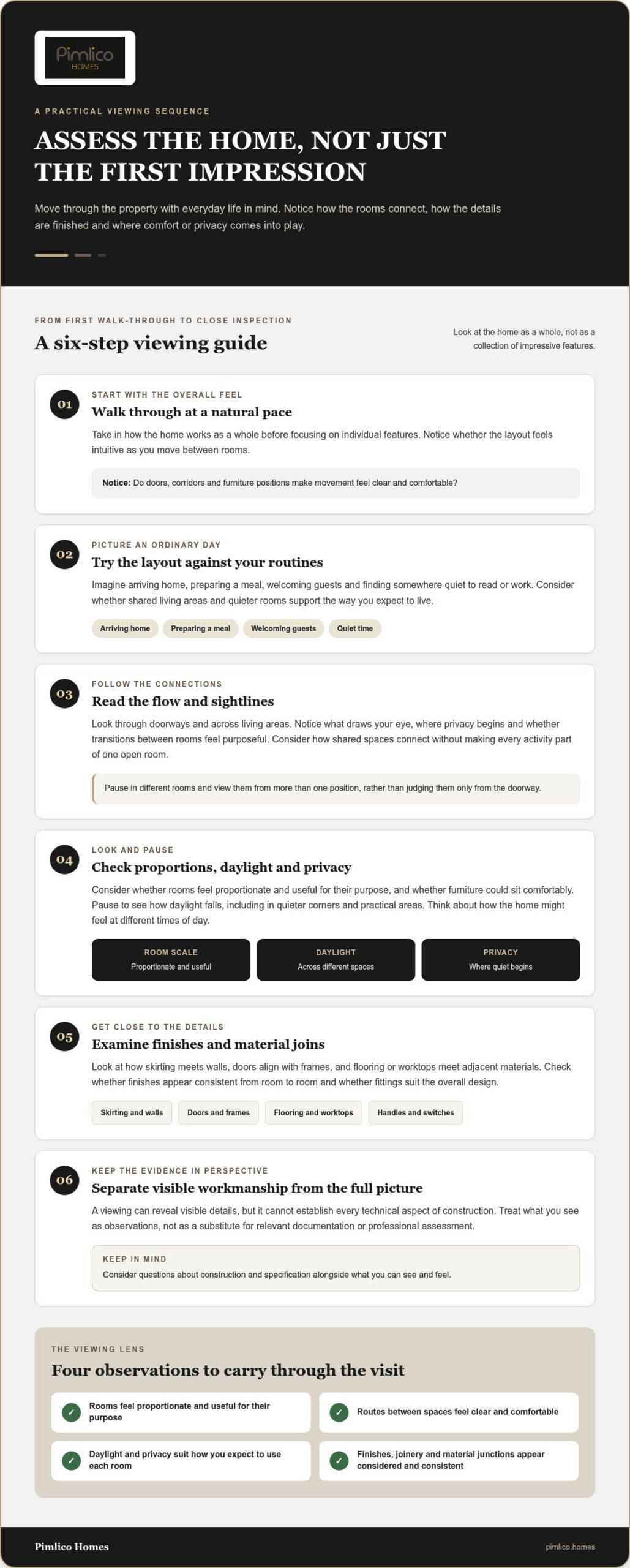
A viewing is more useful when you consider how the home works as a whole, not just its individual features. A striking kitchen or beautifully finished bathroom may catch your eye, but comfort also depends on the routes between rooms, the balance of shared and private spaces, and whether the layout supports everyday routines.
Walk through at a natural pace. Imagine arriving home, preparing a meal, welcoming guests and finding somewhere quiet to read or work. Notice whether movement feels intuitive or whether doors, corridors and furniture positions interrupt it. Thoughtful planning in a modern luxury house should connect spaces without making every activity part of one open room.
Reading the architecture and the flow of each room
Look through doorways and across living areas to understand sightlines: what draws your eye, and where does privacy begin? Consider whether room proportions allow furniture to sit comfortably and whether transitions between spaces feel purposeful. Pause in different rooms to observe how daylight falls. A bright first impression matters, but so does the light reaching quieter corners and practical areas.
Think about how the home might feel at different times of day. A social kitchen may be central to family life, while a separate room could offer welcome calm. Look at rooms from more than one position rather than judging them from the doorway alone.
Recognising craftsmanship without relying on grand claims
Examine details at close range. Look at how skirting meets walls, how doors align with frames, and how flooring or worktops meet adjacent materials. Check whether finishes appear consistent from room to room, and whether handles, switches and other fittings suit the overall design. For further perspective on the role of detail and material choice, read about craftsmanship in luxury homes.
A viewing lets you observe visible workmanship, but it cannot establish every technical aspect of construction. Treat your impressions as observations, not as a substitute for relevant documentation or professional assessment. Consider questions about construction and specification alongside what you can see and feel.
A viewing checklist:
- Rooms feel proportionate and useful for their intended purpose.
- Routes between spaces are clear and comfortable.
- Daylight and privacy suit the way you expect to use each room.
- Finishes, joinery and material junctions appear considered and consistent.
These observations connect design to lived experience, rather than judging a home by impressive features in isolation. To compare different expressions of craftsmanship and residential design, explore Pimlico Homes’ luxury home range.
Detached, Courtyard or Barn Conversion: Which Luxury Home Format Fits?
Home type is a useful starting point, but it cannot tell you exactly how a property will feel to live in. Detached homes, courtyard homes and barn conversions each offer a different architectural experience. Rather than choosing by which sounds most prestigious, consider how each home’s layout, character and setting relate to your priorities.
| Format | Privacy | Layout and character | May suit buyers who value |
|---|---|---|---|
| Detached home | Separation from neighbouring homes may appeal, though the plot and design shape the experience. | Often experienced as a distinct home with its own arrangement of rooms. | Individual space and a sense of separation. |
| Courtyard home | Privacy depends on the homes’ orientation and the relationship between private and shared areas. | The arrangement around a courtyard can shape the sense of community and outlook. | A home whose setting is formed by a considered group layout. |
| Barn conversion | Varies with the building’s layout and its relationship to surrounding spaces. | Can bring existing architectural character together with contemporary residential use. | Distinctive character alongside modern living. |
Detached and courtyard homes: space, privacy and shared character
A detached home may suit you if individual space and separation matter. However, the label alone cannot promise seclusion. The home’s position, room arrangement and relationship to its surroundings all affect the experience. During a viewing, consider which rooms face neighbouring properties and how the spaces you use most often feel.
Courtyard living has a different emphasis. The placement of homes around a shared arrangement can influence outlook, arrival and the balance between personal and communal space. Look at how entrances, windows and outdoor areas relate to one another. Assess the actual layout rather than assuming the format guarantees a particular level of privacy or sociability.
Bespoke homes and barn conversions: individuality with purpose
A bespoke home reflects a specific design intention and has its own architectural character. A barn conversion can bring the presence and form of an existing building into contemporary residential use. In either case, individuality is most compelling when it supports practical living, rather than serving as character for its own sake.
Compare what you can observe: the flow between rooms, the consistency of finishes and the way distinctive features work within the overall layout. For a modern luxury house for sale, the category is only a first filter. The design and execution of the individual home matter more than the label, so weigh its documented details and the experience of viewing it against your priorities.
How to Shortlist and View a Modern Luxury House for Sale
A clear process makes the search more considered and each viewing more useful. Set consistent criteria, compare like with like and keep a written record instead of relying on photographs or a strong first impression. This helps you identify which home suits your priorities, not simply which one is easiest to remember.
- Define your priorities. Write down what daily life requires, such as a particular arrangement of rooms, a quiet place to work or space for entertaining. Mark each item as essential or preferred. This helps prevent an appealing design detail from outweighing a requirement that matters every day.
- Shortlist formats. Decide whether detached, courtyard, bespoke or barn conversion homes merit consideration based on the way you want to live. Treat each format as a starting point, not a verdict. Compare the actual layout, character and documented details of each home instead of assuming properties in one category offer the same experience.
- View with a consistent method. Use the same notes for each property. Record what you observe about room use, circulation, daylight, privacy and finishes, then note how well each feature meets your essential requirements. A simple rating such as “meets”, “partly meets” or “does not meet” can make differences visible without disguising your judgement as a precise measurement.
- Review relevant documentation. Keep questions about specification, construction and property documentation alongside your viewing notes. Separate information in documents from your own observations and assumptions. This guide offers a practical framework for comparison, not legal, surveying or technical advice.
Create a shortlist around how you want to live
Rank your priorities before comparing properties. You might place layout and privacy ahead of a particular finish, or value architectural character while keeping everyday comfort central. For every shortlisted home, record the same points: how rooms relate, which features meet your needs and what the relevant documents describe. Note optional details, such as a distinctive fitting or striking entrance, separately. A like-for-like record makes trade-offs easier to recognise.
Make each viewing more purposeful
Revisit key rooms and the transitions between them. Stand where you might prepare food, sit with guests or work quietly, and consider how those activities connect. Take written notes promptly. Photographs capture appearance, but not how a route felt or whether a room seemed practical. If a specification or construction detail raises a question, note it rather than treating an impression as confirmation.
For wider context on purchase considerations, the luxury new-build buying guide can complement this viewing framework. Once your priorities are clear, explore Pimlico Homes’ luxury homes and consider which format aligns with the life you have in mind.
Explore Pimlico Homes’ Modern Luxury Homes for Sale
Choosing a home is personal. It depends as much on the way you want to live as on architectural style. Pimlico Homes is a specialist residential developer focused on premium homes, with an emphasis on high-quality craftsmanship. Its range includes several distinct formats for buyers considering a modern luxury house for sale.
A range of homes shaped around distinct ways of living
Detached homes, executive courtyard homes, bespoke luxury homes and luxury barn conversions each offer a different residential and architectural experience. A detached home may appeal if you are drawn to a stand-alone format, while a courtyard home offers a different relationship between the home and its surrounding arrangement. Bespoke homes reflect individual design intent, while barn conversions bring an existing building’s character into contemporary residential use.
These categories can help narrow your search, but they cannot tell you how an individual home is planned or finished. Homes within the same broad format can differ in layout, atmosphere and practical suitability. Look beyond the label to understand how the design serves your priorities, whether those centre on character, the arrangement of spaces or the quality of the finishes.
Keep your essential requirements in view as you compare homes, and assess each on its own merits. The right format is not necessarily the one with the most striking name or first impression. It is the one whose design and details align most closely with your way of living.
A considered next step towards finding your home
Exploring Pimlico Homes’ residential developments can help you refine what you are looking for. Consider which architectural approach feels most relevant to your priorities. A detached home, an executive courtyard home, a bespoke home and a barn conversion each represent a different expression of premium residential living, with craftsmanship central to the developer’s approach.
Take time to consider individual homes and the information provided about them, then return to your shortlist criteria. This gives you a measured way to move from broad inspiration towards a clearer view of what may suit you. A home purchase carries lasting significance, so give the choice care, clarity and room for reflection.
Explore Pimlico Homes’ residential developments and consider which home format feels right for you. Start with the design that speaks to your priorities, then take the time to understand the home itself.
Take the Next Step Towards a Home That Fits
Before moving from research to a viewing, revisit the priorities you have identified. Which qualities would make a difference to your ordinary day, not just your first impression? Keeping that question in view can help you assess each property and recognise when a design feels suited to you.
The right modern luxury house for sale is not simply the one that photographs beautifully. It is a home whose character and practical qualities continue to appeal as you imagine living there. Take time to explore, compare and reflect; a considered decision need not be a rushed one.
Pimlico Homes develops premium new-build homes, with a focus on craftsmanship. Explore its homes at your own pace and consider which design direction speaks to your priorities. Explore Pimlico Homes’ luxury homes and take a thoughtful next step towards finding a home that feels right for the life you want to lead.
Frequently Asked Questions
What makes a modern luxury house different from a standard new-build home?
No single label guarantees a particular standard, so assess the individual property rather than relying on “luxury” or “new-build” alone. Consider the design as a whole, the quality and consistency of materials, the finish of details and whether the specification suits your needs. For example, a carefully planned kitchen may matter more to your routine than an impressive feature you would rarely use.
Are modern luxury homes always contemporary in architectural style?
No. “Modern luxury” can describe a home designed for contemporary living without requiring a stark or overtly minimalist appearance. Its architectural character may be traditional, contemporary or a considered combination of both. Look at how the home’s form, materials and interior choices relate, then consider whether the atmosphere suits your taste. Age or visual style alone cannot tell you how well a home will work for you.
Can a barn conversion still feel modern and comfortable?
Yes. A barn conversion can retain distinctive character while being adapted for residential use, but comfort depends on the individual design and execution. During a viewing, notice how the rooms function, whether the layout feels practical and how existing features have been incorporated. Review relevant information about the property’s specification and construction. A characterful exterior is only part of the picture; consider how the home feels across the spaces you would use every day.
What should I consider before reserving a new-build luxury home?
Before reserving, understand the reservation terms, what the stated price includes and which specification applies to the home. Clarify the anticipated build and completion arrangements, and note any choices or decisions with deadlines. Have your solicitor review the relevant paperwork before you commit, and make sure your funding plans fit the purchase process. Keep a written record of what has been agreed, including details that matter to your intended use of the property.
Do luxury new-build homes come with a warranty?
Warranty arrangements can differ between properties, so don’t assume every home has the same provider, cover or terms. Review the paperwork for the specific property and establish what it says about the period of cover, what is included, exclusions and how to report a concern. A warranty document is not a substitute for understanding the home’s specification or condition. If anything is unclear, seek independent advice before relying on your interpretation.
What is an Energy Performance Certificate, and why should a buyer review it?
An Energy Performance Certificate (EPC) records a property’s energy-efficiency rating and includes information intended to help buyers understand its energy performance. Review the certificate for the home you are considering and note any recommendations alongside your questions about running and maintaining the property. The EPC is one useful document, not a complete account of comfort, construction quality or likely household costs, so consider it as part of the wider property information.
Should I arrange an independent survey when buying a modern luxury home?
An independent survey is worth considering, including for a recently built home, because it can provide a separate view of the property’s condition. The appropriate survey and its scope depend on factors such as the building and its stage of completion. Discuss your circumstances with a suitably qualified surveyor, and treat the survey as distinct from sales information or a warranty. Its findings can help you understand issues that may need further attention before proceeding.





