
The acquisition of a luxury residence is rarely just about the bricks and mortar; it is the arrival at a hard-earned sanctuary. You’ve invested in excellence, and your moving into a new build checklist should reflect that same standard of perfection. It’s natural to feel a sense of protective pride over your new home, alongside a slight trepidation regarding the intricate smart systems or the potential for a stray scuff during the move. We understand that for a discerning homeowner, the transition must be as polished as the architecture itself.
Our guide offers the clarity you need to manage this transition with absolute confidence. We’ve distilled decades of expertise into a framework that ensures every detail, from the mandatory 7kW smart EV charger to the latest NHQB snagging protocols, is handled with precision. You’ll discover how to safeguard your bespoke interiors whilst mastering the low-carbon technologies that define modern executive living. By following this structured path, you can move past the logistics and begin enjoying the quiet prestige of your new environment from the very first evening.
Key Takeaways
- Conduct a thorough home demonstration to master integrated kitchen technologies and high-specification systems before you receive the keys.
- Use our meticulous moving into a new build checklist to implement an independent snagging protocol, ensuring your property meets executive standards.
- Secure the longevity of your bespoke interiors by engaging specialist removalists and applying protective measures for marble and hardwood surfaces.
- Simplify the administrative transition by coordinating a digital handover for smart home systems and establishing accounts with green energy providers.
- Maintain the enduring value of your investment by understanding the seasonal drying-out process and the specific maintenance requirements of a new build.
The Pre-Completion Phase: Architectural Handovers and Demonstrations
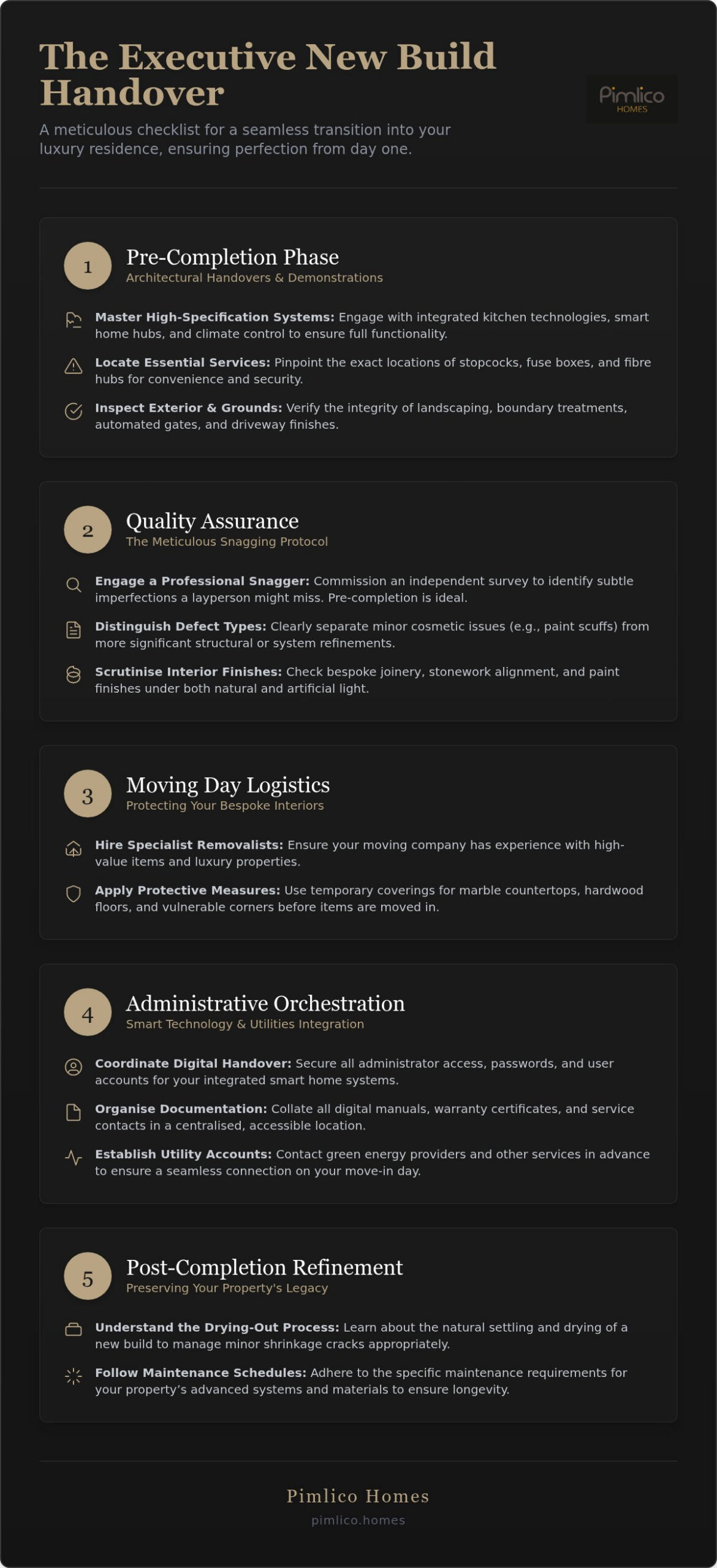
The transition into your new residence begins long before the removal vans arrive. The home demonstration is a pivotal milestone in your moving into a new build checklist. It represents the formal handover of a finished architectural work. This session is your opportunity to step beyond the role of a buyer and become the master of your environment. While the developer guides you through the property, a comprehensive home inspection by an independent professional can provide an additional layer of technical assurance; ensuring that the visionary design is matched by flawless execution.
During this walkthrough, focus your attention on the high-specification appliances and integrated kitchen technologies that define executive living. Don’t simply observe; engage with the systems. Test the induction hobs, the integrated wine cooling systems, and the steam ovens to ensure they operate with the precision expected of premium brands. It’s equally vital to locate your essential service points. In a large detached home, knowing the exact position of stopcocks, fuse boxes, and fibre hubs is paramount for both daily convenience and long-term security. Understanding the heating and climate control systems is particularly critical, especially as modern builds move towards low-carbon technologies like heat pumps that operate differently from traditional boilers.
Mastering Your Home Technology
Modern luxury homes rely on sophisticated digital architecture. Request a dedicated briefing on your smart home hubs and security systems. You’ll need to understand how the internal intercoms connect to external gates and how the security arrays integrate with your personal devices. Ensure that all digital manuals and warranty certificates are organised in a central location. Pay close attention to the operation of underfloor heating zones. Learning to calibrate individual thermostats for different rooms will ensure immediate comfort whilst maintaining the energy efficiency standards of your new property.
The Exterior and Grounds Review
The prestige of a Pimlico property extends to its boundaries. Inspect the integrity of the professional landscaping and boundary treatments to ensure they align with the original architectural vision. Verify the operation of automated gates and the coverage of external lighting across the grounds. Finally, check the finish of your executive courtyard or driveway surfaces. These exterior elements are the first impression your home makes; they deserve the same meticulous scrutiny as the bespoke interiors. This thoroughness ensures that your move is not just a change of address, but a seamless entry into a refined lifestyle.
The Meticulous Snagging and Quality Assurance Protocol
A high-end property is more than a structure; it’s a testament to craftsmanship. Whilst your developer strives for perfection, the sheer complexity of a luxury build means that a dedicated quality assurance phase is vital. Integrating a professional inspection into your moving into a new build checklist ensures that every detail aligns with your expectations. An independent snagging survey is particularly essential for premium builds. These experts possess the technical acuity to identify subtle imperfections that a layperson might overlook, from the calibration of ventilation systems to the precision of intricate masonry.
Timing is a critical factor in this process. Ideally, a pre-completion inspection allows the developer to address refinements before you move your furniture into the space. If this isn’t possible, an immediate post-move survey should be conducted within the first few days. Distinguishing between minor cosmetic touch-ups and structural refinements is key to a smooth transition. Whilst a paint scuff is easily rectified, ensuring the integrity of the building’s thermal envelope requires a more technical approach. When dealing with any specialist remedial contractors, it’s wise to remain vigilant by avoiding home improvement scams and verifying credentials to protect your investment.
Interior Finishes and Artistry
The beauty of a bespoke home lies in the details. Inspect all bespoke joinery and fitted wardrobes to ensure the doors hang with absolute precision and the soft-close mechanisms operate silently. High-end tiling and stonework should be checked for perfectly level alignment and consistent grout lines. It’s often helpful to evaluate paint finishes under both natural daylight and artificial lighting. This reveals any subtle inconsistencies in the texture or coverage that might otherwise remain hidden until you’ve fully settled into the residence.
The Snagging Management Process
Success in rectification depends on clear, professional communication. Create a formalised list of observations to present to the site manager, rather than relying on informal conversations. This document serves as a shared roadmap for excellence. Maintaining a comprehensive moving into a new build checklist during this phase allows you to track the progress of each item systematically. Every correction should be executed to a high specification new build homes standard, preserving the property’s long-term value. At Pimlico Homes, we believe that a partnership based on transparency and mutual respect is the foundation of a flawless handover.
Moving Day Logistics: Protecting Your Bespoke Interiors
The arrival at your new residence is the culmination of a significant life investment. It’s a day that requires more than mere transport; it demands a strategy of preservation. Selecting specialist removalists experienced with luxury detached properties is the first priority on your moving into a new build checklist. These professionals understand the nuances of navigating executive homes, from the weight of solid oak pieces to the fragility of curated artwork. They don’t just move boxes; they safeguard the architectural integrity of your environment.
Protecting the property’s surfaces is paramount. Hardwood and marble floors are resilient once settled, but they’re susceptible to impact damage during the high-traffic hours of a move. While the excitement is high, it’s essential to remain vigilant. Research into new-home defects suggests that many visible issues in new properties are actually caused by the removal process rather than the construction itself. Managing the flow of a move into a multi-storey executive home requires a methodical approach, ensuring that heavy items are positioned correctly without compromising the finish of staircases or narrow landings.
Ensuring Interior Integrity
Maintaining the pristine condition of your bespoke interiors requires specific physical barriers. Your removal team should implement a comprehensive protection plan before the first item crosses the threshold. This includes:
- Protective Runners: Using heavy-duty, non-slip runners for high-traffic hallway areas to prevent grit and moisture from affecting new flooring.
- Padding Door Frames: Applying foam guards to door frames and corners to prevent scuffs or chips during the transit of large furniture.
- Underfloor Heating Consideration: Supervising the placement of heavy crates on underfloor heated zones, as excessive weight in one concentrated area can occasionally affect the heat distribution of newly laid screeds.
Arrival Essentials for the Executive Buyer
The final transition into your sanctuary should be defined by immediate comfort. By the time the sun sets on your first day, the property should feel like a home rather than a building site. This requires foresight in your administrative orchestration. Ensure that your Wi-Fi and connectivity are operational from the moment you arrive, allowing you to manage your affairs without interruption. Most importantly, verify that the security system is fully armed and that you’re comfortable with its operation. Preparing a curated essentials box with high-end linens, toiletries, and perhaps a celebratory bottle of wine ensures that your first night is as prestigious as the property itself.
Administrative Orchestration and Smart Technology Integration
The successful occupation of a high-specification residence requires a meticulous digital and legal migration. Your moving into a new build checklist must extend beyond the physical realm to encompass the sophisticated administrative orchestration that supports a modern lifestyle. Establishing utility accounts for water, gas, and green energy providers should be prioritised on day one; ensure you take clear photographs of all meter readings during the formal handover. Given the UK’s shift towards low-carbon heating, your energy provider should ideally offer tariffs tailored to heat pump technology and smart EV charging. Equally vital is the arrangement of premium home and contents insurance. High-value assets and bespoke interiors require specialist cover that standard policies often fail to provide.
The digital handover represents a modern evolution of the traditional key exchange. In a prestigious property, the ‘keys’ to your home are often found within encrypted applications and smart hubs. You must transition these accounts from the developer’s temporary setup to your permanent ownership. This process ensures you maintain absolute control over the property’s security and climate systems while protecting your personal data privacy. It’s a quiet but essential step in claiming full stewardship of your new environment.
Connectivity and Smart Systems
Activating your Fibre-to-the-Premises (FTTP) connection is the foundation of your home’s intelligence. With ultra-fast broadband established, you can begin integrating your personal devices with the pre-installed smart technology. This includes setting up remote access for automated gates, intelligent lighting scenes, and multi-zone climate control. Having these systems operational from the outset allows you to manage your environment with the effortless precision that defines executive living. If you are ready to explore the pinnacle of modern living, we invite you to view our latest executive developments.
Essential Notifications
The administrative tail of a property move is often complex. Beyond updating the Land Registry and your legal representatives, you must notify your private banks, wealth managers, and insurance brokers of your change of address. Registering for Council Tax and updating the electoral roll is necessary to ensure your presence is formally recognised within the new development. Finally, take the time to register with local residents’ associations. These groups are often the heartbeat of an executive community, providing a platform for connection and shared stewardship of the local area. This structured approach ensures that your transition is as seamless as the architecture of the home itself.
Post-Completion Refinement: Preserving Your Property’s Legacy
A luxury residence is a living masterpiece that continues to evolve long after the final key is turned. Once the immediate flurry of moving day subsides, your perspective should shift from transition to stewardship. The first year is a period of calibration for both the building and its inhabitants. Your moving into a new build checklist must now expand to include a long-term preservation strategy. This commitment to detail ensures the property retains its pristine calibre, directly protecting the resale value of new build homes in an increasingly discerning market. Meticulous care today is the foundation of your property’s future heritage.
Understanding the building’s physical journey is essential. Modern construction involves thousands of litres of water within the plaster, screeds, and timber frames. This moisture must evaporate gradually to ensure the structural integrity of the finishes. Beyond the aesthetics, you should also familiarise yourself with the New Homes Quality Board (NHQB) standards. Since 2025, these regulations have provided enhanced consumer protections, including a defined process for addressing any lingering snags through the New Homes Ombudsman Service. Utilising your warranty effectively provides the long-term peace of mind that a significant life investment deserves.
Settling Into Your New Home
The drying-out process is a natural phase of any new build. You can assist this by maintaining consistent, moderate humidity levels and avoiding excessive heat during the first winter. This gentle approach helps the timber and plaster settle without undue stress. You may notice minor hairline “settling cracks” near door frames or ceiling joints; these are typically cosmetic and easily rectified during your end-of-warranty review. It’s also a time to monitor the performance of your energy-efficient systems. As low-carbon heating technologies like air source heat pumps operate on longer, lower-temperature cycles, it takes a full seasonal rotation to truly master your home’s climate profile.
Long-Term Stewardship
Preserving the artistry of a bespoke barn conversion or a luxury detached home requires a proactive maintenance schedule. High-specification HVAC and AV systems should be professionally serviced annually to ensure they continue to perform with peak precision. Exterior elements, such as bespoke stonework or high-end cladding, may require specific treatments to resist the North East weather whilst maintaining their visual prestige. Periodically reviewing your property’s investment status amongst other luxury residential developments allows you to stay informed about market trends. This structured approach to maintenance doesn’t just fix problems; it celebrates the enduring quality of your sanctuary.
Your Sanctuary Awaits: Orchestrating the Final Handover
The transition into a high-specification residence is a methodical journey from architectural vision to personal sanctuary. By mastering the intricate smart systems and implementing a rigorous quality assurance protocol, you ensure that the property’s performance matches its aesthetic prestige. Protecting bespoke finishes during the move and establishing a clear administrative foundation are the final steps in securing your long-term investment.
Following a structured moving into a new build checklist allows you to navigate this complexity with absolute poise. At Pimlico Homes, we bring over 25 years of experience to every luxury residential development. We are specialists in bespoke detached homes and barn conversions, driven by an unwavering commitment to high-specification craftsmanship. We invite you to explore our current portfolio of luxury executive developments and discover the standard of excellence we uphold in every project.
Your new chapter begins in an environment designed for longevity and refined comfort. We look forward to seeing your vision come to life within the walls of a property built to endure.
Frequently Asked Questions
When should I book a snagging survey for my new build home?
The ideal time to book an independent snagging survey is as close to completion as possible. Most executive developers prefer you to conduct this prior to the formal handover, allowing remedial works to be finished before your furniture arrives. If this isn’t feasible, ensure the survey is completed within the first week of occupation to distinguish between construction snags and accidental damage caused during the removal process.
How long does a developer have to fix snags in a luxury property?
Developers typically have a two-year defect liability period to address internal snags. Under the New Homes Quality Board (NHQB) Code, major builders must acknowledge your report within five days and provide a formal plan for resolution within thirty days. For high-specification homes, timelines may vary based on the availability of bespoke materials, but the developer should maintain a transparent schedule for all remedial artistry.
Can I move into my new build before the landscaping is finished?
You can legally occupy your residence once a Building Control completion certificate or an NHBC cover note is issued, even if external landscaping is ongoing. Whilst the interiors are ready, the grounds may require seasonal planting or final paving. Ensure your moving into a new build checklist includes a review of the exterior site safety to ensure the ongoing works don’t interfere with your immediate comfort or security.
What is included in a standard luxury new build warranty?
A standard warranty, such as those provided by the NHBC, typically offers a ten-year structural guarantee. This is divided into a two-year developer warranty for defects in fixtures and finishes, followed by an eight-year insurance period covering major structural elements. It’s essential to verify that high-specification systems, such as heat pumps or solar arrays, carry their own manufacturer warranties for additional long-term peace of mind.
How do I set up the smart home technology in my new property?
Your developer should facilitate a digital handover that transitions ownership of all pre-installed hubs to your personal accounts. Once your fibre-to-the-premises (FTTP) connection is active, you can integrate your devices with the central climate, lighting, and security systems. Most luxury developments provide a dedicated technical briefing to ensure you’re comfortable managing these sophisticated interfaces from your smartphone or tablet on the first evening.
Is it normal for a new build home to have small cracks in the plaster?
Small hairline cracks are a standard part of the natural drying-out process as the building’s materials settle. These “settling cracks” typically appear around door frames or where walls meet ceilings during the first year. They don’t indicate structural failure; instead, they are a sign that the timber and plaster are adjusting to the internal climate. These are usually addressed during the end-of-warranty cosmetic review.
What documents should I receive from the developer upon completion?
Upon handover, you should receive a comprehensive Home User Guide containing all appliance manuals and warranty certificates. This package must include your Energy Performance Certificate (EPC), electrical and gas safety certificates, and the formal NHBC or equivalent warranty documentation. For bespoke builds, ensure you also receive the technical specifications for integrated smart systems and any landscape management plans for the executive grounds.
How do I ensure my move doesn’t damage the bespoke finishes?
The most effective way to protect your interiors is to engage specialist removalists who are experienced with the scale of luxury detached properties. Use heavy-duty floor runners to safeguard marble or hardwood surfaces and apply padded guards to door frames. Including these protective measures in your moving into a new build checklist prevents accidental scuffs whilst your high-value furniture is being positioned within the multi-storey layout.


