
What if a lasting family legacy begins not with inheritance, but with a home that can respond as family life changes? Choosing multi-generational luxury new builds means looking beyond today’s needs and considering how different generations might share a property while retaining privacy, independence and room to grow.
Living closer can be appealing, but it also raises practical questions. Will the layout offer enough separation? Which type of home is worth considering? How might changing circumstances affect family plans or ownership arrangements? Thinking through these points before you commit can help you make a more informed choice.
This guide explains how to assess and compare a luxury new build for several generations. It covers practical differences between detached homes, executive courtyard homes, bespoke homes and barn conversions, as well as questions to raise with property, legal and financial professionals. Pimlico Homes develops and sells these residential property types. To decide whether one may suit your family, start with a clear picture of how everyone hopes to live, now and in the years ahead.
Key Takeaways
- Discuss how each family member hopes to live, including their need for privacy, shared time and independence.
- Assess how circulation, noise, storage and access could affect everyday comfort in different parts of a home.
- Compare detached, courtyard, bespoke and barn conversion homes as broad categories, then verify each property’s layout and specification.
- Explore care needs, finances, ownership and how family circumstances could change.
- Approach multi-generational luxury new builds with clear household priorities, and seek appropriate property, legal and financial advice before deciding.
Multi-generational luxury new builds: what does a family legacy mean?
A home may serve a family through several chapters of life. Adult children might return for a period, grandparents may want to live closer to relatives, or visits from family may become more frequent. Planning for these possibilities does not mean assuming that everyone will live under one roof, or that their needs will stay the same.
A multigenerational family can take many forms. In property terms, relatives might share one household, live in separate homes close to one another, or choose a property that could accommodate changing patterns of use. The key question is not simply how many people a home can hold. It is how family members want to balance time together with autonomy, quiet and personal space.
What does multi-generational living look like in practice?
Arrangements range from sharing everyday spaces to living in adjacent homes while maintaining separate households. A home with rooms that can serve different purposes may also be considered, although suitability depends on its actual layout and specification. Adult children may value independence; parents may prioritise proximity; grandparents or visiting relatives may need a comfortable place to stay. Agreeing the preferred balance between connection and privacy is a useful first step.
Can a home contribute to a family legacy?
A family legacy can mean more than passing on an asset. It might be the familiar table where relatives gather, the memories built over time, or the considered choice of a home with the family’s longer-term life in mind. These personal measures of value depend on how people use and care for a home.
A family legacy is built through the life shared in a home, not through a guaranteed investment return. Property values can change, and neither future inheritance nor tax treatment can be promised. Families considering ownership, succession or tax questions should seek advice from appropriately qualified legal and financial professionals. When weighing up multi-generational luxury new builds, begin by assessing the property and the family’s hopes, rather than assuming a financial outcome.
This distinction matters. A thoughtful choice may support continuity while respecting each person’s independence, but no property can resolve every uncertainty about the future. Start with open conversations about who may use the home, how needs could evolve and what would make shared life comfortable. Those priorities give you a clearer basis for assessing individual properties and their verified layouts.
Designing multi-generational luxury new builds for privacy and connection
A comfortable shared home needs a balance between places where family can come together and spaces where individuals can withdraw. An inviting kitchen or living area may encourage connection, but privacy also depends on the wider layout. Consider who uses each room, when they need quiet and whether one person’s routine regularly takes them through another person’s personal space.
Base these decisions on your own household. One family may value a generous shared dining area, while another may prioritise quiet rooms for work, rest or study. Map everyday routines, then check whether the property’s confirmed layout could support them without turning shared areas into thoroughfares.
Which layout questions help protect privacy?
Look beyond the number of bedrooms. Do the bedrooms and bathrooms offer suitable personal space for the people who may use them? Could shift work, study, entertaining or early starts create competing demands? Consider sound between rooms, storage for each household member and the routes people take through shared areas. Review the floor plans and, where possible, visit the property. Marketing images alone cannot confirm how a layout feels or functions.
During a viewing, picture ordinary moments as well as special occasions. Could someone take a call or rest while others use a communal room? Would a guest’s route to a bathroom interrupt another person’s privacy? These practical checks can help you judge whether the arrangement supports your family’s preferred balance of togetherness and independence.
How can a home remain useful as needs change?
Consider how a room might serve different purposes over time. For example, a study could later become a guest room, depending on its size and layout. Ask which accessibility provisions are confirmed in the property specification, and whether potential adaptations would be feasible. Proposed building work may have implications that need checking with the relevant professionals and authorities.
Adaptable planning can help a home respond to changing needs, but it cannot promise a particular outcome. Family size, caring responsibilities, work patterns and visiting arrangements may all change. The aim is to understand what the property offers now and what may be possible, rather than assume a feature or future alteration will suit every circumstance.
These checks matter across property types. Pimlico Homes develops and sells luxury detached homes, executive courtyard homes, bespoke luxury homes and luxury barn conversions. Verify the layout and specification of each property individually. You can include luxury homes from Pimlico Homes in your comparison, then assess whether a property’s confirmed details align with your household’s priorities.
Comparing luxury new build types for a multi-generational household
Property type is a starting point for comparison, not an answer in itself. A detached home, executive courtyard home, bespoke luxury home or barn conversion may each offer different possibilities, but the category alone cannot tell you whether an individual property will work for your family. Assess the actual plan, specification and intended use against your household’s priorities.
Detached, courtyard and bespoke homes: what should families compare?
Look at how each home arranges private rooms, shared areas and the routes between them. Consider whether people can follow different routines without unnecessary interruption, and whether storage and access suit the household as it is now. “Bespoke luxury home” is a property category, not a promise that a particular design can be tailored or is available. Verify the details of each property before drawing conclusions.
| Home type | Privacy | Shared space | Adaptability to assess | Questions to verify |
|---|---|---|---|---|
| Detached home | Check the separation of bedrooms and living areas. | Identify which rooms could bring the household together. | Consider whether rooms could serve different purposes over time. | How do the actual layout and access arrangements work? |
| Executive courtyard home | Review how private rooms relate to shared spaces and routes through the home. | Assess where household members could gather comfortably. | Check whether the specified spaces meet current and anticipated needs. | What does the floor plan show about circulation and room use? |
| Bespoke luxury home | Assess the confirmed plan rather than assuming a particular level of separation. | Consider how the designated shared areas suit family routines. | Verify the property’s actual specification and any scope for change. | Which features are confirmed for this individual home? |
| Luxury barn conversion | Examine the arrangement of private rooms in the individual conversion. | Consider how its spaces support everyday family life. | Check the layout and specification, including practical access. | What permissions, building work and property details should professionals verify? |
Could a luxury barn conversion suit changing family needs?
Possibly, but suitability depends on the individual conversion, not its character or former use. Review how the rooms connect, how the household would move between them and whether the specification supports everyday use. Ask qualified professionals to verify relevant permissions, building work and property details. Do not assume that a striking interior or generous-looking space will meet every practical requirement.
Apply the same checks to all multi-generational luxury new builds: compare confirmed information, visit where possible and test the plan against real household routines. The most suitable option is the one whose verified details align with your family’s needs, not a property type presumed to be best.
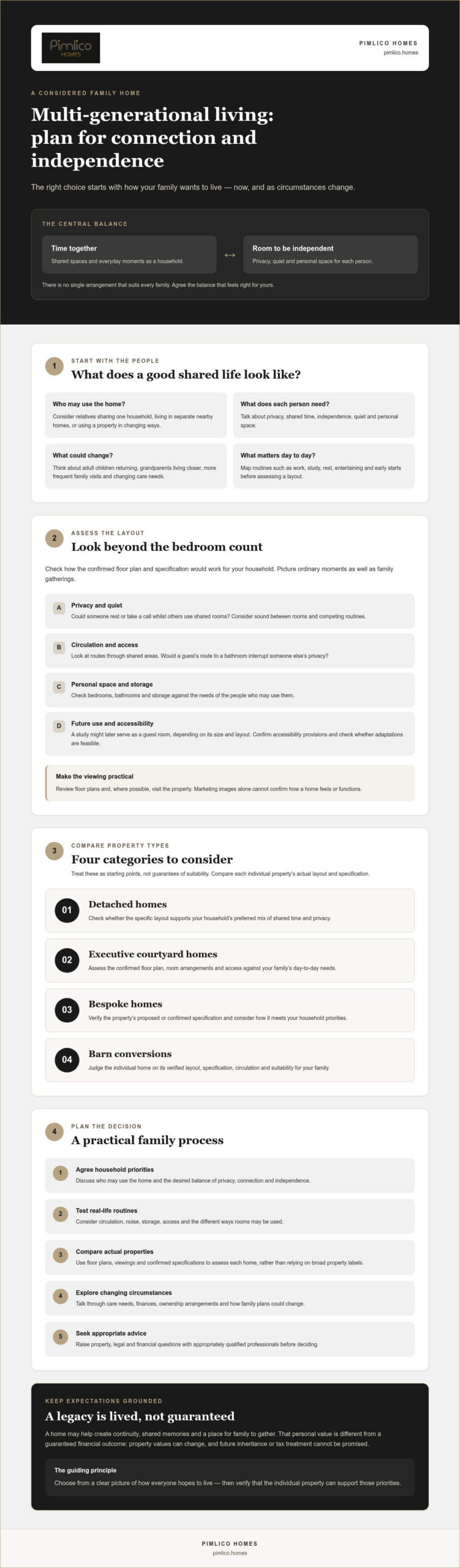
How to plan a property legacy: a practical family decision process
A considered decision starts with the people who may use the home, not with a floor plan. For multi-generational luxury new builds, agreeing household priorities can make property comparisons clearer and help identify questions that need professional advice.
What should the family agree before viewing homes?
Start with an open conversation. Clarify who may live in or regularly visit the property, who may contribute to costs or upkeep, and how decisions would be made if circumstances change. Separate needs everyone agrees on from assumptions that still need discussion.
Then work through this practical sequence:
- Map household needs. Consider privacy, shared routines, care responsibilities, work patterns and how often relatives may stay.
- Agree priorities. Discuss the desired balance between independence and time together, location preferences, and how much flexibility the household hopes to find.
- Set out the financial picture. Establish what each person is comfortable contributing and what should be discussed with a qualified financial adviser.
- Compare suitable homes. Use the agreed priorities to review property types and plans, rather than relying on assumptions based on a home’s category or appearance.
- View and verify. Visit properties where possible, review confirmed plans and specifications, and list unanswered questions before proceeding.
- Complete due diligence. Ask appropriate legal, financial and tax professionals about ownership, succession and relevant jurisdiction-specific matters.
Which checks belong in the property decision process?
Before deciding, review the actual plans, specification, tenure and other confirmed property information. Check that the details align with your intended use, and ask for clarification where anything is uncertain. A luxury new build buying guide can help organise broader purchase questions, but use it alongside advice tailored to your family and chosen property.
Property ownership and tax outcomes depend on individual circumstances. Do not assume one ownership arrangement or succession plan will suit every household. In the UK, questions may also depend on the relevant legal jurisdiction. Seek specific advice from suitably qualified professionals rather than relying on general guidance.
Once your family has agreed its priorities, include Pimlico Homes’ luxury new build homes in your property comparison. Review each home’s confirmed details, then discuss any legal, financial or tax implications with your own advisers.
Choosing a luxury new build that can support your family’s next chapter
A considered choice brings together three things: the household’s agreed priorities, a close assessment of each property’s confirmed details and advice from the right professionals. For multi-generational luxury new builds, this approach helps families look beyond first impressions and judge whether a home’s layout and specification align with the way they hope to live.
How can buyers assess a developer’s homes against family priorities?
Make a shortlist of practical requirements, such as suitable private space, comfortable shared areas, storage and access between rooms. Compare each property’s available plans and confirmed specification against that list. Ask direct questions about availability, layout and the details that matter to your household. Do not assume a feature is included or that a home can be adapted without verification.
A luxury new build buying guide can help you organise the wider purchase process alongside this family-focused assessment. As you compare homes, record what has been confirmed, what remains unclear and which questions need independent advice. This helps distinguish a genuine fit from an appealing possibility that still needs investigation.
What is a considered next step towards a family home?
Shortlist properties against present needs and anticipated changes before arranging further discussions or viewings. For each one, consider:
- Whether the confirmed layout supports the household’s preferred balance of privacy and connection.
- Which property details or specifications still need clarification.
- How the home may work if household size, care needs or work patterns change.
- Which ownership, financial, legal or tax questions require independent professional advice.
Pimlico Homes develops and sells luxury detached homes, executive courtyard homes, bespoke luxury homes and luxury barn conversions. These are property categories to assess, not a claim that a particular home is available or designed for multi-generational living. Verify the plans, specification, availability and suitability of each property directly with the developer before proceeding.
You can include Pimlico Homes’ luxury residential properties in your considered search. Compare confirmed details and keep independent advisers involved where their expertise is needed.
Choose with care, plan for possibility
A home intended to serve more than one generation calls for thoughtful choices, not assumptions. Begin with honest conversations about privacy, shared routines and changing needs, then assess each property’s confirmed layout and specification against those priorities. The value of multi-generational luxury new builds lies in how carefully a home is considered for family life, not in any promised financial or inheritance outcome.
Keep the decision grounded in evidence. Compare property types, verify details directly with the developer and involve independent legal, financial and tax advisers where ownership or future planning questions arise. Pimlico Homes is a specialist luxury residential developer offering luxury detached homes, executive courtyard homes, bespoke homes and luxury barn conversions. Assess each property individually rather than assuming it will suit a particular household.
When you are ready to take the next step, explore Pimlico Homes’ luxury residential properties and consider how their confirmed details align with your family’s priorities. Compare the information available and ask the developer about any property-specific details you need to verify.
Frequently Asked Questions
What is a multi-generational home?
A multi-generational home is a property used by people from more than one generation of a family, either within one household or through nearby, connected living arrangements. The people involved might include adult children, parents, grandparents and visiting relatives. They may have different routines and expectations, so the term does not mean that everyone shares every space or has the same needs. Each family can define what living close means to them.
Are luxury new builds suitable for multi-generational living?
Some may be suitable, depending on the individual home’s layout and specification and the household’s needs. Assess bedroom and bathroom arrangements, shared areas, circulation, storage and access rather than relying on the property category or marketing images. Consider multi-generational luxury new builds property by property. Ask the developer to confirm relevant details, and seek professional advice if you are considering adaptations or have specific requirements.
How can a home provide privacy for different generations?
Privacy depends on how rooms and routes work together. Check whether bedrooms and bathrooms offer suitable personal space, where shared areas sit in relation to private rooms, and how household members may move through the home during different routines. For example, consider whether someone working or resting could be disturbed by activity elsewhere. Review the actual floor plan and, where possible, visit the property to understand how its layout feels in practice.
Can a new build adapt as a family’s needs change?
Possibly, but do not assume a home can be adapted. Consider whether rooms could serve another purpose over time, such as a study becoming a guest room, and ask which accessibility provisions are confirmed in the property specification. If you are considering building work, check its feasibility and any relevant implications with qualified professionals and appropriate authorities. A property may support changing needs, but no layout or future alteration can guarantee that it will suit every family circumstance.
Is buying a property together a good way to create a family legacy?
It can be meaningful if the arrangement reflects the family’s shared priorities and is supported by clear discussions about responsibility, privacy and decision-making. A legacy may include a place to gather and experiences shared over time, not only an asset passed between generations. Before buying together, discuss contributions and future plans, then seek independent legal and financial advice on ownership and succession. The right approach depends on individual circumstances.
What should families compare when choosing a multi-generational new build?
Compare each property’s confirmed plans and specification against the household’s agreed priorities. Consider private and communal spaces, circulation, noise, storage, access and how rooms might be used if routines or household size change. Ask the developer to verify availability and property-specific details rather than assuming features are included. Families can assess detached, courtyard, bespoke and barn conversion homes as broad categories, but suitability depends on the individual property and its intended use.
Does a multi-generational property guarantee long-term value or inheritance?
No. A property cannot guarantee future value, an inheritance outcome or particular tax treatment. These depend on factors and circumstances that may change, and a home’s emotional value is separate from its financial performance. If you are considering joint ownership, succession or tax implications, obtain independent advice from suitably qualified legal, financial and tax professionals. They can consider your circumstances and the relevant jurisdiction before you make decisions.





