
The most profound luxury isn’t the aesthetic of a home, but the absolute peace of mind that its beauty is built to last. For the discerning homeowner, a structural warranty isn’t merely a legal requirement; it’s a testament to the meticulous care poured into every foundation and beam. You’ve likely invested significant emotion and capital into your property, and the thought of unforeseen structural failures can be a source of quiet concern. It’s vital to understand exactly what does a new build warranty cover to ensure your sanctuary remains as flawless in a decade as it is on the day you receive the keys.
We’ll provide total clarity on the ten year coverage timeline, moving from the initial developer liability period to the long term structural insurance. You’ll gain the confidence to distinguish between the craftsman’s responsibility and the warranty provider’s role, stripping away the complexity of the small print. This article offers a clear roadmap for addressing any issues, positioning the warranty as the solid floor of a quality standard that we, as dedicated guardians of excellence, always aim to exceed.
Key Takeaways
- Learn why a 10-year structural warranty is a non-negotiable requirement for mortgage lenders and a vital protection for your capital investment.
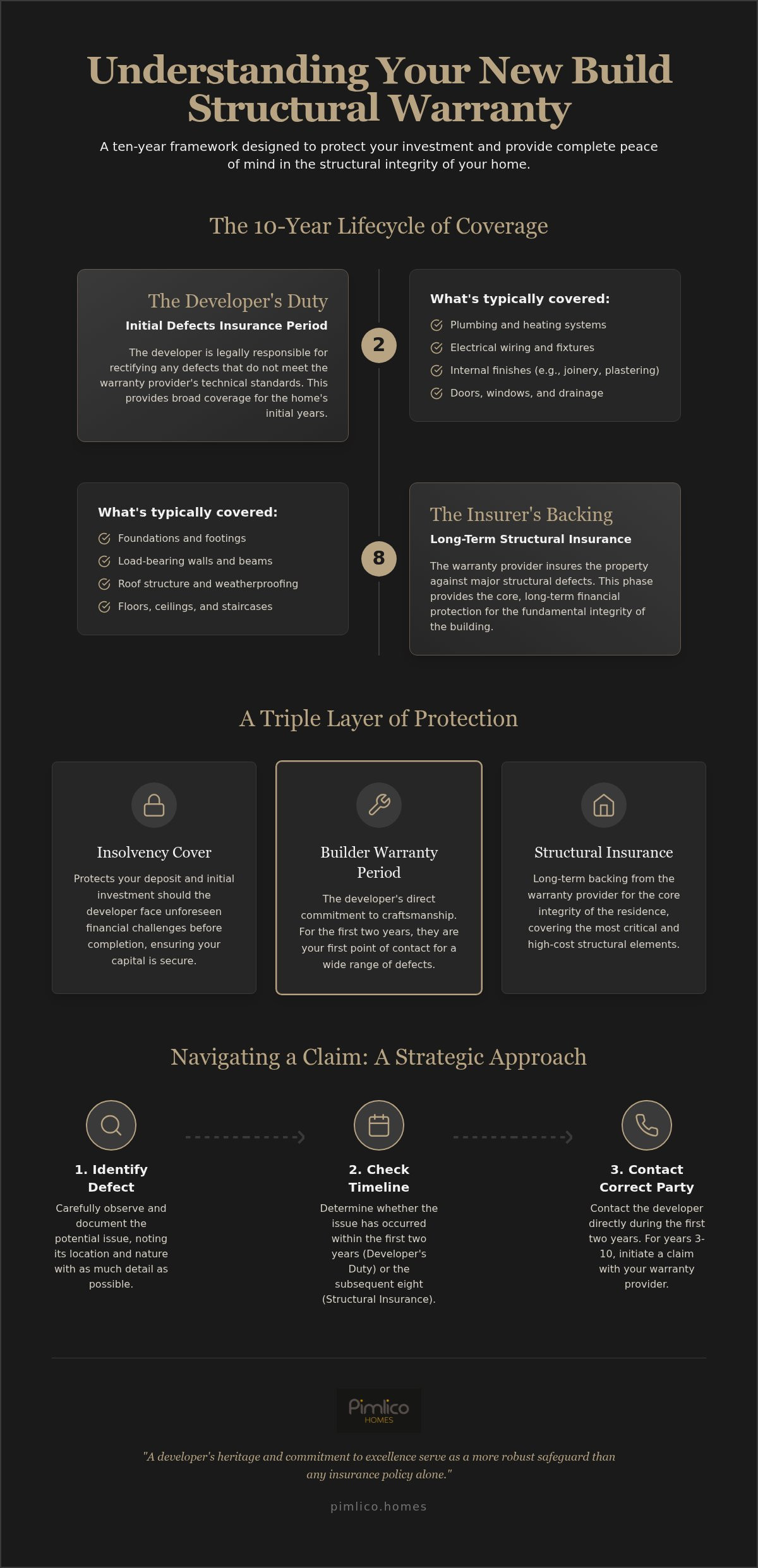
- Understand the critical transition from the initial two-year developer liability period to the subsequent eight-year structural insurance phase.
- Gain a precise understanding of what does a new build warranty cover, from the integrity of the foundations to the essential weatherproofing of the roof and external walls.
- Discover a methodical strategy for identifying defects and the correct hierarchy of contact to ensure swift and professional rectification.
- Recognise why a developer’s heritage and commitment to excellence serve as a more robust safeguard than any insurance policy alone.
The Architecture of Assurance: Understanding the New Build Warranty Framework
A new build warranty is far more than a mere administrative requirement; it’s a multi-layered structural insurance policy meticulously designed to protect your residence against latent defects. At its heart, this framework acts as a silent guardian, ensuring that the architectural integrity of your home is preserved long after the final stone is laid. For many high-net-worth individuals, Understanding the New Build Warranty Framework is the first step in appreciating the permanence of their investment. Whilst the surface of a luxury property exudes artistry, the warranty provides the rigorous technical assurance that the structure beneath is equally refined.
Mortgage lenders typically require a 10-year policy as a non-negotiable condition of finance. This legal necessity ensures that the property remains a viable asset for decades. However, for a bespoke developer, the warranty represents a floor, not a ceiling. It creates a clear distinction between the developer’s personal commitment to craftsmanship and the insurance provider’s robust financial backing. This dual layer of accountability is what transforms a house into a secure sanctuary, providing the peace of mind that defines a truly elite purchasing experience.
The Triple Layer of Protection
The framework is composed of three distinct strata, each offering a specific type of security. First, insolvency cover provides an essential safety net, protecting your deposit and initial investment amongst any unforeseen financial challenges a developer might face. Competitors often gloss over this detail, yet for a high-value transaction, this layer of protection is paramount. It ensures that your vision for a bespoke home isn’t derailed by external market volatility. Following completion, the Builder Warranty period begins. This is your direct line to the creator of your home, covering a wide range of defects during the initial years of residency. Finally, the Structural Insurance phase takes effect, providing long-term backing for the core integrity of the residence, from the foundations to the load-bearing elements.
Why Premium Homes Require Precise Warranties
Bespoke architectural designs and high-specification materials demand a higher level of scrutiny. When considering the resale value of new build homes, a comprehensive warranty is a powerful asset. It demonstrates that the property has undergone rigorous independent inspections, validating the craftsmanship of executive developments. These inspections aren’t just checkboxes; they’re expert validations of quality. This scrutiny is essential for complex builds where unique design features require specialised oversight. Ultimately, understanding what does a new build warranty cover allows you to invest with total confidence, knowing that your home is protected by a framework as robust as its own foundations.
The Lifecycle of Coverage: Two-Year Defect vs Eight-Year Structural Periods
The handover of a new residence is a moment of refined pride, yet it also initiates a rigorous chronological countdown. This completion date serves as the definitive trigger for the ten year protection period, acting as the anchor for every subsequent claim. Understanding the nuances of this timeline is essential for any high-end investor, as the nature of the protection undergoes a significant transformation over the decade. A comprehensive knowledge of what does a new build warranty cover is the hallmark of an informed purchaser. The journey is split into two distinct chapters, each defining exactly what a new build warranty covers and which party is responsible for honouring those standards.
The First Two Years: The Developer’s Duty
The initial phase, commonly referred to as the Defects Insurance Period, places the mantle of responsibility firmly upon the developer. During these first twenty four months, the builder is legally bound to rectify any elements that fail to meet the warranty provider’s technical benchmarks. This stage of protection is remarkably broad. It encompasses the intricate systems that facilitate modern luxury, from complex plumbing and electrical circuitry to the subtle nuances of the internal finish. A meticulous snagging process often serves as the precursor to this phase, acting as a final, high-level audit. This ensures that every architectural detail meets our exacting standards before the formal liability period begins. If an issue arises during this window, your direct line of communication remains with the creator of the home, ensuring a seamless and supportive resolution.
Years Three to Ten: Safeguarding the Core
As the residence matures into its third year, the protective framework evolves into the Structural Insurance Period. The scope of coverage narrows, focusing exclusively on the fundamental integrity of the building. This long term backing is a vital consideration when buying a luxury new build, as it safeguards the primary components that define the property’s longevity. Foundations, load-bearing walls, staircases, and roof structures are the central focus of this eight year insurance phase. During this period, the warranty provider typically assumes the role of the primary insurer, stepping in to manage structural claims directly. This transition ensures that even as the developer moves on to new visions, the structural sanctuary of your home remains under the watchful eye of a major financial institution. For those seeking a residence where this level of security is woven into the very fabric of the build, viewing our latest executive developments offers a glimpse into homes built for permanence.
Defining the Scope: What a Premium New Build Warranty Covers (and Excludes)
Precision is the hallmark of any executive development. Understanding the exact parameters of your protection is as vital as the architectural blueprints themselves. When homeowners ask what does a new build warranty cover, they’re often seeking assurance that the invisible components of their sanctuary are as resilient as the visible finishes. A premium policy serves as a technical guarantee of the home’s primary anatomy, ensuring that the artistry of the build is matched by its underlying strength.
The ‘Structural’ Definition
The core of the coverage lies within the property’s skeletal integrity. Foundations and load-bearing masonry represent the bedrock of your home’s longevity; these are protected with absolute rigour. Beyond the weight-bearing elements, the policy extends to the ceilings and internal staircases, ensuring every level of the residence remains secure. A significant portion of the framework focuses on weather-tightness. This includes the roof structures, external walling, and glazing systems. These elements work in concert to ensure the internal sanctuary remains undisturbed by the elements. Underground drainage, for which the policyholder is responsible, also falls under this protective umbrella. Gaining a granular view of what a premium new build warranty covers allows investors to appreciate the depth of the safety net provided.
Bespoke projects require a more nuanced approach. In the case of modern barn conversion interiors, the integration of traditional timber frames with contemporary structural glass requires meticulous validation. These unique elements are woven into the policy, ensuring that innovative design doesn’t come at the expense of long term security. It’s a delicate balance between heritage and modernity, preserved by a robust legal framework.
What Remains Outside the Shield
Clarity is the best remedy for anxiety. Whilst the warranty is extensive, it isn’t an all-encompassing maintenance contract. General wear and tear is excluded; this is the natural ageing process of high-end materials that gives a home its character over time. Minor shrinkage cracks are also typical. These are a standard behaviour of new materials as they settle and find their permanent equilibrium. Finally, any alterations or extensions made to the property after the initial completion will fall outside the original warranty’s scope. Maintaining this distinction helps to manage expectations, ensuring the focus remains on the structural excellence the warranty was designed to uphold. Your investment is protected at its foundation, allowing you to focus on the experience of living within its walls.
Navigating the Claim: A Strategic Approach to Rectifying Defects
A residence of distinction deserves a proactive approach to maintenance. Whilst the architectural integrity of a luxury property is paramount, the reality of high-end construction is that minor settling or latent defects may occasionally surface. Understanding what does a new build warranty cover is only the first step; the second is knowing how to activate that protection with strategic precision. Meticulous record-keeping and early detection are your most potent tools in preserving the pristine nature of your investment. It’s often wise to commission a professional snagging survey shortly after completion. With research from 2026 showing that 92% of new homes have identifiable snags, an independent expert’s eye can distinguish between a minor cosmetic touch-up and a precursor to a structural concern.
For structural issues arising between years three and ten, homeowners must be mindful of the Minimum Claim Value. For an NHBC policy in 2026, this figure is set at £1,750. This serves as an insurance excess, ensuring the provider’s resources are focused on genuine structural failures rather than routine maintenance. If you identify a concern that exceeds this threshold, a methodical hierarchy of contact ensures your claim is handled with the gravity it requires. To learn more about how we safeguard every project beyond the standard requirements, you can contact our dedicated aftercare team for expert guidance.
Step 1: Formal Notification to the Developer
During the initial two-year liability period, your creator is your first point of contact. It’s essential to provide written notification of any defects, as this creates a formal audit trail. You should allow the developer a reasonable timeframe to investigate the issue and organise the necessary repairs. For minor snags, a collaborative approach usually yields the best results. However, if a major structural concern is identified, documenting every interaction becomes a vital safeguard for your capital. Clear, professional communication ensures that expectations are aligned and that the craftsmanship of your home is restored to its intended excellence.
Step 2: Escalation to the Warranty Provider
If a resolution isn’t reached with the builder, or if you’ve entered the structural insurance phase, it’s time to escalate to the warranty provider. These organisations offer a dispute resolution service designed to adjudicate the validity of a claim through independent inspectors. This process is rigorous and impartial, reflecting the high standards expected in the executive courtyard home market. The inspector’s role is to determine if the issue constitutes a breach of the technical standards. Once a claim is validated, the insurer assumes the responsibility for the costs of rectification, providing the financial security that underpins your long-term peace of mind.
Beyond the Baseline: Why Developer Reputation is the Ultimate Warranty
A structural warranty is a necessary assurance, but for the discerning owner, it remains a secondary line of defence. The primary safeguard is the heritage of the creator. Whilst understanding what does a new build warranty cover provides a technical comfort, the true value of a home lies in the artistry of its construction. A specialist developer doesn’t merely build to satisfy an insurance provider; they build to uphold a legacy. This commitment to excellence drastically reduces the likelihood of ever needing to activate a claim, as the standards of the build often far exceed the baseline requirements of the warranty provider. In the world of high-end property, the warranty should be viewed as a formal validation of a quality that’s already been achieved.
The Legacy of Excellence
Over twenty five years of experience in high-end residential development creates a refined intuition for quality. This longevity translates into a deep understanding of how materials behave and how structures settle over time. In luxury construction, there’s a vast gulf between simply meeting the building code and exceeding the expectations of an executive client. A reputable developer views the warranty as a badge of honour. It’s a testament to their transparency and a welcoming of independent scrutiny. By positioning themselves as a reliable guardian of quality, they ensure that every bespoke detail, from the foundations of a detached home to the timber of a barn conversion, is executed with meticulous care. This proactive approach to excellence ensures that the structural sanctuary of your home remains undisturbed by the flaws that often plague lesser builds.
The Warranty as an Investment Asset
One of the most significant advantages of a premium policy is its transferable nature. For those considering the long term liquidity of their estate, the warranty is a powerful tool. It remains attached to the property, not the owner, ensuring that any future purchaser inherits the same structural safeguards. In the executive market, this provides a distinct layer of prestige. It signals to a prospective buyer that the residence has been maintained to an elite standard and remains fully backed by a major insurer. This assurance makes the property a favourite amongst discerning future buyers, preserving its capital value whilst offering a clear roadmap of protection.
Ultimately, the relationship between meticulous craftsmanship and asset security is absolute. When you invest in a home built with a master craftsman’s pride, you’re securing a sanctuary that is designed for permanence. Understanding what does a new build warranty cover is simply the final piece of a much larger puzzle of quality and trust. It’s the floor of your protection, whilst the builder’s reputation provides the ceiling of your peace of mind.
Securing Your Architectural Legacy
A structural warranty is the silent foundation of a secure investment. By navigating the nuances of the ten year timeline, you’ve gained the clarity needed to distinguish between the initial developer liability and the long term insurance phase. You now possess a precise understanding of what does a new build warranty cover, from the essential weatherproofing of the roof to the core integrity of the load-bearing masonry. This knowledge ensures your sanctuary remains a place of absolute peace, allowing you to focus on the experience of living within a masterpiece.
True security is found in the hands of a visionary creator. With over 25 years of experience in high-end development, we bring an unwavering commitment to executive-level specifications. Whether you’re drawn to the intimacy of an executive courtyard or the refined character of a bespoke barn conversion, our heritage is your primary guarantee of quality. We invite you to explore our portfolio of meticulously crafted luxury homes and discover a standard of excellence that begins where the warranty ends. Your journey toward a permanent and pristine sanctuary is just beginning.
Frequently Asked Questions
What is the difference between a new build warranty and home insurance?
A new build warranty is a structural insurance policy protecting specifically against latent defects in the construction of the property. When homeowners ask what does a new build warranty cover, they should view it as a guarantee of the building’s physical integrity. Conversely, standard home insurance protects your possessions and the structure from external events like fire, theft, or accidental damage. Both are essential for absolute peace of mind.
Does a new build warranty cover damp or mould issues?
Damp or mould is typically covered if it results from a failure to meet the warranty provider’s technical standards, such as a breach in the damp-proof course or a leaking roof. During the initial two year period, the developer must rectify these structural failures. However, issues arising from lifestyle factors, such as poor ventilation or condensation, are generally excluded from the policy’s scope as they don’t constitute a construction defect.
What happens to the warranty if I decide to sell my home within the first 10 years?
The warranty is fully transferable to any subsequent owner, remaining attached to the property’s title for the remainder of the ten year term. This transfer happens automatically upon sale, providing a significant advantage in the executive market. It offers prospective buyers the same structural safeguards you enjoyed, preserving the property’s prestige and capital value whilst ensuring the architectural legacy remains protected under the original policy terms.
Is the builder responsible for minor cracks caused by the house settling?
Developers are generally not responsible for minor hairline cracks, as these are a standard behaviour of new materials settling into their permanent equilibrium. These aesthetic drying-out cracks are common in the first year and are typically classified as maintenance rather than a structural defect. If a crack is wide enough to suggest a genuine structural failure, it may then fall under the developer’s liability or the later structural insurance phase.
Does the warranty cover the appliances and fixtures inside my luxury home?
Internal appliances and fixtures are typically protected by their own manufacturer’s guarantees rather than the structural warranty itself. Whilst the developer is responsible for the correct installation of these items during the initial two year period, any mechanical failure of the unit is usually a matter for the manufacturer. It’s essential to register these high-specification appliances upon moving in to ensure your individual guarantees are active and provide full protection.
What should I do if my developer goes out of business before the two-year period ends?
If a developer ceases trading before the two year liability period concludes, the warranty provider typically steps in to honour the remaining obligations. Most premium policies include insolvency cover specifically for this scenario. This ensures that valid claims for defects are still addressed, maintaining the security of your investment even if the original creator is no longer available. This layer of protection is a cornerstone of the modern structural insurance framework.
Are external features like driveways and fences covered by the new build warranty?
Coverage for external features is often more limited than the main residence. Whilst driveways providing primary access to the home are frequently included under the structural insurance, aesthetic elements like garden fences and landscaping are typically excluded. It’s vital to check the specific policy documents, as the definition of what does a new build warranty cover can vary regarding outbuildings, swimming pools, or extensive courtyard paving across the estate.
How long does it typically take to resolve a claim on a structural warranty?
The duration of a claim resolution varies depending on the complexity of the structural issue identified. Minor snags during the initial period are often resolved within weeks by the developer’s aftercare team. However, major structural claims in years three to ten may take several months. This timeframe allows for independent inspections, technical adjudications, and the organisation of specialist contractors to ensure the rectification work meets the required executive standards.





