
The corner plot that looks brightest and most spacious may also feel the most exposed. That tension sits at the heart of the pros and cons of a corner plot: extra frontage can bring welcome light, a broader outlook and more scope for a garden, but it can also mean more passing activity, less privacy and more boundary to maintain.
If you’re drawn to a distinctive position but unsure how it will feel to live there, look beyond the plot label. The home’s orientation, window placement, screening and layout all affect whether its street-facing sides feel open and inviting or overlooked and busy. A corner plot isn’t automatically a better or worse choice. Its appeal depends on how well the house and garden make use of the site.
This guide weighs the practical benefits against the trade-offs, from natural light and access to privacy, upkeep and resale considerations. It also explains what to look for during a viewing and what to clarify through conveyancing, so you can judge the specific plot against your priorities.
Key Takeaways
- The pros and cons of a corner plot depend on its shape, orientation and surroundings, not simply its position where two streets or plot edges meet.
- Assess how the home’s layout and entrances relate to the street, garden and neighbouring properties to decide whether the frontage works for daily life.
- Visit at different times, and in varied weather where possible, to get a clearer sense of activity, outlook and how the plot functions throughout the day.
- Before making an offer, review the plans and ask your conveyancer to clarify relevant title, boundary and access details.
- A more open setting may suit those who value an individual outlook, whilst buyers seeking a sheltered feel may prefer fewer street-facing boundaries.
Pros and cons of a corner plot: what makes its position different?
A corner plot sits where two streets or plot edges meet, giving the home a different relationship with its surroundings from a plot enclosed by neighbours on both sides. This can create a more open outlook and extra frontage, but it may also expose more of the home and garden to passing activity. The pros and cons of a corner plot depend on the layout of that particular site, not just its label.
The term can describe several settings. A home at a street junction may have two public-facing sides, while one beside a turning head may experience a different pattern of traffic and movement. A plot at the edge of a development might look towards open land, a footpath or another access route. These positions aren’t interchangeable. A wide frontage, meanwhile, doesn’t necessarily make a property a corner plot if it doesn’t meet another street or plot edge. A general overview of Corner lots describes some potential trade-offs, but the plan for the specific home is what matters.
What counts as a corner plot in a residential development?
Check the site plan rather than relying on the wording in a sales description. Identify the plot boundaries, roads, paths and shared routes beside the home. This shows which edges are public-facing and whether the extra frontage is genuine or simply a feature of the plot’s shape. If anything is unclear, ask for the boundaries and neighbouring uses to be explained before proceeding.
Why the exact layout changes the pros and cons
Orientation influences which rooms receive daylight and when. Window and door positions affect the outlook and the connection between indoor living spaces and the garden. A corner home may allow for a distinctive entrance or a side-facing room, but the benefit depends on the aspect and what stands nearby. Neighbouring windows, streetlights, headlights and footpaths can all affect privacy and comfort.
Consider how you would use the garden, too. A generous frontage may offer more flexibility for planting or access, but street-facing boundaries can require more attention. Check precise boundary lines and any shared routes against the available documents rather than assuming that fences or planting mark the legal boundary.
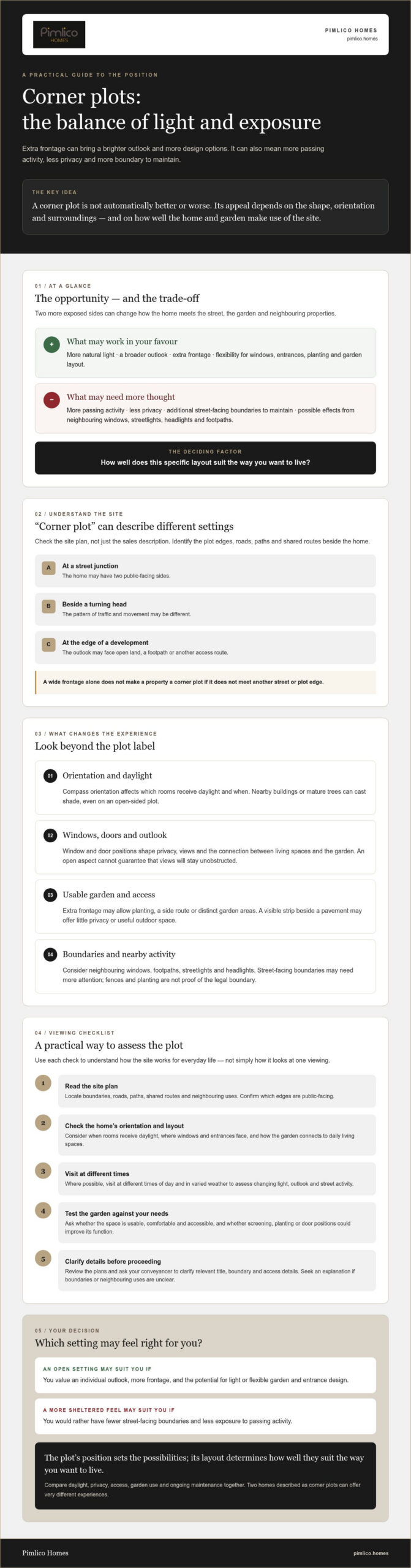
A plot’s position sets the possibilities; its layout determines how well they suit the way you want to live. Keep that balance in mind as you compare daylight, privacy, access, garden use and ongoing maintenance. Two homes described as corner plots can offer very different experiences, so assess the relationship between the house, its boundaries and the surrounding streets as a whole.
The advantages of a corner plot: light, outlook and design freedom
Two exposed sides can give an architect or homeowner more options for placing windows, entrances and garden spaces. That flexibility may bring brighter rooms or a more distinctive approach to the front door, but it is a possibility, not a promise. The benefits depend on the home’s orientation, neighbouring buildings and how much of the plot is genuinely usable.
Can a corner plot bring more daylight and a better outlook?
Check the compass orientation and consider how sunlight moves around the house rather than judging brightness during one viewing. A south-facing window may receive direct sun at different times from a north-facing one, while nearby buildings or mature trees can cast shade regardless of the plot’s open sides. Look at window placement, room use and changes in light throughout the day. An open aspect may widen the outlook, but it cannot guarantee that views will remain unobstructed.
Visit at different times of day if possible. This gives you a better sense of changing light and whether the street feels calm or busy when you would most use the rooms and garden.
How extra frontage can shape garden and home design
Additional frontage can create room for a considered entrance, planting or a practical route to the side of the house. It may also allow the garden to be divided into distinct areas, such as a seating space and a lawn. Check the actual boundaries and layout: a wide strip beside a pavement may be visible from the street without offering much privacy or useful space.
Frontage is what you can see; usable outdoor space is what the layout lets you enjoy. Consider whether fencing, planting and door positions could make the garden accessible and comfortable, and whether the route between house and garden works for everyday life. Don’t assume that more land on a plan means a more functional garden.
When weighing the pros and cons of a corner plot, focus on how well the design turns openness into practical value. Pimlico Homes’ approach to bespoke design offers another perspective on how a home’s layout can shape its relationship with its setting. Explore its bespoke new build homes for examples of considered residential design.
The disadvantages of a corner plot: privacy, traffic and upkeep
Greater exposure can be the price of an open outlook. With two sides facing streets or shared routes, more people may pass the property. Activity that feels unobtrusive during a quiet viewing can change at busy times or in the evening. Vehicle noise, headlights, street lighting and pedestrian movement may all affect how peaceful the home feels, especially in rooms or garden areas close to a boundary.
Does a corner plot offer less privacy or security?
Check sightlines from pavements and neighbouring windows into principal rooms, entrances and places where you might sit outdoors. See whether existing fencing, gates and planting screen views without making access awkward, and note where external lighting falls after dark. A corner position doesn’t, by itself, determine how secure a home is. The arrangement of doors and windows, visibility and the measures in place all matter, so assess the property rather than relying on assumptions about its location.
Listen as well as look. Visit at different times and, if possible, spend a little while inside with the windows open. This can help you distinguish occasional activity from a regular pattern of traffic or footfall. Consider whether headlights might shine into bedrooms or garden seating areas, and whether streetlights affect the rooms you use in the evening.
Could boundaries, traffic and maintenance become drawbacks?
A longer street-facing edge may mean more fencing, planting or paved frontage to maintain, but the amount of upkeep depends on the plot and what is included. Walk the perimeter and note the condition of hedges, fences, gates and planted strips. Ask which areas appear to belong to the property and whether any parts sit beside shared access routes. Don’t assume that a boundary feature’s position makes its ownership or upkeep clear.
Review the title documents and ask your conveyancer about boundaries, access rights and restrictions. Confirm what responsibilities apply to the specific property before relying on a viewing impression. Ownership and maintenance duties should be confirmed, not assumed.
These checks bring the pros and cons of a corner plot into sharper focus. A busier edge may be manageable if the home has sheltered rooms and a private garden area. The same exposure may feel intrusive if key windows and outdoor spaces face regular activity. Judge the trade-off against your routines and tolerance for noise, visibility and ongoing care.
How to assess a corner plot before you make an offer
A measured assessment is more reliable than judging a plot by its label or first impression. Use the same steps for each property, then compare what you observe with your priorities for privacy, light, access and garden use.
- Review the plan. Locate the house, plot boundaries, adjoining streets, paths, entrances and neighbouring buildings.
- Visit the property. Walk the street-facing edges and see how the home meets its surroundings.
- Test daily-life factors. Consider room use, garden access, traffic, noise and privacy.
- Verify the details. Ask your conveyancer to check relevant documents and raise unresolved points before you proceed.
A plan can show dimensions and layout, but not the lived experience. During a viewing, note how visible the garden and principal rooms are from pavements or shared routes. Check whether the entrance feels convenient, the garden is practical to reach from the house, and fences, gates and planted areas appear well maintained. Look for signs of standing water or poor drainage, and ask about access points or shared features you cannot identify.
Visit at different times of day to understand changes in light, traffic and pedestrian activity. If possible, return in different weather: rain can make drainage and exposed areas easier to assess, while wind may reveal how sheltered the garden feels. Compare the plot with other homes using the same checklist rather than assuming extra frontage is automatically an advantage.
Which documents and questions can clarify the position?
Ask your conveyancer to review the title information and clarify boundaries, any rights of way and relevant restrictions. Ask the seller or developer who maintains visible fences, hedges and landscaped areas, especially where they meet a road or shared route. Keep a written list of unanswered questions and seek clear responses through the appropriate channels. Don’t rely on a verbal assumption where ownership or responsibility is uncertain.
The luxury new build purchasing guide covers wider considerations for buyers assessing a new home. For a corner plot, bring those checks back to the details that shape everyday life: how you arrive, where you spend time outdoors and how the site feels across the day. To explore considered residential design, view Pimlico Homes’ luxury homes.
Is a corner plot right for you? Make the decision with confidence
A corner plot may suit you if you value an open outlook, the possibility of more daylight and a distinctive approach to the front door. Those qualities need to work in practice. Base your decision on the home’s orientation, room layout, garden enclosure and surrounding activity, rather than assuming every corner position offers the same advantages.
Choose a corner plot if its strengths match your priorities
Before comparing homes, write down what matters most. Separate your priorities into essential, desirable and unacceptable features. For example, you might welcome an open outlook but consider a private garden essential. Then check each property against what you can see and verify.
| Your priority | What to inspect |
|---|---|
| Daylight and openness | Room orientation, window positions, nearby buildings and shade |
| A distinctive arrival | Entrance location, approach from the street and everyday access |
| Flexible garden use | Usable space, enclosure, boundaries and routes through the garden |
| A quieter, more private setting | Passing activity, sightlines into rooms and garden screening |
This comparison helps you weigh the pros and cons of a corner plot against your routines, rather than an abstract idea of what the position should offer. Thoughtful design can make a meaningful difference to how a home relates to its garden and setting. Executive courtyard homes offer another perspective on how layout can support privacy and a considered connection with outdoor space.
Consider other home positions if privacy is your priority
If you prefer a sheltered garden and fewer street-facing boundaries, compare the specific corner plot with homes set further from roads or shared paths. Look at garden enclosure, activity outside and the outlook from the rooms you use most. Resale appeal is also worth considering as part of your wider decision, but future performance isn’t guaranteed. Research comparable properties and seek professional advice where appropriate.
The right choice is the setting that supports your life, not the one with the most striking label. Explore homes by Pimlico Homes and consider which layout and relationship with outdoor space feels right for you.
Choose the setting that feels right for you
The pros and cons of a corner plot come down to how its position works in everyday life. Extra frontage and openness may appeal if you value the potential for daylight, a distinctive approach and flexibility outdoors. If a sheltered garden, quieter outlook or fewer street-facing boundaries matter more, compare the property carefully with other options.
Look beyond the label. The home’s orientation, room layout, boundaries and surrounding activity will shape your experience far more than the plot description alone. Visiting at different times and checking title information with your conveyancer can help you turn first impressions into a considered decision.
Thoughtful design also influences how a home connects its rooms, garden and setting. As a specialist developer of luxury detached and executive courtyard homes, Pimlico Homes focuses on bespoke design and high-quality craftsmanship. Explore homes by Pimlico Homes and consider which setting best reflects the way you want to live. A confident choice begins with the details that matter most to you.
Frequently Asked Questions
Is a corner plot a good investment?
A corner plot may appeal to buyers who value its particular layout, but its position alone can’t establish future value. Assess the home’s condition, setting and features, compare it with similar properties, and seek professional advice where appropriate. The pros and cons of a corner plot will matter differently to different buyers. Treat resale assumptions cautiously: no plot position guarantees demand or a particular financial outcome.
Are corner plots less private?
They can feel more exposed if windows, entrances or garden areas face public routes on more than one side. The experience also depends on orientation, nearby buildings, boundary treatments and planting. Visit at different times and check sightlines from principal rooms and outdoor seating areas. Consider whether screening provides the privacy you want without making the garden or entrance feel enclosed. Judge the individual home rather than relying on a general rule.
Do corner plots get more daylight?
They may allow additional windows or have fewer immediately adjoining walls, but that doesn’t guarantee brighter rooms. Daylight depends on orientation, window placement, room layout, nearby buildings and shade from trees or other features. Visit at more than one time of day if possible, and notice how light reaches the rooms you use most. An open side doesn’t guarantee an unobstructed outlook throughout the year.
Are corner plots harder to maintain?
They may have more visible frontage or boundary features to care for, but actual responsibilities depend on the property and its documents. Ask who maintains fences, hedges, paths and landscaped areas, especially where they meet a street or shared route. Have your conveyancer review the relevant title information and clarify any shared access or maintenance arrangements before committing. Don’t assume that a feature’s location makes its ownership or upkeep clear.
Is a corner plot noisier than other homes?
It can be affected by activity from more than one street-facing side, although noise varies with road use, nearby paths and the home’s layout. Visit during both busy and quieter periods, and listen from inside as well as outside. Check whether bedrooms or garden seating areas face exposed edges. Traffic, pedestrians and headlights may influence comfort, but the specific surroundings matter more than the corner-plot label alone.
What should I check before buying a corner-plot home?
Review the site plan, orientation, boundaries, access, garden usability, privacy and street activity. During viewings, inspect sightlines, external lighting and the condition of boundary features. Ask the seller or developer who maintains visible or shared areas. Your conveyancer can review title information and clarify rights of way, boundaries and relevant restrictions. Keep a written record of unanswered questions and seek clarification before proceeding rather than relying on verbal assumptions.
Can a corner plot have a larger garden?
Not necessarily. A corner position may include extra side space or frontage, but that area could be narrow, exposed or unsuitable for private use. Compare the usable garden area and layout, not just the apparent width of the plot. Check plans and boundaries, then consider access, enclosure and how the space could support your needs. More visible land doesn’t always translate into a more practical or enjoyable garden.





