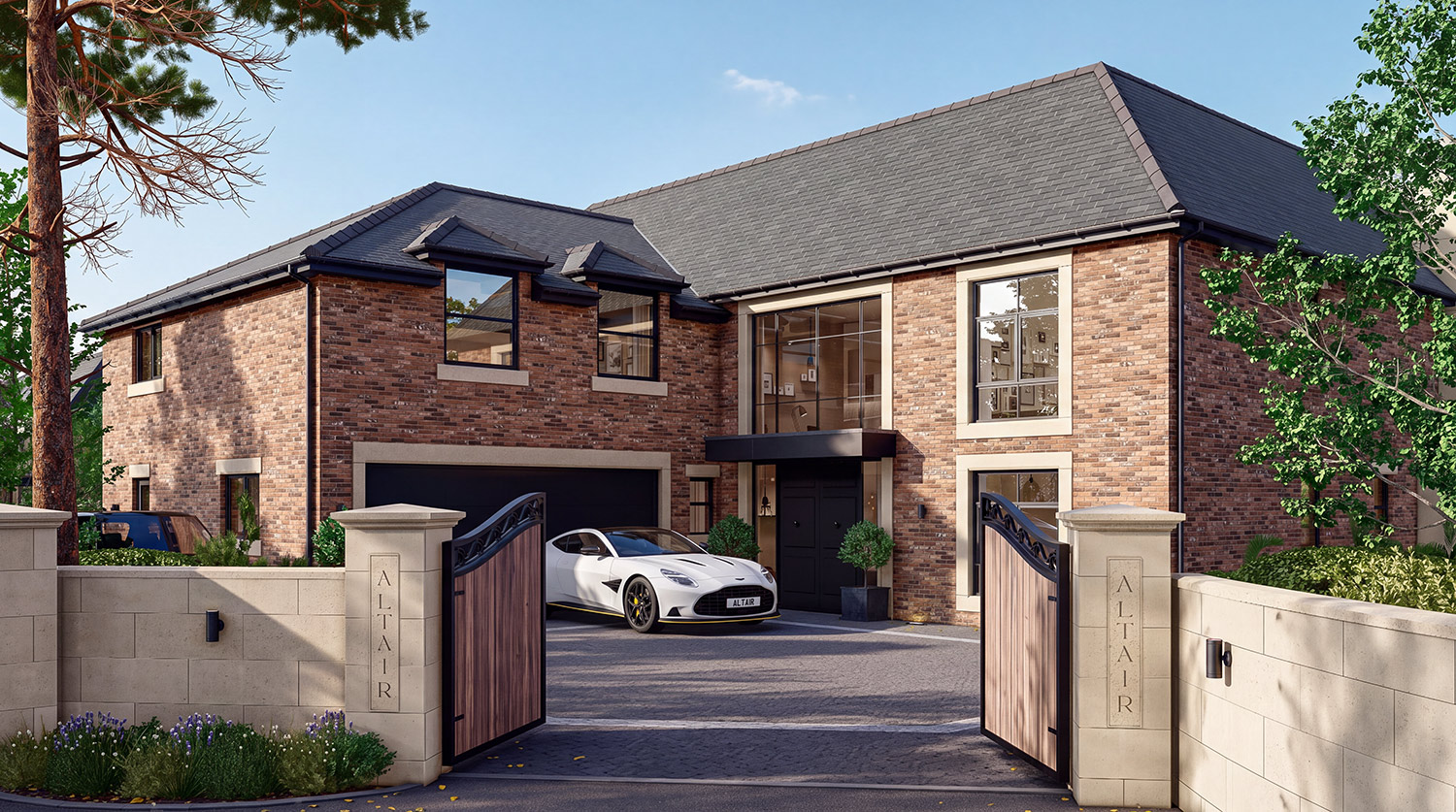
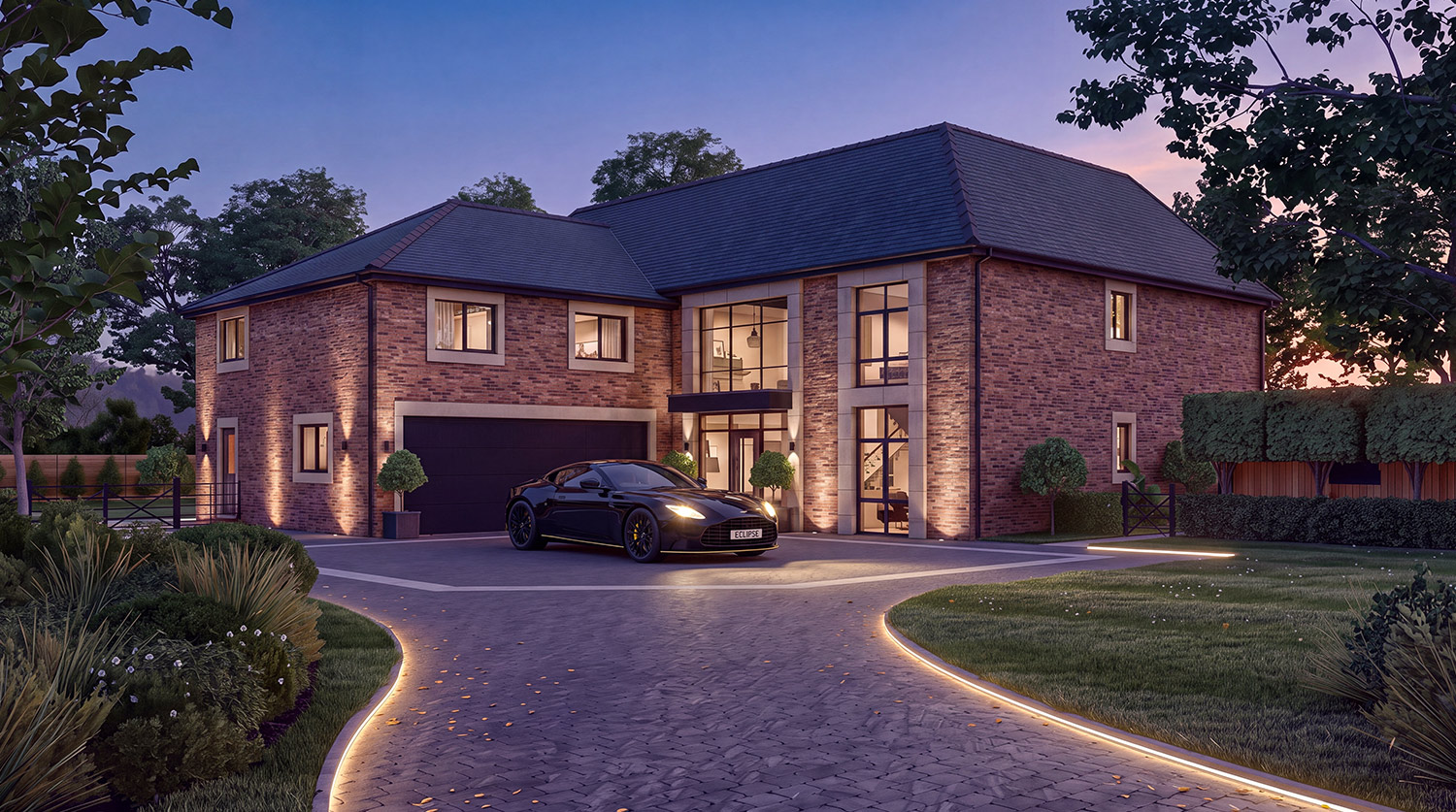
The plot that offers the most freedom can also leave you with the most to organise. If you’re asking, “should I buy a plot of land or from a developer?”, start by weighing the home you want against the process you’re prepared to manage. The right route depends on how much control you value and how much uncertainty you’re comfortable taking on.
Buying land can give you more influence over design, layout and specification, but the plot is only the starting point. Planning, access, services, professional fees and construction all need careful consideration. Buying a home from a developer offers a more defined route: you can assess the home and its setting without taking responsibility for turning a plot into a finished property.
This guide compares both choices in practical terms, including the checks, responsibilities and commitments involved. Use it to decide whether a self-build or a developer-led purchase better matches your priorities. If you’re drawn to a considered, high-quality home, focus on the route that supports your ambitions as well as your peace of mind.
Key Takeaways
- Use your appetite for involvement, design control and uncertainty to decide whether a plot or a defined home better fits your priorities.
- When asking “should I buy a plot of land or from a developer”, compare more than the purchase route: consider customisation, coordination and how much of the build process you want to manage.
- Planning permission is one part of a land-led project. It does not resolve every design, technical or delivery decision.
- Separate essential requirements, such as privacy and layout, from preferences such as architectural character to clarify what matters most.
- For a developer-led purchase, Pimlico Homes offers luxury detached homes, executive courtyard homes and barn conversions.
Should you buy a plot of land or from a developer? Understand the two routes
Both routes can lead to a home, but they involve different responsibilities. When you buy a plot, you acquire land before the project that will turn it into a home is fully resolved. You have more influence over what may be built, but you also take on decisions and coordination beyond the land transaction. Buying from a developer means purchasing a home within a residential development: your focus is on assessing the property and its setting rather than organising a plot-to-build project yourself.
That distinction is central to the question, should I buy a plot of land or from a developer? One route offers more direct control alongside more responsibility. The other gives you a more defined home to assess, but still requires careful due diligence. Planning, building standards and property transaction rules can differ between England, Scotland, Wales and Northern Ireland, so consider the requirements that apply where you plan to buy.
What does buying a plot of land actually involve?
Owning land does not automatically mean you have permission or the practical ability to build a home on it. Before purchase, treat the plot as the starting point for a series of checks. Legal title and boundaries, access, services and the planning context are separate matters, and each can affect what is achievable.
These factors also shape the work that follows. You may need to make decisions about design, technical requirements and how the project will be delivered. Planning permission, if already granted, does not settle every detail. Review its scope and conditions alongside the site’s practical constraints before deciding whether the plot suits your plans.
What does buying a home from a developer mean?
With a developer-led purchase, you buy a home as part of a residential development rather than buying a standalone plot and taking on the work of creating a home from it. Developers bring land and construction together as part of a broader process of improving land; real estate development involves acquiring and improving land before homes are offered to buyers.
A home may be at different stages, from planned or partly built to complete. Its stage affects what you can see and assess when making a decision. The purchase is more defined than a land-led project, but that does not remove the need to review the property, its documents and the terms of the transaction.
You still need to understand the legal and financial commitments involved in buying a home. Review the purchase documents, identify the property being acquired and consider how the transaction fits your finances. Legal requirements can vary across the UK, so account for the rules that apply to the relevant nation.
In short, buying a plot begins with land and leaves more of the route to a finished home for you to shape and manage. A developer purchase centres on a home within a residential scheme. Decide whether your priority is influencing the project or choosing a defined home with fewer build decisions to lead yourself.
Buying land to build: where control comes with responsibility
A plot can look like the first step towards a home designed around your life. But buying the land is only one part of the undertaking. Before committing, establish whether the site’s legal position, physical conditions and planning context align with what you hope to build. Every plot has its own opportunities and constraints.
Planning permission is not a complete construction plan. It may establish that a proposal can proceed in principle, subject to its terms, but it does not automatically resolve detailed design, technical requirements, access arrangements or how the build will be delivered. Treat permission as one important part of the picture, not a guarantee that every element of your preferred home can be achieved.
Which checks matter before committing to a plot?
Start with the site’s legal and physical fundamentals. Review the title information and boundaries, and establish whether rights of way or access arrangements could affect how the land can be used. Then examine the planning history and requirements that apply to the site. These checks help separate what is documented from what you might be assuming.
Services and ground conditions deserve equal attention. Consider how water, electricity and other necessary services could reach the site, and whether ground conditions, levels, drainage or other constraints could shape the design or construction approach. A plot may look straightforward, yet restricted access or difficult service connections can affect the choices that follow. Legal and technical due diligence helps build a clearer picture before you commit.
What responsibilities remain after the land purchase?
After buying the land, the project still needs to progress through design, any required permissions, technical decisions and construction arrangements. Each stage informs the next. A design change may affect technical work; a finding about the site may mean revisiting the design or programme. As the buyer, you remain involved in decisions that would not arise in the same way when purchasing a defined home.
The programme and final expenditure depend on the site and the choices made as the project develops. For example, the cost and timing implications of service connections or ground conditions cannot be assessed reliably without site-specific information. A considered budget and a realistic allowance for changes can help you understand the commitment, but they cannot remove every uncertainty.
Planning processes, building standards and property transaction rules vary across England, Scotland, Wales and Northern Ireland. Check the requirements that apply to the particular nation and site rather than assuming one set of rules applies throughout the UK. If you’re weighing up should I buy a plot of land or from a developer, consider not only the design freedom you want but also the time and attention you can give to decisions after purchase.
For buyers who would rather focus on choosing a considered home than progressing a land-led build, Pimlico Homes’ luxury homes offer a developer-led alternative.
Plot or developer home? Compare control, certainty and commitment
The choice is not simply between a more individual home and a more convenient one. It is about where you want your influence to sit and how much of the process you want to manage. A plot can allow greater design input, within the limits of the site and planning requirements. A developer purchase centres on a more defined home, which you can assess against your needs, including its setting, design and stated specification.
| Consideration | Buying a plot | Buying from a developer |
|---|---|---|
| Control | Greater influence over design and project decisions, subject to site constraints and permissions. | Choose from homes within a development, with decisions shaped by the home and its stated specification. |
| Involvement | More coordination across design, permissions, technical decisions and construction. | Less responsibility for managing a plot-to-build project, but legal and financial due diligence remains. |
| Uncertainty | Site findings and project choices can affect the route, programme and expenditure. | The home is more clearly defined, but the purchase still requires careful review. |
| Customisation | Potential for more direct design influence, within relevant constraints. | Depends on the particular home and its stated specification. |
| Route to occupation | Involves progressing a build before the home is ready to live in. | Depends on the home’s stage and the purchase arrangements. |
Where does a plot purchase offer more control?
Land may suit you if you want to shape decisions such as the home’s layout, architectural character or selected project details. That influence is not unlimited: planning requirements, the plot’s physical characteristics and practical constraints all matter. The more decisions you want to make, the more actively you’ll need to coordinate them and consider how changes affect the wider project.
This route is best suited to buyers who want the building process itself to be part of the undertaking, rather than simply a means of securing a home. Control can be rewarding, but it brings responsibility for managing choices and responding to issues as they arise.
What can a developer purchase make more straightforward?
A developer-led purchase gives you a defined home to assess, reducing the need to organise a plot, design and construction project yourself. It does not remove due diligence or guarantee a perfect fit. Review the legal documents and stated specification, then compare the home’s layout and setting with your priorities. Your circumstances, preferred timing and willingness to take on project decisions should guide your choice.
If you’re still weighing up should I buy a plot of land or from a developer, ask yourself which kind of uncertainty you would rather manage: shaping a project around your brief or assessing a defined home against the life you want to lead.
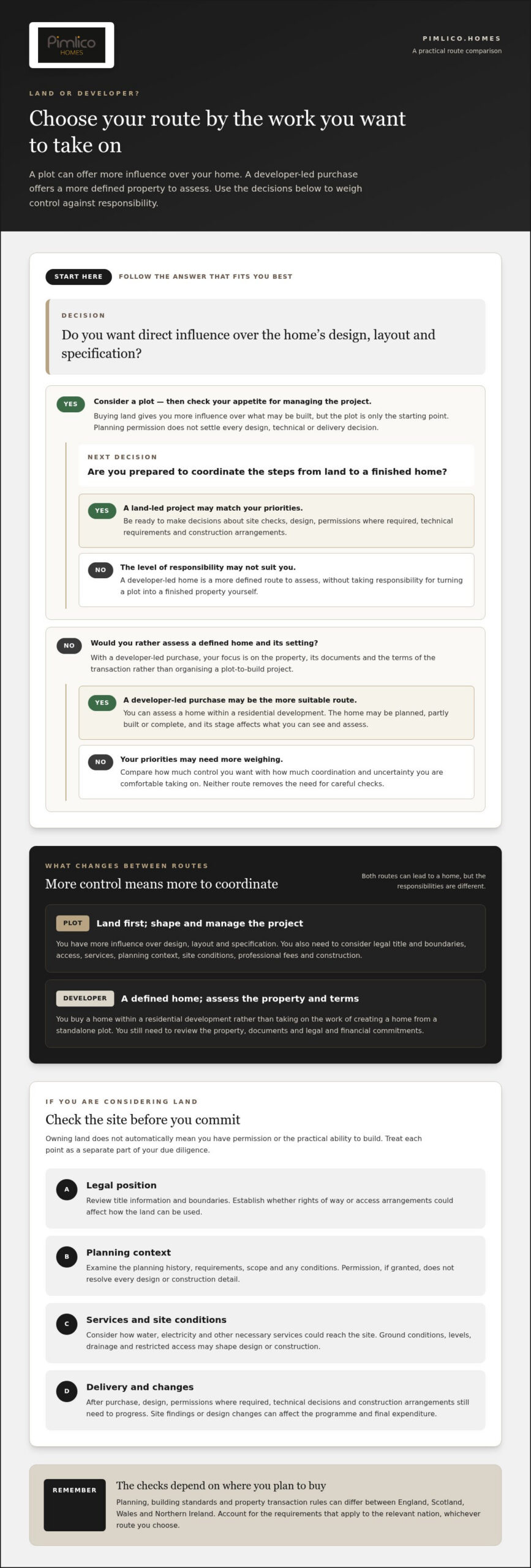
How to decide: match the purchase route to your priorities
Start with the life you want to lead, then work backwards to the purchase route. Consider how much of the creation process you want to shape, how much time you can give it and how comfortable you are making decisions as new information emerges. This helps reveal whether you are drawn to the project as well as the finished home.
- Set your level of involvement. Decide whether you want to lead a sequence of design and build decisions or prefer to focus on choosing a home.
- Define your essential requirements. List what a home must provide, such as layout or privacy, separately from preferences such as a particular architectural character.
- Assess your tolerance for uncertainty. Consider how you would respond if site findings or project decisions changed the route, programme or scope of a land-led build.
- Compare the full commitment. Look beyond the initial purchase to the responsibilities, decisions and time involved in reaching a home you can occupy.
This framework brings the question “should I buy a plot of land or from a developer” back to your own priorities. It also helps distinguish what you need from what you would simply like, so an appealing design idea does not overshadow practical considerations.
When might buying a plot suit your circumstances?
A plot may suit you if shaping a home and guiding a building project are part of the ambition. Consider whether you can give the process sustained attention, enjoy making a series of connected decisions and accept that new information may influence the plan. Land is not a shortcut to a personalised home: design freedom depends on the site and relevant constraints, and delivery remains a substantial undertaking.
When might buying from a developer suit you better?
A developer-led purchase may suit you better if you value selecting a defined home over managing construction. Compare the home’s layout, architectural quality and setting with your essential requirements, then review its stated specification and purchase documents. For further context, consider how the benefits of buying a new build relate to your plans and the particular characteristics of the home.
Neither route is automatically right for everyone. A plot may offer a closer relationship with design decisions, while a developer purchase can keep your attention on choosing a home within a considered residential development. Let your circumstances, preferred timing and appetite for involvement guide the decision.
If a defined home feels closer to your priorities, explore Pimlico Homes’ luxury homes, including detached homes, executive courtyard homes and barn conversions.
Choosing a developer-led home: a considered route to your next move
For buyers who want to choose a home rather than lead a building project, a developer-led purchase can put the focus on the property, its architecture and how it fits everyday life. It remains a significant commitment. Look beyond first impressions to the details that will matter over time.
Pimlico Homes specialises in luxury detached homes, executive courtyard homes and barn conversions. Each offers a different kind of residential character. Rather than assuming one form suits everyone, consider how the home, its design and setting align with your priorities.
What should you look for in a luxury developer-led home?
Start with how you expect to live. Consider whether the layout supports your routines, whether the architectural character feels right for the long term, and whether the home’s relationship with its surroundings gives you the privacy you want. These are personal judgements, but they become clearer when you compare them with your essential requirements rather than relying on a single attractive feature.
Read the purchase documents and the home’s stated specification carefully. They provide the basis for understanding what you are buying. Do not assume that a visual impression, illustrative material or general description establishes a detail that is not documented. Reviewing the written information makes it easier to compare homes on their actual characteristics. The luxury new-build specification guide can also help you focus on the details to consider when assessing a property.
Think beyond immediate appeal, too. A home should work for your present needs, while its layout and enduring character may matter if your circumstances change. Resale value is another consideration, although future market conditions and individual buyer preferences cannot be guaranteed. Weigh it alongside the qualities that make the home right for you now.
Explore a home designed as a complete residential proposition
A developer-led purchase can suit those who value a defined home and a considered residential setting, without taking responsibility for progressing a plot-to-build project. Pimlico Homes develops detached homes, executive courtyard homes and barn conversions. Their distinct forms invite you to consider the balance you want between architectural character, privacy and the level of project involvement you are prepared to take on.
As you compare options, return to your priorities: which qualities are essential, which are preferences, and what kind of commitment feels right for your next move? If a developer-led home fits that picture, explore Pimlico Homes’ residential homes as a next step towards finding a home that reflects your aspirations.
Choose the next step that feels right for you
The question “should I buy a plot of land or from a developer” is ultimately personal. Let your answer reflect not only the home you picture, but the process you want to experience along the way. A clear sense of your priorities can turn a complex decision into a more confident next step.
For some buyers, the appeal lies in directing a building project. For others, it is selecting a considered home without taking on that responsibility. Pimlico Homes is a specialist residential developer focused on high-end homes, with a range that includes detached homes, executive courtyard homes and barn conversions. Each offers a distinct starting point for imagining where you might feel most at home.
Consider the architectural character and setting that matter to you, then explore Pimlico Homes’ luxury homes as part of your decision. Explore the homes and take a considered step towards a home that reflects your aspirations.
Frequently Asked Questions
Is buying a plot of land cheaper than buying a home from a developer?
Not necessarily. A plot’s purchase price is only one part of the overall financial commitment. Design work, surveys, services, permissions and construction can all affect the final budget, and site-specific findings may change what is needed. A developer’s asking price relates to a home, but you should still compare what the stated specification includes and which expenses sit outside the purchase. Assess the full commitment for each route before deciding.
Can I build whatever I want on a plot of land?
No. What you can build depends on the site and relevant planning framework, as well as applicable legal or physical constraints. For example, a proposed home’s scale or position may not fit the planning context, while access or ground conditions may affect its design. Treat your preferred layout as a proposal to test, not an assumption. The site’s planning records and constraints help establish what may be feasible.
Does land with planning permission mean I can start building straight away?
No. Permission does not necessarily mean every preparation is complete or that construction can begin immediately. Read the decision and its conditions carefully, since requirements may need to be addressed before work starts. Further technical design and building standards work may also be needed, alongside practical arrangements for access and services. The steps depend on the permission and the relevant UK nation, so establish the position for the particular site.
What checks should I make before buying a plot of land?
Review the title, boundaries, rights affecting the land and the legal basis for access. Check the planning history and the status and conditions of any permission. Separately, establish how essential services can be connected and review ground conditions and other site constraints. Match the findings against the home you hope to build, noting unanswered questions before you commit.
Can I get a mortgage to buy land and build a home?
Possibly, but lending for land and a self-build can work differently from a standard home mortgage, and availability depends on the lender and your circumstances. Some lenders offer self-build borrowing with funds released in stages, subject to their criteria and the project’s progress. Before committing to a plot, understand how the proposed borrowing, deposit requirements and payment timing fit your finances. Do not assume a standard residential mortgage will cover the whole project.
How long does it take to build a home after buying land?
There is no reliable single timeframe. The overall programme can include design development, planning steps, technical preparation and construction, with the sequence and duration affected by the site and project. For instance, access or service arrangements may need to be resolved before work can progress as intended. Build a project-specific programme with realistic allowances for decisions and potential changes; a construction estimate alone does not establish when you could move in.
Is buying a new-build home from a developer less complicated than buying land?
Often, it involves fewer project-management decisions because you are purchasing a home rather than arranging the work to create one. It is not a due-diligence-free route. Review the draft contract, title information, plan and written specification, and understand how the purchase process applies if the home is unfinished. The question “should I buy a plot of land or from a developer” turns partly on whether you want to manage a build or assess a defined property.
What happens if the home I want is not yet complete?
You may be considering a home at an earlier build stage, so establish what is complete, what remains and which details are documented. The purchase contract should set out the arrangements relevant to the transaction, including any stated completion provisions. Understand the terms and their implications before committing. Keep your moving plans flexible until you understand the contractual position and the home’s progress; do not rely on an informal estimate alone.