
Legacy. For the discerning homeowner, the ultimate mark of prestige isn’t found in the rarest marble or the most ornate gilding, but in the quiet intelligence of a structure built to endure. You likely agree that a bespoke residence is a lifelong investment; yet, the fear of greenwashing often creates a tension between ecological responsibility and the uncompromising finish you demand. Integrating the right sustainable materials in luxury construction isn’t a compromise on opulence; it’s a commitment to a standard of excellence that transcends fleeting trends.
This guide demonstrates how these high-performance materials elevate a property, ensuring it remains architecturally stunning while securing its investment value for the 2030s market. We’ll explore the specific technologies that offer superior durability and lower operational costs, providing a blueprint for a home that’s as ethically sound as it is visually magnificent.
Key Takeaways
- Understand why natural stone and timber are the preferred choices for achieving structural permanence and reducing a property’s carbon footprint.
- Learn how to integrate reclaimed elements into luxury barn conversions to create an authentic, refined aesthetic without sacrificing modern air quality.
- Discover how the strategic use of sustainable materials in luxury construction secures a ‘Green Premium’, enhancing the long-term investment value of your home.
- Identify high-specification solutions that lower operational costs whilst preserving the seamless comfort and elegance of an executive estate.
- Explore the relationship between visionary craftsmanship and future-market relevance to ensure your bespoke residence remains a timeless masterpiece.
The Evolution of Prestige: Why Sustainability is the New Standard in Luxury Construction
Excellence is a moving target. For decades, the luxury sector focused on visual grandiosity and rare imports as the primary markers of wealth. Today, the definition of a prestige home has matured. We’ve seen a profound shift where ‘eco-friendly’ options, once considered niche or rustic, are now the definitive indicators of build quality. Discerning homeowners no longer view sustainability as a compromise. Instead, they recognise it as the ultimate expression of permanence and meticulous care.
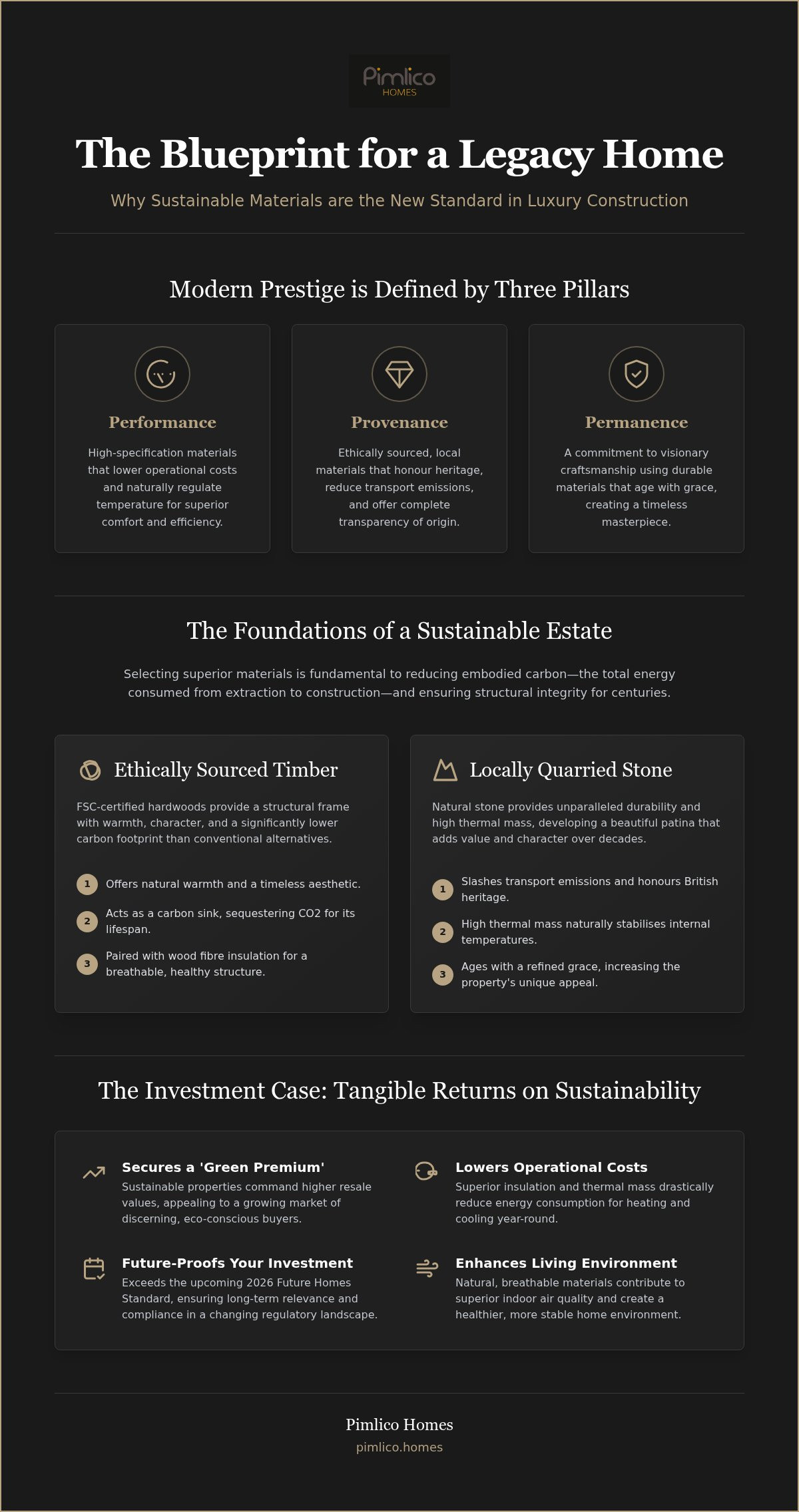
Modern prestige is defined by three pillars: performance, provenance, and permanence. A home that relies on fleeting trends or inefficient technologies lacks the quiet confidence required of a true legacy property. By prioritising sustainable materials in luxury construction, architects and builders create spaces that feel grounded. There’s a unique weight to a home built with ethically sourced, high-performance materials. It speaks of a visionary creator who values the long-term human experience over immediate, superficial impact. High-specification living now demands environmental integrity.
Defining Sustainable Luxury in 2026
In the current market, luxury is synonymous with transparency. It’s no longer enough for a material to look exquisite; its origin must be equally refined. This intersection of architectural artistry and environmental responsibility ensures that every element of a bespoke residence serves a dual purpose. For instance, high-thermal-mass stone provides a stunning aesthetic whilst naturally regulating temperature. This creates a healthier, more stable living environment that far exceeds the comfort levels of traditional high-end builds. It’s a sophisticated approach where the home’s beauty is matched by its ethical foundation.
The Regulatory Landscape for UK New Builds
The UK construction industry is navigating a pivotal era of change. With the Future Homes Standard set to tighten carbon reduction targets significantly by 2026, the choice of materials has become a matter of future-proofing. A property that only meets today’s minimum requirements risks becoming obsolete within a decade. By selecting superior sustainable materials in luxury construction now, you ensure your estate remains relevant and valuable in the 2030s market. This proactive stance on energy regulations isn’t merely about compliance. It’s a strategy to maintain exclusivity and safeguard your investment against an evolving legislative landscape.
Structural Integrity and Embodied Carbon: The Foundations of a Sustainable Estate
True prestige begins beneath the surface. For the visionary homeowner, the environmental cost of a building’s creation is as significant as its final aesthetic. This is defined as ’embodied carbon’. It accounts for the total energy consumed during the extraction, manufacture, and transport of building materials. In the realm of high-specification estates, minimising this figure is a testament to meticulous planning. It ensures that the residence isn’t merely efficient to inhabit, but is fundamentally responsible from the day the ground is broken.
Achieving this requires a sophisticated selection of sustainable materials in luxury construction. Natural stone and timber have long been the benchmarks of durability, yet their role is evolving. We’re now seeing the integration of low-carbon concrete and recycled aggregates within executive developments. These innovations allow for the bold, expansive structures that define modern luxury whilst drastically reducing the carbon footprint of the foundation and frame. It’s a marriage of structural ambition and environmental stewardship.
Ethically Sourced Timber and Stone
Hardwoods with FSC certification are essential for the framing of a detached home. They offer a warmth and permanence that feels inherently luxurious. Locally quarried stone is equally vital. It honours British heritage and slashes transport emissions. Unlike synthetic cladding, natural materials age with a refined grace. They develop a patina that adds value and character over decades. This focus on provenance is central to our work on bespoke luxury homes, where every material choice is deliberate and high-specification. It’s about building for centuries, not just seasons.
Advanced Insulation and Thermal Mass
Thermal performance shouldn’t come at the cost of breathability. High-performance mineral wool and wood fibre insulation are the preferred choices for sophisticated estates. These materials create a healthy indoor climate. In large, open-plan residences, the role of thermal mass is crucial. Dense materials like stone or specialised low-carbon screeds absorb heat during the day and release it at night. This naturally regulates temperature, even in homes featuring extensive architectural glazing. Integrating these sustainable materials in luxury construction allows for a seamless connection between contemporary design and environmental performance. You gain the beauty of light-filled spaces without the energy waste.
Refined Interiors: Marrying High-End Aesthetics with Ethical Material Sourcing
Interior design is the most intimate layer of a home. It’s where the grand architectural vision meets the daily human experience. While the external shell provides security, the interior defines the atmosphere. Discerning homeowners now recognise that true opulence is inseparable from well-being. This has led to a prioritisation of Indoor Air Quality (IAQ) through the use of low-VOC finishes. By eliminating synthetic chemicals found in traditional paints and adhesives, we create executive homes that are as healthy as they are beautiful.
The sensory experience is further elevated by natural textiles. Silk, wool, and linen offer a tactile richness that synthetic alternatives simply cannot replicate. These fabrics interact with light and touch in a way that feels organic and alive. They are sustainable, biodegradable, and possess a timeless elegance that transcends seasonal trends. Integrating these sustainable materials in luxury construction ensures that every touchpoint in the home reinforces a narrative of quality and ethical sourcing. It’s a deliberate choice that rewards the inhabitant with a deeper connection to their surroundings.
Reclaimed Materials in Barn Conversions
For those commissioning luxury barn conversions, heritage is a primary asset. Salvaged brick and ancient timber beams aren’t merely decorative. They are historical echoes that provide a unique narrative for a bespoke home. Sourcing these rare materials requires an expert eye to ensure they meet modern structural requirements whilst retaining their weathered character. The challenge lies in the seamless integration of old and new. When done correctly, the result is a residence that feels both established and contemporary. It’s a refined rustic aesthetic that honours the past through visionary craftsmanship. Every reclaimed beam tells a story of longevity.
Sustainable Finishes and Bespoke Joinery
The final flourish of a prestige home often lies in its joinery. We favour natural oils and waxes over chemical lacquers. These finishes allow the wood to breathe and age naturally, highlighting the unique grain of the timber. Bespoke cabinetry is another area where sustainability meets artistry. By using recycled wood fibres and non-toxic adhesives, craftsmen can create intricate, high-specification pieces that don’t compromise air quality. Hand-finished surfaces provide a tactile luxury that feels deliberate. It’s about the meticulous care taken in every detail, ensuring the interior is a sanctuary of both style and substance. This approach ensures your living space remains as pure as it is polished.
The Investment Case: Performance, Longevity, and the Resale Value of Sustainable Homes
Financial wisdom. In the upper echelons of the property market, value is measured by more than just square footage; it’s found in the resilience of the asset. We’re witnessing the emergence of a ‘Green Premium’. This is where homes built with high-specification ecological integrity command significantly higher resale prices. It’s a fundamental shift in how high-net-worth individuals assess long-term worth. By investing in sustainable materials in luxury construction, you aren’t merely building a house. You’re securing a future-proofed asset that aligns with the evolving expectations of the global elite. This approach ensures your property remains a leader in its class, rather than a relic of an inefficient era.
Future-Proofing Your Property Value
The market is becoming increasingly discerning. Properties that fail to meet modern efficiency standards are beginning to face ‘brown discounts’. This is a scenario where a lack of sustainability leads to a diminished pool of buyers and lower valuations. A commitment to high-specification sustainability is now a prerequisite for investment security. It guarantees that your residence won’t require costly retrofitting to meet future legislation. For a deeper look into market trends, you might explore our guide on the resale value of new build homes. It’s about staying ahead of the curve and protecting your capital.
Operational costs also play a vital role. Energy-efficient construction significantly reduces the ongoing expense of maintaining a large estate. Passive heating, superior insulation, and high-performance glazing work in harmony to lower energy requirements. These savings are substantial over the decades a legacy home is held. Beyond the financial figures, there’s a psychological value in owning a home that reflects modern ethical standards. It’s the quiet pride of knowing your sanctuary doesn’t come at the cost of the environment. It feels like a responsible stewardship of your wealth.
Durability and Reduced Maintenance
Permanence is a hallmark of prestige. Sustainable materials are often synonymous with superior longevity. Consider the lifespan of natural stone or FSC-certified hardwoods compared to cheaper, synthetic alternatives that degrade over time. These high-quality elements require far less frequent intervention. They preserve the property’s stature without the constant, disruptive cycle of renovation. This reduced maintenance burden is a significant financial and lifestyle advantage. Modern estates also benefit from smart technology that monitors material health and performance. It’s an intelligent, data-driven approach to luxury living. If you’re ready to commission a property built for the next century, our bespoke luxury homes provide the perfect foundation for your legacy.
Crafting Your Vision: The Pimlico Homes Approach to Sustainable Luxury
Visionary creation. At Pimlico Homes, we believe that a residence should be a testament to the values of its owner. Our 25 years of industry experience has taught us that the most prestigious homes are those built with a focus on permanence and artistry. We don’t view sustainability as an external requirement. Instead, it’s a fundamental part of our high-specification building process. By integrating sustainable materials in luxury construction, we ensure that every bespoke home we create is a sanctuary of both modern comfort and traditional excellence.
The synergy between heritage and innovation is where our projects truly shine. We blend time-honoured craftsmanship with cutting-edge amenities to create spaces that feel grounded yet forward-thinking. This methodical approach mirrors the careful process of high-end construction itself. We move from the grand vision of the site to the intimate details of the finish, ensuring that every element contributes to a sense of security and exclusivity. It’s a deliberate journey towards a home that will remain relevant for generations.
Bespoke Design Meets Environmental Excellence
Every journey begins with a collaborative dialogue. We work alongside visionary architects to select materials that match your specific aesthetic requirements whilst adhering to the highest ecological standards. This is particularly evident in our executive courtyard developments. These homes are designed to prioritise privacy and security without compromising on environmental performance. For those seeking a comprehensive overview of the market, our Ultimate Guide to Buying a Luxury New Build Home in 2026 offers a detailed roadmap for your next investment. We ensure that your grand vision is realised through a lens of environmental responsibility.
The Pimlico Promise of Quality
Excellence is non-negotiable. From the selection of structural stone to the final hand-finished interior surface, we maintain an executive standard of quality. We understand the weight of a significant life investment. That’s why all our projects, including our specialist luxury barn conversions, come with the reassurance of a luxury new build warranty. This protection is essential when employing innovative sustainable materials in luxury construction. It provides the security you need to explore bold, architectural visions with confidence. We invite you to contact our team to discuss how we can bring your dream of a bespoke, sustainable estate to life. Your legacy deserves nothing less than perfection.
Securing the Future of Bespoke Living
The home of the future is defined by its ability to balance architectural grandeur with environmental integrity. We’ve explored how the strategic selection of sustainable materials in luxury construction protects your property’s value whilst ensuring a healthier, more refined living environment. From the structural permanence of ethically sourced stone to the sensory richness of natural textiles, every choice is a step towards a more resilient legacy. These elements work in harmony to create a residence that is as enduring as it is beautiful.
Pimlico Homes brings 25 years of expertise to this visionary process. As specialists in high-specification barn conversions and bespoke residences, we remain committed to the highest standards of British craftsmanship. We don’t just build homes; we curate environments that stand as a testament to your values and your uncompromising vision for excellence. Your investment deserves a guardian of quality who understands the emotional and financial weight of a significant life project.
Discover our latest luxury developments and bespoke home visions
Your journey towards a timeless, ethically built estate begins with a single, inspired conversation. We look forward to helping you shape a masterpiece that will be cherished for generations.
Frequently Asked Questions
Are sustainable materials more expensive for luxury construction?
While the initial procurement of premium eco-materials can involve a higher outlay, they represent a superior long-term investment. High-performance insulation and thermally efficient glazing reduce operational energy costs significantly over the property’s lifespan. When you factor in the increased resale value and the reduced need for costly retrofitting, the total cost of ownership often proves more favourable than traditional high-end builds. It’s a shift from immediate expense to enduring financial value.
Do sustainable materials affect the aesthetic of a high-end home?
Sustainability actually enhances the aesthetic by prioritising authenticity and provenance over synthetic imitation. Integrating sustainable materials in luxury construction, such as locally quarried stone or hand-finished hardwoods, adds a layer of tactile richness that mass-produced alternatives cannot match. These materials interact with light and age with a refined grace, developing a unique patina that reinforces the home’s character. The result is a residence that feels both architecturally stunning and deeply grounded.
What is embodied carbon and why does it matter for my new build?
Embodied carbon refers to the total greenhouse gas emissions generated during a material’s extraction, manufacture, and transport to your site. For a bespoke new build, minimising this figure is essential for true environmental stewardship. By selecting materials with low embodied carbon, such as timber or recycled aggregates, you ensure the home’s ecological footprint is reduced from the moment construction begins. It’s about building a responsible legacy that respects the landscape it occupies.
How do sustainable materials improve the health of my home?
They improve health by drastically reducing the presence of toxins and improving natural air circulation. Natural finishes and low-VOC paints eliminate the off-gassing of harmful chemicals often found in standard construction projects. Breathable mineral wool insulation also prevents moisture build-up, creating a stable, hypoallergenic indoor climate. This meticulous attention to material purity ensures your executive home is a sanctuary that actively supports the long-term well-being of every inhabitant.
Can a barn conversion be truly sustainable?
Yes, barn conversions are inherently sustainable because they repurpose existing structures, significantly reducing the need for new raw materials. By integrating reclaimed timber beams and salvaged brickwork with modern, high-performance insulation, these homes achieve a perfect balance of heritage and efficiency. This approach allows for a bespoke residence that honours the past whilst meeting the rigorous energy standards of the 2030s market. It’s the ultimate expression of refined rustic living.
What certifications should I look for in sustainable luxury materials?
Look for globally recognised standards that guarantee ethical sourcing and environmental performance. FSC or PEFC certifications are vital for timber, ensuring it comes from responsibly managed forests. For the overall build, BREEAM or the Passivhaus standard provide rigorous frameworks for energy efficiency and carbon reduction. These benchmarks offer the reassurance that every element of your property meets an executive standard of quality and a commitment to meticulous environmental integrity.
How do sustainable materials impact the resale value of a luxury property?
They act as a powerful catalyst for value appreciation by future-proofing the asset against evolving UK building regulations. Homes featuring sustainable materials in luxury construction command a ‘Green Premium’ because they offer lower running costs and superior durability. As the market moves towards the strict 2026 carbon reduction targets, energy-inefficient properties may face diminished demand. A sustainable estate remains a highly desirable, secure investment for the next generation of discerning buyers.
Are sustainable homes more difficult to maintain than traditional luxury houses?
On the contrary, high-quality sustainable materials are often more durable and require less frequent intervention. Natural stone and hardwoods are built to last for centuries, resisting the wear that affects cheaper, synthetic components. When combined with smart monitoring technology, these materials allow for a proactive maintenance schedule that prevents issues before they arise. This reduces the long-term burden of upkeep, ensuring your home maintains its prestige and structural integrity with minimal disruption.


