
Does a flawless architectural facade truly guarantee the structural integrity of your lifelong investment? You’ve likely spent months envisioning the moment you turn the key, yet the fear of hidden defects or being dismissed by a developer can cast a shadow over that anticipation. It’s a natural concern for any discerning homeowner who refuses to be fobbed off with surface-level fixes or minor cosmetic adjustments. By mastering our definitive pre-completion inspection checklist, you’ll gain the architectural insight and functional certainty required to ensure your luxury home meets every exacting standard before you commit to the final financial exchange.
This guide provides a meticulous roadmap through your rights under the March 2026 New Homes Quality Code V2. We’ll examine the technical benchmarks of prestigious construction, from the calibration of smart energy systems to the precision of bespoke finishes, empowering you to challenge any oversight with the authority of a seasoned expert. You’ll walk away with total peace of mind, knowing your new residence is as perfect in its performance as it is in its design.
Key Takeaways
- Understand your statutory rights under the 2026 New Homes Quality Code V2, which guarantees property access for a thorough audit before legal completion occurs.
- Master the use of a comprehensive pre-completion inspection checklist to identify both subtle cosmetic snags and deeper functional defects in your bespoke luxury build.
- Learn to differentiate between standard finishes and the “Luxury Standard,” ensuring every architectural detail from cabinetry to masonry aligns with your original vision.
- Weigh the advantages of independent professional surveys against the meticulous “Homeowner’s Eye” to secure the most rigorous evaluation of your new residence.
- Establish a clear path for resolution by learning how to hold developers accountable for fixing identified issues before the final financial commitment is made.
Understanding Your Rights: The 2026 Pre-Completion Inspection Standard
The landscape of luxury property acquisition has undergone a profound transformation. With the introduction of the New Homes Quality Code V2 in March 2026, the balance of power has shifted toward the homeowner. A Pre-Completion Inspection (PCI) is no longer a requested favour; it’s a statutory right. This formal audit allows you to verify that your residence meets the exacting standards promised before the final legal completion takes place. By utilising a pre-completion inspection checklist, you can ensure that every architectural detail is scrutinised during this vital window of opportunity. Once legal completion occurs and you move in, the process of rectifying discrepancies becomes significantly more complex.
The New Homes Quality Board (NHQB) serves as the guardian of this process. Their framework ensures that developers operate with a level of transparency that was previously inconsistent across the industry. In 2026, this means you are protected from being rushed into a handover. The code mandates that the home must be functionally complete before you are invited to inspect it. This shift ensures that the executive homebuyer is treated with the professional respect a significant life investment deserves. It establishes a clear boundary between the construction phase and the moment of possession.
The New Homes Quality Code V2 (March 2026)
The second edition of the code, effective from 2nd March 2026, introduces rigorous new protocols for homeowner access. Developers are now required to provide a minimum of 14 days’ notice before the anticipated completion date. This period is specifically designed to allow you to conduct a thorough review using the official pre-completion inspection checklist. You have the right to perform this inspection personally or to appoint a qualified professional from a recognised body, such as RICS or the CIOB. This ensures that a neutral, expert eye evaluates the architectural integrity of your new build without the pressure of an imminent moving day.
Why a PCI is Vital for Luxury Investments
For those investing in bespoke masonry and high-specification interiors, a PCI is an essential safeguard for the resale value of premium properties. A luxury home is a collection of intricate details. From the alignment of hand-finished cabinetry to the seamless integration of smart home technology, every element must be perfect. A pre-completion inspection checklist ensures that the original design intent is fully realised. At Pimlico Homes, we welcome this scrutiny. We believe that true craftsmanship should be celebrated, and an independent audit only serves to confirm the excellence of the build. It provides the emotional peace of mind that your sanctuary is ready for its first evening of quiet enjoyment.
The Scope of a Luxury Audit: Aesthetic vs Functional Excellence
A standard snagging list often focuses on the superficial, yet a prestigious residence requires a far more rigorous audit. When you employ a pre-completion inspection checklist for a high-end property, you aren’t just looking for paint drips. You’re looking for the seamless execution of an architectural vision. In the world of executive builds, the distinction between a minor snag and a defect becomes critical. A snag might be a dusty skirting board, whilst a defect is a failure in the underfloor heating or a misaligned piece of bespoke masonry. For a luxury home, any deviation from perfection is a compromise on the value of the asset.
The Luxury Standard is defined by precision. It’s the silent closing of a hand-fitted kitchen drawer and the exact 45-degree mitre on an oak architrave. Volume builds often rely on speed, but bespoke luxury homes are built on the foundation of meticulous care. This is why your inspection must be twice as thorough. You’re verifying that the premium materials you’ve invested in have been handled with the respect they deserve. If you’re currently exploring luxury new build homes, you’ll know that the difference lies in these intimate, often overlooked details.
Cosmetic Perfection in High-End Finishes
High-end finishes require both a tactile and visual assessment. Bespoke joinery and skirting should show no visible gaps or uneven transitions. When inspecting natural stone or premium tiling, ensure the veining and colour consistency remain harmonious across the entire surface. Paintwork should be evaluated under varied lighting conditions; what looks uniform in the midday sun might reveal shadows or flashing under evening spotlights. Every surface should feel as refined as it looks.
Functional Integrity of Smart Home Systems
Modern luxury is increasingly digital. Your audit must include a full test of all integrated technology. This includes:
- Climate Control: Verifying that each zone responds independently and accurately to the central hub.
- Kitchen Tech: Testing high-specification appliances, including wine cooling systems and induction hobs.
- EV Charging: Ensuring the mandated 7kW smart electric vehicle charge point is fully operational as per Part S building regulations.
- Security: Confirming that automated gates and alarm systems provide the intended serenity and protection.
A failure in these systems isn’t just an inconvenience; it’s a breakdown of the home’s functional core. Ensuring these elements are flawless before you move in is the only way to protect the integrity of your lifestyle.
Professional Surveyors vs. Self-Inspection: Making the Choice
Choosing between a professional surveyor and a personal audit is a pivotal moment in the acquisition of a luxury residence. It represents a choice between technical forensic analysis and the intimate knowledge of a bespoke vision. Whilst many developers might suggest a cursory glance is sufficient, the complexity of modern executive homes demands a structured and rigorous approach. Whether you choose to delegate this task or undertake it yourself, your pre-completion inspection checklist serves as the vital bridge between expectation and reality. It’s the final filter that ensures your investment is as sound as it is beautiful.
The decision often hinges on the balance between technical expertise and personal preference. A luxury home is a complex ecosystem of smart technology, high-spec materials, and intricate architectural details. Navigating this landscape requires a steady hand and a clear strategy. At Pimlico Homes, we believe that a transparent inspection process is the hallmark of a confident developer, and we encourage our clients to choose the method that provides them with the greatest sense of security.
The Advantages of a Professional RICS Audit
A professional inspector, particularly one accredited by the Royal Institution of Chartered Surveyors (RICS), brings a level of technical scrutiny that goes beyond the visible surface. These experts often employ thermal imaging to detect heat loss or moisture ingress that the naked eye simply cannot perceive. They understand the nuances of the 2026 building regulations, ensuring that everything from loft insulation depth to the integrity of damp-proofing courses is beyond reproach. A formal report from a RICS-qualified professional carries significant weight. It transforms a subjective concern into an objective requirement for the developer to address, providing a layer of protection that is invaluable when securing a high-value asset.
Conducting Your Own Prestigious Walkthrough
There is, however, a unique advantage to the “Homeowner Eye.” No surveyor, regardless of their qualifications, understands the specific nuances of your bespoke choices as intimately as you do. You know exactly where the natural light should hit the kitchen island and how the grain of the oak flooring should align. If you choose this path, preparation is paramount. You must approach the task with a methodical, room-by-room focus, leaving no corner unlit. Essential tools for a prestigious walkthrough include:
- High-powered LED torches to reveal imperfections in plasterwork or paint finishes.
- Digital spirit levels to verify the absolute precision of stone worktops and tiling.
- The original specification sheet to ensure every bespoke upgrade has been delivered as promised.
- High-resolution photography to document findings with clarity and precision.
The most effective strategy often involves a hybrid approach. Many clients choose to hire a professional to handle the complex structural and functional audits whilst personally managing the aesthetic pre-completion inspection checklist. This ensures that the technical foundation is sound and the artistic execution is flawless. It’s about ensuring your peace of mind before the final financial commitment is made, guaranteeing that your new sanctuary is truly ready for its first inhabitants.
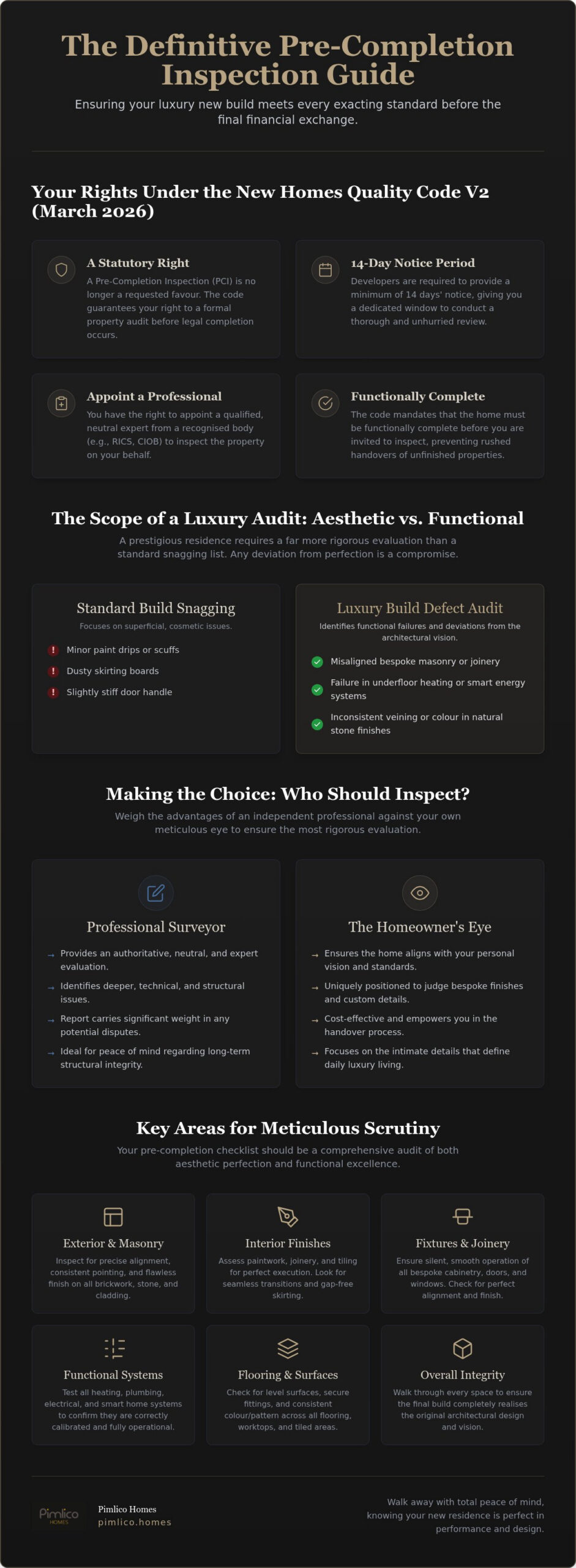
The Ultimate Pre-Completion Inspection Checklist
A prestigious residence demands an audit that transcends the basic requirements of standard building regulations. Whilst generic templates might suggest checking for functional power points, a bespoke pre-completion inspection checklist for a luxury home focuses on the precision of architectural execution. It’s the difference between a house that’s merely finished and one that’s been crafted to an executive standard. This stage is your final opportunity to ensure that every material, from the hand-carved fireplace to the external stone cladding, reflects the excellence you were promised.
Every detail matters in a property designed for longevity and stature. At Pimlico Homes, we take immense pride in our output, which is why we encourage a methodical approach to this walkthrough. If you are preparing to move into one of our luxury detached homes, use the following criteria to verify that your new sanctuary meets our rigorous benchmarks of quality.
Interior Finishes and Bespoke Elements
The interior of an executive home should feel effortless and refined. When moving room-to-room, scrutinise the following:
- Joinery and Ironmongery: Ensure all internal doors operate with a weighted, smooth action. Check that high-quality handles and hinges are perfectly aligned without visible screws or scuffs.
- Bespoke Cabinetry: Inspect the “flushness” of integrated wardrobes and kitchen units. There should be no irregular gaps between the unit and the ceiling or walls.
- Electrical Precision: Verify that every socket and light switch is perfectly level. Check that bespoke lighting scenes respond instantly to their designated controls.
- Underfloor Heating: Test every zone independently. Use your hands to check for consistent warmth across all floor surfaces, ensuring there are no “cold spots” in stone or timber areas.
Exterior Stature and Structural Integrity
The external facade provides the first impression of your estate. It must be beyond reproach. Examine the brickwork or stone cladding for consistent mortar lines and a total absence of staining or efflorescence. Guttering and downpipes should be secure, with all joints sealed and free from construction debris. Pay close attention to the glazing; check every pane of triple or double-glazed units for internal “blown” seals or surface scratches that are only visible when the light hits at a specific angle. Finally, ensure the landscaping is complete, with driveway finishes and boundary fencing meeting the agreed architectural specification.
The “Snagging” Essentials: Kitchens and Bathrooms
These high-traffic areas require a functional audit alongside an aesthetic one. Run every tap simultaneously to verify that water pressure remains consistent and drainage is rapid. Inspect sanitary ware for any microscopic chips or scratches in the porcelain. Silicon sealing around baths and showers must be smooth and continuous, providing a watertight barrier that doesn’t compromise the clean lines of the tiling. Ensure that all ventilation systems, particularly in the kitchen and master ensuite, operate quietly and effectively, maintaining the serene atmosphere of the home.
Beyond the Checklist: Securing Your Dream Home
The conclusion of a walkthrough is merely the beginning of the final refinement phase. Once you’ve documented your findings using the pre-completion inspection checklist, the developer enters a period of focused rectification. This process, often referred to as “closing out,” is where the true character of a builder is revealed. A premier developer doesn’t view this list as a grievance; they see it as a final opportunity to polish a masterpiece. Under the 2026 regulations, there’s a clear expectation that significant functional issues are resolved before the keys are handed over, ensuring your first night in your new residence is one of absolute serenity.
Negotiating the Final Fixes
Effective communication is the cornerstone of a successful handover. You should maintain a formal, dated record of all correspondence with the site manager to ensure every item on your pre-completion inspection checklist is tracked to completion. It’s often wise to prioritise functional defects, such as a temperamental smart hub or a minor plumbing weep, over purely cosmetic snags. Whilst every detail matters, the structural and operational integrity of the home is paramount. You may encounter the “De Minimis” rule, which refers to minor imperfections that are considered acceptable within industry tolerances. In a bespoke luxury build, these tolerances are exceptionally narrow, as the expectation of quality is significantly higher than in a standard development.
Should a disagreement arise regarding the standard of a finish, the New Homes Ombudsman Service provides a robust framework for resolution. This independent body ensures that homeowners aren’t left behind after the final financial exchange. As you move past the initial inspection, your focus will naturally transition toward the long-term protection offered by luxury new build warranties. These guarantees provide a ten-year safety net, though the goal of a prestigious build is always to ensure such measures are never required.
The Pimlico Homes Approach to Quality
At Pimlico Homes, our relationship with quality begins long before a client arrives for their inspection. We conduct our own rigorous internal audits, scrutinising every shadow and joint to ensure the home meets our executive courtyard standards. We believe that a home is a legacy, a testament to 25 years of industry expertise and a commitment to uncompromising craftsmanship. We don’t just build houses; we curate environments that stand the test of time. We invite you to explore our current portfolio of executive courtyard homes and bespoke barn conversions, where every detail is a reflection of our dedication to your long-term satisfaction. Our doors are always open to those who demand the extraordinary.
Realising Your Architectural Vision
Your journey toward a bespoke sanctuary deserves a final chapter defined by precision and certainty. By utilising a comprehensive pre-completion inspection checklist, you’ve transformed a simple walkthrough into a rigorous audit of architectural excellence. You’ve navigated the technical nuances of the 2026 New Homes Quality Code V2 and established a standard where only the finest craftsmanship is accepted. This process isn’t just about identifying snags. It’s about protecting the longevity and emotional weight of your significant life investment.
As you move toward legal completion, remember that a truly prestigious home is built on a foundation of transparency and trust. We invite you to discover the uncompromising quality of Pimlico Homes. As specialists in high-specification detached residences and proud members of the New Homes Quality Board, we combine award-winning architectural design with a guardian’s eye for detail. Your dream home is more than a structure; it’s a legacy of artistry and meticulous care. Step into your future with the confidence that every stone, joint, and system has been crafted to endure for generations.
Frequently Asked Questions
What is a Pre-Completion Inspection (PCI)?
A PCI is a formal walkthrough of a new home conducted before legal completion to identify any issues. Under the New Homes Quality Code V2, it’s a statutory right for buyers of homes reserved after 2 March 2026. It ensures the property is functionally complete and meets architectural standards. This allows for a pre-completion inspection checklist to be used to document any discrepancies that require rectification before the keys are handed over.
Can I hire a professional snagging company for a PCI?
Yes, you can appoint a suitably qualified professional to conduct the inspection on your behalf. The 2026 code specifically allows for inspectors from recognised bodies such as RICS, CABE, or the CIOB. Hiring an expert provides a technical layer of scrutiny, particularly for complex luxury builds where structural integrity and high-spec utility performance are paramount. They provide an independent, authoritative report that developers must acknowledge and address before the final handover of the keys.
What is the difference between a PCI and a snagging survey?
A PCI is a specific right exercised before legal completion, whilst a snagging survey can occur both before and after you move in. The primary difference lies in the timing and the legal framework. A PCI focuses on ensuring the home is ready for possession according to the NHQB standards. Amongst the executive market, a post-completion snagging survey often identifies minor cosmetic issues that settled once the building was inhabited.
What happens if the developer refuses to fix issues before completion?
If a developer refuses to rectify significant defects identified during the PCI, you can escalate the matter through the New Homes Ombudsman Service. Under the 2026 regulations, developers have a clear obligation to address functional failures before legal completion. For minor cosmetic snags, they may agree to a timeline for repairs post-possession. However, having a documented record ensures you have the necessary evidence to hold them accountable if they aren’t meeting their obligations.
When is the best time to conduct a pre-completion inspection?
The inspection should take place after the developer has issued a formal 14-day notice but before the legal completion date. This specific window is mandated by the New Homes Quality Code V2 to ensure the property is functionally complete. Conducting the audit during this period allows the site team enough time to address identified issues without delaying your move-in date. It’s the most effective time to verify that every bespoke detail is perfect.
How long does a thorough PCI usually take for a luxury home?
A comprehensive inspection for a high-specification executive residence typically takes between three and five hours. The duration depends on the size of the property and the complexity of its integrated systems. A luxury build requires extra time to test underfloor heating zones, smart home hubs, and bespoke joinery. Rushing this process can lead to overlooked defects, so it’s vital to allocate a full morning or afternoon for a meticulous walkthrough of the entire estate.
Are developers required by law to allow a PCI in 2026?
Yes, developers registered with the New Homes Quality Board are required to allow pre-completion inspections for all homes reserved on or after 2 March 2026. This is a mandatory requirement under the second edition of the New Homes Quality Code. If a developer denies access, they are in breach of the code, and the buyer has the right to report the incident to the New Homes Ombudsman Service for formal investigation and resolution.
What should I bring with me to a self-conducted inspection?
You should bring a high-powered LED torch, a digital spirit level, a phone charger to test sockets, and your original specification documents. A high-resolution camera or smartphone is essential for documenting every identified issue with clarity. Most importantly, carry a printed or digital copy of a professional pre-completion inspection checklist to ensure your audit is methodical. These tools allow you to verify the precision of stone finishes and the functional integrity of every utility.





