
What if the position of your home matters as much as its design? The importance of plot position in a development can be easy to overlook when you’re comparing floor plans, finishes and room sizes. Yet orientation, outlook, neighbouring homes and access can affect the light reaching your rooms, how private your garden feels and how easily you move around the development.
It’s natural to feel uncertain when one plot looks more secluded, another has a more open outlook, and the differences aren’t clear on a plan. Plot position is a lasting part of a home’s setting, so assess it as carefully as features you may be able to personalise later.
This guide gives you a consistent way to compare plots, weigh trade-offs and identify questions to resolve before reserving a home. It covers sunlight and orientation, privacy and overlooking, views, noise and practical access, so you can judge each plot against your own priorities.
Key Takeaways
- The importance of plot position in a development lies in how its location, orientation and relationship to shared spaces affect everyday living.
- Check how neighbouring homes, boundaries and room placement may affect your outlook and privacy.
- Assess access, nearby activity and natural light together. A plot’s advantages depend on what matters most to you.
- Visit the site to check your impressions, then compare what you see with the plot plan.
- Rank your non-negotiables before comparing plots, so you can weigh compromises before reserving.
Why the importance of plot position in a development goes beyond the floor plan
Plot position is a home’s location, orientation and relationship to its boundaries, neighbouring homes, roads and shared spaces within a development. These fixed surroundings can influence the light a home receives, what its windows look out on, how private its outdoor space feels and the routes people use to arrive and move around.
The importance of plot position in a development extends beyond first impressions. A floor plan shows how the rooms are arranged, while the specification describes features and finishes. Plot position is the context around them. Assess all three together: the same interior can feel different depending on its outlook, nearby activity and relationship to other homes.
What does plot position mean when buying a new-build home?
Look beyond the building’s outline. Check where the plot sits in relation to its boundaries, the development’s roads and entrances, neighbouring homes and shared spaces. A site plan can help you understand these relationships by showing the arrangement of buildings, boundaries and access.
Plots in the same development can offer different experiences. For example, one hypothetical home might have its main garden beside a neighbouring boundary, while another might face a shared route. Neither is automatically the better choice. The question is whether each setting suits your expectations for privacy, outlook and movement around the home.
Why position matters beyond first impressions
Position can shape everyday experiences: the approach to your front door, the view from a living room and the sense of seclusion outdoors. Nearby activity may also affect how peaceful a space feels at different times of day. Orientation can influence when rooms receive natural light, but the actual experience depends on the home’s design and surroundings. No position guarantees a particular amount of sunshine.
A polished presentation or attractive plan is a starting point, not a substitute for practical assessment. If possible, visit the development and look at the plot’s setting. Check which way the windows face, what lies beyond the boundaries and how access works. Then weigh what you observe against your priorities. You may prefer an open outlook to a quieter setting, or privacy to proximity to a shared space. The right balance is personal.
Position is not something you can change as readily as furnishings or finishes. Understanding its trade-offs helps you assess the home and its setting together, rather than choosing on appearance alone.
How orientation, outlook and neighbouring homes affect a plot
A plot’s orientation can influence when natural light reaches different rooms and outdoor areas, but direction alone doesn’t determine how bright or private a home will feel. Building design, window placement, neighbouring structures and boundary treatments all contribute. Orientation indicates the direction a home or garden faces; it does not guarantee daylight at a particular time or an uninterrupted view.
This is an important part of the importance of plot position in a development: assess the plot and the home together. A garden’s orientation may matter to someone who hopes to spend time outdoors in the afternoon, while another buyer may prioritise morning light in a kitchen or bedroom. Neither preference makes one direction universally better. Let the room layout and your household’s routines guide your judgement.
Which direction should a plot face?
Start with the rooms and outdoor spaces you use most. Check the compass direction on the plot plan, then consider how it relates to the principal rooms and garden. If you can visit at different times or under different conditions, do so; a single viewing is only a snapshot. Ask the developer to clarify the orientation shown on the plan and how the home’s design relates to it.
How do outlook and overlooking change the experience?
During a viewing, pause at the windows of key rooms and look towards neighbouring homes, boundaries and shared areas. Check the garden from different points, including the places where you expect to sit or spend time. Notice direct sightlines between windows, the distance between homes and whether a boundary or screen changes what you can see. This helps you judge the outlook in person rather than relying on a plan or first impression.
Separate established features from landscaping that may change. Buildings and plot boundaries define the setting, but planting can take time to mature and its eventual effect may differ from its appearance in a drawing. Don’t assume a hedge, tree or fence will provide permanent screening. Ask the developer which boundary and landscaping details are planned, what is included and when they are expected to be completed. Check the relevant plans and available specifications to compare what is shown with what you have been told.
Before deciding, note what matters most: natural light in a particular room, a more open outlook or reduced visibility from neighbouring windows. These priorities can compete, and the best balance is personal. Reviewing the setting alongside the home’s design helps you make a considered choice. For context on the homes and settings Pimlico Homes develops, explore its luxury new-build homes.
Comparing plot positions: privacy, access, noise and outlook
Plot labels can suggest a certain character, but they don’t tell the whole story. A corner, perimeter or central position may have different relationships to boundaries, access routes and neighbouring homes, depending on the site plan. Compare the actual setting instead of assuming one type is automatically more desirable.
Use the same questions for each option. A consistent comparison makes the importance of plot position in a development easier to judge against your routines and preferences.
| Consideration | What to assess | Possible trade-off |
|---|---|---|
| Privacy | Check sightlines from neighbouring windows and shared routes towards principal rooms and garden areas. | A more open outlook may come with greater visibility; boundaries and screening can affect the experience. |
| Access | Note proximity to entrances, routes, parking areas and any communal spaces shown on the plan. | Convenient access may mean more people passing nearby. |
| Outlook | Look at what faces the windows and outdoor spaces, including nearby homes and shared areas. | A particular view may involve less separation from neighbouring activity. |
| Light | Use the plot plan and compass direction to consider the home’s orientation and room placement. | Light at different times depends on orientation, design and surrounding features. No direction guarantees a particular result. |
| Nearby activity | Consider routes and shared spaces close to the plot, and how you use the home throughout the day. | Activity may be more noticeable in some locations, but the effect depends on the layout and household preferences. |
Do corner, perimeter and central plots offer different advantages?
A corner plot may have boundaries on more than one side, while a perimeter plot may sit beside the development’s outer edge. A central plot may have neighbouring homes or shared routes nearby. These are possibilities, not fixed qualities: boundaries, exposure, access and activity vary with each layout. Read the plan, then view the setting rather than relying on the label.
How should buyers weigh convenience against privacy?
Consider who uses nearby routes and spaces, and when. A position close to an entrance may suit a household that values a direct route, while someone who prefers fewer passing movements may favour a different setting. Neither choice guarantees quiet, security or privacy. Ask what is planned around the plot and compare it with your daily routines.
The best plot is the one whose trade-offs fit your priorities. A clear comparison helps you decide which compromises feel acceptable and which might affect daily life in ways you would rather avoid.
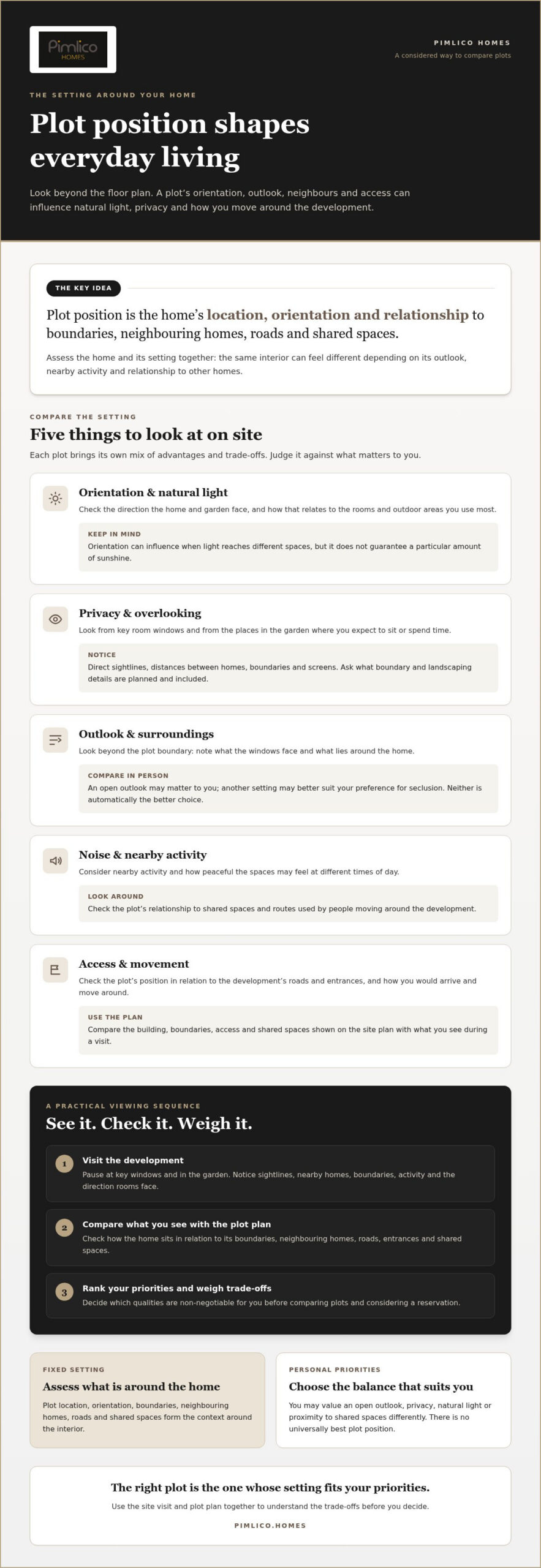
A plot-viewing checklist for assessing position before reserving
A structured visit helps turn first impressions into a considered comparison. The importance of plot position in a development becomes clearer when you review the plan alongside what you see on site, then confirm any details that remain uncertain before reserving.
Before your visit
- Study the plot plan. Locate the home, its boundaries, orientation and access. Note neighbouring plots, shared routes, parking and any communal spaces or amenities shown.
- Prepare questions. Mark anything unclear, including planned landscaping, boundary treatments and changes elsewhere on the site that may affect the setting.
- Choose what to assess. Think about the outlook from principal rooms, privacy in outdoor areas and how you expect to arrive at and move around the home.
During your visit
- Approach the plot as you would each day. View it from likely arrival points and follow the route to the entrance. Notice nearby activity and how access feels in practice.
- Look from key viewpoints. Check sightlines from windows and garden areas towards neighbouring homes, shared spaces and routes. Compare what you see with the plan.
- Observe the setting. Take note of levels, boundaries and the relationship between the home and its neighbours. If practical, visit at a different time; one visit is only a snapshot of conditions.
Before making a decision
Review your notes against the plot plan and ask the developer to clarify material points. For example:
- Which boundary and landscaping details are included, and what remains outstanding?
- Where are shared access routes, parking and communal areas in relation to this plot?
- Are changes elsewhere on the site planned that could affect the outlook, access or nearby activity?
- Can important details be confirmed in writing, so you can consider them alongside the plans?
Keep the answers with your comparison notes. This helps you distinguish confirmed details from assumptions and weigh the plot’s position alongside the home’s layout and specification. For a broader perspective on choosing a home, consult a luxury new-build buying guide as part of your research. To explore Pimlico Homes’ luxury new-build homes, consider each home in the context of its plot and setting.
Choosing a plot position that suits your priorities and future plans
A confident choice begins with knowing what you need from a home, not with trying to find a plot that excels in every respect. The importance of plot position in a development is personal: a setting that feels ideal for one household may not suit another’s routines, plans or sense of comfort.
How can you decide which plot trade-offs are acceptable?
Think about how you expect to use the home each day. Consider where you spend time, who shares the home with you and whether your priorities may change. Then separate essential requirements from preferences. This gives you a practical way to compare plots instead of relying on a first impression or one attractive feature.
- Non-negotiables: features you would be reluctant to compromise on, such as a particular level of privacy or convenient access.
- Preferences: qualities you value, such as a more open outlook or a specific relationship between the garden and living space.
- Acceptable compromises: trade-offs you could live with if the plot meets your more important needs.
Apply the same written criteria to each shortlisted plot. One might offer the outlook you favour but sit nearer a shared route, while another feels more sheltered but has a different orientation. Before committing, revisit the plans and resolve unanswered questions. A pause to check your priorities can bring clarity.
How does plot position fit into the whole-home decision?
Consider the setting alongside the home’s layout, specification and intended use. A room arrangement that suits your routines may matter more than a preferred outlook, or the reverse. Think about how the home and plot work together now, and whether that balance is likely to remain right for you as your needs evolve.
Future appeal may be one consideration, but plot position alone cannot guarantee a particular resale value. Views, privacy and access are experienced differently by different buyers, and the wider home and setting also matter. Choose based on how well the property suits your needs, rather than treating any plot characteristic as a promise of future value.
Pimlico Homes develops luxury detached homes and executive courtyard homes. Consider each purchase as a whole: the home, its design and its setting. Once you have clarified your priorities, Explore Pimlico Homes and enquire about developments that may suit them.
Choose a setting that feels right for the life you’re building
The importance of plot position in a development comes down to how well a home’s setting supports your everyday priorities. Compare orientation, outlook, privacy and access alongside the layout and specification, then decide which trade-offs you can live with. A consistent set of criteria can help you choose with confidence, without assuming any single plot feature suits every household or determines future value.
A thoughtful purchase considers the whole home: its design, surroundings and the way you expect to use it over time. Pimlico Homes specialises in luxury detached and executive courtyard homes, with a focus on considered design and high-quality craftsmanship across its residential developments.
Ready to explore homes where design and setting can be considered together? Explore Pimlico Homes and discover thoughtfully designed new homes. Start with your priorities, then compare each home and its setting against them.
Frequently Asked Questions
What does plot position mean in a new-build development?
Plot position describes where a home sits within its development, including its orientation and relationship to roads, boundaries, neighbouring homes and shared spaces. A plot plan can help you understand these features, while a site visit lets you assess the setting in person. The term alone doesn’t tell you whether a plot will offer more light, privacy or a particular outlook. Consider the specific home and surroundings together.
Why is plot position important when buying a new-build home?
Plot position can shape everyday experiences, from the route to your front door to the views from principal rooms and proximity to shared routes. Its importance depends on your household’s routines and priorities. Compare the actual setting with what matters to you rather than assuming a prominent, corner or perimeter plot is automatically preferable. Consider the home’s design and layout alongside its position to understand how they work together.
Which plot position is best in a development?
There is no universally best plot position; the right choice depends on your preferences and the site layout. You might prioritise privacy or outlook, while another buyer may value convenient access or a particular orientation. Review the development plan and, where possible, visit the plot. Compare options using the same criteria, and ask the developer to clarify uncertain details, including planned boundaries and landscaping.
Does the direction a plot faces affect natural light?
Yes, orientation can influence how sunlight reaches a home and its outdoor areas, but it can’t guarantee a particular amount of daylight. The building’s design, window placement, neighbouring structures, season and site conditions also affect the light you experience. Check the direction on a reliable plan and consider which way principal rooms face. If the information is unclear, ask the developer to explain the home’s orientation.
Can a plot position affect privacy in a new development?
Yes, privacy can be influenced by sightlines, distances between homes, window placement, boundaries and nearby shared routes. During a visit, consider the views from the rooms and outdoor spaces you expect to use most. Don’t rely on a plot label or marketing image alone. Ask which screening or landscaping measures are planned and whether those details are confirmed, as planting and boundary treatments may affect how exposed a space feels.
What should I check before reserving a plot?
Before reserving, compare the plot plan with the home’s orientation, access, boundaries, outlook and nearby shared areas. If possible, visit the site and note questions about landscaping, neighbouring plots or unfinished details. Consider how the setting fits your household’s priorities, then ask the developer to clarify important points in writing. This gives you a clearer basis for weighing the plot alongside the home’s layout and specification.
Can a plot’s position affect its future resale appeal?
A plot’s position may contribute to a future buyer’s impression, alongside the home’s layout, condition, specification and wider market circumstances. However, position alone can’t guarantee a particular resale value or sale outcome. Views, privacy and access may appeal differently to different buyers. Focus first on whether the plot suits your own needs, and consider possible future appeal as one factor rather than the sole reason for choosing a home.





