
The more control you want over a home’s design, the more involvement the journey is likely to demand. That’s the central question behind turnkey property vs building from scratch: would you rather buy a completed home or shape a project around your own vision? Neither route is automatically better. A turnkey purchase can make it easier to assess the home and its specification, while a self-build gives you more scope to guide the design.
It’s natural to weigh the appeal of a home that feels distinctly your own against concerns about changing costs, delays and the work involved in overseeing a build. Equally, a finished property may feel like a compromise if its layout or details don’t suit you. The right decision depends on your priorities and how much time and attention you can give the process.
This guide compares the two routes across design control, involvement, financial planning and the buying journey. Use the questions and comparison points to decide whether to pursue a purchase or a self-build, and what to clarify before committing.
Key Takeaways
- Understand what a turnkey property typically includes, and how a self-build starts with a brief, a plot and a project to oversee.
- Compare the design influence you want with the time and coordination you can commit.
- When weighing turnkey property vs building from scratch, look beyond the headline price to the full financial picture and the uncertainty each route may involve.
- Compare control, involvement, timing and financial planning to see which route better fits your priorities.
- Consider whether a developer-built luxury new home could suit you without personally managing a self-build.
Turnkey Property vs Building from Scratch: What Is the Difference?
A turnkey property is sold in a completed or near-completed state. Its precise level of completion and specification depend on the individual home. Building from scratch means commissioning a new home project and overseeing it from the initial brief and plot onwards. The distinction is not simply new home versus existing home: a turnkey purchase can be a new build, while a self-build describes the buyer’s role in creating the home.
The term turnkey project broadly describes a completed product prepared for use. In property, “turnkey” describes the purchase route, not a guarantee that a home is furnished, finished to your taste or ready for immediate occupation. Check the actual specification and contract rather than relying on the label alone.
With a turnkey purchase, you assess and acquire a home; with a self-build, you help shape and coordinate the project that creates it. Neither route is inherently better. The right fit depends on how much influence, involvement and responsibility you want.
What does turnkey property mean in a home purchase?
With a turnkey purchase, construction is largely complete or close to completion. You can assess the home as a physical property, including its layout and the finishes already specified. But “turnkey” doesn’t automatically mean every room is furnished or every detail is finished. A near-complete home, for example, may have finishing work outstanding, depending on the agreed specification.
Before proceeding, establish what is included in the sale, what remains to be completed and which fixtures and finishes form part of the contract. A kitchen shown in a display or marketing image may not tell you the exact specification of the home being sold. Use the written particulars and contractual terms to confirm what is included.
What does building a home from scratch involve?
A self-build generally starts by defining the brief: the type of home you want, its layout and the needs it must meet. You then secure a suitable plot, develop the design and work through the steps needed to prepare for construction. The project moves into building and, eventually, completion. Decisions made at each stage affect what follows, so planning and clear priorities matter.
The owner usually takes a more active role in decisions and coordination than someone buying a completed home. That involvement can give you more influence over the result, but brings more moving parts to manage. The exact responsibilities depend on how the project is organised.
For a first comparison, consider the journey in broad terms:
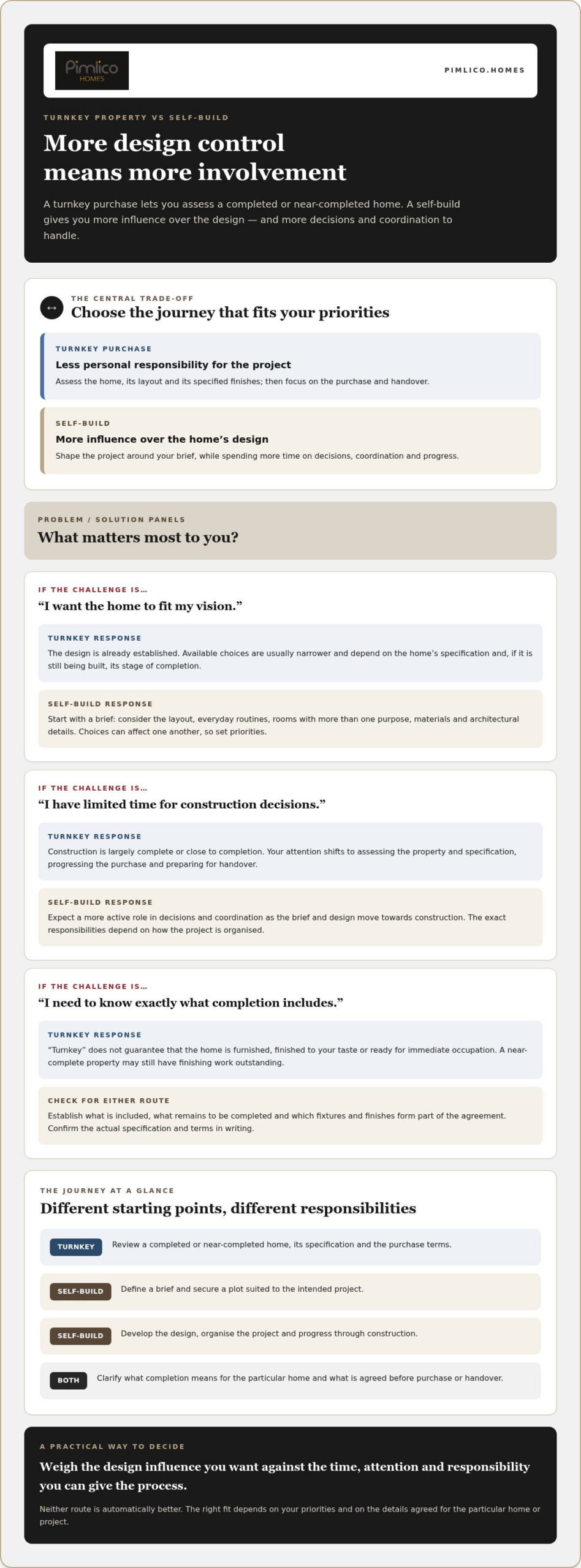
- Turnkey: review a completed or near-completed home, its specification and the purchase terms.
- Self-build: define a brief and secure a plot suited to the intended project.
- Self-build: develop the design, organise the project and progress through construction.
- Both routes: establish what completion means for the particular home and what is agreed before purchase or handover.
This is the starting distinction. Next, consider how the routes differ in the control, time and attention they ask of you.
Control, Customisation and Time: How the Two Routes Compare
The difference between the routes is clear in the decisions you make. A self-build starts with your brief, so you can shape the home around it, from the arrangement of rooms to materials and finishes. With a completed-home purchase, you assess a design that is already established. Available choices are usually narrower and depend on the specification and, if construction is still under way, the home’s stage of completion.
A self-build offers more influence over design, but also asks you to handle more decisions and coordination; buying a completed home limits your personal responsibility for the project. Some buyers enjoy developing a home around a precise vision. Others would rather choose a finished or near-finished property than manage the process of bringing a design to life.
How much design control does each route offer?
With a self-build, the brief is your starting point. Think about how the layout supports everyday routines, whether rooms need to serve more than one purpose and which materials or architectural details matter most. More influence does not make every choice straightforward. Decisions about one element may affect others, so set priorities to keep the design coherent.
Turnkey customisation depends on the property and its agreed specification. If construction is still under way, some choices may remain open; once the home is complete, the design and finishes are more likely to be set. Before comparing homes, separate essential needs, such as a suitable number of bedrooms or a layout that works for your household, from preferences you could compromise on. This helps you judge whether the existing design is a good fit.
Who manages decisions and the project timeline?
A self-build owner usually has a hands-on coordination role. The brief and design need to progress into construction, with decisions made as the project develops and different stages brought together. The amount of direct involvement depends on how the project is organised, but expect to spend time considering choices and tracking progress.
Buying a completed home removes the need to manage its construction sequence personally. Your attention shifts to assessing the property, understanding its specification and progressing the purchase and handover. That is a different kind of involvement, not an absence of decisions: the home still needs to meet your requirements, and the transaction has its own steps. Purchase and project timings vary, so neither route comes with a guaranteed completion date.
When weighing turnkey property vs building from scratch, consider not only how much you want to shape the home, but also how much time you can give to the process. If you value a thoughtfully designed new home without personally overseeing a self-build, explore luxury new-build homes as a completed-home option.
Costs, Funding and Uncertainty: What Should You Compare?
A fair comparison looks beyond the headline figure. A property’s agreed price and a self-build’s initial estimate describe different things, and neither necessarily captures every commitment involved. Compare the full financial picture: what is included, what remains to be paid, how funding will work at each stage and where uncertainty could affect your plans.
Funding terms and total commitments vary with the property, project and buyer’s circumstances. Rather than assume one route will cost less or bring savings, create a like-for-like view of the costs you can identify and the decisions that could change them.
Which costs and commitments belong in a self-build budget?
Plan for the project as a whole, not just the construction estimate. Your budget categories may include:
- Land: the plot and any costs associated with securing it.
- Design and professional input: work needed to develop and progress the project.
- Permissions and preparation: relevant permissions and work needed before construction can begin.
- Construction and completion: the build itself and the items required to complete the home.
- Contingency: an allowance for unforeseen costs or changes as the project develops.
These categories are connected. A change to the brief, design or assumptions about the plot can affect other parts of the plan, so revisit the budget as the project develops. A realistic contingency gives you room to account for uncertainty without treating an early estimate as a final total.
How does the financial planning differ for a turnkey purchase?
For a turnkey home, start with the agreed price and the specification it covers. Establish which fixtures, finishes and completion items are included, then account for transaction costs and any work you plan after purchase. Alterations can mean extra spending and decisions, particularly if the home’s layout or finishes don’t match your preferences.
Set out the commitments in a simple comparison: what is payable, what is included and what remains your responsibility. A self-build budget covers costs across a project; a completed-home budget centres on the purchase terms and the property as specified. For wider buying considerations, see this luxury new build purchasing guide.
Before settling on turnkey property vs building from scratch, test your plan against change. Which costs are defined, which depend on decisions yet to be made, and how much uncertainty can your finances comfortably absorb? The answers help you judge not only what looks manageable on paper, but what feels sustainable for you.
Which Route Fits Your Priorities? A Practical Decision Framework
There is no universal winner in the choice between turnkey property vs building from scratch. The better fit depends on what you value most: shaping the design, limiting personal responsibility for a project, seeing the home you’re buying, or accepting uncertainty in pursuit of a particular vision. Compare the routes against your own priorities rather than an abstract idea of the “best” option.
Use this framework as a starting point. The details of each property or self-build will vary, but these contrasts can help you identify where your preferences lie.
| Priority | Turnkey home | Self-build |
|---|---|---|
| Control | Choose from the home’s existing design and agreed specification. | Shape the brief and influence design decisions from the outset. |
| Involvement | Focus on assessing the property and progressing the purchase. | Expect ongoing decisions and project coordination. |
| Timing | Purchase and handover timings vary with the property and transaction. | Progress depends on the project’s stages and circumstances. |
| Financial planning | Assess the agreed price, specification and transaction costs. | Plan across land, design, permissions, construction and contingency. |
| Uncertainty | Assess the home as completed or near-completed, subject to its specification. | More decisions and changing project assumptions can affect plans. |
When might buying a turnkey home suit you better?
A completed home may suit you if you prefer to see what you’re buying and don’t want to manage construction. A defined specification can make it easier to understand what is included, even if there is less room to direct every design choice. Consider the home against your household’s needs: how its rooms support daily life, whether the layout can adapt as circumstances change and how well the property aligns with your longer-term plans.
Be clear about which features are essential and which are preferences. That distinction helps you judge a home on its overall suitability, rather than focusing only on details you could change or compromise on.
When might building from scratch suit you better?
A self-build may appeal if you have a clear brief and value influencing the home from its earliest design decisions. That opportunity comes with an ongoing commitment to choices and coordination as the project develops. Consider honestly whether you have the time, confidence and appetite to stay involved, including when plans need revisiting or uncertainty arises.
Before deciding, rank your priorities. Put the most important first, then ask which route supports them and what compromises you could accept. A considered decision takes account of both the home you hope to create and the responsibility you’re prepared to take on.
If a thoughtfully designed new home appeals but managing a self-build does not, explore Pimlico Homes’ luxury homes as a completed-home route to consider.
A Considered Route to a Luxury New Build with Pimlico Homes
Choosing between turnkey property vs building from scratch comes down to the home you want and the part you want to play in creating it. A developer-built new home offers a route for buyers seeking a thoughtfully designed property without taking on the coordination of a self-build. Your role is different: assess the home, its specification and how well it suits your plans, rather than oversee the project from the first brief.
Pimlico Homes develops luxury residential properties, including detached homes, executive courtyard homes and bespoke new builds. These options give buyers considering a completed-home route different types of homes to explore. Focus on the qualities that matter in a lasting home: its design, setting and fit with everyday life. The details of each home are set out in its own specification.
Explore luxury homes designed for considered living
A luxury detached home may appeal if you value a distinct home with space for your household’s routines. An executive courtyard home offers another residential form to consider, with its own character. Pimlico Homes also develops bespoke luxury homes, bringing a tailored approach to its high-end residential projects. Each offers a way to consider a new home without personally managing every stage of a self-build.
Premium barn conversions are another option, with the character of a converted building rather than a new-build home. Consider one on its own merits alongside detached homes, courtyard homes and bespoke new builds. The right comparison depends on the type of home you want, the design choices that matter most and the degree of project involvement you are prepared to take on.
As you explore, return to the criteria from the earlier comparison: design control, personal involvement, financial planning and your comfort with uncertainty. A defined home specification can clarify what you are considering, but assess how the property will serve your household and longer-term plans too. For wider considerations in the purchase journey, consult the luxury new build home buying guide.
Take a confident next step in your home search
You don’t need to choose a route by instinct alone. Revisit your priorities, note where you are willing to compromise and weigh the practical commitment of each path against the home you hope to own. If you value a high-quality new home but would rather not oversee a build from scratch, a developer-led option may merit a closer look.
Explore luxury new build homes with Pimlico Homes as you consider the next step in your search.
Choose the Home Journey That Feels Right
The decision between turnkey property vs building from scratch is ultimately about choosing a journey that suits the life you want to lead, not simply the home you hope to own. Consider what you want your days to look like, how much attention you can give a project and where you’re prepared to be flexible. Those reflections can turn a complex choice into a clearer next step.
If a completed luxury new home aligns with your priorities, Pimlico Homes offers a considered place to continue your search. Explore the homes and picture how a thoughtfully developed setting might support your plans for the years ahead.
Explore luxury new build homes with Pimlico Homes, and take the next step towards a home that feels distinctly right for you.
Frequently Asked Questions
Can I get a mortgage to build a house from scratch?
Yes, self-build finance exists, but it can work differently from a standard mortgage for buying a home. Funds may be released according to arrangements linked to the project, rather than through the usual purchase process. Eligibility and terms depend on the lender, your circumstances and the proposed build. Before committing to a plot or design work, understand how the funding route operates and whether its conditions fit your plans.
How much deposit do I need for a self-build mortgage?
There isn’t one deposit figure that applies to every self-build. Requirements can depend on the lender, the plot, the proposed project and your personal circumstances. In the turnkey property vs building from scratch decision, remember that funding for land and funding for construction may need separate consideration. Map out the full funding plan early, including when funds may be required, before making commitments.
Do I need planning permission to build a house from scratch?
A new-home project needs to follow the planning process that applies to its site, and requirements vary across the UK nations. Planning permission and building regulations are distinct: planning considers whether a proposal is acceptable in its location, while building regulations concern standards for the work. Establish the requirements for a specific plot before treating it as ready to build, as its planning position may affect your proposal.
What happens if planning permission is refused for a self-build?
A refusal can affect a project’s design, timing and overall viability. The options depend on the reasons for the decision and the rules in the relevant jurisdiction. Possible next steps may include revising the proposal or considering the formal process available, but a revised application does not guarantee approval. Before making major commitments, understand the plot’s planning position and consider how a refusal could affect your intended design and plans.
Is a new-build home covered by a warranty?
Warranty arrangements depend on the particular home, the provider and the purchase documents, so cover isn’t identical for every new build. Read the relevant warranty information alongside the property specification, contract and handover documents. These serve different purposes: warranty documents describe the applicable cover, while the specification and contract set out what has been agreed for the home. Make sure you understand the documents for the property you’re considering.
Can I buy a new-build home before it is completed?
Some new-build homes may be marketed before completion, but the purchase process and choices available depend on the development stage and contract. Before proceeding, understand the agreed specification, expected milestones and the terms that apply if timings or circumstances change. Any design choices depend on the home’s stage and agreement, so don’t assume every property can be customised. Review the documents for the specific home carefully.





