
Understanding the exchange to completion process for new builds starts with a clear answer: same-day exchange and completion is possible for a finished home, but rare. More often, the timing depends on whether the property is complete or still under construction, the contract terms and when the necessary funds are ready.
It’s natural to want certainty about when you can collect the keys, especially when a new home is taking shape. This guide explains what makes an exchange legally binding, how completion dates and long-stop dates work, and how warranties and deposit protection may affect your purchase. You’ll also learn why an off-plan completion date may depend on notice that the home is ready, and what to understand before committing your deposit.
Key Takeaways
- Plan the gap between exchange and completion around whether the home is finished, the contract terms and when funds can be arranged.
- For an off-plan purchase, understand how completion notice works and what protection the long-stop date offers if construction is delayed.
- Before committing your deposit, examine the contract’s deposit terms and the scope of the new-build warranty.
- Use the purchase timeline to prepare for key decisions early, especially where the home is still under construction.
Exchange of contracts – what does it mean?
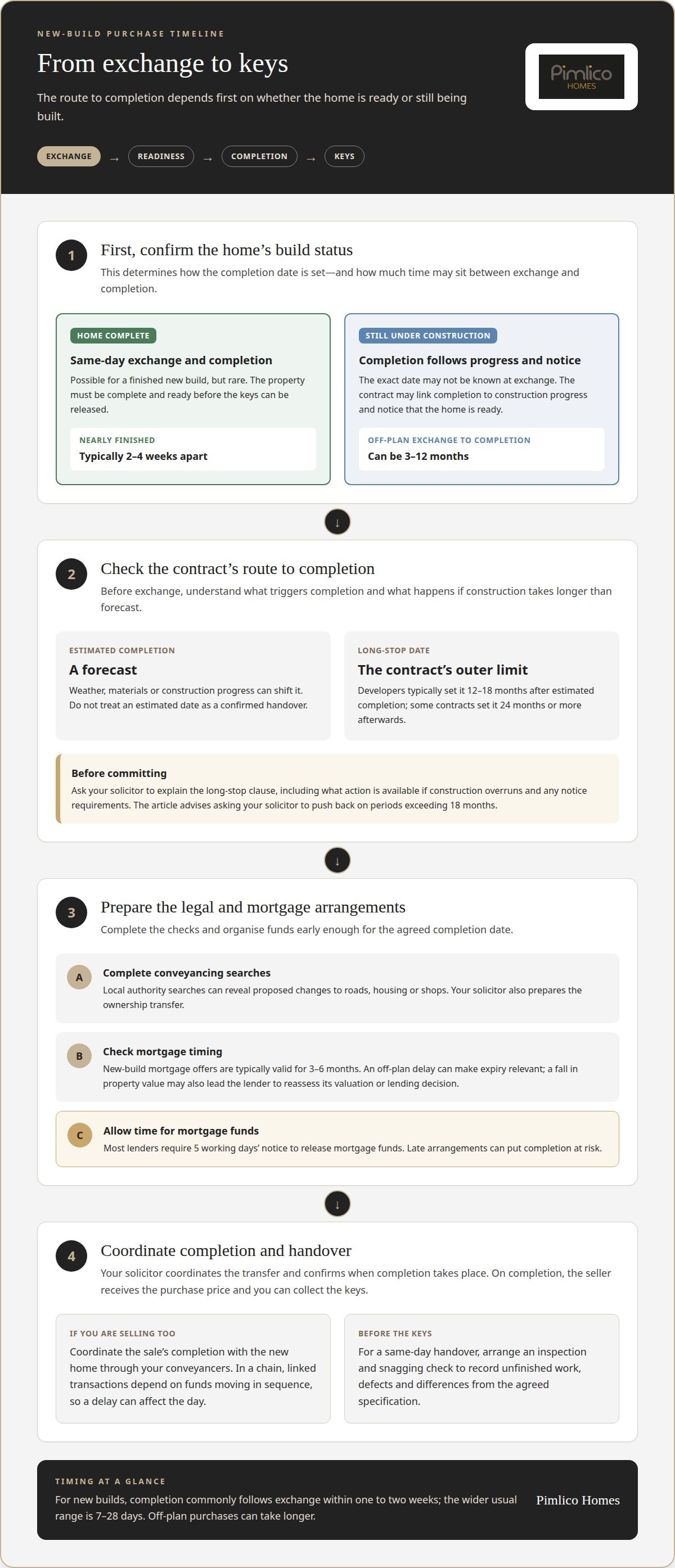
In England and Wales, exchange makes the sale legally binding; Scotland and Northern Ireland follow different conveyancing processes, so their stages and timings differ. For a new build, completion commonly follows exchange within one to two weeks, although the wider usual range is 7-28 days and off-plan purchases can take longer.
-
Review the developer’s contract documents
Read the draft contract and specification with your conveyancing solicitor before signing. Check that the purchase price, deposit, title details and completion arrangements match your agreement. Supporting documents may include ownership information and a fixtures, fittings and contents form.
For a new build, compare the written specification with the plans and schedules. Check how the contract deals with substitutions, such as a different finish or fitting, and whether the developer can make changes. Resolve unclear wording before exchange, when the agreed terms become binding.
-
Meet the requirements for exchange
Ask your solicitor to resolve outstanding enquiries before you commit. Exchange should wait until you are satisfied with the replies, any survey findings have been received and addressed as needed, and a formal mortgage offer is in place. The deposit and completion arrangements must also be ready.
Your solicitor checks the contract’s price, deposit amount and title deeds. Searches may include local authority information, which can reveal proposed changes to roads, housing or shops. For a new build, establish whether the home is complete or still under construction, as this affects how the completion date is set.
-
Sign and exchange contracts
Sign the contract and arrange the required deposit with your solicitor. The deposit amount for a new-build purchase can vary. In England and Wales, solicitors exchange contracts by telephone, confirming that both parties hold identical terms before dating them.
Exchange is the decisive step: the sale becomes legally binding, and withdrawing afterwards may mean losing the deposit and facing legal action. Before exchange, a buyer can withdraw without penalty. Your lender may require buildings insurance from exchange rather than completion, so arrange cover for the relevant date.
On completion, the seller receives the purchase price and you can collect the keys. Your solicitor coordinates the transfer and confirms when completion takes place. For a new build, the contract’s completion provisions determine how that date is reached.
Can you exchange and complete on the same day?
Yes. Same-day exchange and completion is possible for completed new-build homes, but rare. Before completion, arrange an inspection and snagging check to record unfinished work, defects and differences from the agreed specification. Understanding the exchange to completion process for new builds helps you schedule these checks around handover.
-
Exchange before the new build is finished
Confirm whether the property is complete before agreeing a completion date. If the home is still under construction, exchange can happen before its exact completion date is known. The contract may therefore link completion to construction progress and a notice that the home is ready.
Same-day exchange and completion is generally relevant to completed stock. For a nearly finished home, exchange and completion are typically 2-4 weeks apart. Off-plan buyers should understand the notice period and avoid assuming they can set the completion date. This is a key consideration when building your understanding of the exchange to completion process for new builds.
-
Complete searches and mortgage arrangements
Complete conveyancing searches and arrange mortgage funds before the completion date. Local authority searches can reveal proposed changes to roads, housing or shops. Your solicitor also prepares the ownership transfer and requests the mortgage advance from the lender.
New-build mortgage offers are typically valid for 3-6 months, so an off-plan delay can make expiry relevant. A fall in property value may prompt the lender to reassess its valuation or lending decision, affecting the funds available. Most lenders require 5 working days’ notice to release mortgage funds, making late arrangements a risk to completion.
-
Coordinate completion around the property chain
Buying a new build can avoid dependence on a chain of buyers and sellers, reducing the number of linked transactions involved in completion. Same-day moving remains uncommon for new builds, and the property must be complete and ready before the keys can be released.
If you’re selling another property, coordinate its completion with the new home’s date through your conveyancers. In a chain, each linked transaction depends on funds moving in sequence, so a delay can affect the whole day. Allow time for the mortgage advance and transfer rather than assuming an early handover.
Explore new build homes designed for considered living as you plan your next move.
Long-stop dates and delayed construction
For an off-plan home, distinguish the estimated completion date from the long-stop date. The first is a forecast; the second sets an outer limit in the contract.
- Ask your solicitor to explain the long-stop clause before you sign. Developers typically set this date 12-18 months after estimated completion, while some contracts set it 24 months or more afterwards. The clause should explain what happens if construction overruns, including the action available to you and any notice requirements. Your solicitor should push back on periods exceeding 18 months.
- Use the contract to understand how construction delays affect your plans. For off-plan homes where work is ongoing, exchange and completion can be 3-12 months apart. Weather, materials or construction progress can shift the forecast, so avoid treating an estimated date as a confirmed handover. Check how the developer must notify you when the home is ready.
- Resolve outstanding conveyancing points before exchange to avoid preventable delays. Your solicitor needs satisfactory replies to enquiries, relevant survey reports and a formal mortgage offer. The deposit and completion arrangements must also be ready. Missing documents, unresolved title questions or late mortgage arrangements can hold up exchange, even when construction is progressing.
- Keep your finances and completion steps aligned with any revised timetable. A delayed build can affect mortgage-offer validity and the date funds must be requested. Once completion occurs, your solicitor transfers ownership and arranges registration. In England, HM Revenue & Customs requires the Stamp Duty Land Tax return and any tax payment within 14 days of completion.
Wait for confirmation that completion has taken place before arranging to collect the keys. A revised build programme may also mean revisiting moving plans, insurance arrangements and the timing of funds. Keep the signed contract and notices together so the agreed dates and any changes remain clear.
New build warranties and deposit protection
Before completion, the home must be finished and safe to occupy. Ask your conveyancer which building-control documents and warranty evidence the contract requires for handover, and how these relate to completion.
- Read the reservation agreement before paying a fee. The fee is deducted from the final purchase price; establish how it will be accounted for under your agreement.
- Agree how the exchange deposit will be held and protected. Some developers accept a 5% deposit, but the contract should explain whether funds are held by a stakeholder or agent, when they can be released, and what happens if delays affect completion. Ask your conveyancer to explain the arrangement before you pay.
- Check the warranty provider and the exact deposit cover. New-build warranties such as NHBC or Premier Guarantee usually protect the full deposit against builder insolvency, although some cover only the first 10%. NHBC Buildmark deposit protection covers up to £100,000 or 10% of the purchase price, whichever is lower.
- Keep the reservation fee and exchange deposit distinct in your calculations. A £1,000 reservation fee is usually deducted from the exchange deposit. Confirm how the agreement applies that credit, then retain payment records and the warranty documents alongside your signed contract.
For NHBC-registered developers, the defect rectification period is typically two years. Review what the warranty covers and how to report defects, rather than assuming every issue is covered.
Explore new-build homes as you consider the purchase and its protections.
Pimlico Homes
If you are considering a new-build purchase, Pimlico Homes offers homes to explore, including The Collection, Pimlico Court and Brockbushes Farm. Its homes include luxury detached properties, executive courtyard homes, bespoke new builds and luxury barn conversions.
As you consider exchange and completion, the property’s construction stage, contract terms and warranty arrangements all shape the decisions ahead. Exploring a home early can help you understand its specification and development stage before progressing towards a purchase. Your conveyancer is responsible for explaining the legal documents and advising on the transaction; Pimlico Homes offers homes to consider as part of that decision.
For a considered conversation about your next home, contact Pimlico Homes.
Choose a home that fits what comes next
With a sound understanding of the exchange to completion process for new builds, you can turn your attention to the home itself: what kind of space will support the life you want to lead? The legal timetable is one part of the purchase. The design, setting and suitability of the property deserve equal thought.
Consider how you use shared and private spaces, the setting you want around you, and whether the home can accommodate changing routines over time. Pimlico Homes offers luxury detached homes, executive courtyard homes and bespoke luxury homes. Exploring these options can help clarify which features matter most to you. Keep your conveyancer involved as you move towards a commitment, so your decisions reflect the specific contract and property.
When you are ready to take the next step, contact Pimlico Homes to discuss your new build. A considered choice today can become the foundation for a home that feels right for years to come.
Frequently Asked Questions
What does my solicitor do on completion day?
Your solicitor coordinates the final transfer of funds and confirms when completion has taken place. The completion statement sets out the remaining money due, including any balance needed beyond your mortgage advance. Once the seller receives the purchase price, the keys can be released. Afterwards, your solicitor arranges registration of your ownership and handles the relevant tax return.
When do you pay a deposit on a new build?
The exchange deposit is due after contracts have been exchanged. Your solicitor will tell you how to send it and what amount the contract requires. For a new build, the typical exchange deposit is 10-30% of the purchase price, although some developers accept 5%. Keep the reservation fee separate in your records and follow the contract’s instructions on how it is credited.
How long does it take to buy a home?
The timeframe depends on the property’s construction stage and the contract. A new-build reservation period is usually 28 days, and exchange typically follows 14-28 days after reservation. Completion can then be 7-28 days after exchange. For an early off-plan purchase, exchange and completion may be 12-24 months apart, because completion waits for construction and notice that the home is ready.
Is the new build completion process straightforward?
The steps are structured, but a new build can involve timing considerations that a completed home does not. Your conveyancer needs the legal paperwork and searches in order, while the lender’s funds must be arranged for completion. For an off-plan property, construction progress and the contract’s notice terms also affect when you can move. A chain can add further coordination between transactions.
The Exchange Deposit: How Much and Where Does It Go?
Buyers typically pay 10-30% of a new build’s purchase price as the exchange deposit; some developers accept 5%. The contract should set out how the money is held and any protection that applies. For example, NHBC Buildmark deposit protection covers up to £100,000 or 10% of the purchase price, whichever is lower. Check the warranty terms against your deposit amount.
What Exactly Happens at Exchange?
In England and Wales, the solicitors exchange contracts by telephone, first confirming that both parties hold identical terms. They then date the contracts, making the sale legally binding. The exchange deposit becomes due after this point. Unresolved enquiries, survey matters or mortgage arrangements can affect readiness, so your solicitor should address outstanding issues before exchange.





