
Could the very documents designed to protect your luxury investment actually be the greatest barrier to your peace of mind? It’s a common frustration amongst owners of high-end properties. You’ve secured a masterpiece of modern architecture, yet the legal fine print often remains an opaque obstacle. We understand that your home is a significant life investment. The fear that a structural defect might one day impact its resale value, or the annoyance of persistent snagging issues, shouldn’t diminish the pride you feel in your residence. Mastery of your investment begins with understanding new build home warranties, viewing them as a blueprint for enduring excellence rather than a mere safety net.
This guide offers a refined approach to resolving these complexities. We’ve crafted this masterclass to replace confusion with clarity, ensuring you possess a sophisticated grasp of your ten-year protection. We’ll provide a methodical roadmap for resolving developer disputes without unnecessary stress, allowing you to act with the authority of an informed connoisseur. By the end of this article, you’ll have the tools to protect the longevity of your home and the serenity of your lifestyle.
Key Takeaways
- Learn to distinguish between standard home insurance and the comprehensive 10-year protection offered by a luxury structural warranty.
- Gain clarity on the two-phase protection system, ensuring you know exactly when the developer is directly accountable for every architectural detail.
- Empower your investment strategy by understanding new build home warranties as a sophisticated tool for resolving disputes and maintaining high-specification standards.
- Discover how to differentiate between natural building settlement and genuine structural defects that require professional intervention.
- Understand why a developer’s 25-year heritage provides a level of security and peace of mind that legal documents alone cannot match.
Defining the Scope: What is a Luxury New Build Home Warranty?
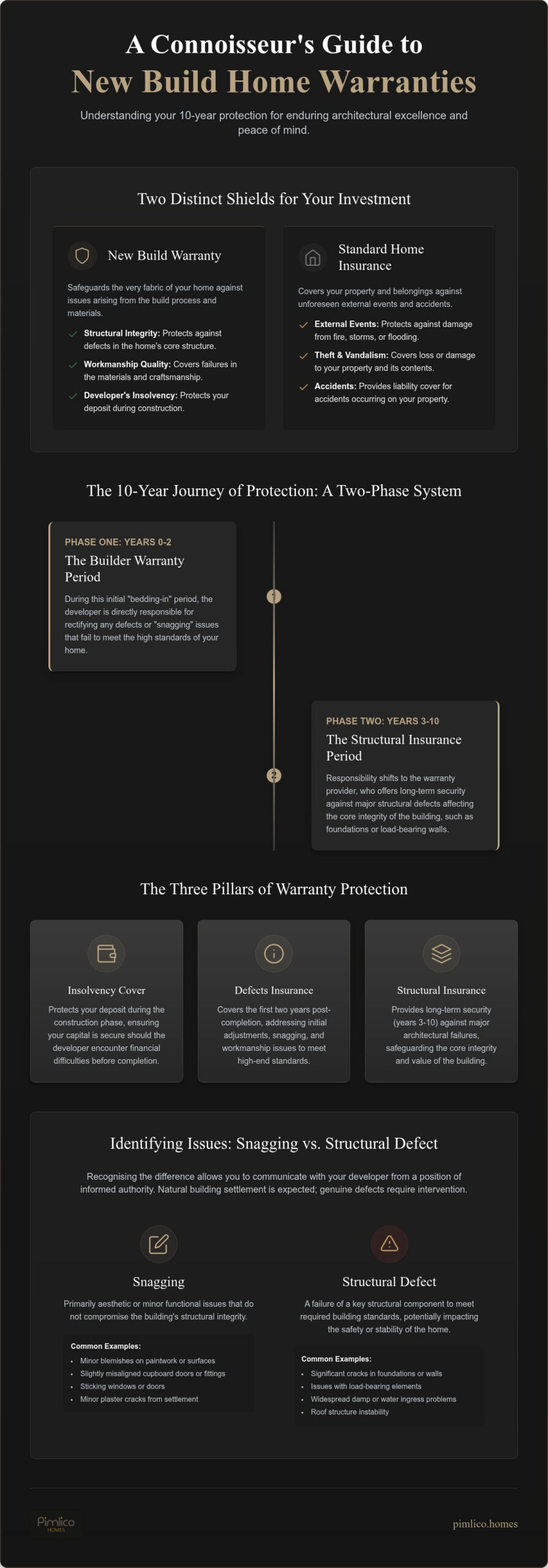
A luxury home is more than a residence; it’s a testament to architectural vision and meticulous craftsmanship. Yet, even the most carefully curated developments require a formal safety net to ensure their enduring excellence. Understanding new build home warranties allows you to appreciate this ten-year protection period against structural defects and workmanship failures. It’s often misunderstood as a simple extension of home insurance. However, whilst standard insurance protects you against external events like fire or theft, a warranty specifically safeguards the construction quality of the building itself. For the discerning homeowner, this document is a guarantee of structural integrity from the moment of exchange.
Securing the future of your property requires a deep dive into the legal framework that underpins your purchase. For those investing in bespoke luxury homes, this protection acts as a vital document for maintaining the resale value of luxury residential developments. It provides the confidence that the artistry of the build is matched by its permanence. When you’re understanding new build home warranties, you begin to see them as a seal of approval from independent inspectors who monitor the build at key stages. This oversight ensures that the hidden elements of your home, from the foundations to the load-bearing walls, meet rigorous industry standards.
The Three Pillars of Protection
The architecture of a warranty is built upon three distinct layers of security, each designed to protect your investment at different stages of its life cycle:
- Insolvency cover: This protects your deposit whilst the home is under construction, ensuring your capital remains secure should the developer face financial hardship before completion.
- Defects insurance: Usually covering the first two years, this phase addresses the initial period of “bedding in” and any minor adjustments required to meet high-end standards.
- Structural insurance: This provides long-term security against major architectural failures, lasting for the remainder of the ten-year term to safeguard the core integrity of the building.
Why Warranties Matter for Executive Homes
In the world of executive courtyard homes and detached developments, the standard for excellence is non-negotiable. A warranty ensures the high specification promised in the initial designs matches the physical reality of the finished build. It’s the difference between a house that looks beautiful and one that functions perfectly for decades. Beyond the physical structure, these documents play a quiet but essential role in the financial health of your investment. Lenders often require a recognised warranty to offer favourable mortgage rates for premium properties. This protection maintains the aesthetic and functional prestige of detached courtyard developments, ensuring that every unique feature, from bespoke masonry to intricate roofing, is backed by a professional guarantee of quality.
The Two-Phase Protection: Builder Warranty vs Structural Insurance
Moving into a new residence is a moment of profound significance. It marks the beginning of a legacy. To preserve this legacy, understanding new build home warranties requires a clear grasp of the “2+8” structure. This chronological divide dictates who is responsible for your home’s perfection at any given time. It’s a framework designed to provide continuous security, yet the nature of that protection evolves as the building settles into its environment. Managing your expectations after moving in starts with knowing exactly which phase of protection is active.
The first step in resolving any potential dispute is distinguishing between a “snag” and a “defect”. In the context of a high-end property, the line is often fine. A snag is typically an aesthetic issue, such as a minor blemish on a hand-polished surface or a slightly misaligned cupboard door. A defect, however, represents a failure of a component to meet the required building standards. Recognising this difference allows you to communicate with your developer from a position of informed authority. If you’re seeking a partner who views these standards as a starting point rather than a ceiling, you might explore our current collections to see how heritage informs every brick we lay.
Years 0-2: The Builder Warranty Period
During these initial twenty-four months, the developer remains the primary guardian of your home’s quality. They’re legally obliged to rectify defects resulting from a failure to meet agreed standards. This period is the most critical for buyers of luxury detached homes, where the complexity of the build demands a higher level of scrutiny. The developer’s remit covers the intricate systems that make modern living effortless. It includes everything from the silent operation of plumbing and electrical circuits to the seamless finish of bespoke joinery. If a fault arises, the developer is your direct point of contact for rectification.
Years 3-10: The Structural Insurance Period
As the home matures, the protection shifts from the developer to the warranty provider. The focus moves to the “bones” of the property. Foundations, load-bearing walls, and the intricate layers of the roofing system are the primary concerns during this phase. At this stage, the warranty provider typically takes over direct responsibility for repair costs related to major structural failures. It’s a period defined by long-term security, ensuring the architectural integrity of your investment remains intact. It’s vital to recognise the common exclusions, such as general wear and tear or a failure to maintain the property correctly. Understanding new build home warranties in this long-term context ensures you’re never caught off guard by the natural aging process of a premium building.
Identifying Common Defects and Snagging Challenges
A hand-crafted masterpiece requires a different level of scrutiny than a standard property. In a bespoke luxury home, the definition of “acceptable” is elevated far beyond the benchmarks of volume housing. You’ve invested in a vision of architectural excellence; therefore, every mitred joint and plaster finish must reflect that commitment. A deeper level of understanding new build home warranties involves recognising that these high-end structures undergo a period of maturation. As the building settles, minor adjustments are natural. However, this evolution should never compromise the aesthetic or functional integrity of your residence.
Identifying potential issues early is the most effective strategy for maximising resale value. Whilst some changes are expected, others require professional intervention. Common challenges often include settlement cracks in plasterwork, micro-adjustments in complex underfloor heating systems, or the precise calibration of external drainage. These aren’t necessarily signs of poor construction. Instead, they’re the intimate details of a building finding its rhythm. By addressing these nuances within the initial builder warranty period, you ensure the property remains a flawless asset for years to come.
The Snagging List: A Tool for Perfection
Precision is the hallmark of a prestige home. For executive properties, an independent professional snagging survey is a wise investment that provides an objective record of every detail. This document isn’t a list of complaints; it’s a roadmap to perfection. It’s helpful to categorise findings into three distinct areas: aesthetic finishes, functional performance, and urgent safety concerns. Once your list is compiled, organising a formal walkthrough with your developer ensures mutual agreement on the path forward. This collaborative approach, rooted in understanding new build home warranties, allows for a methodical resolution that respects the artistry of the build.
Latent Defects: The Hidden Risks
Some challenges only reveal themselves as the seasons pass. Latent defects are issues that may not appear until several years into the structural insurance period, often relating to the core fabric of the building. These might include subtle failures in weatherproofing or structural movement that wasn’t apparent during the initial handover. Maintaining a meticulous maintenance log is essential here. It proves the home has been cared for correctly, making it easier to demonstrate that any emerging fault is a construction defect rather than a result of neglect. Protecting the long-term prestige of exclusive residential developments requires this forward-thinking vigilance, ensuring the home’s legacy remains untarnished.
How to Resolve Disputes with a Property Developer Step-by-Step
Your home should be a sanctuary of calm. It’s a place where architectural vision meets personal legacy. When a defect threatens this tranquility, resolving the issue requires a methodical blend of firm evidence and professional communication. The objective isn’t merely to fix a fault. The goal is to restore the property to its intended high-specification standard, ensuring your luxury new build remains a source of pride rather than a source of stress. Acting with precision and poise ensures that the prestige of your investment is never compromised.
Meticulous record-keeping is the foundation of a successful resolution. You must maintain a comprehensive paper trail of all “formal notifications” sent to the developer, including dates, photographs, and descriptions of the issues. Understanding new build home warranties means knowing that these records are your most powerful tool during mediation. If you’re currently considering a move and value a developer who prioritises transparent communication, you might view our executive developments to see how we uphold these standards from day one.
Step 1-3: Formal Notification and Mediation
The journey to rectification begins with clear, documented communication. Follow these initial steps to initiate the process:
- Step 1: Issue a formal written notice of the defect to your developer. Be specific. Reference the exact clause in your warranty document that you believe has been breached to establish a clear legal footing.
- Step 2: Allow the developer a reasonable timeframe to respond. The industry standard is typically 28 days for them to propose a formal programme of works. This period allows for a professional assessment of the requirements.
- Step 3: Utilise the warranty provider’s independent dispute resolution service if progress stalls. These services are designed to provide a fair, objective middle ground without the need for immediate escalation.
Step 4-5: Escalation to the Ombudsman and Legal Recourse
Should the initial mediation fail to produce a satisfactory result, more formal channels are available. Understanding new build home warranties includes knowing when to escalate. Step 4 involves contacting the New Home Ombudsman Service. They can provide an independent, legally binding ruling that developers must follow. This service acts as a guardian of consumer rights within the construction industry. Finally, Step 5 is to seek specialist construction law advice. This should remain a final resort, reserved for high-value claims where structural integrity is at significant risk. Throughout this process, the Consumer Code for Home Builders remains a vital framework, enforcing the high standards of behaviour expected from premium developers.
Beyond the Paperwork: Why the Developer’s Heritage is Your Best Warranty
A warranty is a legal necessity; however, a developer’s reputation is a moral commitment that transcends the fine print. Whilst understanding new build home warranties provides you with an essential framework for protection, the most profound security comes from the character of the artisan. Choosing a builder with a 25-year history of excellence significantly reduces the likelihood of ever needing to invoke a claim. We believe that the best developers don’t view the completion of a build as an end point. Instead, they see the post-handover period as a unique opportunity to cement a lifelong relationship based on mutual respect and shared pride.
Refined living is built on a foundation of trust. It’s the silent assurance that every beam, brick, and bespoke finish has been executed with meticulous care. When you invest in a property of this calibre, you aren’t just buying a structure. You’re becoming the custodian of a vision. This vision is protected not just by insurance policies, but by the integrity of a creator who remains deeply invested in your long-term satisfaction. Understanding new build home warranties allows you to appreciate the legal safety net, but it’s the developer’s heritage that ensures the excellence of the build itself.
The Pimlico Homes Standard
Our executive courtyard homes are designed to exceed the minimum requirements of any standard warranty. We view these legal benchmarks as a baseline, not a goal. Our approach to snagging is a proactive commitment to perfection, where we identify and rectify nuances before you even receive the keys. It’s about more than construction. It’s about acknowledging the emotional weight of your investment and providing the peace of mind that only comes from a guardian of quality who truly cares about the human experience within the home.
Securing Your Future
A well-maintained, warranted home is an asset that outlasts its initial ten-year protection period. The connection between developer heritage and the enduring allure of luxury detached living is undeniable. A property built with longevity in mind retains its architectural prestige and functional excellence for generations. As you move forward, remember that your choice of developer is the most significant decision you’ll make. We invite you to explore our current developments and experience the difference of a vision that is quite simply built to last.
Securing the Future of Your Architectural Legacy
Your home is a sanctuary. It’s a physical manifestation of your success and a vessel for future memories. Mastery of your investment relies on understanding new build home warranties, yet as we’ve explored, the most robust protection is found in the integrity of the builder. By navigating the distinct phases of protection and maintaining a professional dialogue, you ensure your residence remains a flawless asset. True peace of mind isn’t found in a legal document alone. It’s born from 25 years of uncompromising craftsmanship and a legacy of exclusive residential developments. Sophisticated design tailored for the executive market requires a guardian who views quality as a moral obligation rather than a simple contractual requirement. We invite you to explore our vision for luxury detached homes and discover the Pimlico Homes difference. Your journey toward a permanent, expertly crafted residence begins with a partner who values the emotional weight of your investment. Step into a future where excellence is the standard and every detail is a testament to artistry.
Frequently Asked Questions
What does a 10-year new build warranty actually cover in a luxury home?
A ten-year warranty primarily safeguards against structural defects and workmanship failures that compromise the building’s integrity. During the initial two-year period, the developer remains responsible for almost every component, from the electrical systems to the bespoke joinery. For the remaining eight years, the policy shifts to structural insurance, focusing on the foundations, roofing, and load-bearing walls. This ensures the architectural core of your investment remains secure for the long term.
Is a professional snagging survey worth the cost for a bespoke new build?
Investing in a professional snagging survey is a prudent step for any executive property owner. Whilst our own standards are exceptionally high, an independent expert provides an objective audit of the high-specification finishes you expect. This document acts as a definitive roadmap for perfection. It removes the subjectivity from discussions about quality, ensuring that every mitred joint and plaster finish meets the elite standards of a bespoke residence.
How long does a developer have to fix snags after I move in?
Developers are typically expected to respond and propose a programme of works within 28 days of receiving a formal notification. Whilst minor snags are often resolved quickly, bespoke components may require a longer lead time for sourcing and installation. Maintaining a clear, dated paper trail of all communications is essential. This methodical approach ensures that understanding new build home warranties leads to a swift and satisfactory resolution of any outstanding issues.
What happens to my warranty if the property developer goes bust?
Your protection remains intact even if a developer ceases trading. The warranty provider, such as the NHBC or ICW, steps in to honour the remaining terms of the policy. This is why the insolvency cover pillar is so vital during the construction phase. It provides a layer of financial security that safeguards your capital and ensures the long-term structural integrity of the building is never left to chance, regardless of the developer’s status.
Can I still claim on the structural insurance if I am not the first owner?
The warranty is tied to the physical structure of the home rather than the individual purchaser. It transfers automatically to any subsequent owners within the ten-year protection window. This transferability is a significant factor in maintaining the resale value of luxury properties. Prospective buyers gain immediate peace of mind knowing the building’s structural history is backed by a professional guarantee, regardless of how many times the title has changed hands.
What is the difference between the Consumer Code and the New Home Ombudsman?
The Consumer Code for Home Builders establishes the mandatory requirements that developers must meet during the marketing and selling process. In contrast, the New Home Ombudsman Service offers a formal, independent route for resolving disputes that arise after you’ve moved in. If a developer fails to meet their obligations, the Ombudsman has the power to issue legally binding rulings and award compensation, providing a robust layer of consumer protection for homeowners.
Are appliances and interior finishes covered by the 10-year structural warranty?
Standard structural warranties don’t cover domestic appliances or decorative finishes for the full ten years. Manufacturers provide their own guarantees for items like ovens or cooling systems, whilst aesthetic finishes are usually only covered during the initial two-year builder warranty period. Understanding new build home warranties involves recognising that the long-term focus is on the bones of the property. This ensures the structural artistry of your home endures long after the initial decor has matured.
How do I officially start a dispute resolution process with a builder?
The process begins with a formal written notice sent directly to the developer’s registered office. You should clearly detail the defect and reference the relevant section of your warranty agreement. If the issue remains unresolved after eight weeks, you can then approach your warranty provider to initiate their independent dispute resolution service. This structured escalation path is designed to achieve a fair outcome whilst maintaining a professional relationship with your builder throughout the rectification process.


