
Could placing a home in a trust give your child a secure start, or add a layer of control between them and the property? For families searching for luxury home developments, the distinction matters: a trust changes who holds legal title and how decisions about the home are made. It is not simply a different name on the paperwork.
It is understandable to want both a lasting gift and confidence that the property will be managed in your child’s interests. A trust can also bring tax, mortgage and administration considerations, and the implications depend on its structure and your family’s circumstances. Buying personally or gifting funds may lead to different outcomes.
This guide from Pimlico Homes explains the broad differences between trust ownership, personal purchase and gifting, including how bare and discretionary trusts can affect control. It also sets out questions to resolve before proceeding, from who will manage the property to how purchase funding and ongoing costs will work. Use it to prepare for a significant family decision, then seek tailored legal and tax advice before choosing a route.
Key Takeaways
- Clarify the purpose of the purchase first. A trust can shape who manages the home and how decisions are made for the beneficiary.
- Understand how trustees, beneficiaries, conveyancers and lenders may each contribute before setting the purchase in motion.
- Compare trust ownership with buying personally or gifting funds, weighing control, administration and the child’s rights.
- Use a practical checklist to separate decisions about the home’s future use from legal, tax and funding questions that need specialist advice.
- When exploring luxury homes, consider which property could suit your child’s future needs, including detached, courtyard and bespoke options from Pimlico Homes.
Can a Trust Buy a House for a Child? Start with Ownership and Purpose
Securing a home for a child is both a property decision and a family-planning decision. Before looking at homes, decide who should hold legal ownership, who will manage the property and what benefit the child is meant to receive. A trust can provide a framework for that plan, but it does not automatically give parents ongoing control or a right to live in the home.
A trust is an arrangement in which trustees hold or manage assets for one or more beneficiaries, according to the trust’s terms. The person creating or funding it, the trustees and the beneficiaries can have distinct roles. For a straightforward overview of these roles, see what is a trust. The precise rights and responsibilities depend on the trust deed, the type of trust and applicable law.
Who owns and controls a home held in trust?
Trustees generally hold the legal title to property on the trust’s behalf. A child may have a beneficial interest, which means they can benefit from the home or its value under the deed without holding legal title themselves. These forms of ownership are connected, but they are not interchangeable.
Trustees must follow the deed and their applicable duties when managing trust property. Depending on the arrangement, their responsibilities may include decisions about occupation, maintenance or a future sale. Parents who establish or fund a trust should not assume they can direct every decision. Their authority depends on whether they are trustees and on the powers set out in the deed. Trust ownership alone does not give a parent the right to occupy the property.
What does it mean for the child to be a beneficiary?
Being named as a beneficiary does not always mean a child can immediately live in, sell or make decisions about the property. Their rights depend on the trust terms and their circumstances, including age. Some arrangements may give a beneficiary a defined entitlement, while others leave trustees discretion over when or how benefits are provided. The deed should make these distinctions clear.
Before transferring funds or beginning a property purchase, ask a solicitor to explain who will hold title, what rights the child will have, who can make decisions and how the arrangement may change as the child grows older. Tax and mortgage considerations also depend on individual circumstances and the proposed structure, so obtain relevant specialist advice before committing.
Once the ownership and purpose are clear, shape the property search around the child’s likely needs and the family’s long-term intentions. The right home is not only an asset, but a place intended to support the next stage of family life.
How Trust Ownership Works During a Home Purchase
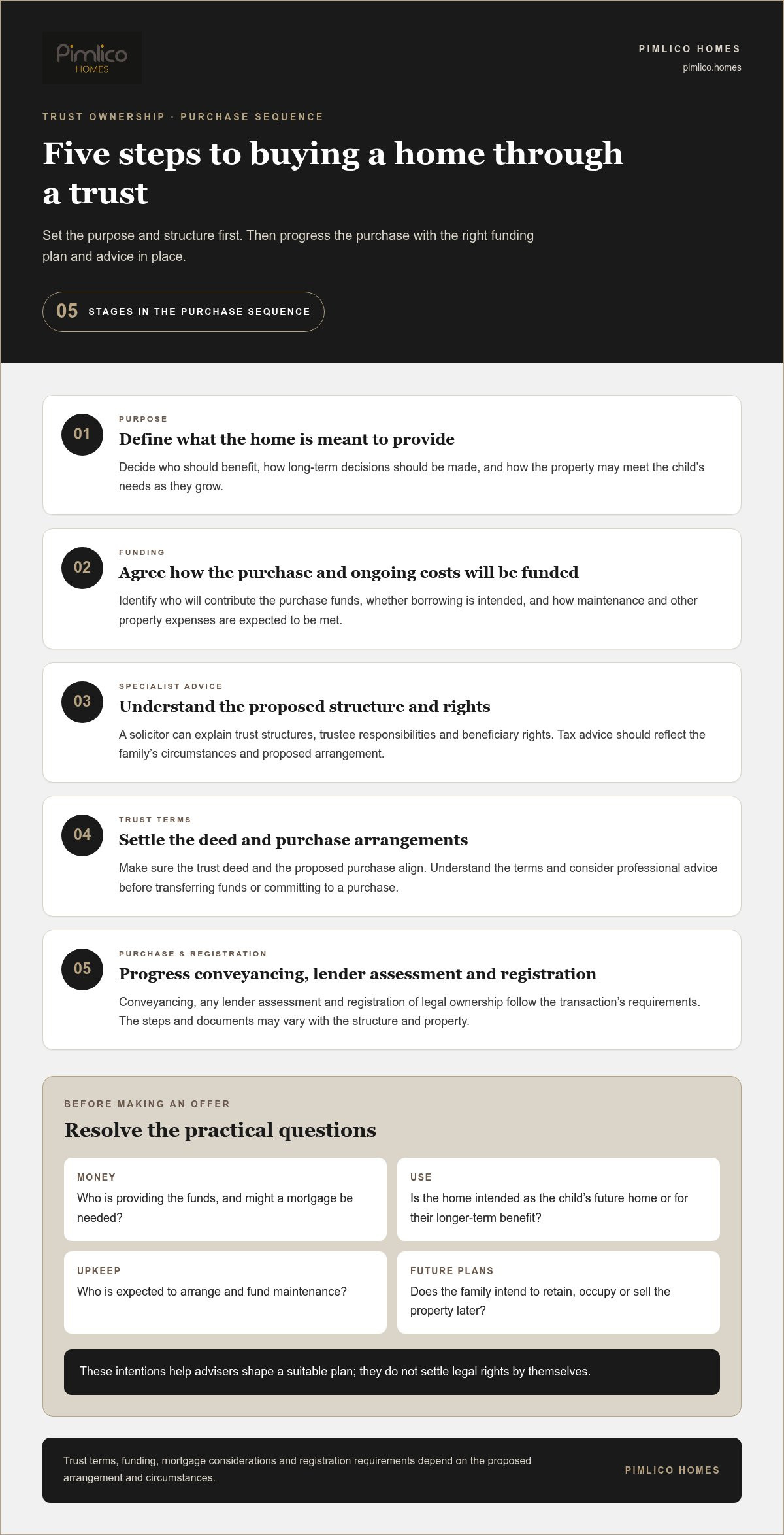
A trust-based purchase is best approached in a deliberate sequence. The family’s purpose informs the structure, and the structure shapes how the transaction proceeds. Resolve key questions before making an offer so the proposed ownership reflects the child’s needs and the family understands the process.
- Define the purpose. Decide what the home is intended to provide, who should benefit and how long-term decisions should be made. Consider the child’s likely needs as they grow, alongside the family’s intentions for the property.
- Agree the funding plan. Identify who will contribute the purchase funds and whether borrowing is intended. Discuss how ongoing costs, including maintenance and other property expenses, are expected to be met.
- Obtain legal and tax advice. A solicitor can explain possible trust structures, trustee responsibilities and beneficiary rights. Tax advice should be tailored to the family’s circumstances and proposed arrangement.
- Settle the trust structure before proceeding. The trust deed and purchase arrangements need to align. Avoid transferring funds or committing to a purchase until the family understands the proposed terms and has considered professional advice.
- Progress the purchase and registration. Conveyancing, any lender assessment and registration of legal ownership then follow the transaction’s requirements. The steps and documents may vary with the structure and property.
What should the family decide before making an offer?
Be clear about who is providing the money, whether a mortgage may be needed and how the home will be used. A property intended as the child’s future home raises different practical questions from one held for their longer-term benefit. Decide who is expected to arrange and fund upkeep, and whether the family intends to retain, occupy or sell the property later. These intentions help advisers shape a suitable plan, but do not settle the legal rights by themselves.
What happens during conveyancing and registration?
Conveyancers handle the legal work for the purchase and establish relevant details. These may include the buyer’s identity, the trustees’ authority to act and the source of purchase funds. The precise information and documents required depend on the transaction. Where trustees hold legal title, HM Land Registry records that ownership in accordance with the applicable registration process. The conveyancer can confirm the requirements for the particular purchase.
If borrowing is proposed, raise the trust structure with prospective lenders early. Mortgage availability and lending criteria can depend on the arrangement, the parties involved and the property, so do not assume a standard residential mortgage will apply. For families also considering luxury home developments North East, settling the ownership plan early helps keep the legal process aligned with the choice of home. Explore luxury homes from Pimlico Homes as you consider which property may suit your child’s future.
Trust, Personal Ownership or a Gift: Which Route Fits the Family?
A trust is one way to arrange ownership, not a universal shortcut to lower tax or fewer complications. Buying personally and giving money to a child are distinct alternatives, each with different implications for control, administration and the child’s rights. Start by defining the family’s purpose, then consider how each route may work in practice.
| Route | Control and beneficiary rights | Administration and advice |
|---|---|---|
| Trust ownership | Trustees manage the property under the trust terms. The child’s rights depend on the deed and arrangement. | Trustees have ongoing responsibilities. Legal, tax and, where relevant, mortgage advice should consider the specific structure. |
| Adult buying personally | The adult is the legal owner and generally makes decisions directly. The child does not automatically own the home because it is intended for their benefit. | There may be fewer trust-specific administration tasks, but ownership, inheritance, tax and future transfer questions still need consideration. |
| Gifting funds | The donor gives money rather than retaining ownership of a home through a trust. Who controls a property bought with the funds depends on who buys it and the arrangements made. | The gift may have tax and family-governance consequences. Advice should clarify the intended recipient, terms and effect before funds are transferred. |
How does a trust differ from buying in a parent’s name?
With a trust, trustees act under the trust’s terms and responsibilities. A parent who buys personally holds the property directly and may have more immediate control over decisions, but that ownership also forms part of their personal circumstances. Inheritance, tax and succession outcomes depend on the facts and should be reviewed against current HMRC guidance. Neither route guarantees a particular tax result or resolves future family decisions by itself.
Could gifting money be simpler than buying through a trust?
A gift involves a different ownership structure, but it is not automatically a substitute for a trust. Once funds are given, the donor may have less control over their use, while the recipient’s age and circumstances can affect how a purchase is arranged. A gift may also raise tax questions. Compare the options with qualified legal and tax advisers before committing, as the implications depend on the details.
For families exploring luxury home developments North East, first decide what the home should mean for the child and how the family intends to manage it. The property choice and ownership route should fit together, but neither should be selected on the assumption that one option is always simpler or more favourable.
A Practical Checklist Before Buying a Home Through a Trust
A clear plan brings the family’s intentions, the trust arrangements and the property choice into focus. Work through these questions before progressing towards a purchase. They are prompts for discussion, not a guarantee of a particular legal, tax or financial outcome.
What should the trust deed and family plan address?
- Purpose and beneficiaries: Record what the home is intended to provide and who may benefit. Consider how the plan should account for the child’s changing needs over time.
- Trustee powers: Clarify who will make decisions, what authority trustees have and how disagreements or major decisions will be handled under the arrangement.
- Funding and costs: Identify the source of purchase funds and how ongoing expenses, including maintenance and insurance, are intended to be met.
- Occupation and future plans: Set out the intended approach to use of the property and consider what may happen if circumstances change, including a future sale or transfer.
A solicitor should draft or review the deed for the family’s circumstances. Broad intentions alone may not resolve how decisions are made or what rights beneficiaries have.
“Settle the trust structure before contracts progress.” This gives the family and its advisers an opportunity to align the ownership plan with the proposed purchase before commitments are made.
What property details matter when buying for a child?
Assess the home for the child’s needs now and as they grow. Consider layout, accessibility and whether the spaces could suit changing routines or future independence. Look beyond first impressions: review the specification and purchase documents as part of ordinary property due diligence, with conveyancing advice on the transaction.
For further property-focused considerations, read the luxury new-build buying guide. It can help families assess the home while their legal and tax advisers address the trust arrangement.
Keep the questions distinct: property suitability and specification guide the search; trust terms, tax treatment, funding and any borrowing require tailored professional review. Families considering luxury home developments North East can use this separation to connect the choice of home to the child’s future without assuming the ownership structure dictates which property is right.
Once the family has clarified its priorities, explore luxury homes from Pimlico Homes as part of the property search.
Choosing a Luxury Home for a Child: Turning the Plan into a Purchase
A considered purchase brings two decisions together: what the family intends the home to provide, and how ownership will be arranged. Define the family objective first, take legal and tax advice on the proposed structure, then assess homes against the child’s needs. Keep those conversations distinct. A property’s design and specification do not determine whether a trust or another ownership route is appropriate.
Match the property type to the child’s future needs
Think beyond the child’s present circumstances. A layout that works well now may need to accommodate greater independence later. Consider how the arrangement of living spaces, privacy and outdoor space could support the intended resident over time, then identify which features matter most to your family.
Luxury detached homes and executive courtyard homes offer different forms of residential setting. The right category depends on the needs and preferences being planned for, rather than an assumption that one type suits every child. For a closer look at this property style, read the executive courtyard homes guide.
Pimlico Homes develops and sells luxury detached, executive courtyard and bespoke homes, alongside luxury barn conversions. These property types offer different possibilities to consider as a family defines its priorities. Assess each home against the child’s circumstances and the family’s ownership plan.
What are the next steps for an informed purchase?
Keep the order clear. Write down what the family wants the home to achieve, establish the proposed ownership and funding arrangements with qualified advisers, then explore properties against the child’s current and future needs. Before proceeding, ensure the family understands how the intended use of the property fits with the agreed arrangements.
Assess a home’s layout, privacy, outdoor space and specification on their own merits. Direct legal and tax questions to the relevant advisers. A property’s design cannot answer them, and design decisions should not be treated as legal or financial advice.
For families researching luxury home developments North East, a well-judged purchase begins with clarity about both the person who will benefit and the home intended to support them. Once the family’s objectives and ownership advice are in place, you can explore Pimlico Homes and its luxury residential developments as part of your property search.
Make a Considered Start to Your Child’s Future Home
A trust can shape who owns and manages a property, but it is not simply a different name on the purchase. The trust deed, beneficiary rights and family’s objectives all matter. Compare trust ownership with buying personally or gifting funds, and seek tailored legal and tax advice before committing. That preparation can help align the ownership plan with the choice of home.
Then consider what the child may need from the property over time: a thoughtful layout, privacy, outdoor space or room for changing circumstances. Families exploring luxury home developments North East can consider different residential possibilities with those priorities in mind.
Pimlico Homes develops luxury residential properties, including detached, courtyard, bespoke and barn-conversion homes. Explore Pimlico Homes’ luxury residential developments as you consider a home that could become a meaningful part of your child’s future. Start your property search with a clear sense of purpose, alongside advice on the ownership arrangements.
Frequently Asked Questions
Can a trust buy a house for a child?
A trust may be used to hold or manage a home for a child, depending on its terms and the family’s circumstances. Trustees generally hold legal title and must act under the trust’s terms and applicable duties. The child’s rights depend on the trust structure and deed. Obtain tailored legal and tax advice before proceeding, since requirements and consequences can differ between arrangements.
Who owns a house bought in trust for a child?
The trustees generally hold the legal title on behalf of the trust, while the child may have a beneficial interest under its terms. These are distinct concepts: a child may benefit from a property without controlling every decision about it. The deed, trustee powers and applicable law shape the arrangement. Do not assume a parent, trustee or child has unrestricted ownership or decision-making authority.
Is buying a house through a trust tax-efficient?
Not automatically. Tax treatment depends on factors such as the trust type, who provides the funds, the beneficiaries and later events, including occupation or sale. Inheritance Tax, Capital Gains Tax and property transaction taxes may all require consideration, but the outcome depends on the circumstances and rules in force. Ask a qualified tax adviser to assess the proposed structure before relying on any expected tax benefit.
Can a child live in a house owned by a trust?
A child may be able to live in a trust-owned home, but occupation should be considered alongside the trust deed, trustee duties and relevant tax rules. The arrangement may also affect how the property is managed and who meets its costs. Beneficiary status alone does not necessarily give a child an automatic right to occupy the home. Seek advice based on the particular trust and family circumstances.
Can you get a mortgage to buy a house through a trust?
Borrowing may be more complex when trustees are buying or holding a property, and lender criteria depend on the proposed structure and parties involved. Do not assume an ordinary residential mortgage will apply. If borrowing is intended, raise it early so the conveyancer and relevant finance professionals can consider the arrangement before you make commitments or exchange contracts.
What happens when a child reaches adulthood if a house is held in trust?
The outcome depends on the trust terms, the beneficiary’s rights and applicable legal rules. A child may gain rights to benefit from or control trust assets at a specified point, but there is no single outcome for every trust. The deed should explain how decision-making, occupation and any future transfer or sale will be handled as the child grows older. Have a solicitor explain these provisions.
Should I buy a home for my child personally or through a trust?
Neither route is universally best. Personal ownership may allow an adult to make decisions directly, while a trust establishes a framework for trustees to manage property for beneficiaries. The routes can have different legal, tax, lending and administration implications. Compare them against your family’s objectives with qualified advisers, then assess the home separately for its suitability, design and intended use over time.





