
Before completion, the builder is responsible for putting right snags identified in a new-build home. If you’re asking who is responsible for fixing snags before completion, the practical answer is the builder or developer responsible for the work. Defects should be addressed before the sale completes, while issues that emerge after completion generally fall within the developer’s two-year customer care period.
It’s natural to want every detail resolved before moving in. The key distinction is when an issue is found: pre-completion, post-completion and end-of-customer-care inspections each serve a different purpose. This guide explains who is responsible at each stage, what builders are expected to address during the first two years, and how to record and report snags clearly, including when each issue was raised.
Key Takeaways
- Before completion, record visible defects clearly so the builder can address them before you move in.
- Understand how responsibility changes after completion, including the developer’s two-year customer care period.
- Keep dated photographs and written records of reported issues and any responses you receive.
- Use the right inspection stage to identify emerging defects and raise unresolved items in good time.
1. Pre-Completion, Post-Completion & End of Customer Care Period Snagging Inspections – What’s the Difference?
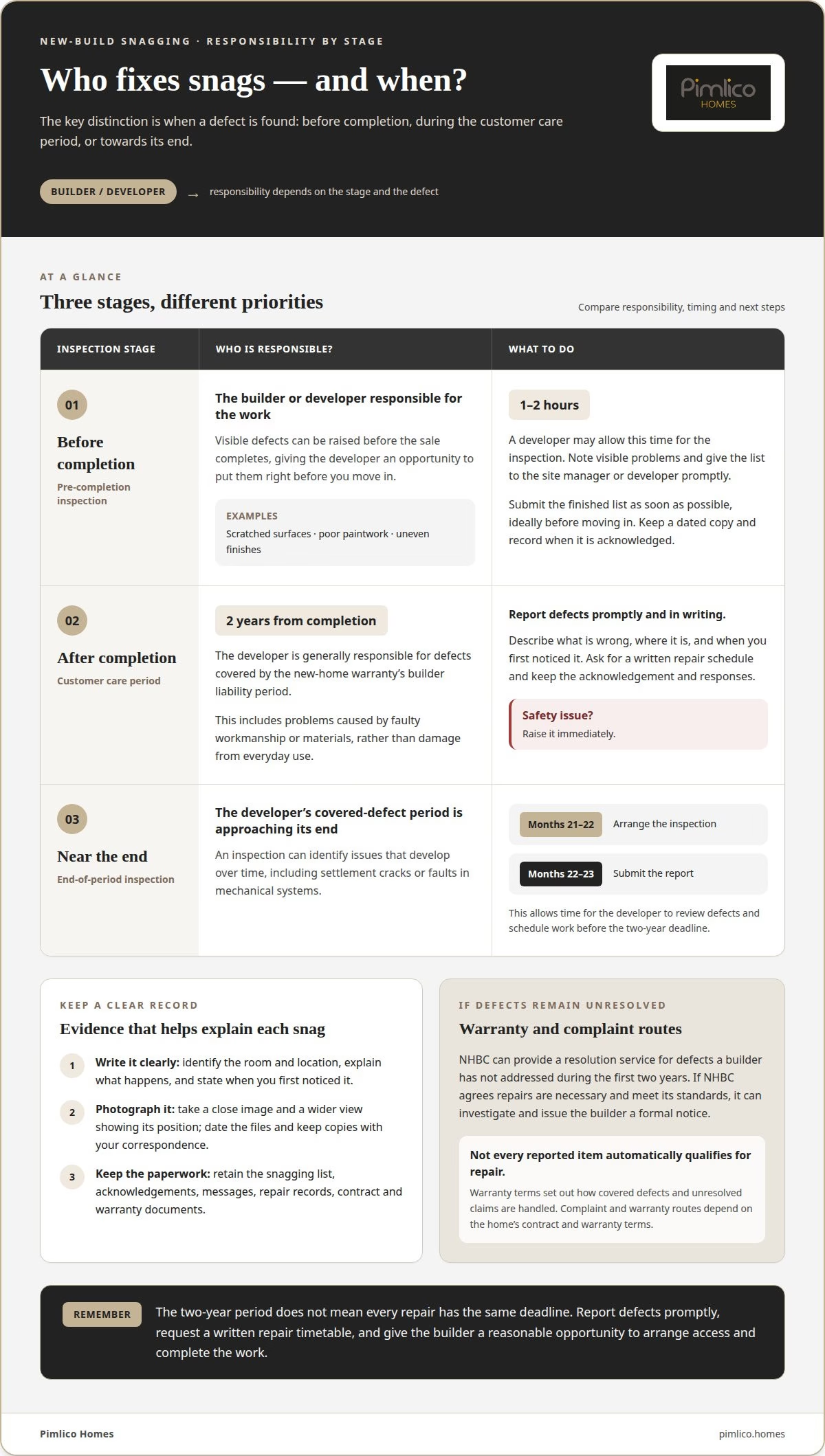
For buyers asking who is responsible for fixing snags before completion, the answer is the builder or developer responsible for the work. A pre-completion inspection identifies visible defects, such as scratched surfaces, poor paintwork or uneven finishes. Raising these issues before the sale completes gives the developer an opportunity to put them right before you move into your new-build home.
After completion, responsibility follows a different timetable. The developer is generally responsible for covered defects during the two-year period from completion, often called the builder liability period or customer care period. Report defects promptly and in writing so there is a clear record and the developer can arrange repairs. Raise any serious safety issue immediately.
Timing matters at the end of this warranty period. Arrange an inspection around 21-22 months after completion, then submit the report in months 22-23. This allows time for the developer to review defects and schedule work before the two-year deadline. An inspection can reveal issues that emerge over time, including settlement cracks or faults in mechanical systems.
NHBC can provide a resolution service if a builder does not address defects during the first two years. If NHBC agrees repairs are necessary and meet its standards, it can investigate snagging items and issue the builder a formal notice. This process supports resolution, but not every reported item automatically qualifies for repair.
Construction contracts also use the term “defects liability period”. It generally begins when practical completion is certified and allows the contractor to return to address defects that appear afterwards. This differs from a homebuyer’s warranty period after purchase. Across Great Britain, inspection stages are broadly similar, but warranty and complaint routes depend on the home’s contract and warranty terms. Review those documents before reporting a defect.
2. Builder responsibilities during the first two years
For two years from completion, the developer is generally responsible for defects covered by the new-home warranty’s builder liability period. This includes problems caused by faulty workmanship or materials, rather than damage from everyday use. Before completion, buyers can raise visible defects with the developer and ask how they will be addressed. When reporting a defect that may breach those standards, describe the issue clearly.
How long do UK developers have to fix snagging issues? The builder liability period is two years from completion, but this does not mean every repair has the same deadline. Report defects promptly and ask for a written repair schedule. The issue’s seriousness, the work involved and access to the property can affect when repairs are arranged.
Before completion, a developer may allow 1-2 hours for inspection. Use that visit to note visible problems and give the list to the site manager or developer promptly. The New Homes Quality Board sets out a standard checklist for pre-completion inspections, helping buyers organise observations rather than rely on memory. Submit the finished list as soon as possible, ideally before moving in.
Keep a dated copy of the snagging list and record when the developer acknowledges it. If no repair timetable is provided, request one in writing. Clear records help you follow up while preserving the details of each reported item. Give the builder a reasonable opportunity to arrange access and complete the work.
NHBC Buildmark is a new-home warranty, and other providers, including Premier Guarantee, also offer warranty cover. The first two years are the builder liability period; warranty terms explain how covered defects and unresolved claims are handled. Read the policy terms before relying on a warranty claim, and retain correspondence showing what the developer has addressed.
3. Evidence and practical steps for resolving snags
After completion, send the developer a written snagging list through its formal complaints procedure. Describe each fault by room and location, explain what happens, and state when you first noticed it. For example, write “water appears beneath the kitchen sink when the tap runs” rather than simply “leak”. This gives the developer a clear starting point for investigating and arranging repairs.
Photographs provide useful evidence. Take a close image of the fault and a wider one showing its position in the room; date the files and keep copies with your correspondence. A short video can demonstrate an intermittent problem, such as a door that sticks when closed. Keep the contract and warranty documents together, as they set out the relevant standards and complaint process.
A thorough inspection can cover more than cosmetic finishes. Test taps, toilets, heating, sockets, doors and windows, recording what works and what does not. An independent snagging survey may identify workmanship faults or potential Building Regulations issues. Some post-completion inspections also use thermal imaging to examine insulation or heating performance where visual checks alone may not reveal a problem.
What is the process for getting a builder to fix snags after completion? Submit the list in writing under the developer’s complaints procedure, keep its acknowledgement, and request a repair timetable. If the developer acknowledges the defects but gives no timeframe, follow up in writing every two weeks and keep each response.
Serious faults that could affect safety need immediate attention. For other items, organise evidence by room and distinguish urgent functional problems from minor finish issues. If a complaint against a developer registered with the New Homes Quality Board remains unresolved after eight weeks, the dispute can be referred to the New Homes Ombudsman service. Keep the inspection report, photographs, dated messages and repair records together so the sequence is clear if the matter proceeds to independent resolution.
4. How should buyers document and report snags before completion?
During the pre-completion inspection, record each snag as a separate entry. Identify the room, exact location and visible problem, such as a chipped tile beside the bathroom basin. Add a dated photograph showing both the defect and its position. Clear descriptions help the builder understand what needs attention, unlike a general note such as “poor finish”.
Type the snagging list and send it to the builder’s head office, keeping a copy for your records. Include your name, property address and inspection date, then request written acknowledgement. If you’re unsure whether an issue belongs on the list, ask the site manager to clarify it. Record the response against that item rather than relying on a verbal conversation.
Keep the evidence together. Save the original photographs, submitted list and any acknowledgement or repair updates in one dated folder. For example, if a window handle does not operate smoothly, identify the window and describe what happens when you use it. This specific record helps distinguish the reported fault from damage or a different problem identified later.
Timing and inspection conditions matter. The snagging inspection should take place after the builder has cleaned the property, removed protective materials and switched on full, permanent lighting. These conditions make surface defects easier to see and help ensure the record reflects the finished space. If you find an issue after the inspection, report it in writing as soon as possible and attach a dated image.
Keep the contract and any inspection correspondence alongside your list. If a builder disputes an item, refer to the relevant description and ask for its position in writing. A calm, precise record supports a clear discussion about the work required and its timing. As you consider the next stage of your purchase, explore your new-home plans with the same care you bring to documenting each detail.
Pimlico Homes
Pimlico Homes creates new homes for buyers considering a significant property investment. Its offerings include Luxury Detached Homes, Executive Courtyard Homes, Bespoke Luxury Homes and Luxury Barn Conversions.
Understanding inspection stages and keeping a clear record of defects can help you approach a new-build purchase with informed expectations. If you’re considering a home, Pimlico Homes can discuss the properties it creates and help you explore what may suit your plans.
For a conversation about your next home, contact Pimlico Homes.
Make your next move with clarity
Choosing a home also means choosing the standards and care you expect from its construction. Knowing who is responsible for fixing snags before completion gives you a stronger basis for discussing quality, asking precise questions and making a considered decision. Carry that attention into your next stage: consider how the property will support your routines, which spaces matter most and what design details will continue to feel right over time.
Pimlico Homes creates homes shaped by considered design and lasting character. If you’re weighing up your next move, a conversation can help you explore the possibilities and decide what matters to you in a new home. Take the next step at your own pace and bring your questions to the discussion.
Contact Pimlico Homes to discuss your next home, and move forward with confidence.
Frequently Asked Questions
Pre-Completion, Post-Completion & End of Customer Care Period Snagging Inspections: What’s the Difference?
Each inspection serves a different stage of a new-build purchase. Before completion, it identifies visible issues while the builder can still address them before handover. After completion, an inspection can record faults noticed in the lived-in home. An end-of-customer-care inspection looks for defects that have emerged over time, including movement cracks or problems with mechanical systems.
What is a Snagging List?
A snagging list is a written schedule of defects or unfinished items identified in a property. It gives the builder a clear record of what needs attention. For example, an entry might identify a loose kitchen cupboard door, state its location and describe how it moves. Dated photographs and a copy of the submitted list can help clarify what was reported.
What if the developer ignores your snagging report?
If the developer does not respond, follow its formal complaints procedure and keep the report, submission date and correspondence together. Request a written response and proposed resolution. If the complaint remains unresolved after eight weeks and the developer is registered with the New Homes Quality Board, you can refer the dispute to the New Homes Ombudsman service. Resolution through the warranty provider may also be available.
Who is responsible for fixing snags before completion in a UK property purchase?
For a buyer asking who is responsible for fixing snags before completion, it is the builder or developer responsible for the work. The buyer’s role is to identify and report defects, not arrange the builder’s repairs. Send the list to the developer or its nominated site contact, and retain a copy showing which issues were raised before handover.
What snags must a UK house builder fix before completion?
Builders should address defects in a new-build home to Building Regulations standard before the sale completes. Report visible faults such as damaged finishes, poorly fitting doors or incomplete work, and describe each clearly. The contract and applicable construction standards help determine whether an item is a defect requiring attention. A snag list does not automatically mean every preference or cosmetic variation must be changed.
Can a buyer refuse to complete until serious snags are fixed in the UK?
Do not assume that a snagging list automatically gives you the right to delay completion. The contract and the nature of the outstanding problem matter, particularly if it affects safety or prevents the home from being completed as agreed. Before refusing to complete, raise the issue with your conveyancer and ask how the contract applies. Record any agreed action in writing before proceeding.





