
A home’s true prestige isn’t found in its square footage; it’s found in the silent dialogue between the materials that line its walls. Choosing interior finishes for a luxury home is an exercise in restraint as much as it’s an act of creation. You likely recognise that every marble vein and timber grain must serve a purpose, yet the sheer volume of high-end options can feel paralysing. It’s natural to worry that today’s most sought-after material might become tomorrow’s dated regret, or that a beautiful natural stone won’t withstand the rigours of daily life.
We believe that true luxury is synonymous with longevity. You’ll discover how to curate a sophisticated architectural narrative through the meticulous selection of premium materials, textures, and bespoke finishes that transcend fleeting trends. This guide provides a clear framework for balancing aesthetic permanence with tactile warmth. We’ll examine how to visualise the interplay of light and surface, ensuring your design decisions protect both your lifestyle and your investment’s long-term prestige.
Key Takeaways
- Establish a cohesive architectural narrative by aligning your master palette with your home’s external stature to ensure a sense of lasting serenity.
- Master the process of choosing interior finishes for a luxury home by selecting natural materials like Italian marble and English limestone that age with grace.
- Discover how the tactile weight of architectural ironmongery and layered textures can signal quality and provide depth to every room.
- Learn to organise a multi-layered lighting plan that treats fixtures as jewellery, highlighting the unique textures and colours of your chosen materials.
- Gain the confidence to make design decisions that balance contemporary aesthetics with traditional values, protecting your home’s long-term resale value.
The Art of Selection: Establishing a Cohesive Vision for Your Luxury Home
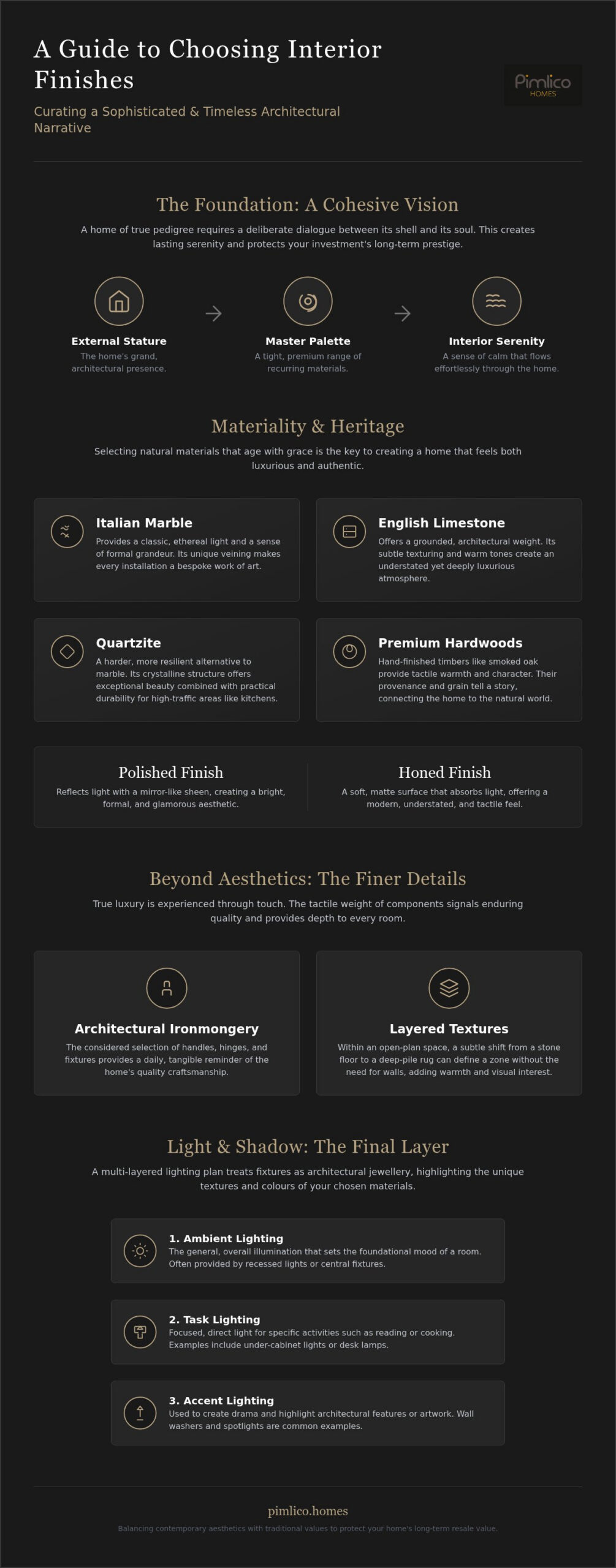
A luxury residence should feel like a singular, breathing entity. Its interior shouldn’t merely exist within its walls; it should speak to them. When choosing interior finishes for a luxury home, the first task isn’t picking a tile or a paint swatch. It’s defining the architectural narrative. This is the invisible thread that connects the external stature of the property to the intimate experience of its inhabitants. A mismatch between a grand, stone-clad exterior and a flimsy, trend-heavy interior creates a dissonance that even the untrained eye can sense. A home of true pedigree requires a deliberate dialogue between its shell and its soul.
Serenity is born from restraint. A master palette isn’t a limitation; it’s a foundation of quality. By selecting a tight, premium range of materials, you create a sense of calm that flows effortlessly from the entrance hall to the master suite. This cohesive design language does more than just look beautiful. It increases the emotional weight of the home. It also protects the financial value. Trends fade with the seasons. Investment-grade finishes, such as hand-finished timber or honed natural stone, carry a permanence that ensures the property remains as desirable in twenty years as it’s today. This approach moves beyond the superficial, focusing on a home that feels uniquely yours whilst maintaining a timeless elegance.
Crafting Your Primary Colour and Material Palette
Your base tone should act as a canvas for natural light. In regions like the North East, light shifts dramatically between the crisp brightness of spring and the soft, grey hues of winter. Selecting a neutral foundation that responds warmly to these changes is vital. Identify your “hero” materials early. Perhaps it’s a specific vein of marble or a deep, smoked oak. These should recur throughout the home, appearing as flooring in one room and bespoke joinery in another. This repetition creates an intuitive flow. Bold, bespoke accents should be reserved for focal areas, allowing meticulous craftsmanship to shine without overwhelming the senses.
The Interplay Between Interior Architecture and Finishing
Scale is the silent arbiter of design. High ceilings and expansive room volumes require finishes with enough visual weight to command the space. Large-format stones or wide-plank floors prevent a room from feeling cluttered or fragmented. Within open-plan living, materials serve as subtle boundaries. A shift in floor texture or a change in wall finish can define a dining area without the need for physical walls. For those undertaking luxury barn conversions, the challenge is even more specific. You must ensure a seamless transition between rugged, heritage features and the sleek requirements of modern luxury. It’s about respecting the original timber whilst introducing contemporary refinements that feel inevitable, not intrusive.
Materiality and Heritage: Selecting Natural Stones and Premium Hardwoods
Materials are the physical manifestation of a home’s character. When choosing interior finishes for a luxury home, you’re selecting the textures that will define your daily experience for decades. Natural stone offers a timelessness that synthetic alternatives cannot replicate. Italian marble provides a classic, ethereal light, whilst bespoke English limestone offers a grounded, architectural weight. The choice between a polished or honed finish is a decision of atmosphere. Polished surfaces reflect light with a formal grandeur. Honed finishes provide a soft, matte tactility that feels modern and understated. Both have their place in a home of distinction.
Provenance is paramount. In a modern luxury context, the origin of your materials adds a layer of narrative and ethical security to your investment. Knowing where your stone was quarried or your timber was felled connects the home to the natural world. It’s about more than just aesthetics; it’s about the heritage of the craftsmanship involved. This connection between innovative thinking and traditional values ensures your home remains a sanctuary of quality.
Stone Selection: Aesthetic vs. Practical Performance
While marble is often considered the pinnacle of beauty, quartzite offers a harder, more resilient surface for high-traffic kitchens. High-specification porcelain has evolved to mimic natural textures with remarkable accuracy, providing a maintenance-free alternative for wet rooms. Book-matching involves placing two mirror-image stone slabs side by side to create a continuous, symmetrical pattern that serves as a dramatic focal point. For those seeking a truly unique finish, these natural variations are what make bespoke luxury homes feel curated rather than manufactured. Understanding the porosity and maintenance requirements of each slab is essential to ensuring your investment retains its lustre.
Timber Provenance and Installation Styles
Hardwood flooring serves as the home’s anchor. European oak remains a favourite for its durability and versatility, whilst American walnut offers a deeper, more executive warmth. Installation patterns like chevron or herringbone add a layer of geometric sophistication, particularly effective in executive courtyard homes where floor space is a key architectural feature. Selecting the correct timber grade is essential to ensure minimal movement over time. This technical precision ensures your flooring remains stable whilst perfectly coordinating with bespoke cabinetry and internal joinery. The result is a seamless transition between the structural elements of the room and the fine furniture within it.
Beyond Aesthetics: The Role of Tactile Textures and Architectural Ironmongery
Luxury isn’t merely a visual feast; it’s a tactile journey. Every time you turn a handle or run your hand across a wall, you’re interacting with the home’s architectural soul. When choosing interior finishes for a luxury home, the physical sensation of quality is the ultimate validator of prestige. A door handle shouldn’t just look beautiful. It should possess a reassuring weight and a smooth, deliberate mechanism that signals the calibre of the construction behind it. This is where the visionary creator distinguishes a house from a masterpiece.
Layering textures is about creating a deliberate contrast that invites exploration. By mixing metals like hand-rubbed bronze or blackened steel with the softness of leather and rich fabrics, you add depth to a room that a single-material palette can’t achieve. This sensory approach extends to the invisible elements of the home. High-specification acoustic finishes and soft-close technology throughout the property ensure that the living experience is as peaceful as it’s sophisticated. It’s a methodical process of ensuring that every interaction, whether heard or felt, reinforces a sense of security and exclusivity.
Selecting High-Specification Hardware and Ironmongery
Consistency is the hallmark of refined design. Matching your hardware finishes across various rooms creates a unified executive feel that ties the entire home together. There’s a profound difference between solid brass and plated alternatives. Solid materials develop a graceful patina over time, whereas plated finishes can wear and lose their lustre. Modern luxury also demands the integration of smart-home access controls. These must be chosen with care to ensure they offer cutting-edge security whilst disappearing into a traditional, high-end aesthetic.
The Importance of Textile and Surface Contrast
A balanced room relies on a dialogue between opposing surfaces. Cold stone floors find their perfect partner in warm timber joinery or rich, fabric-lined walls. To add subtle architectural movement, consider using Venetian plaster or silk-effect wallpapers. These finishes catch the light in ways that flat paint cannot, creating a sense of scale and artistry. It’s essential to select high-performance fabrics for these surfaces. They must maintain their luxurious feel and delicate appearance whilst possessing the durability required to withstand the behaviour of a busy, modern household.
Light and Shadow: Organising Your Lighting Plan for Maximum Impact
Lighting is the invisible architect of a refined interior. It dictates how we perceive every other element in a room, from the grain of a timber floor to the depth of a Venetian plaster wall. When choosing interior finishes for a luxury home, lighting should never be viewed as a utility. Instead, it’s the final, transformative layer that breathes life into your material palette. A well-considered plan uses light to sculpt the space, creating a sense of drama and intimacy that shifts with the rhythm of your day.
Mastering this dialogue requires a layered approach. Ambient lighting provides a soft, foundational wash that ensures the room feels inviting. Task lighting offers precision where it’s needed most, such as over a bespoke kitchen island or within a private study. Finally, accent lighting acts as the curator’s tool. It draws the eye to hero features, such as a book-matched stone wall or a piece of fine sculpture. By using reflective finishes on cabinetry or polished stone, you can harness natural light during the day, making even the most expansive rooms feel airy and connected to the landscape.
Decorative vs. Architectural Lighting Fixtures
There’s a vital distinction between fixtures that provide light and those that provide presence. Statement chandeliers are the jewellery of a room, and they must be selected to complement the grand proportions of luxury detached homes. These decorative pieces should be balanced by discreet, architectural lighting. High-CRI LED fittings are essential for showcasing art, as they render colours with absolute fidelity. Even the smallest details matter. Your switch-plate finishes should be a deliberate match for the architectural ironmongery used throughout the property, ensuring a seamless aesthetic thread from the door handle to the light switch.
Integrating Technology with Traditional Craftsmanship
Modern luxury demands the convenience of smart technology without the visual clutter of hardware. Visionary design allows for the concealment of control systems within bespoke cabinetry or behind elegant wall finishes. Automated shading systems are equally important. They don’t just provide privacy; they protect your investment by preventing UV rays from fading delicate fabrics and natural timbers. Warm-dim technology mimics the natural shift of evening light by lowering the colour temperature as the intensity drops, creating an intimate, amber glow. This intersection of innovation and tradition ensures your home remains a sanctuary of comfort. To see how these elements come together in a finished residence, you can explore our portfolio of bespoke luxury homes.
The Bespoke Journey: How Pimlico Homes Curates Unrivalled Interior Specifications
A home is more than a structure; it’s a testament to a life well-lived. At Pimlico Homes, we view ourselves as both visionary creators and reliable guardians of quality. The meticulous process of choosing interior finishes for a luxury home is where our 25 years of expertise meets your personal vision. It’s a transition from a technical specification to an intimate, lived-in sanctuary. We understand that this journey requires a delicate balance of authority and warmth, ensuring that every material selected resonates with the emotional weight of your investment.
Quality is a silent promise. By prioritising high-specification construction standards, we ensure that your choices enhance the long-term resale value of your investment. We don’t believe in standardised packages that limit expression. Instead, we offer a bespoke canvas where heritage and innovation coexist. This collaborative approach allows us to finalise a vision that feels uniquely yours whilst maintaining the timeless elegance that defines the Pimlico name. It’s about creating a residence that doesn’t just look prestigious but feels deeply personal.
The Design Consultation Process for Bespoke Buyers
Navigating the specification phase shouldn’t be a source of overwhelm. Our team organises the selection of materials to ensure a stress-free experience, guiding you through the “snagging” and refinement stages with expert precision. We specialise in customising executive courtyard homes to suit individual lifestyle requirements. Whether you require specific acoustic treatments for a home office or a particular stone for a grand entrance, we facilitate these decisions with quiet confidence. This methodical rhythm ensures that every detail is considered before the first stone is laid.
Future-Proofing Your Investment Through Design
True luxury is permanent. We focus on selecting finishes that age with dignity, requiring minimal intervention over the coming decades. Modern property specifications must also embrace energy-efficient luxury. This includes the integration of sustainable materials and smart technologies that reduce environmental impact without compromising on comfort. Your home should be a sanctuary of refined pride and enduring stature. It’s a commitment to excellence that remains long after the keys are handed over, providing a sense of security and exclusivity that only a truly bespoke home can offer.
Realising Your Vision of Permanent Elegance
Choosing interior finishes for a luxury home is the final, essential chapter in a narrative of meticulous craftsmanship. It’s the process where architectural volumes are softened by texture and light, turning a grand structure into an intimate sanctuary. By aligning your material palette with the home’s external stature and prioritising the tactile weight of every fitting, you ensure a residence that feels both prestigious and enduring. These deliberate choices don’t just define your daily experience; they protect the long-term legacy of your investment.
At Pimlico Homes, we bring 25 years of experience to the creation of bespoke detached homes and executive courtyards. We’re known for our meticulous attention to detail and a commitment to high-end specifications that transcend fleeting trends. As your visionary creator, we provide the expert guidance needed to navigate the complex world of premium materials with confidence and ease.
Discover the Unrivalled Craftsmanship of Pimlico Homes
Your journey toward a home of unrivalled distinction is a significant life investment. We look forward to helping you curate a space that reflects your unique values and stands as a beacon of refined pride for generations to come.
Frequently Asked Questions
What are the most durable interior finishes for a high-traffic luxury home?
Quartzite and high-grade engineered oak are amongst the most resilient choices for busy executive residences. Quartzite offers the beauty of natural stone with a hardness that exceeds marble, making it ideal for kitchen worktops. For flooring, wide-plank engineered timber provides the warmth of solid wood with enhanced structural stability. High-specification porcelain is also a superior choice for wet areas, offering a maintenance-free surface that replicates the texture of natural stone without the porosity.
How do I choose between a contemporary and traditional finish for a barn conversion?
The most successful luxury barn conversions often embrace a deliberate dialogue between both styles. You should respect the original heritage by leaving structural timbers or stonework exposed whilst introducing sleek, contemporary amenities. Choosing interior finishes for a luxury home of this type requires a focus on material contrast. A polished concrete floor can look exceptional against ancient oak beams, creating a space that feels both grounded in history and effortlessly modern.
Will bespoke interior finishes significantly increase my home’s resale value?
Investment-grade finishes are a primary driver of long-term property value in the premium market. Discerning buyers recognise the difference between standard materials and the artistry of bespoke joinery or natural stone. These finishes age with dignity, ensuring the home remains desirable for decades rather than dating with fleeting trends. Meticulous craftsmanship acts as a silent validator of the property’s overall construction quality, providing a sense of security that protects your financial investment.
What is the difference between “high specification” and standard new build finishes?
High specification refers to a commitment to permanent quality and tactile excellence. Standard new builds often rely on mass-produced, synthetic alternatives that lack the weight and character of premium materials. In an executive-level home, you’ll find solid brass ironmongery, hand-finished timber, and book-matched marble. These elements possess a physical presence and longevity that standard specifications simply cannot match. It’s the difference between a house that is merely functional and a home that is a visionary work of art.
How do I ensure a cohesive design flow between different floors of a detached home?
Establishing a master palette of “hero” materials is the most effective way to create a unified architectural narrative. You might use a specific smoked oak for the grand staircase and repeat it in the bespoke cabinetry of the upstairs study. This repetition creates an intuitive connection as you move through the space. Whilst each room can have its own personality, maintaining consistent hardware finishes and a shared foundation of neutral tones ensures the property feels like a singular, breathing entity.
When is the best time to choose interior finishes during the construction of a new build?
The process of choosing interior finishes for a luxury home should begin during the initial technical specification phase. Early selection is vital because many premium materials, such as bespoke stone slabs or hand-crafted tiles, have significant lead times. Deciding on your finishes early also allows the construction team to integrate structural requirements, such as floor reinforcements for heavy stone or the concealment of smart technology, before the build reaches an advanced stage.
Can I incorporate smart home technology into a traditional interior design?
Modern luxury thrives on the seamless integration of innovation and tradition. Smart technology should be felt rather than seen, with control systems concealed within bespoke cabinetry or behind elegant wall coverings. Automated shading and warm-dim lighting can be programmed to enhance the atmosphere of a traditional room without the need for visible hardware. This approach ensures you enjoy the convenience of a modern lifestyle whilst preserving the classic, executive aesthetic of your home.
How do natural light levels affect the choice of wall and floor finishes?
Light is the silent arbiter of how we perceive colour and texture. In rooms with abundant natural light, polished surfaces can be used to reflect brightness and enhance the sense of scale. Conversely, in north-facing rooms or more intimate spaces, honed or matte finishes provide a soft, tactile warmth that prevents the space from feeling cold. It’s essential to view material samples in the specific room they’re intended for, observing how they shift through the seasons and the cycle of the day.


