
In the world of premium property, a garden isn’t merely an outdoor space; it’s a private estate that demands the same architectural rigour as the home itself. Most high-end buyers believe that choosing a modern property means sacrificing the expansive grounds found in period manors. You’ve likely noticed that many new developments prioritise density over depth, leaving you with a home that’s overlooked and a garden that’s little more than a token gesture. It’s a common frustration for those seeking new build homes with large gardens, where the desire for contemporary luxury often clashes with the need for significant acreage.
We understand that for your lifestyle, land is the primary luxury. This guide reveals how to secure a high-specification residence that offers the privacy and space required for professional landscaping or equestrian facilities. We’ll examine the critical land-to-build ratios that define a true executive estate and provide clarity on the planning permissions needed for stables or outbuildings. You’ll discover how a meticulously designed modern home can serve as the foundation for a lasting rural legacy, providing the security and seclusion your family deserves.
Key Takeaways
- Understand the land-to-build ratios required to maintain the prestige and long-term value of a true executive estate.
- Identify the specific acreage and soil drainage factors necessary for sustainable horse grazing and the installation of private stabling.
- Discover why specialist developers offer superior plot sizes compared to volume builders when searching for new build homes with large gardens north east of the country.
- Gain clarity on the nuances of planning permission and domestic curtilage when intending to construct arenas or significant outbuildings.
- Explore how a collaborative bespoke design process ensures your luxury home and its grounds are perfectly tailored to your equestrian vision.
Beyond the Boundary: Defining Large Gardens in the Luxury New Build Market
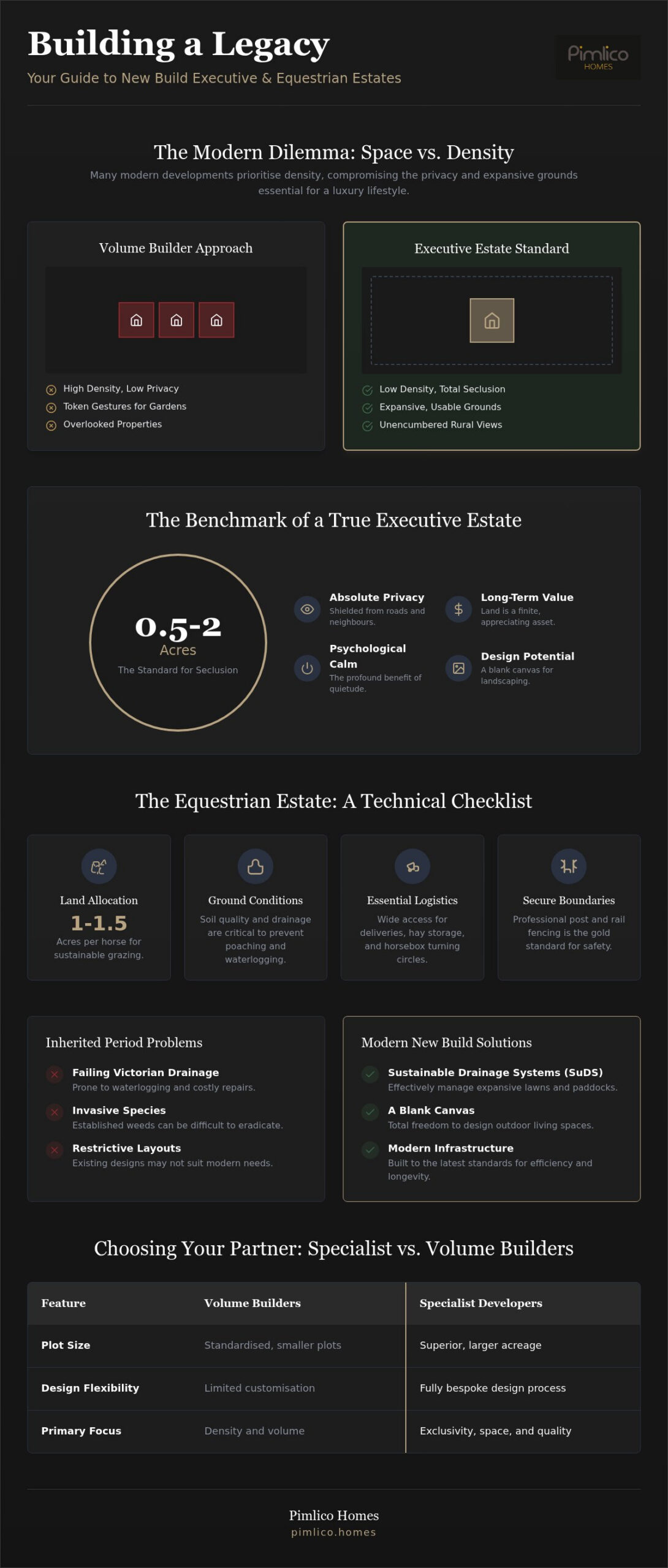
Prestige is measured in metres, not just square footage. A standard residential garden often feels like an afterthought; an executive estate requires a deliberate expanse that allows the architecture to settle into its surroundings. For those seeking new build homes with large gardens north east of England, the distinction lies in the land-to-build ratio. A prestigious property isn’t just a large house. It’s a residence that commands its plot without feeling crowded by neighbours. This ratio is a silent indicator of exclusivity, ensuring that the physical structure never overpowers the natural environment it inhabits.
This sense of permanence and scale draws inspiration from the traditional English country house, where the landscape was designed to complement the dwelling. Large gardens provide a “borrowed landscape”, pulling in the beauty of the surrounding countryside to create unencumbered rural views that stretch toward the horizon. This spatial luxury significantly enhances long-term resale value. Discerning buyers recognise that whilst interiors can be renovated, land is a finite asset. The psychological benefit of such space is profound, offering a sense of quietude that smaller plots simply cannot replicate.
The Executive Standard for Outdoor Space
True luxury detached homes are defined by a benchmark of 0.5 to 2 acres. This isn’t merely about size; it’s about the potential for absolute seclusion. Strategic plot positioning ensures your private sanctuary remains unseen from the road or adjacent properties. Professional landscaping acts as a living boundary, using natural screening and structural planting to define the estate. It creates a secure environment where family life can flourish in complete peace, shielded from the outside world by a buffer of green.
New Build Advantages for Large Plots
Opting for a new build eliminates the “inherited problems” often found in period gardens, such as invasive species or failing Victorian drainage. Modern developments utilise Sustainable Drainage Systems (SuDS) to manage expansive lawns and paddock areas effectively. This ensures your land remains healthy and usable throughout the British winter, preventing the waterlogging that plagues older estates. You also gain the freedom to design outdoor living spaces from scratch. Whether you envision a sunken fire pit, a professional outdoor kitchen, or a sprawling terrace for entertaining, a new build provides the perfect blank canvas for your architectural vision.
Assessing the Suitability of Land for Equestrian Facilities and Paddock Space
For the equestrian enthusiast, a garden is more than a scenic backdrop; it’s a functional asset that requires a discerning eye for land quality. Identifying new build homes with large gardens north east of the country often involves looking beyond the immediate perimeter of the house. Precision is paramount. While a standard residential plot might offer a sense of openness, an equestrian estate demands a rigorous assessment of the terrain’s functional capacity. Generally, a minimum of one to one and a half acres per horse is the benchmark for sustainable grazing, ensuring the ground isn’t overtaxed during the winter months.
Soil quality and drainage are the silent architects of a successful paddock. Heavy clay soils, common in parts of the North East, can lead to poaching and health issues like mud fever if not managed with sophisticated drainage systems. When evaluating a new development, consider the logistical requirements that extend beyond the stable door. You’ll need wide access for deliveries, dedicated hay storage, and a turning circle capable of accommodating a large horsebox without compromising the aesthetic of your primary residence. Understanding the complexities of UK planning and land use regulations is essential before committing to a site, as the transition from agricultural to domestic or equestrian use involves specific legal nuances.
Boundaries must be as secure as they are beautiful. Existing hedgerows offer natural shelter, but the installation of professional post and rail fencing is the gold standard for safety and longevity. As of 2026, pasture land in the UK averages approximately £8,600 per acre, making the acquisition of a new build plot with significant land already attached a sound financial investment. If you are envisioning a rural retreat that accommodates your passion, exploring our bespoke luxury homes provides the ideal starting point for a property tailored to your specific requirements.
Paddock Management and Land Layout
The transition from a formal garden to a functional paddock requires a delicate balance of design and utility. Strategic layout allows for formal lawns near the home, while paddocks are positioned to offer clear sightlines from the main living areas. A standard recommendation for private grazing is to allow one to one and a half acres per horse to ensure the land remains sustainable and healthy throughout the seasons. Essential infrastructure, such as frost-proof water troughs and discreetly positioned electricity points for lighting and clipping, should be integrated into the initial site plan to avoid future disruption.
Identifying Equestrian Potential in New Developments
When reviewing site plans, look for plots that border open countryside or agricultural land, as these often provide the best opportunities for expansion or “borrowed” views. A bespoke plot allows for the stables to be designed in harmony with the main residence, using matching stone or timber to create a cohesive architectural statement. This integration ensures that your equestrian facilities feel like a natural extension of your home rather than a secondary addition, preserving the prestige and visual flow of the entire estate.
Bespoke Construction vs. Executive Developments: Which Offers Superior Acreage?
Volume builders often focus on high-density plots to maximise output. This approach is fundamentally at odds with the requirements of a rural estate. The search for new build homes with large gardens north east of the country requires a shift in perspective, moving away from standard estates toward bespoke developments where land is treated as a core architectural element. In the North East, residential land values typically range from £300,000 to £400,000 per acre. This regional advantage allows specialist developers to allocate more land to each plot, ensuring the property remains a prestigious asset rather than just a dwelling. Compared to the inflated costs in southern counties, your investment here secures significantly more breathing room.
Bespoke luxury homes offer the greatest flexibility for garden customisation because the land is often secured before the first brick is laid. You aren’t limited by the rigid boundaries of a corporate site plan. This freedom allows for a more considered land-to-build ratio, where the garden is designed to enhance the home’s stature. Whether you require a formal parterre or a functional paddock, starting with a bespoke plot ensures the terrain matches your ambition. It’s about more than just square footage; it’s about the quality and utility of every acre you acquire.
The Bespoke Advantage for Land Seekers
Working with a specialist developer like Pimlico Homes allows you to secure specific acreage from the outset. You aren’t confined to a pre-determined boundary. Instead, you can position the home to capture the best of the day’s light or to ensure absolute privacy from the approach. Our experience with luxury barn conversions demonstrates how heritage structures can be seamlessly integrated with modern land needs. We ensure all projects adhere to Equestrian Land Use and Planning guidelines, providing a legally sound foundation for your rural vision from day one.
Evaluating Executive Courtyard Living
The executive courtyard model offers a sophisticated middle ground. It provides the security of a small, exclusive community without sacrificing the substantial private grounds required for a large garden or paddock. Navigating the approach to your estate becomes a pleasure, with shared access roads leading to expansive, private driveways. This model balances the warmth of a secure enclave with the unencumbered space of a private estate. For a deeper exploration of this lifestyle, consider The Allure of Executive Courtyard Homes in the North East, which details the unique balance of community and seclusion found in these developments.
Strategic Considerations for Planning and Maintaining Private Rural Estates
Owning a significant plot involves a complex legal landscape that many buyers overlook. The distinction between domestic curtilage and agricultural land is fundamental. Curtilage refers to the immediate area serving the house; it’s where you’ll likely place your terrace, formal lawns, and primary garden features. Beyond this boundary, the land is often classified as agricultural. For those acquiring new build homes with large gardens north east, understanding this divide is crucial. You cannot simply extend your formal garden into a paddock without considering the change of use implications. This legal nuance ensures the rural character of the North East remains protected whilst allowing you to enjoy the benefits of a private estate.
Covenants within a new development often act as a safeguard. They aren’t merely restrictions; they’re guardians of value. These legal agreements prevent neighbours from making unsightly alterations that could detract from the area’s exclusivity. By adhering to these standards, the collective prestige of the enclave is preserved for decades. Sustainable land management is equally vital. Preserving local hedgerows and creating wildflower buffers at the paddock edges supports the regional ecosystem. It adds a layer of natural beauty that enhances the property’s character and ensures your estate remains a sanctuary for local biodiversity.
Planning for Outbuildings and Stables
Planning permission is almost always required for permanent stables, arenas, or changing land use from agricultural to equestrian. As of April 2026, a change of use application typically costs around £401, while outline applications for dwelling houses on sites under 0.5ha are approximately £719 for each 0.1ha. It’s a structured process that requires precision. Consulting with your developer early in the design phase is the most effective way to navigate these hurdles. It ensures that any additional structures, such as a bespoke stable block, maintain architectural harmony with the main residence. This collaborative approach prevents the fragmented look often seen when outbuildings are added as an afterthought.
Long-Term Maintenance of Large Estates
Managing an expansive estate requires more than a standard lawnmower. Professional groundskeeping is a necessity for maintaining the executive standard your property demands. Investing in smart irrigation systems and robotic mowing ensures your lawns remain pristine with minimal manual intervention. This technological approach also allows you to focus on the more artistic elements of your landscape. If you’re ready to begin your journey, our luxury new build homes offer the perfect foundation for a bespoke rural life. For a comprehensive overview of the acquisition process, refer to The Ultimate Guide to Buying a Luxury New Build Home in 2026.
Securing Your Vision with Pimlico Homes’ Bespoke Residential Developments
At Pimlico Homes, we believe a residence is defined by the ground it stands upon. Our philosophy rejects the high-density models of volume builders, focusing instead on the creation of estates where land and architecture exist in perfect equilibrium. When you seek new build homes with large gardens north east of the country, you’re looking for more than a postcode. You’re looking for a guardian of quality who understands that privacy is the ultimate modern luxury. Every project we undertake begins with a rigorous selection process, ensuring the site offers the stature and seclusion necessary for a high-specification lifestyle.
The collaborative process is the heart of our service. We don’t just build houses; we curate environments. This involves working closely with you to ensure your bespoke luxury home integrates seamlessly with its grounds. Whether you’re planning a professional equestrian facility or a tiered botanical garden, our team ensures the architectural excellence of the main residence is mirrored in the surrounding landscape. It’s a methodical approach that prioritises your long-term satisfaction and the emotional weight of your investment. We focus on the human experience, ensuring that every acre serves a purpose in your daily life.
Our Approach to Land and Stature
We specialise in identifying prime locations that allow for substantial gardens and genuine equestrian potential. Our portfolio, ranging from luxury detached homes to meticulous barn conversions, demonstrates a deep respect for the North East’s rural heritage. We select sites that offer unencumbered views and natural screening, providing a secure foundation for your vision. This dedication to excellence ensures that our executive developments represent the pinnacle of rural luxury. Pimlico Homes carries a 25-year heritage of industry experience, positioning us as a trusted authority in the creation of prestigious residential estates.
Commencing Your Journey
The most successful estates are those where the vision is established early. Engaging with us during the initial phases of our executive developments allows for significant bespoke plot customisation. You can influence the positioning of outbuildings, the flow of private driveways, and the boundary treatments that will define your home for generations. This early involvement ensures that the final result is a unique reflection of your lifestyle, built with the meticulous care that defines our brand. We invite you to explore our vision and discover the unique opportunities currently available within our portfolio.
Explore our exclusive luxury new build developments
Cultivating Your Private Rural Legacy
The journey toward an equestrian lifestyle begins with a commitment to space and architectural integrity. You’ve seen how the right land-to-build ratio preserves prestige. Understanding the nuances of domestic curtilage ensures your vision remains legally sound. Securing new build homes with large gardens north east of the country is no longer a matter of compromise. It’s a deliberate choice to prioritise quality over density. It’s about creating a sanctuary where your passions and your home coexist in perfect harmony.
Pimlico Homes brings over 25 years of specialist luxury development experience to every project. We disfavour volume for the sake of quality and acreage, ensuring each residence remains a unique masterpiece. Our expertise in bespoke barn conversions and executive courtyard homes allows us to bridge the gap between heritage and modern luxury. We invite you to Discover the Prestige of Pimlico Homes and explore our vision. Your private, high-specification estate is waiting to be realised.
Frequently Asked Questions
How much land do I need for a horse on a new build property?
A minimum of one to one and a half acres per horse is the widely accepted benchmark for sustainable grazing. This allocation ensures the pasture remains healthy and prevents the ground from becoming poached during the wetter months. When you are looking for a property with equestrian potential, you must consider the quality of the land and its ability to support your animals year-round without overtaxing the soil.
Can I build stables in the garden of a new build home?
You’ll almost certainly require full planning permission for the construction of permanent stables and potentially a change of use for the land. While small mobile shelters might occasionally fall under different rules, permanent structures with concrete foundations and utility connections are subject to local authority approval. It’s essential to consult with your developer early in the process to ensure your plot can accommodate these facilities within its legal boundaries.
Are new build gardens always smaller than period property gardens?
Not necessarily, as specialist luxury developers prioritise land-to-build ratios that rival historic estates. While volume builders tend to maximise density, bespoke projects focus on the creation of expansive, private grounds. This approach provides the space needed for new build homes with large gardens north east of the country, offering the benefits of contemporary construction alongside the substantial acreage typically associated with older country houses.
What is the difference between domestic curtilage and agricultural land?
Domestic curtilage is the land immediately serving the residence for daily living, whereas agricultural land is designated for farming or grazing. This distinction is vital because permitted development rights usually only apply within the curtilage. If you intend to extend a formal lawn or build an arena on agricultural land, you’ll need to navigate a formal change of use application with the local planning department to avoid legal complications.
Do Pimlico Homes offer bespoke design for equestrian facilities?
We specialise in the creation of bespoke luxury homes where every element of the estate is designed in harmony. Our collaborative process allows you to integrate high-specification stables or outbuildings into the initial site plan, ensuring they match the architectural aesthetic of the main residence. This methodical approach ensures that your equestrian facilities feel like a natural extension of the property rather than a secondary, disconnected addition.
What should I look for in a new build warranty for a large estate?
You should ensure the warranty covers the structural integrity of both the primary dwelling and any additional buildings constructed by the developer. It’s equally important to verify that the drainage systems for expansive lawns and paddocks are included in the coverage. A comprehensive warranty provides the security and peace of mind required when making a significant life investment in a large, high-specification rural property.
How does a large garden affect the resale value of a new build?
Substantial acreage significantly enhances the long-term value of a property by providing a finite asset that is increasingly rare in the modern market. A large garden offers a level of privacy and versatility that appeals to a discerning niche of buyers. This spatial luxury ensures the home remains a prestigious and sought-after asset, protecting your investment and providing a unique selling point should you ever choose to move.
Is planning permission required for a ménage or riding arena?
Planning permission is always required for a ménage due to the significant engineering works, drainage installations, and specialist surfacing involved. Local authorities will examine the impact on the local landscape, particularly if you intend to install floodlighting or high fencing. Because these projects are complex, we recommend discussing your requirements during the design phase of your new build to ensure the application is handled with the necessary precision.


