
True prestige in modern landscaping no longer resides in the sterile perfection of a manicured lawn. It lives in the vibrant, intentional complexity of a private ecosystem. You’ve likely looked at the pristine yet daunting blank canvas of your new outdoor space and felt the weight of its immense potential. It’s natural to feel overwhelmed by compacted ground or to fear that inviting nature in means sacrificing the sharp lines of a luxury home. You don’t want a garden that looks neglected; you want one that feels curated. This guide demonstrates that creating a wildlife-friendly garden in a new build is the ultimate expression of sustainable elegance. We’ll show you how to transform your plot into a thriving sanctuary that increases property prestige whilst maintaining a sophisticated aesthetic. We’ll explore the art of soil restoration, the selection of architectural native species, and the clever design choices that invite biodiversity without compromising on the functional beauty of your outdoor retreat.
Key Takeaways
- Embrace the unique opportunity of a blank canvas to design a bespoke ecological legacy from the first day of ownership.
- Learn how to restore soil health and overcome compaction to create a nutrient-rich foundation for your high-specification garden.
- Discover how to curate a refined plant palette that supports local biodiversity whilst maintaining a sophisticated, architectural aesthetic.
- Explore the art of integrating structural habitats into your garden’s design to provide year-round interest and essential shelter.
- Realise the prestige of creating a wildlife-friendly garden in a new build as a seamless extension of your home’s luxury specification.
The Blank Canvas: Why New Build Gardens are the Ultimate Opportunity
The blank canvas of a new property is often viewed with a mix of excitement and trepidation. For the discerning homeowner, it represents a rare opportunity to design an outdoor space from the ground up, ensuring every element aligns with the architectural integrity of the residence. When you’re creating a wildlife-friendly garden in a new build, you aren’t merely planting flowers; you’re establishing an ecological legacy that will mature alongside your home. Luxury developments provide unique opportunities to create vital habitat corridors that connect fragmented landscapes. By planning with intent from day one, you ensure that your garden isn’t just a beautiful backdrop, but a functional, living extension of your home’s prestige.
Understanding the New Build Ecosystem
Success begins with a thorough appreciation of the site’s natural characteristics. Before the first spade touches the earth, it’s vital to conduct a form of ecological surveying. This involves identifying the indigenous species already present in the surrounding area and understanding how they might interact with your plot. Assessing sunlight patterns and drainage in a newly landscaped plot is equally critical. New developments often have altered topography, so observing how water moves across the land during a heavy downpour will inform where you place a wildlife-friendly garden feature, such as a pond or a damp meadow zone. This methodical approach ensures your interventions are both sustainable and effective.
Planning for Prestige and Nature
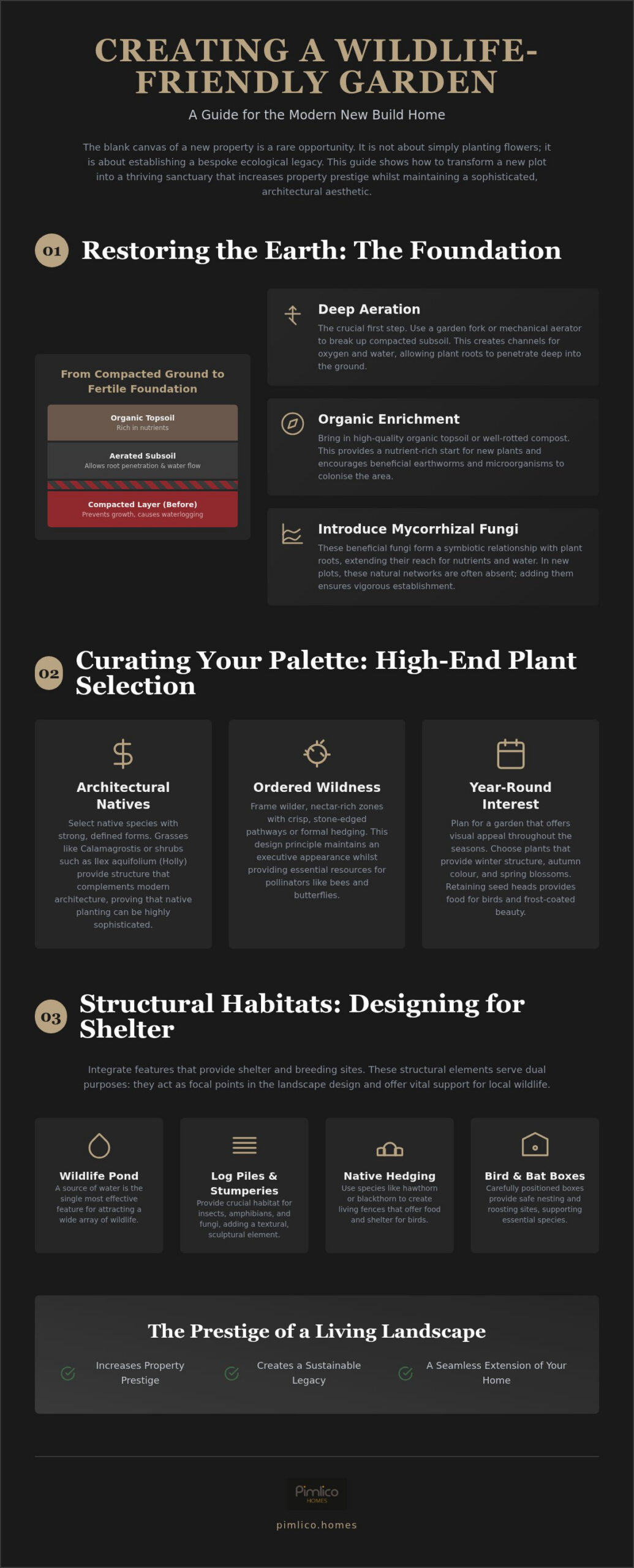
A common misconception is that a biodiverse space must look untidy. In reality, the most successful designs for creating a wildlife-friendly garden in a new build utilise structure and symmetry to maintain an executive appearance. You can achieve this by framing wilder, nectar-rich zones with crisp, stone-edged pathways or formal hedging. This “ordered wildness” ensures the garden remains a sophisticated setting for relaxation and entertainment. When you invest in luxury detached homes, the outdoor space should feel like a seamless transition from the interior’s high-end specification. By using high-quality materials and visionary design, your garden becomes a sanctuary that reflects the stature of your home whilst providing a vital lifeline for local birds, bees, and butterflies. It’s a statement of refined pride that respects the natural world.
Restoring the Earth: Preparing Your Soil for Biodiversity
Healthy soil is the silent architect of a prestigious garden. Whilst the architectural lines of your new home are immediately visible, the vitality of the landscape beneath depends on the unseen world of the rhizosphere. In many developments, the earth has endured months of heavy machinery traffic, leading to significant subsoil compaction. This compressed layer acts as a barrier, preventing roots from penetrating deep into the ground and causing water to stagnate. To begin creating a wildlife-friendly garden in a new build, you must first breathe life back into the ground. Restoring this foundation is a meticulous process that transforms a former construction site into a fertile, flourishing estate.
One of the most effective ways to accelerate this transition is the introduction of mycorrhizal fungi. These beneficial organisms form a symbiotic relationship with plant roots, effectively extending their reach for nutrients and water. In a fresh plot, these natural networks are often absent. By adding them during the planting phase, you ensure your high-specification greenery establishes with the vigour and permanence expected of a luxury landscape. This level of careful preparation is part of what makes our bespoke new builds stand apart as long-term investments in quality.
Remedying Soil Compaction
Deep aeration is the first step in reclaiming your garden’s potential. For new lawns and borders, use a garden fork or a mechanical aerator to create deep channels, allowing oxygen and water to reach the subsoil. If the existing earth is particularly poor, it’s wise to bring in high-quality organic topsoil to provide a nutrient-rich start. Before you plant, test the pH levels of your soil. This ensures that your chosen species, whether they prefer acidic or alkaline conditions, don’t just survive but thrive in their new environment. This methodical assessment prevents costly planting errors and ensures your vision for the landscape is realised without delay.
Organic Enrichment Strategies
Nurturing biodiversity requires a move away from the quick fixes of the past. Chemical fertilisers often provide a temporary flush of growth but can hinder long-term soil health and discourage the very insects you wish to attract. Instead, embrace the art of mulching with well-rotted organic matter. This suppresses weeds whilst slowly releasing nutrients into the earth. For larger, open areas of the plot, consider using green manures like clover or vetch. These plants fix nitrogen naturally, enriching the soil whilst providing an early nectar source for pollinators. This organic approach ensures your garden remains a vibrant, self-sustaining sanctuary for years to come.
Curating Your Palette: Selecting High-End Wildlife-Friendly Plants
The “Sustainable Elegance” philosophy dictates that every botanical choice must serve a dual purpose. A garden should be as visually arresting as it is ecologically productive. When Selecting High-End Wildlife-Friendly Plants, the focus shifts from mere decoration to the curation of a living tapestry. This approach ensures that creating a wildlife-friendly garden in a new build doesn’t result in a cluttered or overgrown aesthetic. Instead, it produces a landscape of architectural stature, where biodiversity is woven into the very fabric of the estate’s design. Every leaf and bloom is a deliberate contribution to a larger, more permanent vision.
The Beauty of Native Species
Native species provide the essential backbone for local fauna, but they must be selected with an eye for executive refinement. The Silver Birch, with its luminous white bark and delicate canopy, offers immediate height and elegance whilst supporting hundreds of insect species. Similarly, Hawthorn can be sculpted into formal, dense hedging that provides both security and vital nesting sites. To avoid the appearance of neglect, wildflower meadows should be planted in clearly defined, geometric islands or borders. This intentionality signals that the wilder elements are a deliberate design choice. Successional flowering is the secret to a thriving sanctuary; by selecting species that bloom at different times, you provide a constant, reliable food source for pollinators from early spring through to the first frosts of autumn.
Balancing Ornamentals with Pollinators
A truly sophisticated garden blends native plants with high-performing ornamentals to create year-round interest. Aspirational choices like the architectural globes of Alliums, the fragrant drifts of English Lavender, and the soft, cloud-like textures of Nepeta provide a refined look that appeals to the human eye whilst buzzing with life. It’s crucial to avoid invasive species that might escape the garden and threaten local habitats, as true luxury always respects its surroundings. Pollinator-friendly ornamentals represent the essential bridge between human-led design and the untamed requirements of nature. By incorporating evergreens with high biodiversity value, such as certain varieties of Holly or Yew, you maintain a sense of permanence and structure even in the depths of winter. Specimen trees, carefully positioned as focal points, provide the necessary stature to match the scale of your home whilst offering high-canopy sanctuary for birds.
Structural Habitats: Designing for Year-Round Interest and Shelter
Architecture doesn’t end at the threshold of your patio doors. When creating a wildlife-friendly garden in a new build, you must view the landscape as a series of structural layers. From the low-lying ground cover to the high, sheltering canopy, each level provides a specific niche for local fauna. This verticality isn’t just beneficial for nature; it adds significant depth and visual interest to your estate. By integrating these habitats into the permanent architecture of the garden, you ensure the space remains elegant throughout the seasons. Privacy is a priority for any executive homeowner, yet it shouldn’t come at the cost of ecological connectivity. Small, discreet gaps at the base of boundaries, often called hedgehog highways, allow for essential movement without compromising your security or seclusion.
The Sophisticated Wildlife Pond
A water feature is the ultimate ecological and aesthetic centrepiece. Forget the messy, overgrown ponds of the past. A modern wildlife pond can be designed with clean lines and premium stone edging to match the contemporary finish of your property. It’s a place for reflection. For the executive homeowner, maintenance is simplified through the use of high-specification filtration and careful aquatic plant selection. Beyond the immediate aesthetic joy, such features significantly enhance the resale value of new build homes north east. Discerning buyers increasingly prioritise sustainable, mature landscapes that offer a personal retreat from the world.
Living Boundaries and Hedgerows
Timber fences are functional but lack the prestige of a living boundary. Replacing them with mixed native hedging creates a lush, green framework that provides better security through density and offers vital shelter for songbirds. If you require immediate privacy without blocking natural light, pleached trees are an excellent architectural solution. They act as hedges on stilts, providing a high-level screen whilst leaving the ground clear for ornamental planting. For a truly innovative approach, consider dead hedges. These are structures made from woven branches and prunings. When hidden behind formal borders, they provide a discreet haven for insects and small mammals without disrupting the garden’s refined appearance. If you are ready to begin your journey in a home that respects the natural landscape, explore our latest luxury new build homes.
The Pimlico Promise: Integrating Nature into Luxury Living
At Pimlico Homes, we view every development as a contribution to the local heritage. Our commitment to excellence extends beyond the brickwork; it encompasses the entire environment that our residents call home. We understand that the true value of a property is found in its connection to the landscape. During the design phase, we meticulously consider the ecological impact of our projects, ensuring that the transition from natural terrain to a luxury estate is handled with sensitivity and care. Each plot is a testament to our 25 years of experience in high-end residential development, where we strive to protect existing biodiversity whilst laying the groundwork for new growth.
Living in a nature-rich executive development offers more than just aesthetic pleasure. It provides a profound sense of well-being and a vital connection to the rhythms of the seasons. We invite our homeowners to see themselves not just as residents, but as stewards of a unique environmental legacy. This vision of sustainable luxury is about more than just the present; it’s about creating a space that matures and flourishes for decades to come.
Sustainable Development Standards
Quality is the cornerstone of our philosophy. We prioritise high-specification materials that are chosen to last for generations, reflecting a belief in permanence and artistry. This dedication to longevity is mirrored in our approach to the land. There is a natural harmony between our traditional values of craftsmanship and innovative ecological thinking. Our executive courtyard homes illustrate this perfectly. These spaces are designed to offer unparalleled privacy whilst providing the ideal sheltered microclimate for a thriving garden. By creating a wildlife-friendly garden in a new build, you are enhancing a space that has been specifically engineered to support life and luxury in equal measure.
Your Journey to an Ecological Estate
The transition into your bespoke Pimlico Home is the start of a rewarding journey. Once you’ve settled into your new residence, the first practical step is to observe the natural visitors that already frequent your borders. This initial period of quiet reflection allows you to tailor your landscaping to the specific needs of the local fauna. We recommend visiting premium local nurseries that specialise in native British species to ensure your planting is both authentic and robust. Your home is more than a structure; it’s a sanctuary for you and a vital refuge for the nature that surrounds it. This is the Pimlico promise: a home of distinction that respects the earth it stands upon. Creating a wildlife-friendly garden in a new build is the final, personal touch that completes this vision of sustainable elegance.
Cultivating Your Ecological Legacy
The journey from a pristine plot to a flourishing sanctuary is one of patience and artistry. We’ve explored how meticulous soil restoration and the curation of a refined plant palette can transform a blank canvas into a masterpiece of biodiversity. By balancing structural ornamentals with indigenous species, you ensure that your outdoor space remains an elegant extension of your home’s luxury specification. Creating a wildlife-friendly garden in a new build is a profound way to ground your property in the local landscape whilst providing a vital refuge for nature.
With 25 years of luxury development expertise and a commitment to award-winning architectural design, Pimlico Homes provides the ideal foundation for your vision. Our bespoke high-specification finishes ensure that every detail of your estate reflects a standard of excellence that lasts for generations. It’s time to turn your aspirations into a living, breathing reality. Explore our latest luxury developments and find your blank canvas today. Your home is a sanctuary, and the garden you create will be its crowning glory.
Frequently Asked Questions
How do I start a wildlife garden in a new build with poor soil?
You begin by addressing subsoil compaction through deep aeration and the introduction of organic matter. New build plots often suffer from heavy machinery traffic; therefore, breaking up the pan is essential for root penetration. Incorporating mycorrhizal fungi and high-quality topsoil creates a nutrient-rich foundation. This methodical preparation ensures that your efforts in creating a wildlife-friendly garden in a new build are built upon a healthy, self-sustaining base that supports complex ecosystems.
Will a wildlife-friendly garden affect the resale value of my luxury home?
A professionally designed biodiverse garden significantly enhances property prestige and resale value. Discerning buyers increasingly seek homes that offer a mature, private sanctuary and demonstrate environmental responsibility. Sustainable landscaping is viewed as a high-specification upgrade rather than a maintenance burden. By investing in a landscape that offers year-round beauty and ecological depth, you distinguish your home as a forward-thinking, premium asset within the luxury market.
Can I have a wildlife garden that still looks neat and formal?
You can certainly maintain a sophisticated aesthetic by employing “ordered wildness” in your design. Use clean, geometric lines for pathways and stone-edged borders to frame wilder, nectar-rich zones. This structural contrast ensures the space remains executive in appearance whilst providing vital habitats. By utilising pleached trees and formal native hedging, you achieve a curated look that respects the architectural stature of your home without compromising on biodiversity.
What are the best trees to plant for wildlife in a new build garden?
Specimen trees like Silver Birch, Hawthorn, and Rowan are exceptional choices for luxury developments. These species provide immediate architectural stature and high-canopy shelter for birds. Silver Birch offers luminous winter interest with its white bark, whilst Hawthorn can be sculpted into formal shapes. Selecting trees that offer both berries and blossoms ensures a constant food source. These choices represent a commitment to quality and longevity in your garden’s design.
How long does it take for a wildlife garden to become established?
Most gardens reach a level of mature elegance within two to three years of planting. Whilst insects and birds often arrive within days of introducing water or nectar-rich flowers, the structural elements like hedging and specimen trees take longer to settle. Starting with high-specification plants and ensuring proper soil preparation accelerates this process. Your garden is an evolving legacy that grows in complexity and beauty alongside your residence.
What is a “hedgehog highway” and do I need one in a gated development?
A hedgehog highway consists of small, discreet 13cm gaps at the base of boundaries to allow for safe passage. Even in a gated development, these connections are vital for maintaining ecological corridors. They allow small mammals to traverse the landscape in search of food and mates without leaving the security of the estate. These features are easily integrated into high-end fencing or stone walls without compromising your privacy or security.
Can I incorporate a wildlife pond into a small courtyard garden?
You can successfully integrate a wildlife pond into a courtyard by opting for a raised, stone-edged design. Even a modest water feature acts as an ecological magnet for dragonflies and birds. By using premium materials like granite or slate, the pond becomes a sophisticated focal point rather than a rustic addition. This approach is particularly effective for creating a wildlife-friendly garden in a new build where space may be more intimate.
What are the most effective ways to support birds in a new development?
Supporting birds requires a layered planting approach that provides food, shelter, and nesting sites. Introduce native berry-bearing shrubs and evergreen trees to offer winter protection. High-specification nesting boxes can be discreetly integrated into the garden’s architecture to provide safe havens. Providing a clean, permanent water source is equally critical. These intentional additions ensure your estate becomes a vital sanctuary for songbirds throughout the changing seasons and enhances the local environment.


