
A luxury residence is more than a collection of high-specification finishes; it’s a visionary canvas for the life you intend to lead. Yet, many homeowners find that the transition from a pristine architectural shell to a soulful, lived-in sanctuary is fraught with hesitation. The challenge of choosing art for a modern new build home often stems from a fear of disrupting the minimalist elegance with something that feels generic or poorly scaled. You’ve invested in excellence. It’s only natural to worry about the permanence of a drill bit against flawless plasterboard or the daunting volume of an open-plan mezzanine.
We understand that your home should reflect a unique narrative rather than a showroom catalogue. This guide provides the sophisticated framework you need to select and install artwork that honours the structural integrity of your property. You’ll gain the confidence to judge scale amongst grand proportions and learn the professional secrets of gallery-standard lighting. From technical mounting advice to the philosophy of curation, we’ll ensure your collection feels like a natural extension of the architecture itself.
Key Takeaways
- Master the ‘Golden Ratio’ to select correctly scaled pieces for open-plan zones and double-height voids, ensuring your collection commands the space rather than being lost within it.
- Navigate the process of choosing art for a modern new build home by harmonising your collection with premium interior finishes like natural stone, glass, and bespoke oak joinery.
- Implement the professional 145cm ‘eye-level’ rule and learn the technical requirements for safely mounting heavy, large-scale works onto modern plasterboard surfaces without damage.
- Explore how architectural features such as executive courtyards can be used to showcase sculptural pieces that bridge the gap between your interior sanctuary and the outdoors.
- Gain the confidence to use bold textures and accent colours to personalise your residence whilst preserving the architectural elegance and quiet prestige of a high-specification home.
The Pristine Canvas: Navigating the Architectural Potential of a New Build
The transition from a pristine architectural shell to a soulful sanctuary begins with the first piece of art you hang. A modern new build offers a unique opportunity. Its clean lines and neutral palettes aren’t voids to be filled; they are a curated environment designed to celebrate light and form. When you’re choosing art for a modern new build home, you’re acting as a curator for a space that already possesses its own architectural rhythm.
Identifying ‘hero walls’ is the first step in this curation. These are the expansive surfaces that command immediate attention, such as the primary wall in a double-height entrance hall or the focal point of a grand living area. Patience is vital here. Whilst it’s tempting to decorate every room immediately, the house must breathe to maintain its elegance. A well-placed void can be just as powerful as a masterpiece, allowing the eye to rest and the architecture to speak.
Overcoming the ‘Show Home’ Aesthetic
It’s easy to fall into the trap of purchasing art that merely matches the soft furnishings. This often results in a ‘cookie-cutter’ feel that lacks genuine character. To avoid this, seek pieces with a narrative or a personal connection. Texture plays a crucial role in softening the crisp, contemporary finishes of a luxury new build. A heavy impasto oil painting or a tactile textile piece creates a sophisticated dialogue with sleek glass and stone. Mixing contemporary acquisitions with heritage items provides a sense of established longevity. It suggests a home that has evolved over decades rather than one that was finished in a single afternoon.
Identifying Architectural Opportunities
Light is the most powerful tool in your collection. Observe how natural light paths move through your floor plan throughout the day. A piece that looks vibrant in the morning glow of a kitchen might lose its depth in the evening shadows of a drawing room. Sightlines are equally important in open-plan layouts. Consider what you see when moving between rooms. Art can act as a visual anchor, defining specific ‘zones’ without the need for physical barriers. By applying fundamental interior design principles, you can use art to guide the eye and create a sense of cohesion across large executive spaces. This methodical approach ensures your home feels deeply personal and expertly curated.
Scale and Proportion: Mastering Art for Open-Plan and Double-Height Spaces
Volume is the ultimate luxury of a contemporary residence. In the expansive architecture of a Pimlico home, the sheer height of a vaulted ceiling or the breadth of an open-plan living zone can easily overwhelm standard-sized artwork. When choosing art for a modern new build home, the most frequent error is a failure of nerve regarding size. A piece that appears substantial in a gallery often shrinks when placed against a five-metre architectural void. To command the room, your art must dialogue with the structural scale rather than merely occupying a fragment of the wall.
Establishing a visual anchor is essential in multi-functional spaces. In a vast kitchen-dining area, a large-scale canvas or a series of triptychs creates a definitive focal point that organises the room’s energy. This sense of prestige is achieved when the artwork feels like an intentional architectural component. For those seeking to refine their eye, understanding scale and proportion is the difference between a house that feels decorated and one that feels expertly curated.
The Rules of Scale in Large Rooms
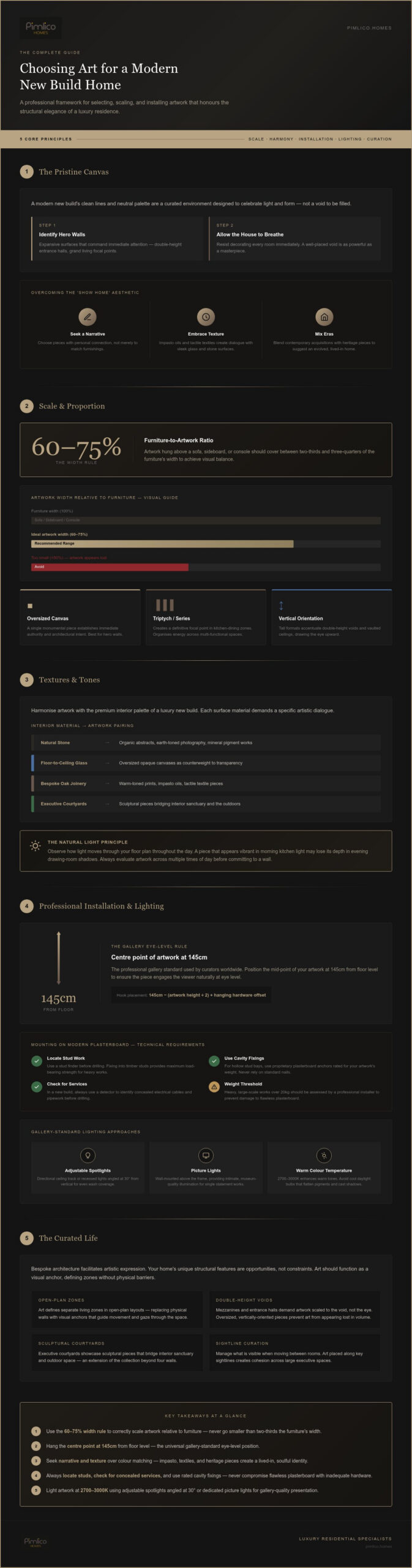
The 60-75% rule is a reliable benchmark for achieving balance. Artwork hung above a sideboard, sofa, or console should ideally cover between two-thirds and three-quarters of the furniture’s width. In executive courtyard homes, where floor-to-ceiling glass is a signature feature, oversized art provides a necessary counterweight to the transparency of the walls. Consider these principles for large rooms:
- Oversized Canvases: A single, monumental piece establishes immediate authority and architectural intent.
- Vertical Orientation: Use tall, slender pieces to draw the eye upward, celebrating high-specification ceiling details and crown moulding.
- Triptychs and Diptychs: Multiple panels allow you to cover significant wall spans whilst maintaining a manageable weight for installation.
Curating for Voids and Stairwells
Transition zones like stairwells and mezzanine voids offer the most dramatic potential for artistic expression. These areas allow you to move beyond the traditional 2D canvas and explore sculptural installations that change perspective as you move through the home. In modern barn conversion interiors, the placement of art is often dictated by the rhythmic positioning of original or reclaimed beams. Here, the art must sit comfortably within the bays, respecting the heritage of the timber whilst asserting its own modern identity.
Whether you are navigating the vaulted heights of a bespoke conversion or the sleek lines of a detached estate, the goal is a seamless integration of art and structure. If you are beginning your journey toward a more refined lifestyle, you might find inspiration by exploring our latest luxury new build developments, where every room is designed as a visionary canvas.
Textures and Tones: Harmonising Artwork with Modern Interior Palettes
A luxury home is a symphony of textures. When you’re choosing art for a modern new build home, you aren’t just selecting a subject; you’re selecting a surface. The tactile quality of a piece, whether it’s the rough grain of a heavy impasto oil or the delicate weave of a textile hanging, must complement the high-specification materials surrounding it. In a Pimlico property, where natural stone, bespoke oak joinery, and expansive glass are standard, your artwork acts as the final sensory layer.
Art provides the perfect vehicle for introducing accent colours without compromising a sophisticated, neutral base. A vibrant abstract can pull together the subtle tones of a silk rug or the metallic glint of a bronze sculpture. This dialogue ensures the room feels cohesive rather than cluttered. We’ve seen a significant resurgence of textile and sculptural art in contemporary British interiors. These pieces offer a softness that contrasts beautifully with the sharp, clean lines of modern architecture.
Materiality and Architectural Contrast
Organic forms are essential for softening the inherent coolness of glass and steel. A textured painting can break up the flatness of a large wall, adding depth that changes as the light shifts throughout the day. Monochrome works are equally powerful. They allow the architectural details to speak whilst providing a minimalist, gallery-like feel. Some collectors even choose to commission bespoke pieces that incorporate the very materials found in their home’s construction, such as limestone dust or oak charcoal, creating a literal connection between the art and the dwelling.
The Sophisticated Frame
The frame is the bridge between the artwork and the room’s interior design. Floating frames are now the modern standard for luxury developments. They allow the canvas to breathe and appear to hover within the frame, which suits the airy feel of an open-plan layout. Matching frame finishes to ironmongery and light switches creates a meticulous, professional finish. It’s a small detail that yields a grand impact.
For homes with floor-to-ceiling windows, anti-reflective glass is an essential investment. It preserves the clarity of the work whilst protecting it from UV damage. Achieving this level of detail often requires expert advice on professional art installation and lighting to ensure every piece is showcased to its full potential. It’s these intimate details that transform a high-end house into a curated sanctuary. Quality framing reflects the same craftsmanship found in your property’s bespoke joinery.
The Engineering of Aesthetics: Professional Installation and Lighting
Precision is the hallmark of a master craftsman. When choosing art for a modern new build home, the technical execution of hanging and lighting is as critical as the selection itself. A masterpiece loses its authority if it’s positioned poorly or cast in shadow. To achieve a gallery-standard finish, one must adhere to the 145cm rule; this dictates that the centre of the artwork should sit at eye level, approximately 145cm from the floor. This consistency creates a rhythmic flow through the property, anchoring the collection within the architectural frame.
Professional installation isn’t merely about aesthetics; it’s a prerequisite for protecting high-value investments. Substantial canvases and framed works carry significant weight. Relying on standard nails is a risk that few connoisseurs are willing to take. Expert installers ensure that every piece is secured with structural integrity, allowing you to enjoy your collection with total peace of mind. It’s the difference between a house that’s decorated and a sanctuary that’s curated.
Hanging Art on Modern Walls
Modern construction typically utilises high-specification plasterboard. Whilst pristine, these surfaces require specific technical knowledge for heavy-scale art. Selecting the correct heavy-duty fixings, such as Gripit or metal toggle bolts, is essential for distributing weight effectively. For particularly substantial commissions, finding the timber studs within the wall provides the necessary structural support. If you enjoy a frequently rotating collection, a discreet gallery rail system integrated into the ceiling junction offers flexibility without the need for repeated drilling. This methodical approach preserves the flawless finish of your walls whilst celebrating your evolving taste.
Illuminating the Vision
Lighting is the element that breathes life into a collection after sunset. A sophisticated lighting design should be integrated with your smart home system, allowing for bespoke ‘gallery modes’ that highlight specific works at the touch of a button. Recessed ceiling spots offer a clean, minimalist look that suits contemporary architecture, whilst adjustable wall-mounted picture lights provide a more traditional, intimate glow. Protection is equally vital. In bright, south-facing rooms, understanding UV light damage is crucial. Utilising museum-grade glass or automated shading systems ensures your investment remains as vibrant as the day it was acquired.
The synergy between engineering and art is what defines a truly exceptional residence. If you’re ready to begin your next chapter in a home designed for such excellence, explore our bespoke luxury homes to find your perfect architectural canvas.
The Curated Life: How Bespoke Architecture Facilitates Artistic Expression
The synergy between a residence and its collection is not a matter of chance. It’s the result of deliberate architectural foresight. When choosing art for a modern new build home, the most successful outcomes occur when the building itself is designed to celebrate the owner’s aesthetic vision. At Pimlico Homes, we view our role as more than just constructors. We are the creators of the stage upon which your personal narrative will unfold. This partnership between builder and collector ensures that every niche, lighting circuit, and sightline is optimised to showcase curated beauty.
A bespoke home builder acts as the ultimate guardian of quality for your collection. By understanding the requirements of large-scale works during the initial planning stages, we can reinforce structural points and integrate sophisticated technology without compromising the minimalist aesthetic. This methodical approach ensures that your home isn’t just a place of residence, but a private gallery that reflects your unique journey and refined taste.
Designing for the Collector
True luxury lies in the details that aren’t immediately visible. During the bespoke design phase of our executive courtyard homes, we consider the placement of substantial wall spans and integrated electrical points long before the first brick is laid. This allows for the seamless installation of the smart lighting systems and heavy-duty fixings discussed earlier. These properties are particularly suited to the ‘artistic life’, offering private, glass-walled vistas that invite the eye to move from interior canvases to sculptural garden art. A high-specification home deserves investment-grade art; the two work in tandem to create an environment of permanence and prestige.
A Legacy of Excellence
Finishing a home with carefully selected art carries a profound emotional weight. It’s the final act of transformation, turning a structure of stone and glass into a legacy of excellence. Beyond the personal satisfaction of living amongst beauty, a well-curated collection significantly enhances the stature and perceived value of a premium property. It signals a level of meticulous care that resonates with discerning guests and future generations alike. It’s a testament to a life well-lived and a vision fully realised.
Your collection will inevitably grow and evolve, just as your life does within these walls. By choosing a home that offers both structural integrity and architectural elegance, you’ve secured the ultimate partner for your artistic journey. We invite you to explore our latest bespoke developments to find the perfect visionary canvas for your collection. This is where your curated life begins, grounded in quality and elevated by art.
Realising Your Visionary Sanctuary
The journey of transforming a high-specification property into a curated sanctuary is a deeply personal endeavour. It requires a balance of artistic intuition and technical precision. By mastering the nuances of scale within architectural voids and harmonising textures with premium materials, you ensure your collection commands the respect it deserves. The process of choosing art for a modern new build home is ultimately about creating a legacy of excellence that reflects your unique narrative.
Your home should be more than a residence; it’s a visionary canvas designed with meticulous attention to every architectural detail. With 25 years of specialist expertise in luxury residential projects, we provide the foundation for a life defined by quality and prestige. We invite you to discover the architectural excellence of Pimlico Homes and find the perfect canvas for your collection. Our bespoke service for discerning executive buyers ensures that your property is as unique as the masterpieces you choose to hang within it. Begin your next chapter in a home that celebrates your vision.
Frequently Asked Questions
How do I hang heavy artwork on a new build plasterboard wall safely?
Use high-specification heavy-duty plasterboard fixings such as Gripit or metal toggle bolts to distribute weight across the surface effectively. For exceptionally substantial pieces, you must locate the timber studs behind the plasterboard to provide structural support. This ensures the integrity of your pristine walls whilst providing the security required for significant investments. Professional installers often use these methods to prevent damage and ensure a permanent, secure mount.
What is the best height to hang art in a room with high ceilings?
The standard gallery height of 145cm from the floor to the centre of the artwork remains the most sophisticated choice, even in rooms with vaulted ceilings. This eye-level placement creates a consistent visual line that anchors the collection to the human scale of the room. Whilst the volume of the space is grand, hanging art too high creates a disjointed atmosphere. Use larger pieces rather than higher placement to fill the vertical void.
Should my artwork match the colour of my furniture or the walls?
Your artwork should dialogue with the interior palette rather than strictly matching the upholstery or wall colour. A sophisticated approach involves selecting pieces that introduce complementary accent tones or textures whilst respecting the neutral base of a luxury home. This creates a curated feel that suggests a collection built over time. Art is a personal expression; it should stand as its own entity whilst harmonising with the high-specification finishes of your residence.
How do I choose the right size art for a large open-plan living room?
Aim for artwork that occupies approximately 60% to 75% of the available wall space above a piece of furniture to ensure correct proportions. In large open-plan zones, choosing art for a modern new build home requires a bold approach to scale; undersized pieces will appear lost amongst the architectural volume. Large-scale canvases or triptychs act as visual anchors, defining specific areas like the dining or lounge zones without the need for physical partitions.
Is it better to buy original art or limited edition prints for a new home?
Original artwork offers a level of uniqueness and texture that limited edition prints cannot replicate, making it the preferred choice for a luxury residence. It represents a significant life investment and adds a layer of bespoke craftsmanship to your home. However, high-quality limited edition prints from established artists can be an excellent way to diversify a collection. The decision ultimately rests on the emotional weight and narrative you wish to establish within your sanctuary.
How can I protect my paintings from fading in a room with large windows?
Protect your collection by investing in museum-grade glass with high UV resistance for framed works. In rooms with expansive floor-to-ceiling glazing, automated smart shading systems can be programmed to reduce direct sunlight exposure during peak hours. Positioning sensitive oil paintings away from direct light paths also mitigates the risk of fading. These preventative measures ensure that the vibrancy and provenance of your investment are preserved for decades to come.
What are the current trends in art for modern British luxury homes?
Current trends amongst discerning collectors include a shift toward tactile textile art and large-scale sculptural installations that break the flatness of modern walls. There is a renewed focus on organic forms and textured impasto oils that soften the clean lines of contemporary architecture. Monochrome works remain a staple for those seeking a minimalist, gallery-like aesthetic. These choices reflect a desire for a home that feels both innovative and grounded in traditional craftsmanship.
Do I need a professional art installer for my new build?
Engaging a professional art installer is a prudent choice when choosing art for a modern new build home, particularly for heavy or high-value pieces. Professionals possess the technical expertise to handle complex plasterboard installations and ensure every piece is perfectly level and secure. This service provides peace of mind that your pristine walls remain undamaged and your collection is showcased with the same meticulous care that went into the construction of your property.


