
True prestige isn’t found in a pristine surface that demands tip-toeing. It’s found in a floor that welcomes the rhythm of a vibrant life. When choosing flooring for a high-traffic luxury home, the challenge lies in selecting materials that refuse to compromise on elegance whilst enduring the inevitable pressure of busy hallways and bustling kitchens. It’s disheartening to witness the slow erosion of a significant investment through unsightly scratches on delicate timber or stubborn stains on porous stone. You shouldn’t have to choose between a house that looks like a gallery and one that feels like a home.
This guide reveals how to achieve a seamless balance between uncompromising aesthetic grandeur and the practicalities of a high-end household. We’ll explore materials that develop a graceful patina over time, integrate perfectly with underfloor heating, and offer the low-maintenance luxury your lifestyle deserves. You’ll discover how the right specifications ensure your floors remain a testament to craftsmanship rather than a source of constant concern. We’ll examine the intersection of durability and design, ensuring your home remains an enduring sanctuary for years to come.
Key Takeaways
- Recognise the role of flooring as the architectural foundation that defines the prestige and emotional resonance of your living space.
- Navigate the nuances of choosing flooring for a high-traffic luxury home by comparing the resilience of engineered oak with the classical elegance of limestone and marble.
- Utilise technical metrics like the Janka Hardness Scale to ensure your timber selections withstand the pressures of a modern, active household.
- Tailor your material choices to specific zones, protecting high-impact areas like entrances and kitchens from grit, moisture, and frequent spills.
- Gain insight into how bespoke architectural specifications and elite material sourcing create a finish that develops a beautiful patina over decades.
The Architecture of the Surface: Why Flooring Matters in Luxury Design
Flooring is far more than a functional necessity. It’s the fifth wall of a residence, providing the silent foundation upon which the entire interior narrative is built. In a high-end detached home, the floor occupies the largest visual plane, commanding attention and setting the atmospheric tone from the moment one crosses the threshold. The emotional weight of these materials can’t be overstated. A cool, honed marble suggests a disciplined, classical grandeur, whilst a deep, hand-distressed timber evokes a sense of heritage and warmth. These textures don’t just occupy space; they influence the very behaviour of those within it.
The challenge of choosing flooring for a high-traffic luxury home lies in the intersection of this aesthetic vision and the relentless demands of daily life. Entrance halls, sprawling kitchens, and social galleries are the arteries of the home. They endure the grit of the outdoors, the weight of frequent gatherings, and the playful energy of family life. Standard residential products often fail the executive standard because they are designed for average wear rather than exceptional longevity. To understand the breadth of options available, one might consult a comprehensive overview of flooring materials, but for a bespoke residence, the selection must be far more curated.
The Aesthetic Impact of Continuity
Open-plan living demands a unified approach to surfaces. When a single material flows from the grand entrance into the culinary centre, it creates a sense of boundless architectural volume. This continuity removes visual “noise” and allows the home’s structural features to shine. Light reflection plays a critical role here. A soft matte finish absorbs light, creating an intimate, grounded feel, whereas a subtle satin sheen can lift a room, reflecting the garden views and expanding the sense of space. It’s about creating a canvas that feels deliberate and cohesive.
Durability as a Foundation for Luxury
We believe that true prestige is found in materials that age with grace. This is the “wear-in, not wear-out” philosophy. A premium floor shouldn’t look its best only on the day of installation; it should develop a beautiful patina that tells the story of the home. By selecting high-specification finishes, you’re shifting the focus from a temporary cost to a permanent enhancement of property value. This meticulous approach to material selection is a cornerstone of our buying a luxury new build guide, which frames these choices as vital investments in a home’s long-term legacy. Quality underfoot provides a sense of security that no superficial finish can replicate.
Premium Material Selection: Comparing Hardwood, Stone, and Porcelain
Materiality defines the soul of a residence. When choosing flooring for a high-traffic luxury home, you’re selecting the tactile interface of your daily life. It’s a decision that balances the organic warmth of timber with the cool, enduring strength of mineral surfaces. The sensory experience is profound. It’s the difference between the resonant, solid sound of a footstep on oak and the silent, thermal stability of porcelain. Each material carries its own narrative of permanence and artistry.
Hardwood: The Sophisticated Choice
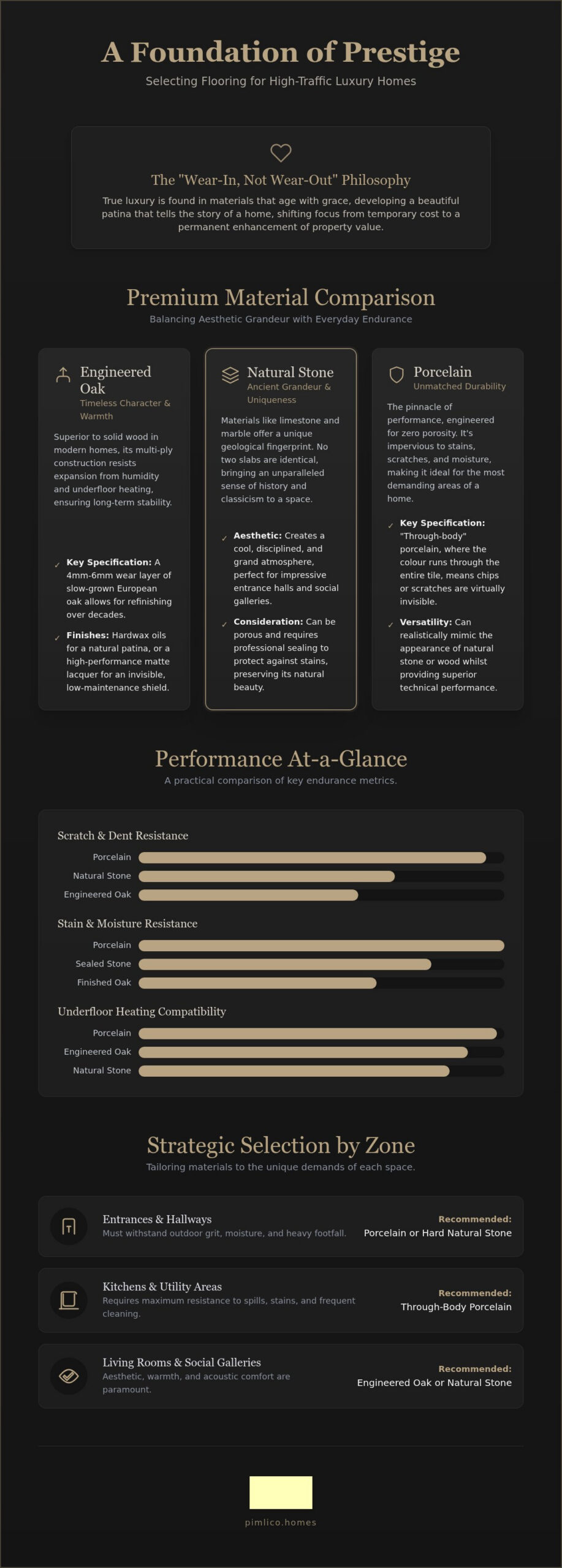
Engineered oak remains the quintessential choice for those seeking timeless character. In high-specification new builds, engineered timber is the undisputed standard; it’s far superior to solid wood in modern environments. This superiority stems from a robust multi-ply construction that resists the natural expansion and contraction caused by seasonal humidity and underfloor heating. A significant wear layer, typically 4mm to 6mm of slow-grown European oak, ensures the surface can be refinished over decades. It’s an investment that matures. When it comes to finishes, hardwax oils are often favoured for their ability to penetrate the grain, allowing the wood to breathe and develop a rich patina. For households with constant activity, a high-performance matte lacquer provides an invisible shield that’s easy to maintain whilst preserving the wood’s natural texture.
Natural Stone and Porcelain Stoneware
Natural stone offers an unparalleled geological fingerprint. Limestone, marble, and travertine bring a sense of ancient grandeur to grand entrance halls and social galleries. No two slabs are identical; this unique variation is the hallmark of true luxury. However, natural stone requires a commitment to care. It’s porous and can be sensitive to acidic spills. For many, the modern alternative is porcelain stoneware. These tiles are a triumph of contemporary engineering, capable of replicating the delicate veining of Calacatta marble with zero porosity. They’re impervious to moisture and staining, making them ideal for the culinary centre. Safety is equally paramount. We look for R10 or R11 slip-resistance ratings to ensure family security in high-traffic zones without sacrificing the sleek, honed aesthetic. If you’re envisioning these finishes within a custom-designed space, exploring our bespoke luxury homes provides a glimpse into how we integrate these premium materials into a cohesive architectural vision. The goal is always to provide a surface that feels as exceptional as it looks.
Performance Metrics: The Science of High-Traffic Endurance
Prestige is as much about performance as it is about appearance. When choosing flooring for a high-traffic luxury home, one must look beneath the surface grain to the empirical data that ensures longevity. A floor that appears magnificent today must retain that stature a decade from now, even under the constant pressure of a vibrant, active household. This requires a scientific approach to material selection, focusing on hardness, porosity, and the acoustic profile of the space.
The Janka Scale and Timber Resilience
The Janka scale is the measure of a wood species resistance to denting and wear. It provides a vital benchmark for homeowners who desire the organic warmth of timber but worry about the impact of high heels or pets. For instance, European Oak typically sits at 1,120 lbf on the scale, making it a robust choice for social galleries. Whilst Walnut offers a deeper, more evocative tone, its lower rating of 1,010 lbf means it’s better suited to more intimate areas. Maple, reaching 1,450 lbf, is exceptionally hard but can be less stable when exposed to significant temperature shifts.
Hardness is only one part of the equation. The finish is the true guardian of the wood. A high-specification matte lacquer can provide a protective shell that resists micro-scratches, whereas a hardwax oil allows for easy spot-repairs in busy hallways. We often recommend a brushed texture for high-activity zones. This technique removes the softer springwood, leaving a harder, more resilient surface that hides minor imperfections amongst the natural grain.
Thermal Dynamics and Underfloor Heating
In contemporary luxury architecture, underfloor heating (UFH) is a standard expectation for year-round comfort. However, the efficiency of these systems depends entirely on the thermal conductivity of the floor above. Natural stone and porcelain are the most efficient partners for UFH. They possess high thermal mass, absorbing heat quickly and radiating it evenly across the room. This creates a gentle, consistent warmth that defines the executive home experience.
Timber requires more careful management. Engineered boards are essential here; their multi-layered construction limits the expansion and contraction that occurs when the heating is engaged. Beyond heat, acoustics must be considered. Detached homes with expansive hard surfaces can suffer from unwanted echo. We solve this through the strategic use of high-density acoustic underlays. These layers don’t just protect the heating elements; they dampen the sound of footsteps, ensuring that even the busiest kitchen maintains an air of quiet, refined calm. It’s this attention to technical detail that transforms a simple surface into a lasting architectural asset.
Strategic Selection: Tailoring Flooring to High-Activity Zones
Choosing flooring for a high-traffic luxury home is an exercise in architectural choreography. It isn’t enough to select a single beautiful material and apply it universally. One must consider the distinct rhythm of each room. The entrance demands a different resilience than the library. The kitchen requires a different acoustic profile than the social gallery. A successful design anticipates these needs, tailoring the surface to the specific pressures of the zone whilst maintaining a unified aesthetic vision. It’s about creating a home that functions as beautifully as it presents.
Entrance Halls and Mudrooms
The threshold is the first point of contact. It’s where the external world meets the internal sanctuary. To protect the more delicate surfaces further inside, we recommend integrating recessed matting into the architectural plan. This allows for a flush transition that captures grit without compromising the floor’s profile. Large-format, textured stone slabs are ideal here. They provide a sense of permanence and gravitas that reflects the stature of an executive courtyard home. Subtle variations in the stone’s surface, such as those found in tumbled limestone, help to disguise minor debris, ensuring the entrance remains pristine between cleans.
Kitchens and Open-Plan Spaces
The culinary centre is the most demanding environment in any residence. Porcelain has become the favourite choice for modern luxury kitchens due to its impervious nature. It handles spills, heat, and heavy footfall with effortless poise. In large-scale architectural barn conversions, these hard surfaces can occasionally create an unwanted echo. We mitigate this by introducing soft transitions or specifying high-performance acoustic backings. Bridging the gap between the functional kitchen and the softer living area is a delicate art. A seamless transition from porcelain to engineered oak can define the space without the need for jarring physical barriers. This maintain the flow whilst acknowledging the different purposes of each zone.
Social galleries and entertaining spaces require a focus on warmth and acoustics. Here, the tactile nature of timber is unsurpassed. By using consistent materials across transition zones, you create a sense of boundless space. Small details, such as bespoke brass or steel threshold strips, can elevate a simple material change into a deliberate design statement. If you’re ready to see how these high-specification finishes come together in a finished project, explore our bespoke luxury homes to see our commitment to excellence in every detail.
The Pimlico Standard: Bespoke Specifications for Lasting Luxury
Excellence is never accidental. It’s the result of deliberate choices made long before the first stone is laid or the first plank is fitted. When choosing flooring for a high-traffic luxury home, we look beyond the superficial to the lineage of the material itself. We partner exclusively with reputable European suppliers who share our devotion to permanence. These artisans provide the slow-grown timbers and rare mineral slabs that form the backbone of our high-specification finishes. By integrating these selections into the initial architectural vision, we ensure that the floor isn’t merely a surface, but a fundamental component of the home’s structural integrity. This methodical approach allows us to align the floor’s performance with the home’s heating, lighting, and spatial flow from the very beginning.
Craftsmanship and Heritage
In our barn conversion interiors, we often blend the raw, honest textures of the original structure with the precision of contemporary engineering. This requires a meticulous approach to sub-floor preparation. Without a perfectly level, thermally stable foundation, even the finest materials will eventually falter. Our master craftsmen spend as much time perfecting what’s beneath the floor as they do laying the surface itself. This technical rigour is paired with a deeply personalised consultation process. We don’t just present samples; we explore how your family will move through the space. We consider the impact of natural light at different times of day and the specific demands of your household pets. This ensures the material matches your specific rhythm of life without compromise.
A Legacy of Excellence
Bespoke flooring is a hallmark of a Pimlico property. It’s an investment in the resale value of your home, providing a tangible sense of quality that prospective owners recognise instantly. We select materials that age with a quiet dignity. They develop a character that reflects the life lived upon them, ensuring your residence remains as striking in a decade as it is on the day you first receive the keys. It’s about creating a legacy of excellence that endures through changing trends. We invite you to explore our current developments and witness this commitment to craftsmanship first-hand. Discover the difference that 25 years of industry expertise brings to every square metre of your future home. Our team remains a reliable guardian of quality, supporting you through every stage of your journey toward a truly exceptional living environment.
Creating an Enduring Architectural Legacy
Excellence isn’t a destination; it’s a standard maintained through every intricate detail of your residence. We’ve explored how the intersection of material science and architectural vision creates a surface that doesn’t just endure, it evolves. From understanding technical hardness scales to implementing strategic zoning, the art of choosing flooring for a high-traffic luxury home is about balancing aesthetic grandeur with the uncompromising practicalities of a busy life.
With 25 years of specialist experience in high-end property development, Pimlico Homes provides bespoke specifications tailored specifically to the executive market. Our expert craftsmanship is woven into every barn conversion and new build, ensuring that your foundation remains a source of pride for decades. We invite you to take the next step in your journey toward a home that reflects your achievements and your lifestyle.
Explore our bespoke luxury developments and discover the Pimlico standard of excellence. Your vision for a sanctuary that marries resilience with refinement is ready to be realised.
Frequently Asked Questions
Which flooring is best for high-traffic areas in a luxury home?
High-grade porcelain and engineered European oak are the premier choices for durability. Porcelain offers unmatched resistance to moisture and abrasion, whilst engineered oak provides organic warmth with the structural stability required for modern environments. When choosing flooring for a high-traffic luxury home, the focus should remain on materials that age with grace. These selections ensure that the most active zones of your residence maintain their prestige without requiring constant remedial work.
Can I have real wood flooring with underfloor heating?
You can certainly enjoy real wood flooring with underfloor heating, provided you specify engineered boards rather than solid timber. The cross-laminated construction of engineered oak minimises the natural expansion and contraction caused by temperature fluctuations. This stability prevents warping or gapping over time. It’s essential to use a high-quality, thermally conductive underlay to ensure the heat radiates efficiently through the wood, maintaining a consistent and comfortable climate throughout your living spaces.
Is natural stone or porcelain more durable for a luxury kitchen?
Porcelain is technically more durable for a culinary environment due to its zero porosity and resistance to acidic spills. Whilst natural stone like marble or limestone offers an unparalleled geological fingerprint, it requires regular sealing to prevent staining. Porcelain replicates these natural aesthetics with far less maintenance. It doesn’t absorb moisture or odours, making it the superior choice for a busy kitchen where spills are inevitable but perfection is still the expected standard.
How do I prevent scratches on my luxury hardwood floors?
Preventing scratches begins at the threshold with the installation of high-quality recessed matting to capture grit. We recommend using felt protectors on all furniture legs and avoiding fine-point heels on softer timber species. Choosing a brushed finish for your hardwood can also help, as the textured surface naturally disguises minor micro-scratches. Regular maintenance with specialist hardwax oil or pH-neutral cleaners will preserve the protective layer and keep the grain looking vibrant for decades.
What is the most low-maintenance luxury flooring option?
Large-format porcelain tiles are the most low-maintenance option for a high-end residence. They require no specialist sealing or periodic sanding, unlike natural stone or timber. A simple sweep and a damp mop are usually sufficient to maintain their original lustre. Because porcelain is impervious to water and chemicals, it doesn’t suffer from the fading or etching that can affect other premium materials. This allows you to enjoy a pristine aesthetic with minimal domestic intervention.
How does flooring choice impact the resale value of a new build?
High-specification flooring significantly enhances the resale value of a new build by signaling a commitment to quality. Prospective buyers in the executive market look for permanent architectural assets rather than superficial finishes. Materials like engineered oak or natural stone suggest a home that has been built to last, reducing the perceived need for future renovations. These choices provide a tangible sense of prestige that justifies a premium valuation and distinguishes the property from standard developments.
What is the best way to transition between different flooring materials in an open-plan home?
The most sophisticated way to transition between materials is through flush, seamless joins that avoid bulky threshold bars. We often utilise bespoke brass or stainless steel strips to create a deliberate and elegant boundary between timber and stone. In an open-plan home, these transitions should feel intentional, perhaps aligning with architectural features like pillars or ceiling beams. This maintains the visual flow whilst clearly defining the functional zones of your living space without physical barriers.
Should I choose a matte or polished finish for a high-traffic hallway?
A matte or satin finish is almost always preferable for high-traffic hallways. Polished surfaces are prone to showing every footprint, water spot, and micro-scratch, which can quickly diminish the sense of luxury. Matte finishes are far more forgiving, diffusing light to hide the minor debris and wear that naturally occur in entrance zones. They provide a grounded, contemporary look that feels both sophisticated and practical, ensuring your hallway remains welcoming and pristine between professional cleans.


