
The true legacy of a luxury property isn’t found in the initial handover; it lives in the meticulous preservation of its soul. Acquiring a bespoke residence is a landmark achievement, yet it often brings a quiet anxiety regarding the stewardship of its most delicate elements. You might worry about the vulnerability of rare natural stone or the natural movement of seasoned timber as it settles into its new environment. It’s a valid concern for any discerning homeowner who views their property as both a sanctuary and a significant financial asset.
This guide offers a masterclass in maintaining high-end finishes in a new home, transforming confusion into confident expertise. We’ll provide the precise knowledge needed to protect the lustre and structural integrity of your premium materials without resorting to aggressive or harmful chemicals. From the specific sealing requirements of marble to the atmospheric needs of fine cabinetry, you’ll discover a framework for care that preserves aesthetic radiance and secures long-term investment value. We will move from the grand vision of your home’s design to the intimate, essential details of its daily upkeep.
Key Takeaways
- Adopt the mindset of a dedicated steward to transition from standard cleaning to the sophisticated management of your property’s most valuable physical assets.
- Master the specific requirements for maintaining high-end finishes in a new home, including the delicate preservation of natural marble, limestone, and hand-crafted timber.
- Optimise your home’s internal environment by balancing temperature and humidity to protect bespoke joinery from the unique challenges of the British climate.
- Follow a methodical seasonal checklist designed to maintain the perpetual radiance of your finishes, from spring re-sealing to summer UV monitoring.
- Create a comprehensive stewardship logbook to document every act of care, providing future buyers with tangible proof of the property’s exceptional value.
The Philosophy of Stewardship: Why High-End Finishes Demand Precision
Owning a prestige property is a commitment to excellence that extends far beyond the initial exchange of keys. While standard house cleaning focuses on the temporary removal of dust, the art of maintaining high-end finishes in a new home is a deeper practice of stewardship. It’s the difference between mere tidiness and the preservation of a legacy. Every surface in a Pimlico home, from the hand-polished marble to the bespoke timber joinery, is a high-specification asset that requires a precise, informed approach to remain in its peak condition.
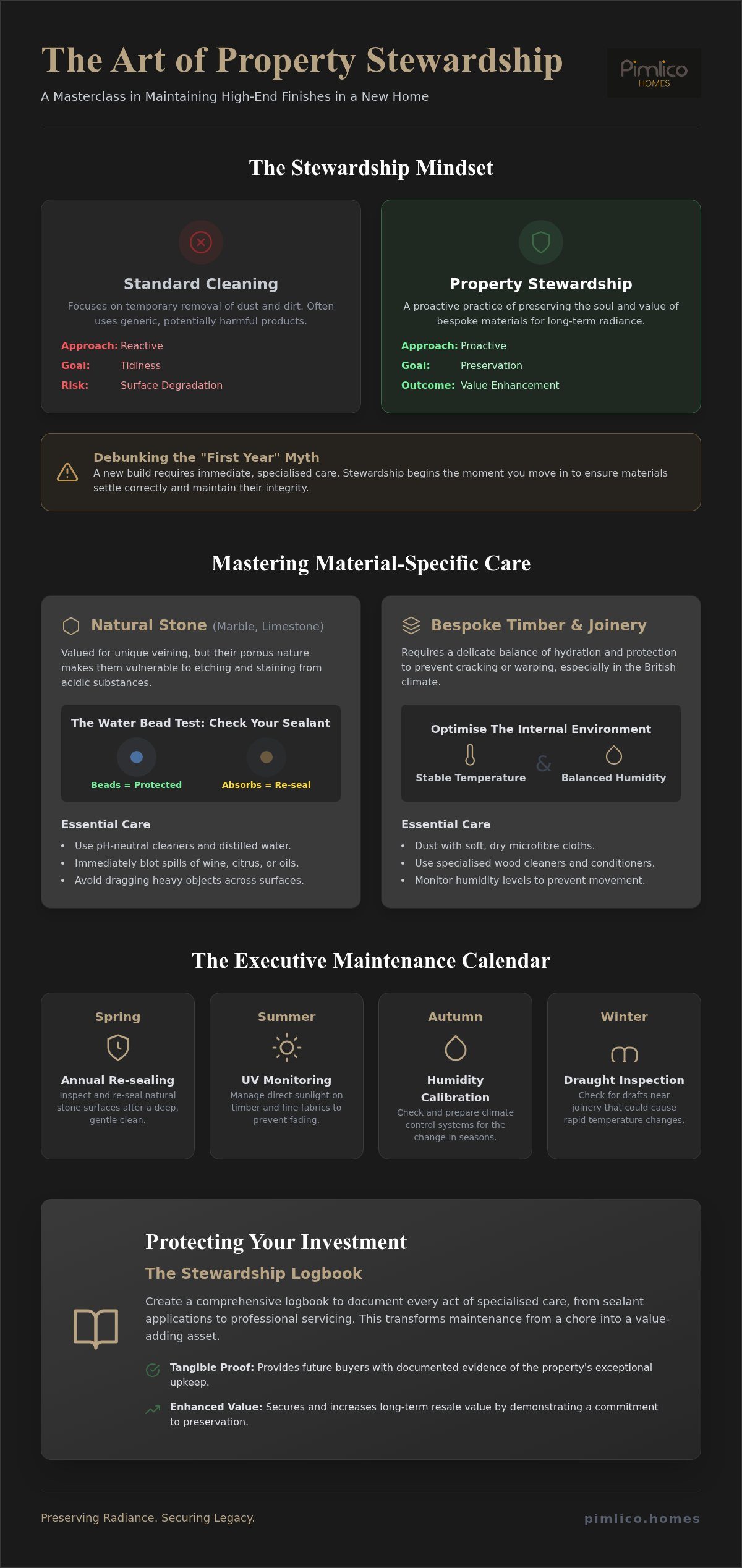
A common misconception exists that a new build requires little attention during its first twelve months. This “First Year” myth can be a costly assumption. In reality, the stewardship of your home begins the moment you step through the door. Early intervention ensures that materials settle correctly into their environment, protecting the integrity of the finish against the subtle shifts of a building’s infancy. Beyond the financial implications, a flawlessly maintained environment fosters a sense of refined pride; it reinforces the daily experience of luxury that defines your life investment.
The Stewardship Mindset for Luxury Homeowners
True stewardship begins with a shift in perspective. You aren’t simply looking after floors and walls; you’re acting as the guardian of a collection of bespoke materials. This mindset prioritises controlled, gentle interventions over the occasional deep-cleaning marathons that can actually stress delicate surfaces. By adopting a methodical routine, you reinforce the benefits of buying a new build, ensuring that the precision craftsmanship of the original build remains visible for decades. It’s about maintaining that elusive “day-one” radiance through consistent, specialised care.
The Risk of Common Cleaning Shortcuts
Convenience is often the enemy of quality. Many homeowners inadvertently damage their property by using aggressive, multi-purpose cleaners that aren’t designed for premium specifications. The chemistry of care is uncompromising. High-specification finishes often react poorly to acidic or highly alkaline detergents, which can cause permanent etching or dulling. Gaining a foundational understanding cleaning agents is essential for any resident; it allows you to distinguish between safe, pH-neutral solutions and those that pose a risk. When maintaining high-end finishes in a new home, identifying the early warning signs of degradation, such as micro-scratches or a loss of depth in the stone’s grain, is vital before these changes become irreversible. Precision isn’t just a preference; it’s a necessity for the discerning homeowner.
Mastering Material-Specific Care: Stone, Timber, and Bespoke Metals
Mastering the specific requirements for maintaining high-end finishes in a new home begins with understanding the distinct personality of each material. Every element of a bespoke residence is selected for its aesthetic depth and structural resilience, yet these qualities are only sustained through informed care. From the cool precision of natural stone to the warm, organic grain of artisanal timber, your stewardship must be as specialised as the craftsmanship that created the space.
Natural Stone: Preventing Etching and Staining
Natural stone surfaces like marble, quartzite, and limestone are prized for their unique veining and tactile elegance. However, their porous nature makes them susceptible to etching from acidic substances. When maintaining high-end finishes in a new home, the “Water Bead Test” remains an essential diagnostic tool. Simply place a few drops of water on the surface; if it beads, the sealant is intact. If the stone absorbs the moisture, it’s time for a professional refresh. For those seeking professional guidance on stone care, remember that distilled water and a clean microfibre cloth are your most effective daily allies. Immediate action is required for spills of wine, citrus, or oils to prevent permanent shadows from marring the stone’s radiance.
Timber and Joinery: Managing Moisture and Lustre
Bespoke joinery requires a delicate balance of hydration and protection. This is particularly vital when preserving the heritage-inspired aesthetics of modern barn conversion interiors, where the interplay of light and wood is central to the design. You must distinguish between oil-finished timber, which breathes and requires periodic re-oiling, and lacquered wood, which offers a sealed barrier. Avoid the common trap of using heavy waxes; these often create a sticky build-up that traps dust and dulls the natural grain over time. For those seeking to expand their portfolio with properties built to these exacting standards, exploring our collection of luxury new build homes provides a foundation of quality from the outset.
Architectural Metals and Hardware
High-specification hardware often features “living finishes” like unlacquered brass, which are designed to develop a unique patina that tells the story of the home. If you prefer the original brilliance, regular polishing with a specialised, non-abrasive cream is necessary. Conversely, matte black and polished chrome require a gentler touch to manage fingerprints and water spots without scratching the surface. Matte aluminium window frames require a simple, periodic wipe with a non-abrasive, pH-neutral solution to prevent the accumulation of environmental particulates from degrading the surface coating.
Textile preservation is the final layer of luxury stewardship. Performance linens and deep-pile wool rugs should be vacuumed with a brushless suction head to prevent pilling or fibre damage. Managing these soft finishes ensures that the acoustic and visual softness of your private sanctuary remains as inviting as the day you first arrived.
Regulating the Internal Environment: Temperature, Humidity, and Light
The British climate poses a unique challenge to the preservation of architectural integrity. Whilst we often focus on the physical contact of cleaning, the atmospheric conditions within the home are equally influential in the long-term preservation of your investment. Maintaining high-end finishes in a new home requires a sophisticated understanding of how temperature and moisture interact with organic materials. Underfloor heating (UFH) provides a gentle, consistent warmth that is far kinder to bespoke timber and stone than the aggressive heat spikes of traditional radiators. This stability is the foundation of material longevity.
Air quality also plays a silent role in the stewardship of your home. Implementing high-efficiency filtration, such as the MERV 13 standards highlighted in the 2025 LEED v5 updates, significantly reduces the particulate matter that settles as abrasive dust on delicate surfaces. By managing the environment at the source, you reduce the frequency of physical cleaning, thereby minimising the risk of accidental wear.
The Humidity Sweet Spot for Premium Timber
Natural timber is a living material that responds to the moisture in its environment. In the UK, seasonal shifts can cause relative humidity to fluctuate wildly. For bespoke executive homes, maintaining a constant range of 40% to 60% relative humidity is the benchmark for excellence. This stability prevents the timber from shrinking or cracking as it settles during the first 24 months of the building’s life. Utilising smart home sensors allows for real-time monitoring; this ensures that your HVAC system can make subtle adjustments before the material’s integrity is compromised.
Light Stewardship and UV Mitigation
Daylight is a primary design element, yet its ultraviolet component is a slow-acting catalyst for degradation. Solar bleaching can irrevocably alter the deep tones of dark timber floors and the vibrant pigments of performance linens. Strategic stewardship involves the use of automated blinds and UV-filtering glass to mitigate this risk whilst still enjoying the radiance of a sun-drenched room. To avoid the “shadow effect”, where protected areas under rugs or furniture remain darker than the surrounding floor, we recommend subtle rotations of your interior layout during the first year of occupancy. This ensures an even, graceful maturation of all surfaces across the property.
The Executive Maintenance Calendar: A Seasonal Checklist for Perpetual Radiance
Precision stewardship isn’t a reaction to wear; it’s a proactive rhythm that aligns with the natural cycles of the year. Maintaining high-end finishes in a new home requires a methodical approach that anticipates environmental shifts before they manifest as physical degradation. By establishing a seasonal calendar, you transform the complex requirements of a prestige estate into a manageable, elegant routine of preservation.
Spring serves as the season of renewal and deep-cleansing. As the damp British winter recedes, it’s the ideal time for re-sealing natural stone surfaces and conducting thorough inspections of exterior hardscapes. Summer demands a focus on UV monitoring, ensuring that automated shading systems are functioning perfectly to protect your interiors from the peak solar intensity. Autumn is a period of preparation; you must ensure timber elements are appropriately hydrated and gutters are cleared to prevent moisture ingress before the heating season begins. Winter requires a defensive posture. It’s vital to manage the ingress of salt and grit at entryways to protect polished floors, whilst monitoring internal humidity levels as the external air turns crisp and dry.
Quarterly High-Specification Checks
Every three months, dedicate time to the intimate details of your home’s infrastructure. Inspect the sealant and grout in wet rooms with a critical eye. Even the finest craftsmanship can experience micro-movements as a new building settles; catching potential moisture ingress early is essential for protecting the sub-structure. You should also verify the “flow” of integrated smart home systems and architectural hardware, ensuring that every tactile interaction remains effortless. For those residing in executive courtyard homes North East, quarterly care should include the gentle removal of environmental particulates from sheltered architectural features to maintain their bespoke lustre.
The Annual Professional Audit
Whilst daily and seasonal care forms the foundation of stewardship, a yearly professional audit provides the expertise necessary for long-term excellence. We recommend engaging specialist stone restorers once a year for a professional buff and seal; this process restores the mirror-like depth of marble and quartzite that domestic cleaning cannot replicate. Simultaneously, ensure that high-end mechanical systems, such as MVHR and underfloor heating, are serviced by qualified technicians. These systems are the silent guardians of your finishes, and their stability is paramount. Finally, review your property’s snagging history to ensure that every structural element is maturing gracefully. If you’re seeking a residence built with this level of foresight, we invite you to view our current luxury new build homes to find your next investment.
Protecting Your Investment: Documenting Maintenance for Long-Term Resale Value
The final act of precision stewardship is the preservation of the property’s provenance. Whilst the physical beauty of your residence is immediately apparent to any visitor, its enduring financial value is often found in the records that remain unseen. Creating an “Executive Home Logbook” transforms your daily commitment into a tangible asset. This document serves as a comprehensive history of care; it proves that maintaining high-end finishes in a new home has been a consistent priority since the day of completion. It’s a powerful lever during future negotiations. It offers a prospective buyer the ultimate luxury: absolute peace of mind.
Transferring this “Stewardship Legacy” to a subsequent owner is a mark of prestige. It ensures that the meticulous standards you’ve established are carried forward, preserving the home’s soul for the next generation. At Pimlico Homes, we view our relationship with clients as a long-term partnership in excellence. We provide the architectural foundation that makes such high-level stewardship possible, ensuring your investment remains as radiant as the day it was conceived.
What to Include in Your Stewardship Log
A truly effective logbook is both digital and physical. It should act as a definitive archive for the property’s unique specifications, allowing for seamless care even as years pass. Consider including the following elements:
- Material Specifications: Maintain a record of exact stone types, bespoke paint colour codes, and the contact details for the original specialist suppliers.
- Service Records: Document every professional intervention for your mechanical, electrical, and smart home systems to ensure continuity of performance.
- Photographic Evidence: Keep a visual record of “under-the-hood” maintenance and yearly professional audits to demonstrate the depth of your stewardship.
This level of detail ensures that future maintenance remains consistent with the original design intent. It protects the home’s aesthetic integrity against the risks of guesswork or improper treatment.
The Link Between Care and Valuation
In the premium property market, the condition of internal finishes is a primary driver of valuation. An immaculate property reduces buyer friction. It removes the fear of hidden costs or the need for immediate restoration, allowing the purchaser to focus on the emotional weight of the investment. By presenting a documented history, you differentiate your residence from standard developments. You aren’t just selling a building; you’re selling a legacy of excellence. Explore our latest luxury new build homes Newcastle to see craftsmanship that lasts.
Securing the Future of Your Architectural Legacy
Transitioning from property owner to dedicated steward ensures your residence matures with grace rather than wear. By balancing internal atmospheric humidity and adhering to a methodical seasonal rhythm of professional care, you preserve the tactile and visual brilliance of every bespoke surface. Mastering the art of maintaining high-end finishes in a new home is the final, essential step in a journey that begins with exceptional construction and ends with an enduring investment.
Pimlico Homes brings 25 years of excellence to every luxury residential development, providing bespoke specifications that prioritises material longevity. As recognised leaders in high-end barn conversions and executive homes, we build with a vision of permanence that supports your commitment to quality. Discover the enduring quality of Pimlico Homes and explore a collection of properties where fine craftsmanship meets a lifestyle of distinction.
Your home is a significant life investment; with the right stewardship, its unique character and radiance will only deepen as it settles into its landscape.
Frequently Asked Questions
How often should I re-seal my marble or granite worktops?
You should typically re-seal natural stone worktops every six to twelve months to maintain their protective barrier. The exact frequency depends on the stone’s porosity and your daily usage patterns. Perform the water bead test regularly; if water no longer beads on the surface, a fresh application of a high-specification impregnating sealer is required. This proactive measure is a cornerstone of maintaining high-end finishes in a new home, preventing irreversible staining or etching.
Is underfloor heating bad for bespoke timber flooring?
Underfloor heating is perfectly compatible with bespoke timber flooring provided the system is operated with precision. Modern engineered wood is designed specifically to remain stable under consistent, gentle warmth. To protect the material’s integrity, avoid rapid temperature spikes; instead, use smart thermostats to ensure gradual adjustments. This prevents the timber from drying out too quickly, which can lead to warping or gaps in the grain of your executive residence.
What is the best way to clean matte black bathroom fixtures without scratching them?
The most effective method for cleaning matte black fixtures is using a soft microfibre cloth dampened with warm water and a mild, pH-neutral soap. You must strictly avoid abrasive sponges or acidic cleaners, as these can permanently scratch the delicate electroplated or powder-coated finish. After cleaning, always buff the hardware dry with a separate, clean cloth to prevent unsightly limescale deposits or water spots from dulling the contemporary aesthetic of your bathroom.
Can I use a steam mop on high-end engineered wood floors?
You should never use a steam mop on high-end engineered wood floors. The combination of intense heat and pressurised moisture can force water into the joints, causing the timber layers to delaminate or swell. For safe stewardship, use a well-wrung damp mop with a specialised wood cleaner. This method provides sufficient cleanliness without compromising the structural adhesives or the sophisticated surface finish that defines your property’s interior radiance.
How do I prevent my new build timber from cracking during the first winter?
Preventing timber from cracking requires maintaining a consistent internal humidity level between 40% and 60%. During the first winter, central heating often strips moisture from the air, causing natural wood to shrink and potentially split. Utilise smart home sensors to monitor these levels and consider a discreet humidification system if the air becomes too dry. This careful regulation is vital for maintaining high-end finishes in a new home as the structure settles into its environment.
What cleaning products are safe for aged brass or living finish hardware?
Safe care for aged brass involves using only gentle, pH-neutral soap and a soft cloth for routine dusting. If your hardware features a “living finish,” avoid traditional metal polishes or aggressive chemicals that would strip away the natural patina. The beauty of these materials lies in their unique maturation over time. If you wish to halt the oxidation process, a light application of high-quality beeswax can provide a protective, breathable barrier.
How does documenting maintenance help my home’s resale value?
Documenting your maintenance history provides tangible proof of meticulous stewardship, which significantly reduces perceived risk for prospective buyers. A comprehensive logbook, detailing professional stone treatments and mechanical services, justifies a premium resale price by demonstrating that the property has been managed as a high-value asset. This transparency differentiates your home from standard listings, positioning it as a well-preserved legacy rather than a property with deferred maintenance or hidden issues.
What should I do if I notice a small chip in my natural stone surface?
You should contact a specialist stone restorer immediately if you discover a chip in your natural stone surface. Professional technicians use colour-matched UV-curing epoxies or resins to fill the void, seamlessly blending the repair with the stone’s natural veining. Attempting a DIY fix often results in a visible mismatch or further damage to the surrounding area. Prompt professional intervention ensures the structural integrity of the piece is restored while maintaining its flawless visual appeal.


