
Why should your outdoor sanctuary lose its soul the moment the first frost settles? For many, the garden becomes a source of quiet frustration once the vibrant blooms of July fade, leaving behind a landscape that feels messy or hollow for half the year. It’s a common struggle to balance complex flowering schedules whilst avoiding a design that demands constant, exhausting maintenance. Planting a garden for year-round interest requires more than just a seasonal eye; it demands a structural vision that treats the landscape as a permanent extension of your home’s architecture.
Permanent structure. Architectural integrity. Year-round allure. You deserve a garden that acts as a stunning backdrop through every window, regardless of the weather. This guide will show you how to curate a sophisticated landscape that maintains its beauty through every British season. We will explore the masterful layering of evergreens and winter silhouettes, ensuring your outdoor space remains a high-impact sanctuary that enhances your lifestyle and your property’s long-term value.
Key Takeaways
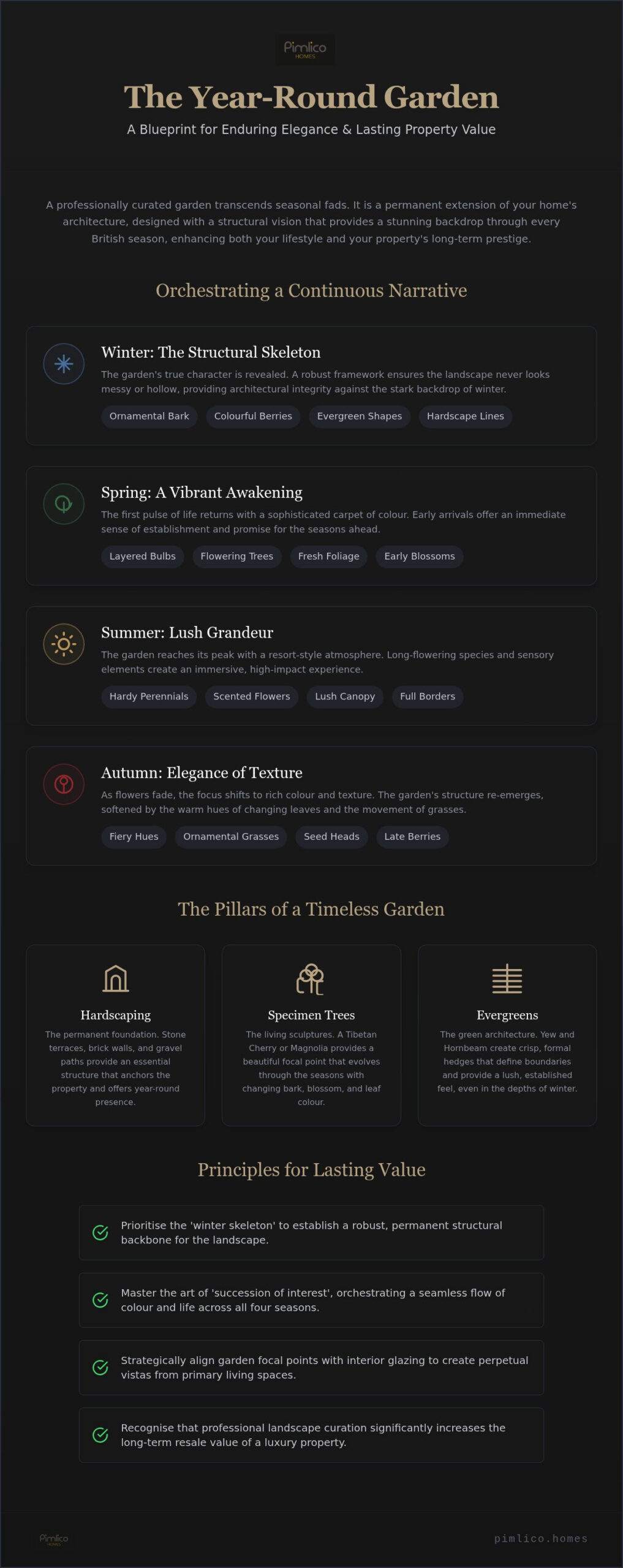
- Understand why a robust winter skeleton forms the essential foundation of any high-end landscape design.
- Master the art of planting a garden for year-round interest by orchestrating a seamless succession of colour and life across every season.
- Discover how to utilise ornamental bark, berries, and grasses to maintain visual allure during the quietest months of the year.
- Learn to align garden focal points with interior glazing to create a perpetual vista from your primary living spaces.
- Recognise the significant impact that professional landscape curation has on the long-term resale value and prestige of a luxury property.
The Architecture of the Garden: Establishing a Permanent Structural Backbone
A garden’s true character isn’t revealed in the peak of summer. It’s found in the quiet, stark months of January. Planting a garden for year-round interest starts with a commitment to structure over ornament. This isn’t merely about choosing plants; it involves the fundamental principles of garden design that dictate how space is utilised. Hardscaping, such as stone terraces, brick walls, and gravel paths, provides the essential foundation. These elements don’t change with the weather. They offer a sense of permanence that anchors the property, acting as the “final room” of a luxury new build.
The “winter skeleton” is what distinguishes a professional landscape from a hobbyist’s patch. When the perennials have retreated, the skeleton remains. It’s the crisp line of a wall or the dramatic silhouette of a tree. This structural backbone ensures your home never looks abandoned or messy during the colder months. By prioritising a balance of structure, colour, and texture, you create an outdoor sanctuary that maintains its allure through every British season. It’s a long-term investment in the aesthetic and financial value of your estate.
Selecting Specimen Trees for Year-Round Stature
Specimen trees are the anchors of the landscape. A Tibetan Cherry, for instance, offers mahogany-coloured bark that glows with a polished sheen in the winter sun. It’s vital to position these trees so they align with the views from your main living areas. They provide a focal point that evolves beautifully. You’ll enjoy the delicate spring blossom, the lush summer canopy, and the autumnal fire of changing leaves. It’s a living sculpture that provides vertical interest when the rest of the garden is dormant.
The Role of Evergreens in Defining Boundaries
Evergreens function as the green walls of your outdoor space. Yew and Hornbeam are peerless choices for formal hedging because they retain their crisp, architectural shape throughout the year. This is particularly important for executive courtyard homes where privacy and clear boundaries are paramount. You can mix leaf textures to add depth; consider the glossy, bold leaves of Magnolia grandiflora alongside the softer, feathery needles of various conifers. These permanent anchors ensure the garden feels lush and established, even when the rest of the world appears grey and lifeless.
Spring and Summer Transitions: Orchestrating a Continuous Floral Narrative
Once the architectural backbone of your landscape is established, the focus shifts to the ephemeral beauty of the seasons. A truly curated space doesn’t rely on a single month of brilliance. Instead, it employs a “succession of interest” where one species gracefully yields to the next. Planting a garden for year-round interest requires this rhythmic planning; it ensures that as the vibrant tulips fade, the lush perennials are already rising to take their place. This layering creates a sense of effortless abundance that feels both intentional and professional.
Cohesion is achieved through the deliberate repetition of colours and forms. By echoing certain hues across different borders, you create a visual thread that pulls the entire landscape together. This technique is particularly effective in larger estates where disparate areas must feel part of a singular, grand vision. Balancing these vibrant transitions against your permanent green anchors prevents the design from feeling thin or fleeting during the high season.
Spring Awakening: From Bulbs to Blossoms
The first pulse of life in a new landscape often comes from beneath the soil. Layering early bulbs like Crocus, Snowdrops, and Narcissus beneath deciduous shrubs provides a sophisticated carpet of colour while the rest of the garden is still waking. For those settling into luxury new build homes, these early arrivals offer an immediate sense of establishment. Flowering trees, such as the classic Magnolia or ornamental Cherry, create an unforgettable first impression when positioned along a driveway or entrance. Their blossoms signal the start of the season with a dramatic, vertical display that transitions beautifully into the fresh green foliage of early summer.
Summer Grandeur: Maximising High-Season Impact
High summer is the time for a lush, resort-style atmosphere. To maintain a consistent narrative, select long-flowering perennials like hardy Geraniums or various species of Salvia. These plants provide reliable colour for months rather than weeks. The sensory experience is equally vital in a luxury setting; integrating scented plants like Lavender, Jasmine, or Roses near seating areas adds an invisible layer of prestige to the outdoor experience. Using large-leaved plants, such as Fatsia japonica or certain Hostas, provides a structural contrast to delicate flowers. This variety in leaf shape ensures the garden remains visually engaging even during the hottest spells, maintaining its integrity as a high-impact sanctuary.
The Elegance of Texture and Dormancy: Bark, Berries, and Autumnal Hues
Autumn and winter are the seasons when a bespoke garden truly reveals its quality. Whilst summer relies on the fleeting exuberance of flowers, the colder months demand a more sophisticated appreciation of form and texture. Planting a garden for year-round interest isn’t just about avoiding a “dead” look; it’s about celebrating the unique beauty of dormancy. This is the time when the landscape’s structural integrity is most visible, and the subtle interplay of light and shadow takes centre stage.
Ornamental grasses are indispensable for providing movement and sound during this period. Species such as Calamagrostis or Miscanthus catch the low winter light, their tawny plumes swaying in the breeze to bring a dynamic quality to an otherwise still vista. They provide a soft, ethereal contrast to the rigid lines of walls and terraces. Similarly, leaving the seed heads of perennials like Echinops or Phlomis adds a layer of intricate detail. When covered in a delicate layer of hoarfrost, these silhouettes become natural sculptures, transforming the garden into a crystalline sanctuary.
Winter berries act as the jewels of the landscape. They provide vibrant splashes of scarlet, orange, and gold against a muted backdrop. Beyond their visual appeal, they offer a vital lifeline for local wildlife, ensuring your estate remains a living, breathing ecosystem throughout the year. It’s this combination of aesthetic excellence and environmental harmony that defines a truly premium outdoor space.
Autumnal Fire: Planning for Late-Season Drama
The transition into the later months should be a crescendo, not a fade. Selecting shrubs known for intense leaf colour changes, such as Euonymus alatus or various Acer palmatum varieties, ensures a spectacular display of autumnal fire. These fiery tones are most impactful when positioned against the dark evergreen backdrops discussed in earlier sections. To extend the floral narrative into October, integrate late-bloomers like Asters or Hylotelephium. These hardy plants provide a final pulse of colour that bridges the gap between summer’s end and the arrival of the first frosts.
Winter Interest: Texture, Bark, and Form
Bark becomes a primary design element once the leaves have fallen. The ghostly white trunks of Silver Birch or the vivid, polished stems of Dogwood provide striking vertical interest against a crisp winter sky. These features are enhanced by the use of topiary. Box or Yew clipped into spheres, cones, or spirals act as visual punctuation marks, guiding the eye through the frost-covered landscape. Finally, consider the role of garden lighting. Strategically placed uplights can transform the structural skeleton of a winter garden at night, casting dramatic shadows and highlighting textures that are often overlooked during the day.
Framing the Vista: Aligning Garden Design with Interior Living Spaces
A garden shouldn’t be a destination you only visit in the summer; it’s a permanent vista that defines the atmosphere of your interior living spaces. Modern luxury homes often feature expansive glazing, which effectively removes the barrier between the home and the horizon. This architectural choice demands a landscape that feels as furnished and intentional as your interior decor. Planting a garden for year-round interest ensures that your master suite or lounge always has a curated view, regardless of the weather. It transforms your windows into living canvases that evolve with the light.
Achieving this level of perpetual elegance requires a focus on the “borrowed landscape”. If your property borders the rolling countryside, your design should act as a sophisticated transition. It should frame the distant hills or woodlands, pulling that sense of scale into your private sanctuary. This creates a feeling of boundless space and prestige. By treating the outdoor area as the final room of the house, you ensure the transition from the kitchen to the terrace is seamless and aesthetically consistent.
The Kitchen View: Seasonal Interest for the Heart of the Home
The kitchen is the heart of the home. It’s where you spend your mornings. Positioning winter-scented plants like Sarcococca or colourful bird feeders near these windows provides daily enjoyment during the darker months. For those residing in executive courtyard homes, the garden becomes an intimate, private gallery. You can use height and layering with pleached trees or tall planters to create depth in these smaller, high-specification spaces. It ensures that even a quick glance over a morning coffee reveals a landscape that is thriving and full of life.
Evening Ambiance: Lighting the Year-Round Landscape
As the sun sets in mid-winter, a garden without lighting disappears. Strategic up-lighting of specimen trees creates a dramatic night-time vista that can be enjoyed from the warmth of the indoors. Subtle path lighting doesn’t just provide safety; it extends the visual boundaries of your home. It ensures the garden remains a visual asset long after dark, maintaining the allure of your property through every hour of the day. This careful curation of light and shadow reinforces the sense of security and exclusivity that defines a premium estate.
Explore our portfolio of bespoke luxury homes to see how we integrate architectural excellence with curated landscape vistas.
Investing in Excellence: Professional Curation for Lasting Estate Value
A garden is not merely a collection of plants; it’s a significant financial and emotional asset. For the discerning homeowner, a well-landscaped exterior is a critical factor in the overall prestige and resale value of a property. Research from June 2026 indicates that professionally designed landscaping can increase a property’s value by an estimated 5.5% to 12.7%. This appreciation is particularly evident when planting a garden for year-round interest. By ensuring the landscape remains vibrant during the winter months, you eliminate the “seasonal dip” in curb appeal that often affects lesser designs. A garden that looks as impeccable in February as it does in June suggests a level of care and quality that resonates with potential buyers.
Acquiring a bespoke luxury home is an investment in a lifestyle. Working with professional designers ensures that this investment is protected through expert curation. These specialists understand the complex interplay of soil chemistry, microclimates, and architectural framing. They provide a level of foresight that prevents costly mistakes, ensuring your outdoor sanctuary matures gracefully over decades rather than fading after a single season. This mastery transforms the garden into a legacy, a private haven that offers a sanctuary for the modern executive whilst quietly bolstering the estate’s market position.
Low-Maintenance Sophistication
True luxury is found in ease. Achieving a high-impact garden doesn’t have to mean constant toil. By selecting high-quality, slow-growing species, you reduce the need for frequent pruning and intervention. This approach prioritises “right plant, right place”, a fundamental rule that ensures long-term success. Preserving this investment is made simpler through the integration of automatic irrigation systems. These discreet installations provide precise hydration, protecting your botanical assets during dry spells and ensuring the landscape remains lush with minimal effort. It’s a methodical approach to beauty that values your time as much as your surroundings.
The Pimlico Homes Standard: Integrating Nature and Luxury
At Pimlico Homes, we believe that bespoke architecture is only truly complete when it’s enhanced by thoughtful landscaping. The relationship between the interior and the exterior should be one of perfect harmony. We encourage our clients to view their garden as a long-term investment in their daily well-being and their property’s future. A curated landscape is the final brushstroke on a masterpiece. It provides the privacy, beauty, and structural integrity that define a world-class home. We invite you to explore our latest developments and discover how we combine visionary construction with the enduring elegance of nature.
Crafting Your Perpetual Sanctuary
A garden that maintains its allure through every season is the hallmark of a truly distinguished estate. By establishing a robust architectural skeleton and orchestrating a seamless succession of colour and texture, you ensure your outdoor space remains a source of pride throughout the year. We’ve explored how the deliberate alignment of garden vistas with interior living spaces transforms a property into a cohesive work of art. Planting a garden for year-round interest is not just a horticultural endeavour; it’s a strategic investment in your lifestyle and your home’s long-term value.
At Pimlico Homes, we bring 25 years of expertise in luxury residential property to every project we undertake. Our bespoke designs are tailored to discerning buyers who demand excellence in every detail. From premier developments across the country to intimate barn conversions, we prioritise the relationship between nature and architecture. We invite you to explore our collection of luxury detached homes and bespoke developments to find your next sanctuary. Your vision of a perfect, perpetual landscape starts with a home designed to frame it beautifully.
Frequently Asked Questions
How do I start a year-round garden from scratch in a new build?
Begin by establishing the structural backbone through hardscaping and permanent evergreens before considering seasonal blooms. In a new build, soil quality can be variable; investing in premium topsoil and organic matter is a vital first step. Once the foundation is laid, planting a garden for year-round interest involves layering trees, shrubs, and perennials to ensure no area looks barren. This methodical approach creates an immediate sense of maturity and prestige for your estate.
What are the best low-maintenance plants for year-round interest in the UK?
Favour species that offer multiple seasons of appeal with minimal intervention. Taxus baccata provides a crisp, dark green backdrop that requires only annual pruning, whilst Choisya ternata offers fragrant spring flowers and glossy evergreen foliage. Ornamental grasses like Calamagrostis Karl Foerster maintain their upright form throughout winter, providing movement and texture without the need for constant deadheading. These selections ensure a high-impact landscape that remains sophisticated with very little effort or maintenance.
Can I achieve year-round interest in a small courtyard garden?
Courtyard gardens are ideal canvases for concentrated, high-specification design. By utilising vertical space with pleached trees or evergreen climbers like Trachelospermum jasminoides, you can create a lush environment without sacrificing floor area. Focus on high-quality hardscaping materials and a few choice specimen plants to establish a sense of luxury. The limited scale allows for meticulous attention to detail, ensuring every element contributes to a curated, permanent vista from your interior living spaces.
How much does professional garden landscaping add to property value?
A professionally curated landscape is a significant asset that directly impacts market appeal. Industry research from June 2026 suggests that high-quality landscaping can increase a property’s value by an estimated 5.5% to 12.7%. This investment is particularly effective for luxury detached homes, where the garden acts as a seamless extension of the interior. A well-maintained, year-round garden signals a level of excellence and care that resonates deeply with discerning buyers and investors.
What should I plant for immediate impact in a winter garden?
For instant winter allure, focus on plants with striking bark and architectural silhouettes. Cornus alba Sibirica provides vivid scarlet stems that glow against a frost-covered landscape, whilst larger evergreen specimens offer immediate structure and privacy. Integrating mature topiary, such as Box or Yew cones, provides a sense of established elegance. These elements ensure your garden feels intentional and full of life even in the depths of January, avoiding the hollow look of traditional designs.
Is it possible to have a colourful garden in January and February?
Vibrant colour is entirely achievable during the quietest months of the year. Winter-flowering species like Helleborus niger and Jasminum nudiflorum provide delicate blooms that thrive in the cold. Additionally, the scarlet berries of Ilex aquifolium or the golden hues of certain conifers offer a rich palette against a winter sky. When planting a garden for year-round interest, these early pulses of life are essential for maintaining a sense of vitality and a continuous seasonal narrative.
How do I choose the right specimen tree for a detached home?
Select a tree that complements the architectural scale of your residence whilst offering interest across all four seasons. Consider the sculptural form of an Acer palmatum or the polished, mahogany bark of Prunus serrula. It’s important to evaluate the tree’s ultimate height and spread to ensure it frames the property without obscuring vital views. A well-chosen specimen acts as a living anchor, providing a sophisticated focal point that matures beautifully alongside your home.
What is the best way to light a garden for winter interest?
Effective lighting focuses on highlighting the structural skeleton that becomes visible during the winter months. Use subtle uplighting to showcase the intricate bark of specimen trees or the sharp lines of evergreen hedging. Low-level path lighting adds a sense of depth and security, extending the garden’s use long after the sun sets. By illuminating textures and silhouettes, you transform the landscape into a dramatic, night-time gallery that can be enjoyed from your home.


